



















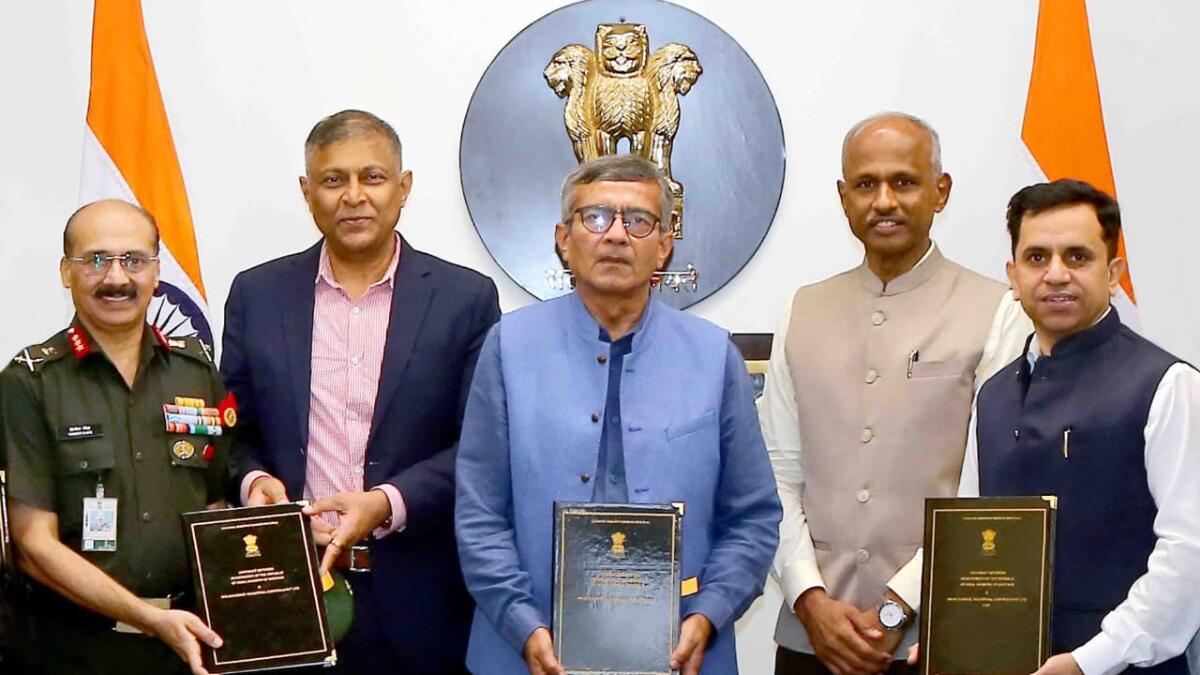
The Ministry of Defence has signed a contract worth Rs 586 crore with Accurate Industrial Controls Private Limited to procure Auxiliary Power Units (APUs) for the Indian Army’s T-72 and T-90 tanks, in a fresh push to indigenize critical components of the country’s armoured fleet.
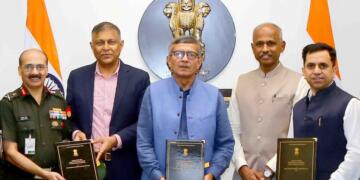
The contract was signed in New Delhi on September 21, 2026, in the presence of Defence Secretary Rajesh Kumar Singh.
APUs serve as an alternate power source for a tank’s fire control system, firing circuit, gun stabilisation system, and other ancillary functions — components critical to a tank’s combat readiness that would otherwise depend solely on the main engine for electrical power. Inducting indigenously developed APUs, officials said, will strengthen the operational readiness, reliability and sustainability of the Army’s mechanised formations, which rely heavily on the T-72 and T-90 as the backbone of India’s armoured corps.
The Ministry described the procurement as a significant milestone in indigenising critical sub-systems for armoured platforms, and pointed to it as evidence of industry-led research and development succeeding under the Make-II category — a procurement route specifically designed to encourage private industry to develop and prototype defence technology without government funding, with the promise of orders once the product proves viable. Officials framed the contract as proof that this mechanism can effectively convert homegrown innovation into actual production and induction into service.
The deal has also been positioned within the government’s broader strategic narrative, aligning with the Viksit Bharat @2047 vision and marking what the Ministry called a notable step toward Aatmanirbharta (self-reliance) in defence manufacturing. The push reflects a sustained effort in recent years to reduce the Indian defence establishment’s dependence on imported components for legacy platforms like the T-72 and T-90 — both originally Soviet/Russian-origin tank designs that have formed the core of India’s tank fleet for decades — by building a domestic industrial base capable of sustaining and upgrading them independently.
Beyond this specific contract, the Ministry framed the deal as part of a wider goal: building a defence industrial ecosystem in India that is not only self-reliant but globally competitive, capable of both meeting the armed forces’ needs and eventually competing in export markets.