














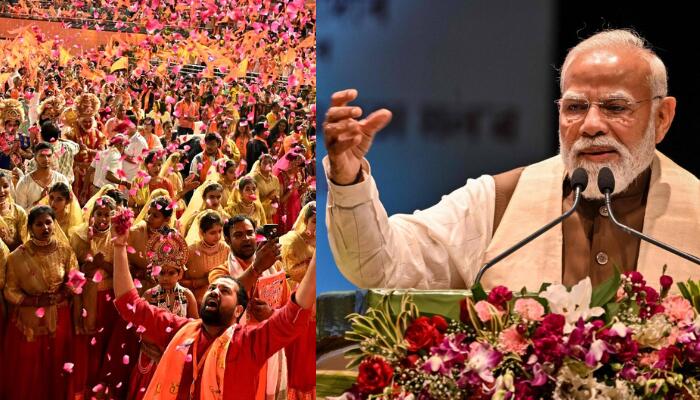
Record moment framed as collective mandate
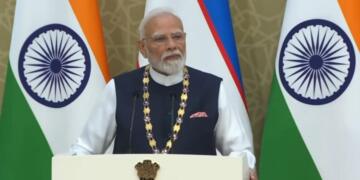
Modi described the milestone not as a personal achievement but as a reflection of sustained public trust and political stability. He credited the NDA’s continuity in power to what he called the “maturity of the electorate”, arguing that India had moved beyond an era marked by instability in governance.
He said the last twelve years represented a shift in both aspiration and execution, adding that citizens had placed faith in the alliance after what he termed a period of uncertainty in earlier decades.
Sharp attack on Congress and growth narrative
A central focus of Modi’s speech was a strong critique of the term “Hindu Growth Rate”, which he said was used to describe India’s slower economic performance during Congress-led rule. He argued that the label unfairly associated systemic policy failures with the Hindu community rather than acknowledging governance shortcomings.
Modi said the phrase should instead be understood as reflecting a “Congress Growth Rate”, pointing to what he described as a lack of decisiveness and reform-oriented governance during that period. He claimed the narrative was used to mask deeper structural failures in economic management.
The Prime Minister asserted that India had since broken free from that phase and entered a period of accelerated growth and global relevance.
Economic performance and welfare claims
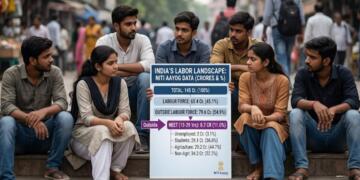
Highlighting key indicators, Modi said that 25 crore people had moved out of poverty under the NDA government, calling it one of the most significant socio-economic transformations in independent India. He linked this change to targeted welfare delivery systems and governance reforms.
Referring to the Covid-19 pandemic, he said India had maintained a strong growth trajectory despite global disruption, claiming a growth rate of 7.7 percent at a time when many economies struggled. He added that India had transitioned from being seen as part of the “fragile economies” category to one of the world’s fastest-growing major economies.
He also referenced reforms such as the Goods and Services Tax and broader structural changes, arguing that these measures strengthened the middle class and improved economic efficiency.
Governance decisions and future vision
Modi also pointed to major policy decisions such as the abrogation of Article 370, developments in the North-East, and initiatives like Operation Sindoor, describing them as markers of a more decisive governance approach.
Looking ahead, he urged a national focus on the year 2047, when India will mark a century of independence. He said the global community increasingly expects solutions from India and called for a forward-looking, globally engaged economic strategy.
Push for cooperative development among states
The Prime Minister emphasised that India’s progress would depend on cooperative competition among states, urging them to prioritise development outcomes over political rivalry. He said national growth would accelerate only when states improved their economic performance in alignment with broader national goals.
He also reiterated the principle of “sabka prayaas”, describing collective effort as the driving force behind India’s development journey.
Cabinet resolution marks formal recognition
Earlier in the day, the Union Cabinet passed a resolution congratulating Modi on becoming the longest continuously serving elected Prime Minister. The resolution highlighted the government’s welfare focus, including housing, electricity, clean water access, direct benefit transfers, free ration support for over 80 crore citizens, and healthcare coverage for more than 60 crore beneficiaries.
As Modi crossed a symbolic political threshold, his address blended celebration with confrontation, reinforcing both his government’s narrative of economic transformation and its sharp critique of past administrations.