





















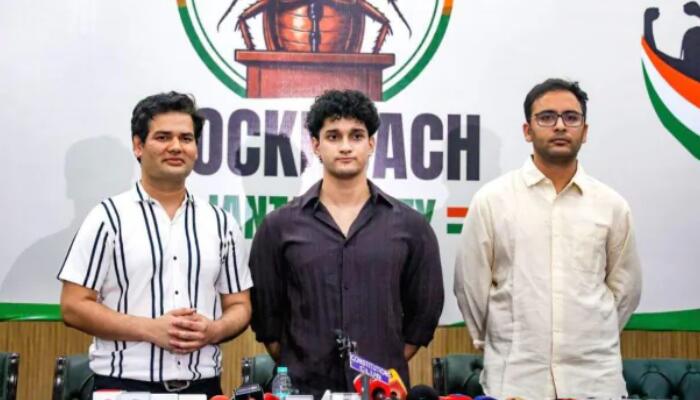
The Cockroach Janta Party (CJP), a youth-driven political movement that has gained traction online, has named three spokespersons ahead of its planned protest in Delhi on 6 June. The move signals an effort to formalise its communication structure as the group transitions from digital mobilisation to organised political activity on the ground.
The party has appointed Saurav Das, Vijeta Dahiya and Ashutosh Ranka as its official spokespersons. Reports suggest the trio will represent the movement publicly as it intensifies its campaign around governance and accountability issues. The announcement has shifted attention from the protest itself to the professional backgrounds and public associations of those chosen to speak for the organisation.
Digital media ecosystem linkages around Saurav Das draw attention
Saurav Das, now serving as Chief Spokesperson, works as an investigative journalist. His reported association with digital political commentary spaces, including content ecosystems linked to commentator Dhruv Rathee, has become a point of discussion in public discourse.
He has also been mentioned in online discussions for his presence across multiple digital platforms, including Quora, which often features active political commentary and debate. These associations have contributed to wider scrutiny of his positioning within digital media ecosystems.
Supporters describe Das as a strong media voice capable of articulating the movement’s position in public debates. Critics question his proximity to digital activism networks and argue that such associations raise concerns about neutrality in his communication role.
Vijeta Dahiya and her activist and political commentary background
Vijeta Dahiya works as a political researcher, author and filmmaker. She has been involved in political commentary and activist spaces in the past, which has drawn renewed attention following her appointment as spokesperson.
Her background includes participation in protest-oriented and issue-based political engagement, which has become part of public discussion around CJP’s leadership choices. Her recognition is linked to work in environmental and student-linked political activism spaces, which later turned into pro Naxal movement which was broadly supported by JNU.
Supporters view her as someone with grassroots exposure and experience in public storytelling and mobilisation. Critics argue her activist background reflects a clear ideological orientation that influences the movement’s messaging direction.
Ashutosh Ranka brings corporate consulting experience
Ashutosh Ranka, an IIT Kanpur graduate, has worked in management consulting, including at McKinsey & Company. His profile introduces a corporate consulting background into a movement that publicly positions itself as anti-establishment.
His inclusion has triggered discussion about the contrast between global consulting experience and CJP’s political messaging. McKinsey’s global advisory work across corporate and institutional sectors has also been referenced in broader commentary around professionals moving from corporate strategy roles into political communication spaces.
Supporters argue his experience brings structure and strategic clarity to the movement’s outreach. Critics, however, point to the mismatch between his corporate background and CJP’s ideological positioning.
CJP prepares for key Delhi protest amid rising scrutiny
CJP will hold its protest in Delhi on 6 June. The event is expected to test the organisation’s reach, mobilisation capacity and public support. Founder Abhijeet Dipke is expected to return to India around the same period, adding further attention to the group’s next phase of activity.
The movement continues to focus its messaging on governance, education and accountability issues. However, attention is increasingly shifting from its demands to the individuals representing it and the networks they are perceived to be part of.
As the protest approaches, scrutiny of CJP has expanded beyond its agenda to include closer examination of its spokespersons, their professional trajectories and the diverse ecosystems shaping their public profiles.