









RelatedPosts
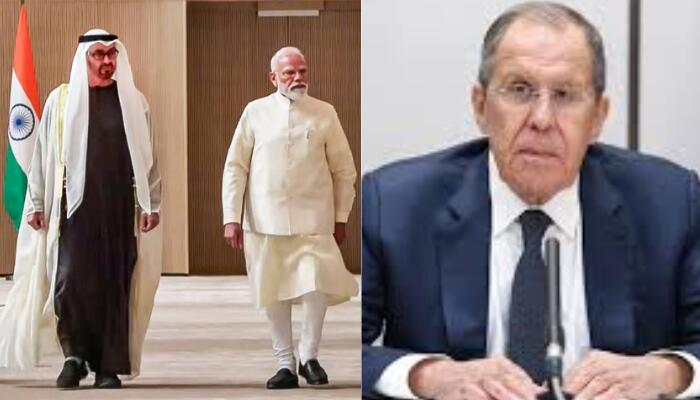
A discernible recalibration in West Asia’s diplomatic landscape is underway, shaped by parallel signals from Moscow, Washington and Abu Dhabi that are reshaping how regional mediation roles are perceived and contested. At the centre of this evolving narrative are Russian remarks questioning the durability of Pakistan’s mediation capacity and India’s expanding institutional engagement with the Gulf, highlighted by Prime Minister Narendra Modi’s visit to the United Arab Emirates.
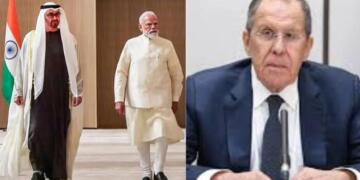
Russian Foreign Minister Sergey Lavrov, speaking in Delhi, adopted a calibrated but clear position on the question of mediation in the region. While acknowledging that Pakistan may continue to function as a facilitator in ongoing contacts, he stressed that sustainable mediation requires a depth of diplomatic experience and institutional continuity that, in Russia’s assessment, is more closely associated with India’s established external engagement. His comments also sit within a broader Russian push for structured multilateral dialogue, particularly through platforms such as BRICS, where the convening authority is increasingly being reassessed.
From Islamabad’s perspective, however, the notion of mediation has never been framed as a formal or institutionalised mandate. Pakistani diplomacy has traditionally defined its role as pragmatic facilitation, enabled by geographic proximity and long-standing channels of communication with multiple regional actors. This approach allows access across divides, but also leaves its role vulnerable to external reinterpretation, particularly during periods of heightened geopolitical friction.
Washington’s scrutiny adds pressure to Islamabad’s balancing strategy
The debate has been further intensified by renewed attention in Washington to Pakistan’s handling of sensitive regional developments involving Iran. Reports suggesting that Iranian military aircraft may have temporarily taken refuge at Nur Khan Air Base have resurfaced in policy discourse, adding another layer of complexity to already strained perceptions.
US Senator Lindsey Graham has publicly questioned Pakistan’s reliability as a neutral intermediary in high-stakes diplomatic engagements. While these remarks remain part of broader political commentary rather than formal US policy shifts, they reflect a growing scepticism within sections of the American strategic establishment about Islamabad’s ability to maintain consistent neutrality amid competing regional pressures.
For Pakistan, such criticism is often interpreted through the structural constraints of its geopolitical position. Operating simultaneously within overlapping security theatres involving Iran, the Gulf, and the United States inevitably produces conflicting interpretations of intent, particularly when regional tensions escalate.
Modi’s UAE visit highlights the depth and institutionalisation of India–Gulf ties
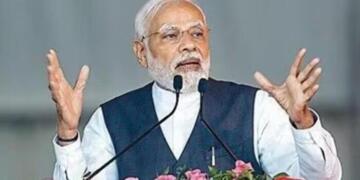
In contrast, Prime Minister Modi’s visit to Abu Dhabi projected a markedly structured and forward-looking framework of engagement. The ceremonial reception, marked by a guard of honour and escorted by UAE Air Force aircraft, reflected the diplomatic significance both sides attach to the relationship.
Substantively, the visit advanced cooperation across energy security, defence collaboration, and emerging technologies. Agreements spanning strategic petroleum reserves, liquefied petroleum gas supply, and defence cooperation were complemented by a reported $5 billion investment commitment from the Emirati side.
A key outcome was the Joint Strategic Action Plan for 2025–2029, which anchors bilateral cooperation in semiconductors, green hydrogen, and maritime security. The emphasis on the Strait of Hormuz underscored the shared recognition of maritime chokepoints as central to both economic stability and regional security architecture.
Russia’s framing and the evolving hierarchy of mediation
Within broader multilateral settings, including BRICS-linked discussions, Russia’s positioning reflects a gradual shift towards privileging institutional continuity and sustained diplomatic bandwidth in assessing mediation capacity. This has brought renewed attention to India’s ability to engage across competing regional blocs while maintaining functional ties across diverse actors.
India’s growing presence in West Asia is increasingly viewed by external stakeholders as structurally embedded rather than episodic, shaped by energy dependencies, investment flows, and expanding security dialogue with Gulf partners. This has contributed to a perception of New Delhi as a stabilising interlocutor within an increasingly fragmented regional order.
Pakistan, meanwhile, remains situated in a more contested interpretive space. Its facilitative role continues to be acknowledged in certain diplomatic contexts, but its elevation to a sustained mediation actor is increasingly debated externally, particularly in light of shifting trust dynamics among key global stakeholders.
What is emerging is not a definitive realignment but a gradual reordering of diplomatic perceptions. West Asia’s mediation landscape is becoming less about fixed roles and more about contested credibility, where India’s institutional engagement is strengthening, and Pakistan’s role remains conditional, situational, and subject to external interpretation.