























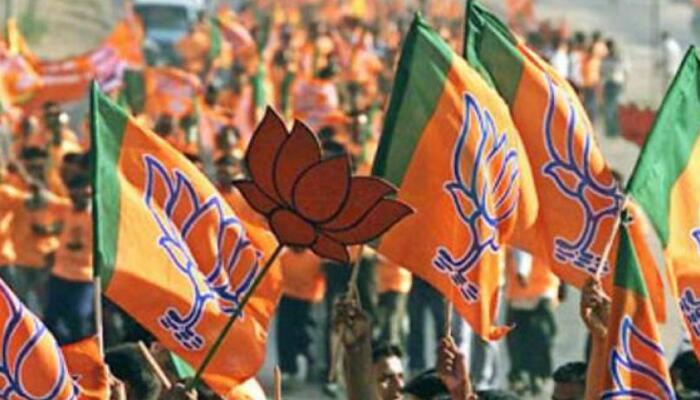
West Bengal’s verdict day is unfolding like a slow-burning political earthquake. What began as a cautious early lead for the Bharatiya Janata Party (BJP) has quickly snowballed into a commanding surge, placing the party within touching distance of forming its first-ever government in the state.
Counting for 293 of the 294 Assembly seats, involving a staggering 2,926 candidates, began with the BJP edging ahead in just three constituencies in the initial rounds. Within minutes, that number climbed to eight, then 18, and by mid-morning, the party had surged ahead in 52 seats. The pace of this rise is as significant as the numbers themselves.
More crucially, broader trends suggest the BJP is now hovering around, and in some projections even crossing, the majority mark of 148 seats. In a state where it has never held power, that number carries enormous political weight.
A surge that is hard to ignore
The BJP’s lead is not confined to a region. It is spread across constituencies such as Kalimpong, Jhargram, Medinipur, Bankura, and Asansol Dakshin. In Diamond Harbour, BJP’s Dipak Kumar Halder established a lead of over 2,500 votes, signalling cracks in areas once considered secure for the Trinamool Congress (TMC).
Seats like Dinhata, Gosaba, Monteswar, and Baghmundi are reflecting the same pattern. This is not a fragmented performance. It is a coordinated surge.
Even smaller players have found a place in the early picture. The Bharatiya Gorkha Prajatantrik Morcha has taken a slim lead in Kalimpong, while the Aam Janata Unnayan Party has opened its account in one seat. Yet, the larger battle remains decisively tilted towards a BJP versus TMC face-off.
Bhabanipur becomes a symbol of the shift
All eyes remain on Bhabanipur, where Chief Minister Mamata Banerjee is locked in a tight contest with BJP’s Suvendu Adhikari. The seat has swung between the two, with Banerjee initially leading before Adhikari narrowed the gap and briefly moved ahead.
The margin remains under 2,000 votes, but the symbolism is larger than the numbers. A close fight in the Chief Minister’s own constituency reflects the churn across the state.
TMC struggles, opposition fades
While the TMC is attempting to close the gap with leads in seats like Singur, Chowrangee and Canning Paschim, the overall picture remains challenging. The Congress and Left, once pillars of Bengal politics, are yet to open their accounts in early trends, continuing their slide into political irrelevance.
High turnout, high stakes
The elections witnessed record participation, with 92.8 per cent turnout in the first phase and 91.47 per cent in the second, the highest since Independence. Counting is underway at 77 centres across 23 districts under heavy security deployment, with over 2.5 lakh personnel on duty.
A defining moment for Bengal
The trajectory of the results so far points to more than just a lead. It hints at a structural shift. From three seats in the opening round to crossing the halfway mark in trends, the BJP’s rise today is both rapid and decisive.
If this momentum holds, West Bengal may not just be witnessing a change in government. It may be witnessing the collapse of a long-standing political order and the arrival of a new one.