























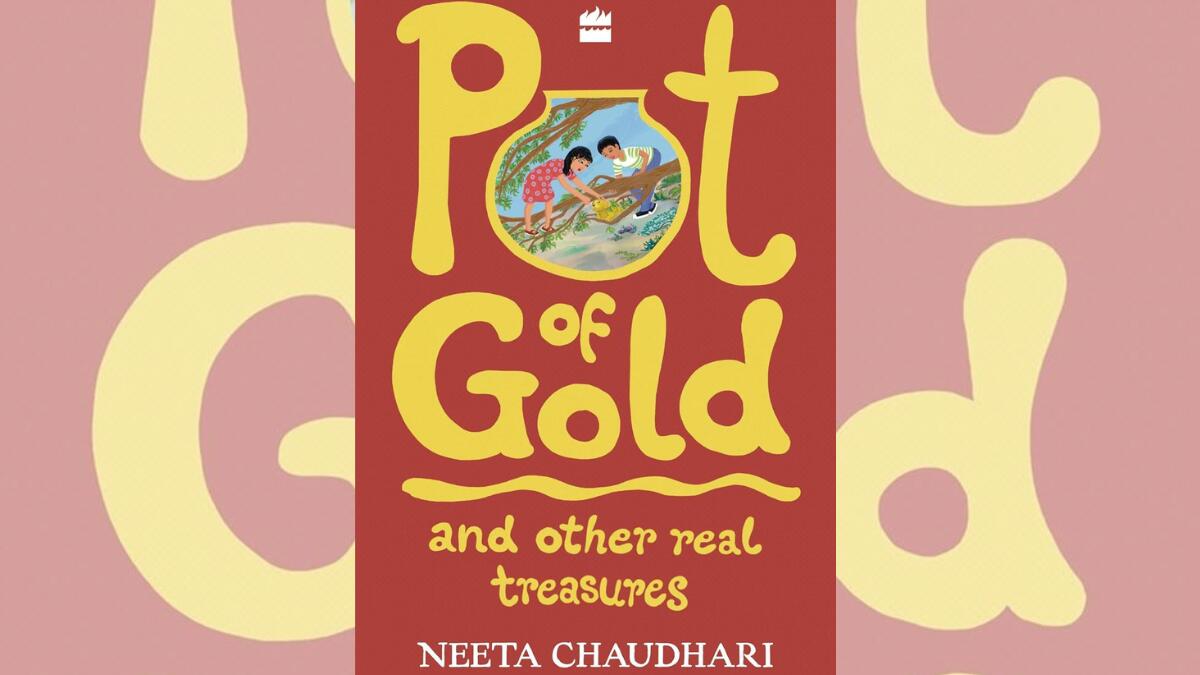
Among the twenty stories in Pot of Gold and Other Real Treasures, “A Lesson for Molu” stands out for tackling one of the more difficult subjects in children’s fiction: bullying and the possibility of genuine change in the child responsible for it. Chaudhari resists the temptation to make Molu a cartoonish villain. He is unkind, certainly — he steals lunches, mocks a classmate’s second-hand books, and refuses to contribute toward a school trip for a friend whose family cannot afford it — but the story is careful to let his cruelty exist alongside ordinary childishness, rather than painting him as irredeemable from the outset.
The turning point arrives not through a lecture from a teacher, but through consequence: distracted by the urge to chase a squirrel during a class trip to Golconda Fort, Molu wanders off from his group, gets lost, and falls into a dark, disused stairwell, where he is left frightened, injured, and entirely dependent on the very classmates he has spent the story mistreating. It is a well-constructed piece of narrative irony, and Chaudhari lets it play out with real tension — the search for Molu, the whimpering voice in the dark, the nervous wait as Jaya and her father descend to rescue him — before allowing the story to resolve.
What elevates this story above a simple comeuppance narrative is its final movement. Jaya, whose father works as the school gardener and who Molu has mocked throughout the story, is the one who insists on helping rescue him, and it is her kindness, not punishment, that prompts Molu’s genuine remorse. His apology — sheepish, immediate, and specific — feels believable precisely because it follows real fear and real gratitude, rather than arriving as an imposed moral. The teacher’s quiet praise for the class’s collective bravery, rather than a scolding of Molu, allows the story to end on a note of communal warmth rather than individual shame.
This is a more emotionally layered treatment of bullying than the genre typically offers young readers, most of whom will recognise a version of Molu, or a version of Jaya, from their own classrooms. By grounding the story’s turning point in vulnerability rather than punishment, Chaudhari suggests something more useful to children than simple retribution: that even difficult classmates are capable of change when shown genuine kindness. It is a quietly ambitious story, handled with a light touch, and one of the stronger entries in an already strong collection.