





















RelatedPosts
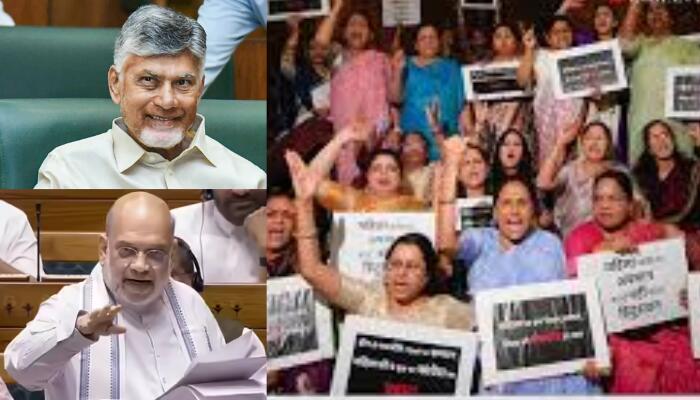
Andhra Pradesh Chief Minister N Chandrababu Naidu has launched a sharp political attack on the Congress-led Opposition, accusing it of blocking the Women’s Reservation Bill and describing the move as a setback to women’s political empowerment in India.
In a post on X, Naidu said the Opposition’s stance amounted to a “betrayal of millions of women”, arguing that it had denied them a historic opportunity for equal representation in legislative institutions.
He also reshared a message by Union Home Minister Amit Shah, aligning with the broader position that the proposed reforms were intended to strengthen both women’s participation and the structural balance of India’s constitutional framework.
Women’s Representation at the Centre of Political Clash
Naidu said the proposed 33 per cent reservation for women in legislative bodies was a necessary correction to long-standing imbalances in political participation. He argued that blocking the Bill was not a routine parliamentary disagreement but a direct obstruction of institutional reform aimed at inclusivity.
According to him, the Opposition’s decision reflected a disregard for women’s aspirations and weakened efforts to expand their role in governance and decision-making. He reiterated that his party would continue to support measures that enhance women’s presence in public life.
Delimitation After 2026 and the Federal Question
The controversy unfolds against the backdrop of an upcoming delimitation exercise expected after the first Census conducted post-2026, which could reshape India’s parliamentary map.
Under Article 81, the Lok Sabha consists of up to 530 elected members from States and up to 20 members from Union Territories, with seat allocation broadly linked to population to maintain proportional representation.
However, this system has remained frozen since the 1971 Census for seat allocation purposes, with constituency boundaries currently based on the 2001 Census. Once the freeze ends after the next Census, a redistribution of seats based on updated population figures is expected.
Naidu warned that this shift could significantly impact Southern States, North-Eastern States, and smaller States, despite their relatively stronger development outcomes.
Federal Balance Versus Population-Based Representation
Naidu argued that the NDA’s proposal aimed to protect India’s federal structure by ensuring that States performing well on development indicators are not penalised solely on demographic grounds.
He said, “Representation should not be determined by population alone, but must also reflect federal fairness and governance performance.” According to him, States contributing strongly to development should not lose political weight in the national structure due to slower population growth.
“Lost Opportunity” in Constitutional Reform
Escalating his criticism, Naidu said the Opposition had prioritised political considerations over long-term national interest, resulting in the loss of a crucial constitutional opportunity.
He said, “India had missed a chance to simultaneously strengthen women’s representation and preserve a balanced federal structure ahead of a major electoral reset.”
Naidu cautioned that such decisions would have lasting consequences for democratic fairness and institutional stability, adding that those celebrating the outcome should reflect on its implications.
Reaffirming his position, he said his party would continue to support reforms that enhance women’s participation in public life while safeguarding the federal character of the Constitution as India moves towards a significant redistribution of representation after 2026.