





















As geopolitical tensions reshape global alliances, Russia has intensified its educational outreach towards India. Moscow now views academic cooperation as a major pillar of its evolving strategic partnership with New Delhi.
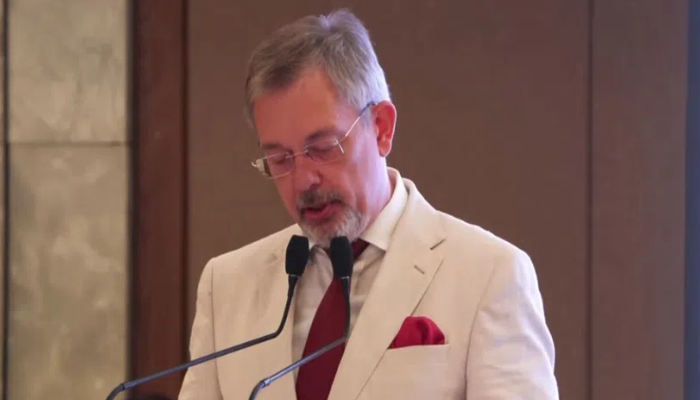
Speaking at the 2nd Russia-India Education Summit in the national capital, Russian Ambassador to India Denis Alipov stressed the need for deeper institutional integration between the two countries. He said education could emerge as one of the strongest foundations of the India-Russia relationship.
“The 2nd Russia-India Education Summit we’re holding reflects the growing strength of educational ties between our two countries,” Alipov said while addressing students, policymakers, diplomats, and academic leaders gathered at the summit.
The event brought together representatives from more than 30 leading Russian universities along with Indian educational institutions, political stakeholders, and subject experts. It also created a direct engagement platform for thousands of Indian students exploring higher education opportunities in Russia.
For decades, Russian universities have attracted Indian students, particularly in medicine, engineering and scientific research. Alipov said Russia’s strong academic traditions and accessible, high-quality education continue to make Russian institutions a preferred destination for Indian students.
Russia currently hosts nearly 300,000 international students. Around 40,000 of them are Indians. During the summit, Alipov announced that Moscow aims to increase its international student intake to 500,000 by 2030, reflecting Russia’s expanding global academic ambitions.
The announcement comes at a time when Russia is strengthening partnerships with countries outside the Western bloc. India has emerged as one of Moscow’s most trusted long-term partners in education, technology and innovation.
Alipov also noted that thousands of Indian graduates from Russian universities have contributed across sectors in India over the years. He described them as “living bridges of friendship” between the two nations.
Emerging Technologies Drive New Cooperation
The summit discussions focused heavily on future-oriented sectors including artificial intelligence, engineering, medicine, climate governance, nuclear science and advanced technologies. The emphasis reflected the growing strategic importance of research-led international partnerships.
Alipov highlighted several ongoing collaborations between Indian and Russian institutions. These include Immanuel Kant Baltic Federal University’s partnerships with Chandigarh University and Sharda University. The Higher School of Economics has also launched joint programmes with UPES Dehradun.
He further referred to Saint Petersburg State University’s academic engagement with IIM Ahmedabad. Sechenov First Moscow State Medical University has also partnered with Indian institutions including IIT Bombay and the University of Delhi.
Additional collaborations involving Dr Ambedkar University and MGIMO University were discussed during the summit. The discussions also explored opportunities for scholar exchanges, collaborative research and innovation-driven partnerships.
Moscow Pushes Degree Recognition and Mobility
A major focus area at the summit involved improving structural integration between the educational systems of India and Russia. Alipov strongly advocated wider academic mobility, vocational training partnerships, dual-degree programmes and mutual recognition of qualifications.
The Russian envoy also supported the possibility of Russian universities establishing campuses in India under the National Education Policy 2020 framework. Such a move could significantly deepen Moscow’s academic presence in India’s higher education sector.
Alipov welcomed the opening of new Russian language centres in Trivandrum, Bengaluru and Ahmedabad. He described them as important tools for strengthening cultural familiarity and people-to-people ties. He also praised initiatives taken by the governments of Haryana and Rajasthan to strengthen educational cooperation with Russian institutions.
“Education remains one of the strongest bridges nations can build. It nurtures talent, strengthens trust, and inspires innovation. Above all, it brings people closer together and lays the foundation for lasting friendship between nations,” Alipov stated.
The summit will conclude with a major education fair scheduled for Friday. Students will be able to explore academic programmes, internships and research opportunities offered by Russian universities.
As countries increasingly use education and technology partnerships to strengthen strategic influence, Russia’s academic outreach towards India reflects a larger geopolitical calculation. Moscow appears to recognise that future global partnerships will be shaped not only through diplomacy and trade, but also through universities, research networks and skilled talent.