










TFIPOST हिन्दी
TFIPOST Global
Tfipost.com
Tfipost.com
No Result
View All Result
  • Premium
  • Politics
    • All
    • Analysis
    • Opinions
    • Trending
    US Weighs First-Ever Hypersonic Strike: Can the $15M Dark Eagle Break the Iranian Deadlock?

    US Weighs First-Ever Hypersonic Strike: Can the $15M Dark Eagle Break the Iranian Deadlock?

    Caught Between Giants: How China’s Strategic Embrace Is Complicating Nepal’s Balancing Act

    Caught Between Giants: How China’s Strategic Embrace Is Complicating Nepal’s Balancing Act

    Rescue operations underway after Narmada cruise capsizes in sudden storm at Bargi Dam, Jabalpur.

    Mother, Child Found Locked in Final Embrace After Narmada Cruise Disaster in Jabalpur

    Amit Shah reacts to major anti-narcotics success in Mumbai operation

    Amit Shah Promises Tough Action as ₹1,745 Crore Cocaine Bust in Mumbai Exposes Global Drug Network

    • Analysis
    • Opinions
    • Trending
  • Economy
    • All
    • Business
    • Economy1
    • Finance
    From struggle to reform, India’s workers power the nation’s rise.

    Labour Day 2026: From Red Flags to Reform, How New India is Rewriting the Workers’ Future

    AI, access, and accountability: Goyal’s push to transform India’s procurement system through GeM

    Goyal Speeds Up GeM Revamp, Pushes AI Tools and Wider Access to Reform Procurement System

    What are the Benefits of Critical Health Insurance in Serious Illness Cases?

    What are the Benefits of Critical Health Insurance in Serious Illness Cases?

    How Digital Verification Works In Online Personal Loan Applications

    How Digital Verification Works In Online Personal Loan Applications

    • Business
    • Finance
  • Defense
    • All
    • Defence
    • Strategy
    • Weaponry
    US Weighs First-Ever Hypersonic Strike: Can the $15M Dark Eagle Break the Iranian Deadlock?

    US Weighs First-Ever Hypersonic Strike: Can the $15M Dark Eagle Break the Iranian Deadlock?

    Dubey escalates infiltration debate in Bengal

    Bengal Poll Row Escalates After Bangladesh Parliament Remarks: Nishikant Dubey Targets TMC Over Infiltration Debate

    India called the shots, not the ceasefire: Rajnath SIngh

    India Chose the Moment, Not the Pressure: Rajnath Singh Says Operation Sindoor Halt Was a Strategic Call

    Why is Making a Jet Engine so Hard | The failure of Kaveri

    Why is Making a Jet Engine so Hard | The failure of Kaveri

    • Defence
    • Strategy
    • Weaponry
  • Geopolitics
    • All
    • Africa
    • Americas
    • Asia Pacific
    • Europe
    • South Asia
    • West Asia
    US Weighs First-Ever Hypersonic Strike: Can the $15M Dark Eagle Break the Iranian Deadlock?

    US Weighs First-Ever Hypersonic Strike: Can the $15M Dark Eagle Break the Iranian Deadlock?

    Caught Between Giants: How China’s Strategic Embrace Is Complicating Nepal’s Balancing Act

    Caught Between Giants: How China’s Strategic Embrace Is Complicating Nepal’s Balancing Act

    Karachi Pact 1949: How Pakistan Cemented Control Over Gilgit-Baltistan Without Its People’s Consent

    Karachi Pact 1949: How Pakistan Cemented Control Over Gilgit-Baltistan Without Its People’s Consent

    When law becomes an instrument of exclusion, persecution moves far beyond the courtroom.

    Ahmadis in Pakistan: From Faith to Marginalisation Under Law and Society

    • Africa
    • Americas
    • Asia Pacific
    • Europe
    • South Asia
    • West Asia
  • Knowledge
    • All
    • Culture
    • Education
    • History
    • Indology
    Chants of ‘Jai Badri Vishal’ Echo as Badrinath Portals Open; All Four Dhams Now Accessible to Pilgrims

    Chants of ‘Jai Badri Vishal’ Echo as Badrinath Portals Open; All Four Dhams Now Accessible to Pilgrims

    Kedarnath Dham Portals Open for Devotees After 181 Days Amid Vedic Chants, Traditional Rituals

    Kedarnath Dham Portals Open for Devotees After 181 Days Amid Vedic Chants, Traditional Rituals

    Sardar Patel and Amit Shah

    Sardar Patel’s 1947 Blueprint on Minority Quotas Resurfaces as Reservation Debate Returns to Centre Stage

    The 1973 Constitution and ‘Bhutto’ the Man Who Made It: What Pakistan Owes and What It Destroyed

    The 1973 Constitution and ‘Bhutto’ the Man Who Made It: What Pakistan Owes and What It Destroyed

    • Culture
    • History
    • Indology
  • Law
  • Lounge
    • All
    • Books
    • Cinema
    • Entertainment
    • Food
    • Games
    • Health
    • Lifestyle
    • Satire
    • Sports
    • technology
    • Travel
    From struggle to reform, India’s workers power the nation’s rise.

    Labour Day 2026: From Red Flags to Reform, How New India is Rewriting the Workers’ Future

    A journey of faith unfolds across one of India’s toughest terrains.

    Adi Kailash Yatra Begins Today: Temple Gates Open as Uttarakhand Tightens Grip on Strategic Himalayan Corridor

    Minor rape survivor’s pregnancy termination and reproductive rights

    SC Reinforces Bodily Autonomy in Teen Rape Survivor Case, Questions State Control Over Abortion Rights

    The Role of AI in Airport Security Solutions for Managing High Tourist Traffic

    The Role of AI in Airport Security Solutions for Managing High Tourist Traffic

    • Books
    • Cinema
    • Food
    • Health
    • Sports
    • technology
    • Travel
    • Satire
Tfipost.com
  • Premium
  • Politics
    • All
    • Analysis
    • Opinions
    • Trending
    US Weighs First-Ever Hypersonic Strike: Can the $15M Dark Eagle Break the Iranian Deadlock?

    US Weighs First-Ever Hypersonic Strike: Can the $15M Dark Eagle Break the Iranian Deadlock?

    Caught Between Giants: How China’s Strategic Embrace Is Complicating Nepal’s Balancing Act

    Caught Between Giants: How China’s Strategic Embrace Is Complicating Nepal’s Balancing Act

    Rescue operations underway after Narmada cruise capsizes in sudden storm at Bargi Dam, Jabalpur.

    Mother, Child Found Locked in Final Embrace After Narmada Cruise Disaster in Jabalpur

    Amit Shah reacts to major anti-narcotics success in Mumbai operation

    Amit Shah Promises Tough Action as ₹1,745 Crore Cocaine Bust in Mumbai Exposes Global Drug Network

    • Analysis
    • Opinions
    • Trending
  • Economy
    • All
    • Business
    • Economy1
    • Finance
    From struggle to reform, India’s workers power the nation’s rise.

    Labour Day 2026: From Red Flags to Reform, How New India is Rewriting the Workers’ Future

    AI, access, and accountability: Goyal’s push to transform India’s procurement system through GeM

    Goyal Speeds Up GeM Revamp, Pushes AI Tools and Wider Access to Reform Procurement System

    What are the Benefits of Critical Health Insurance in Serious Illness Cases?

    What are the Benefits of Critical Health Insurance in Serious Illness Cases?

    How Digital Verification Works In Online Personal Loan Applications

    How Digital Verification Works In Online Personal Loan Applications

    • Business
    • Finance
  • Defense
    • All
    • Defence
    • Strategy
    • Weaponry
    US Weighs First-Ever Hypersonic Strike: Can the $15M Dark Eagle Break the Iranian Deadlock?

    US Weighs First-Ever Hypersonic Strike: Can the $15M Dark Eagle Break the Iranian Deadlock?

    Dubey escalates infiltration debate in Bengal

    Bengal Poll Row Escalates After Bangladesh Parliament Remarks: Nishikant Dubey Targets TMC Over Infiltration Debate

    India called the shots, not the ceasefire: Rajnath SIngh

    India Chose the Moment, Not the Pressure: Rajnath Singh Says Operation Sindoor Halt Was a Strategic Call

    Why is Making a Jet Engine so Hard | The failure of Kaveri

    Why is Making a Jet Engine so Hard | The failure of Kaveri

    • Defence
    • Strategy
    • Weaponry
  • Geopolitics
    • All
    • Africa
    • Americas
    • Asia Pacific
    • Europe
    • South Asia
    • West Asia
    US Weighs First-Ever Hypersonic Strike: Can the $15M Dark Eagle Break the Iranian Deadlock?

    US Weighs First-Ever Hypersonic Strike: Can the $15M Dark Eagle Break the Iranian Deadlock?

    Caught Between Giants: How China’s Strategic Embrace Is Complicating Nepal’s Balancing Act

    Caught Between Giants: How China’s Strategic Embrace Is Complicating Nepal’s Balancing Act

    Karachi Pact 1949: How Pakistan Cemented Control Over Gilgit-Baltistan Without Its People’s Consent

    Karachi Pact 1949: How Pakistan Cemented Control Over Gilgit-Baltistan Without Its People’s Consent

    When law becomes an instrument of exclusion, persecution moves far beyond the courtroom.

    Ahmadis in Pakistan: From Faith to Marginalisation Under Law and Society

    • Africa
    • Americas
    • Asia Pacific
    • Europe
    • South Asia
    • West Asia
  • Knowledge
    • All
    • Culture
    • Education
    • History
    • Indology
    Chants of ‘Jai Badri Vishal’ Echo as Badrinath Portals Open; All Four Dhams Now Accessible to Pilgrims

    Chants of ‘Jai Badri Vishal’ Echo as Badrinath Portals Open; All Four Dhams Now Accessible to Pilgrims

    Kedarnath Dham Portals Open for Devotees After 181 Days Amid Vedic Chants, Traditional Rituals

    Kedarnath Dham Portals Open for Devotees After 181 Days Amid Vedic Chants, Traditional Rituals

    Sardar Patel and Amit Shah

    Sardar Patel’s 1947 Blueprint on Minority Quotas Resurfaces as Reservation Debate Returns to Centre Stage

    The 1973 Constitution and ‘Bhutto’ the Man Who Made It: What Pakistan Owes and What It Destroyed

    The 1973 Constitution and ‘Bhutto’ the Man Who Made It: What Pakistan Owes and What It Destroyed

    • Culture
    • History
    • Indology
  • Law
  • Lounge
    • All
    • Books
    • Cinema
    • Entertainment
    • Food
    • Games
    • Health
    • Lifestyle
    • Satire
    • Sports
    • technology
    • Travel
    From struggle to reform, India’s workers power the nation’s rise.

    Labour Day 2026: From Red Flags to Reform, How New India is Rewriting the Workers’ Future

    A journey of faith unfolds across one of India’s toughest terrains.

    Adi Kailash Yatra Begins Today: Temple Gates Open as Uttarakhand Tightens Grip on Strategic Himalayan Corridor

    Minor rape survivor’s pregnancy termination and reproductive rights

    SC Reinforces Bodily Autonomy in Teen Rape Survivor Case, Questions State Control Over Abortion Rights

    The Role of AI in Airport Security Solutions for Managing High Tourist Traffic

    The Role of AI in Airport Security Solutions for Managing High Tourist Traffic

    • Books
    • Cinema
    • Food
    • Health
    • Sports
    • technology
    • Travel
    • Satire
No Result
View All Result
Tfipost.com
Tfipost.com
No Result
View All Result
  • Premium
  • Politics
  • Economy
  • Defense
  • Geopolitics
  • Knowledge
  • Law
  • Lounge

Karachi Pact 1949: How Pakistan Cemented Control Over Gilgit-Baltistan Without Its People’s Consent

The Karachi Agreement of 1949 is where Gilgit-Baltistan's political marginalisation was written into the institutional DNA of the region

Ajit Amar Singh by Ajit Amar Singh
29 April 2026
in Geopolitics
Karachi Pact 1949: How Pakistan Cemented Control Over Gilgit-Baltistan Without Its People’s Consent

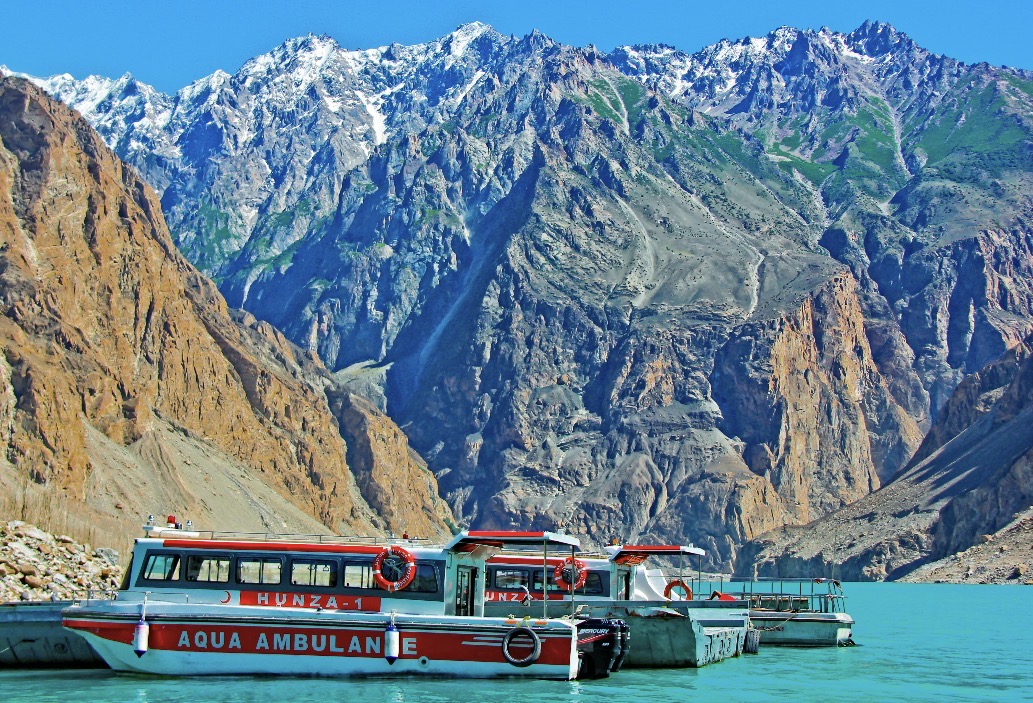
Screenshot

Share on FacebookShare on X

The story of Pakistan’s control over Gilgit-Baltistan begins not with the will of its people, but with a secret meeting held without them.

The Karachi Agreement of 1949 is where Gilgit-Baltistan’s political marginalisation was written into the institutional DNA of the region, and where it has remained, in one form or another, ever since.

RelatedPosts

India Chose the Moment, Not the Pressure: Rajnath Singh Says Operation Sindoor Halt Was a Strategic Call

Pakistan’s Proxy War Faces a Setback as Delhi Terror Plot is Crushed, 18 Weapons Seized

Ahmadis in Pakistan: From Faith to Marginalisation Under Law and Society

Load More

Signed on 27–28 April 1949 between Pakistan, the leadership of so-called “Azad Jammu and Kashmir,” and the All Jammu and Kashmir Muslim Conference, the agreement transferred sweeping administrative authority over Gilgit-Baltistan to Islamabad.

Not a single representative of the region sat at that table. The people whose homeland was being signed away were simply not consulted.

The absence was not an oversight. It was the shape of things to come.

Through the Karachi Agreement, Islamabad assumed complete control over all critical levers of power in the region, defence, foreign affairs, communications, and the conduct of negotiations with the UN Commission for India and Pakistan on Kashmir.

Most consequential of all was the formal transfer of the “Northern Areas,” as Gilgit-Baltistan was then designated, from even the nominal authority of the AJK government to direct federal control in Islamabad.

It is worth noting that the Karachi Agreement is a source of confusion because there are two agreements that carry that name: the April 1949 Pakistan-AJK deal discussed here, and a separate July 1949 military accord between India and Pakistan establishing the ceasefire line in Jammu and Kashmir.

The two are entirely distinct. The April agreement was an internal arrangement, negotiated in secret and kept hidden from the public until the AJK High Court exposed it in the early 1990s, at which point it caused considerable embarrassment to Pakistan, which was simultaneously championing Kashmiri self-determination at international forums.

Scholars and analysts are largely in agreement that Gilgit-Baltistan was never a party to the agreement that decided its fate, and the International Crisis Group has described the pact as deeply unpopular in the region for precisely this reason.

The democratic deficit it created was not merely procedural. It was structural, and it has persisted across seven decades.

Rule by Appointment

Even before the Karachi Agreement formalised things, Pakistan had moved quickly to establish direct control.

When its first political agent, Sardar Muhammad Alam Khan, arrived in Gilgit on 16 November 1947, one of his first acts was to impose the Frontier Crimes Regulations, a colonial-era legal instrument originally designed for the northwest tribal belt.

Under the FCR, a single appointed official served simultaneously as magistrate, revenue collector, police chief, and judge.

Residents had no right to legal representation, no right of appeal, and in some cases needed police permission simply to travel.

This was not the post-independence democratic promise. It was its negation.

The FCR regime remained in place until 1972, when Prime Minister Zulfikar Ali Bhutto finally abolished it. For a full quarter century after the Karachi Agreement, across Pakistan’s constitutions of 1956, 1962, and 1973, Gilgit-Baltistan was present in none of them.

The region was governed, but it was not represented. It paid the cost of being part of Pakistan without enjoying any of the rights.

The Paradox at the Heart of Islamabad’s Policy

The Karachi Pact created a contradiction that Pakistan has never resolved. Islamabad exercises de facto control over Gilgit-Baltistan, but has consistently refused to grant the region full constitutional status.

The reason is strategic: formally integrating Gilgit-Baltistan as a fifth province of Pakistan would undermine Islamabad’s longstanding international position that the future of Jammu and Kashmir, of which Gilgit-Baltistan is legally a part, must be determined through a UN-supervised plebiscite. The result is a region trapped between two positions.

Pakistan claims it for strategic purposes but declines to own it constitutionally. Gilgit-Baltistan has no seats in Pakistan’s National Assembly. Its people cannot vote in federal elections.

They inhabit a space that Pakistani law has never quite decided how to name.
Reforms have arrived, but slowly and always on Islamabad’s terms.

Bhutto established a rudimentary Northern Areas Advisory Council in 1970 and abolished the FCR in 1972. Benazir Bhutto introduced a Legal Framework Order in 1994.

The landmark 2009 Empowerment and Self-Governance Order created an elected assembly for the first time in the region’s history, over six decades after the Karachi Agreement.

The 2018 Order that replaced it transferred some powers from the federal Gilgit-Baltistan Council to the elected assembly, but retained a prime ministerial veto over key legislative areas. Each reform has been a response to pressure from below, not a principled reckoning with the illegitimacy of the original arrangement.

The People Still Waiting

The legacy of 1949 is not abstract. It shows up in the recurring protests across Gilgit-Baltistan over wheat prices, electricity, mining rights, and land. It shows up in slogans demanding genuine autonomy and an end to rule by distant decree.

It shows up in the fact that major infrastructure projects, among them the China-Pakistan Economic Corridor, a corridor that runs through Gilgit-Baltistan and reshapes the region’s geography, were conceived and agreed without any meaningful local input.

Political movements across the region have, for decades, called for provincial status or at minimum a governance model that gives people a real voice in decisions that affect their land, water, and futures. The demands are not radical.

They are, at their core, a request to be treated as citizens rather than as subjects.

The Karachi Agreement of 1949 was not merely an administrative convenience. It was the moment that institutionalised Gilgit-Baltistan’s disenfranchisement. Seventy-five years on, the pact’s shadow has not lifted.

The region remains governed without full consent, its people still pressing for the voice that was denied to them before the ink was even dry.

Tags: China Pakistan Economic CorridorGilgit BaltistanIslamabadJammu and KashmirKarachiPakistan
ShareTweetSend
Previous Post

Modi Opens 594-Km Ganga Expressway, Unveils Uttar Pradesh’s New High-Speed Growth Corridor

Next Post

Supreme Court Rejects ‘Legislative Vacuum’ Claim on Hate Speech, Shifts Focus to Enforcement Gaps

Related Posts

US Weighs First-Ever Hypersonic Strike: Can the $15M Dark Eagle Break the Iranian Deadlock?
Defence

US Weighs First-Ever Hypersonic Strike: Can the $15M Dark Eagle Break the Iranian Deadlock?

1 May 2026

For decades, the phrase 'hypersonic' existed only in the realm of physics labs and classified blueprints, but as tensions...

Caught Between Giants: How China’s Strategic Embrace Is Complicating Nepal’s Balancing Act
Analysis

Caught Between Giants: How China’s Strategic Embrace Is Complicating Nepal’s Balancing Act

1 May 2026

Nepal's foreign policy has a name for itself, 'equidistance,' and the doctrine holds that a country wedged between India...

When law becomes an instrument of exclusion, persecution moves far beyond the courtroom.
Geopolitics

Ahmadis in Pakistan: From Faith to Marginalisation Under Law and Society

28 April 2026

The troubles of Ahmadis in Pakistan are not merely those of a religious minority. Their story is about how...

Load More

Leave a Reply Cancel reply

Your email address will not be published. Required fields are marked *

I agree to the Terms of use and Privacy Policy.
This site is protected by reCAPTCHA and the Google Privacy Policy and Terms of Service apply.

Currently Playing

From Runways to Warships: India’s Firefighting Warrior Built for Bases & Battles| IAF | VayuShakti

From Runways to Warships: India’s Firefighting Warrior Built for Bases & Battles| IAF | VayuShakti

00:05:40

Ethanol, EVs and Solar- How India’s Energy Game Is Changing | Modi on LPG & Crude Oil | war| Hormuz

00:05:21

Truth of IRIS Dena: 8 Days That Changed Narrative | War zone Reality, Not an Indian Navy Exercise

00:08:02

300 Million Euros for SCALP: Strategic Necessity or Costly Dependency on France300

00:04:06

Tejas Mk1A: 19th aircraft coupled but Not Delivered: What Is Holding Back the IAF Induction?

00:07:21
Facebook Twitter Instagram Youtube
tfipostTfipost.com
Right Wing | News Analysis | Indian Opinion
  • About us
  • Contact Us
  • Careers
  • Brand Partnerships
  • Terms of use
  • Privacy Policy
  • Sitemap

©2026 TFI Media Private Limited

No Result
View All Result
  • Premium
  • Politics
    • Analysis
    • Opinions
    • Trending
  • Economy
    • Business
    • Finance
  • Defense
    • Defence
    • Strategy
    • Weaponry
  • Geopolitics
    • Africa
    • Americas
    • Asia Pacific
    • Europe
    • South Asia
    • West Asia
  • Knowledge
    • Culture
    • History
    • Indology
  • Law
  • Lounge
    • Books
    • Cinema
    • Food
    • Health
    • Sports
    • technology
    • Travel
    • Satire
TFIPOST हिन्दी
TFIPOST Global

©2026 TFI Media Private Limited