



















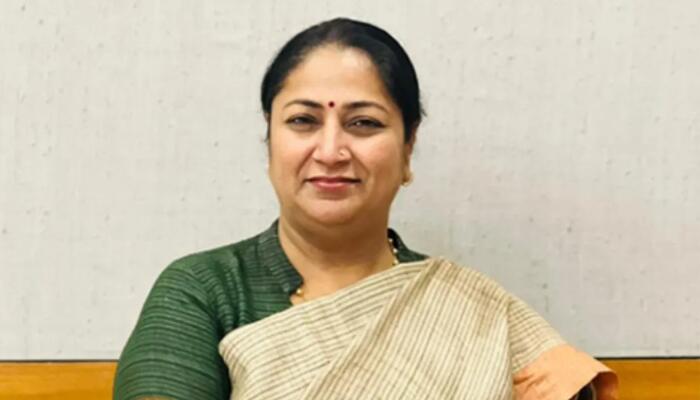
Delhi Chief Minister Rekha Gupta announced a comprehensive Air Pollution Mitigation Action Plan for 2026, outlining a stricter regulatory framework and a series of technological and infrastructure interventions aimed at improving the capital’s deteriorating air quality.
The plan was presented following a high-level review meeting at the Mukhyamantri Janseva Sadan in New Delhi. Officials said the initiative seeks to address the principal contributors to air pollution in the city, including vehicle emissions, road dust, construction activity, industrial pollution, and biomass burning.
According to the government, the strategy builds on the environmental priorities outlined in the 2026–27 Green Budget and is intended to translate policy commitments into concrete action through clearly defined timelines and monitoring systems.
Speaking at the meeting, Gupta said, “The administration was moving beyond policy announcements to ensure strict enforcement of pollution control measures.” She stressed that environmental protection and cleaner air now form a central pillar of the government’s governance agenda and will be supported through financial allocations, monitoring mechanisms, and accountability at multiple levels.
“This is not merely a declaration of intent. It is a campaign focused on implementation, supported by resources, technology, and rigorous oversight,” she said.
Stricter Checks on Polluting Vehicles
A major component of the action plan focuses on reducing vehicular emissions, one of the largest contributors to Delhi’s air pollution.
The government will strictly implement the “No PUC, No Fuel” policy, under which vehicles lacking a valid Pollution Under Control certificate will not be permitted to refuel at petrol pumps.
Authorities will rely on Automatic Number Plate Recognition cameras and digital monitoring systems to identify violations and ensure compliance.
In addition, new entry restrictions for goods vehicles will come into effect from November 1. Only those vehicles that comply with Bharat Stage VI emission standards or operate on CNG or electricity will be allowed to enter the national capital.
Officials also indicated that the government may introduce temporary measures during periods of extreme pollution, including staggered office schedules, work-from-home arrangements, and restrictions on high-emission vehicles.
Expanding Public Transport and Electric Mobility
The administration is also planning a significant expansion of public transport infrastructure in an effort to reduce reliance on private vehicles.
Delhi’s bus fleet is expected to increase to 13,760 by 2028–29, with a substantial proportion of the expansion consisting of electric buses.
Efforts will also be made to strengthen last-mile connectivity by integrating the metro and Regional Rapid Transit System networks with feeder buses, e-autos and other shared mobility services.
To support the adoption of electric vehicles, the government plans to install 32,000 EV charging stations across the city over the next four years. A new Electric Vehicle Policy 2026 is also being prepared, with a focus on encouraging the use of electric two-wheelers, commercial vehicles and cleaner government fleets.
Addressing Dust, Traffic, and Waste Management
The plan also identifies road dust as a major pollution source and proposes large-scale deployment of mechanical sweepers, water sprinklers, anti-smog guns and mist spray systems across the city.
These operations will be tracked through GPS-enabled monitoring and supervised through a centralised digital dashboard.
The government also intends to redevelop nearly 3,500 kilometres of roads with paved surfaces, green buffers and improved utility infrastructure in order to limit dust generation.
Construction-related pollution will be monitored through an upgraded artificial intelligence-based Construction and Demolition Portal 2.0, which will allow authorities to track sites in real time and enforce environmental norms.
To reduce traffic congestion and associated emissions, the administration plans targeted interventions at 62 congestion-prone locations, supported by the introduction of an Intelligent Traffic Management System and improved parking management.
The strategy also sets firm timelines for the clearance of the capital’s major landfill sites. The Okhla landfill is scheduled to be cleared by July 2026, followed by Bhalswa by December 2026 and Ghazipur by December 2027.
Strengthening Monitoring and Public Participation
The government will expand the city’s air quality monitoring network and establish a centralised Green War Room along with an Integrated Command and Control Centre to improve environmental oversight.
Ward-level “Vayu Rakshak” teams will be deployed to strengthen local monitoring, while the existing 311 platform will be upgraded to encourage citizen reporting of pollution-related violations.
Alongside enforcement measures, the administration has also set an environmental target of planting 70 lakh trees, shrubs, and bamboo during the 2026–27 financial year, with a long-term objective of planting more than one crore across the city.
Gupta said, “The strategy would involve collaboration with research institutions, technical experts, and start-ups to develop innovative solutions to the city’s pollution challenge.”
“The Action Plan 2026 is not simply about intentions. It establishes a structured framework with financial support, defined timelines and accountability. Clean air is a basic right for every citizen, and the government is committed to ensuring it,” she said.
The meeting was attended by cabinet ministers Pravesh Sahib Singh, Manjinder Singh Sirsa and Pankaj Kumar Singh, along with chief secretary Rajiv Verma, representatives of the Delhi Metro Rail Corporation and Delhi Traffic Police, and senior government officials.