















TFIPOST हिन्दी
TFIPOST Global
Tfipost.com
Tfipost.com
No Result
View All Result
  • Premium
  • Politics
    • All
    • Analysis
    • Opinions
    • Trending
    Calcutta High Court Rebuke: Border Fencing Delay Puts Bengal Government Under Fire

    Calcutta High Court Rebuke: Border Fencing Delay Puts Bengal Government Under Fire

    West Bengal On Alert After High-Turnout Polls As CEO Urges: ‘ No Post-Poll Violence Should Happen’

    West Bengal On Alert After High-Turnout Polls As CEO Urges: ‘ No Post-Poll Violence Should Happen’

    ‘Ram Rajya’ Row: DMK Remark Sparks Fresh Debate Over Faith, Politics and Cultural Identity

    ‘Ram Rajya’ Row: DMK Remark Sparks Fresh Debate Over Faith, Politics and Cultural Identity

    National Investigation Agency (NIA): Gulshan Colony Raid Raises Serious Security Questions in Kolkata

    National Investigation Agency (NIA): Gulshan Colony Raid Raises Serious Security Questions in Kolkata

    • Analysis
    • Opinions
    • Trending
  • Economy
    • All
    • Business
    • Economy1
    • Finance
    India–New Zealand FTA signed in New Delhi, marking a “once in a lifetime” moment in trade ties.

    India, New Zealand Seal Fast-Tracked Trade Pact to Expand Duty-Free Access, Jobs and $5 Billion Trade Target

    Ahmadis in Pakistan: From Faith to Marginalisation Under Law and Society

    Ahmadis in Pakistan: From Faith to Marginalisation Under Law and Society

    Open Demat Account with Zero Annual Maintenance Charges What to Look For

    Open Demat Account with Zero Annual Maintenance Charges What to Look For

    Blood in the Meadows: How the Pahalgam Terror Attack Exposed Calculated Targeting of Civilians in Kashmir

    Blood in the Meadows: How the Pahalgam Terror Attack Exposed Calculated Targeting of Civilians in Kashmir

    • Business
    • Finance
  • Defense
    • All
    • Defence
    • Strategy
    • Weaponry
    Why is Making a Jet Engine so Hard | The failure of Kaveri

    Why is Making a Jet Engine so Hard | The failure of Kaveri

    Rajnath Singh at SCO, reaffirming India’s zero-tolerance stand on terrorism.

    “No More Double Standards”: Rajnath Singh’s SCO Message Rewrites India’s Terror Response Playbook

    Recovered arms and arrests have intensified scrutiny on a suspected cross-border terror network.

    Pakistan’s Proxy War Faces a Setback as Delhi Terror Plot is Crushed, 18 Weapons Seized

    The scars of Pahalgam endure, even as the nation moves forward

    Pahalgam Anniversary: Modi Signals Firm National Stand as India Reasserts Anti-Terror Resolve

    • Defence
    • Strategy
    • Weaponry
  • Geopolitics
    • All
    • Africa
    • Americas
    • Asia Pacific
    • Europe
    • South Asia
    • West Asia
    Karachi Pact 1949: How Pakistan Cemented Control Over Gilgit-Baltistan Without Its People’s Consent

    Karachi Pact 1949: How Pakistan Cemented Control Over Gilgit-Baltistan Without Its People’s Consent

    When law becomes an instrument of exclusion, persecution moves far beyond the courtroom.

    Ahmadis in Pakistan: From Faith to Marginalisation Under Law and Society

    When uranium becomes strategy, India moves first.

    India’s $4 Billion Uranium Coup with Kazakhstan Rewrites the Global Nuclear Balance

    “Fixing the World”: What a Century of Big Ideas Reveals About Us

    “Fixing the World”: What a Century of Big Ideas Reveals About Us

    • Africa
    • Americas
    • Asia Pacific
    • Europe
    • South Asia
    • West Asia
  • Knowledge
    • All
    • Culture
    • Education
    • History
    • Indology
    Chants of ‘Jai Badri Vishal’ Echo as Badrinath Portals Open; All Four Dhams Now Accessible to Pilgrims

    Chants of ‘Jai Badri Vishal’ Echo as Badrinath Portals Open; All Four Dhams Now Accessible to Pilgrims

    Kedarnath Dham Portals Open for Devotees After 181 Days Amid Vedic Chants, Traditional Rituals

    Kedarnath Dham Portals Open for Devotees After 181 Days Amid Vedic Chants, Traditional Rituals

    Sardar Patel and Amit Shah

    Sardar Patel’s 1947 Blueprint on Minority Quotas Resurfaces as Reservation Debate Returns to Centre Stage

    The 1973 Constitution and ‘Bhutto’ the Man Who Made It: What Pakistan Owes and What It Destroyed

    The 1973 Constitution and ‘Bhutto’ the Man Who Made It: What Pakistan Owes and What It Destroyed

    • Culture
    • History
    • Indology
  • Law
  • Lounge
    • All
    • Books
    • Cinema
    • Entertainment
    • Food
    • Games
    • Health
    • Lifestyle
    • Satire
    • Sports
    • technology
    • Travel
    594 km of speed, scale and connectivity; the Ganga Expressway opens a new development corridor across Uttar Pradesh.

    Modi Opens 594-Km Ganga Expressway, Unveils Uttar Pradesh’s New High-Speed Growth Corridor

    When regulation meets the algorithm

    India Tightens Digital Control as Online Blocking Orders Surge to 24,300 Amid AI Deepfake Trend

    Digital Data Collection In India

    India’s Data Reset Begins: Census 2027 to Become First Fully Digital Population Count

    5 Facilities in Bengaluru Specializing in Mental Health Treatment for Those with Cancer

    5 Facilities in Bengaluru Specializing in Mental Health Treatment for Those with Cancer

    • Books
    • Cinema
    • Food
    • Health
    • Sports
    • technology
    • Travel
    • Satire
Tfipost.com
  • Premium
  • Politics
    • All
    • Analysis
    • Opinions
    • Trending
    Calcutta High Court Rebuke: Border Fencing Delay Puts Bengal Government Under Fire

    Calcutta High Court Rebuke: Border Fencing Delay Puts Bengal Government Under Fire

    West Bengal On Alert After High-Turnout Polls As CEO Urges: ‘ No Post-Poll Violence Should Happen’

    West Bengal On Alert After High-Turnout Polls As CEO Urges: ‘ No Post-Poll Violence Should Happen’

    ‘Ram Rajya’ Row: DMK Remark Sparks Fresh Debate Over Faith, Politics and Cultural Identity

    ‘Ram Rajya’ Row: DMK Remark Sparks Fresh Debate Over Faith, Politics and Cultural Identity

    National Investigation Agency (NIA): Gulshan Colony Raid Raises Serious Security Questions in Kolkata

    National Investigation Agency (NIA): Gulshan Colony Raid Raises Serious Security Questions in Kolkata

    • Analysis
    • Opinions
    • Trending
  • Economy
    • All
    • Business
    • Economy1
    • Finance
    India–New Zealand FTA signed in New Delhi, marking a “once in a lifetime” moment in trade ties.

    India, New Zealand Seal Fast-Tracked Trade Pact to Expand Duty-Free Access, Jobs and $5 Billion Trade Target

    Ahmadis in Pakistan: From Faith to Marginalisation Under Law and Society

    Ahmadis in Pakistan: From Faith to Marginalisation Under Law and Society

    Open Demat Account with Zero Annual Maintenance Charges What to Look For

    Open Demat Account with Zero Annual Maintenance Charges What to Look For

    Blood in the Meadows: How the Pahalgam Terror Attack Exposed Calculated Targeting of Civilians in Kashmir

    Blood in the Meadows: How the Pahalgam Terror Attack Exposed Calculated Targeting of Civilians in Kashmir

    • Business
    • Finance
  • Defense
    • All
    • Defence
    • Strategy
    • Weaponry
    Why is Making a Jet Engine so Hard | The failure of Kaveri

    Why is Making a Jet Engine so Hard | The failure of Kaveri

    Rajnath Singh at SCO, reaffirming India’s zero-tolerance stand on terrorism.

    “No More Double Standards”: Rajnath Singh’s SCO Message Rewrites India’s Terror Response Playbook

    Recovered arms and arrests have intensified scrutiny on a suspected cross-border terror network.

    Pakistan’s Proxy War Faces a Setback as Delhi Terror Plot is Crushed, 18 Weapons Seized

    The scars of Pahalgam endure, even as the nation moves forward

    Pahalgam Anniversary: Modi Signals Firm National Stand as India Reasserts Anti-Terror Resolve

    • Defence
    • Strategy
    • Weaponry
  • Geopolitics
    • All
    • Africa
    • Americas
    • Asia Pacific
    • Europe
    • South Asia
    • West Asia
    Karachi Pact 1949: How Pakistan Cemented Control Over Gilgit-Baltistan Without Its People’s Consent

    Karachi Pact 1949: How Pakistan Cemented Control Over Gilgit-Baltistan Without Its People’s Consent

    When law becomes an instrument of exclusion, persecution moves far beyond the courtroom.

    Ahmadis in Pakistan: From Faith to Marginalisation Under Law and Society

    When uranium becomes strategy, India moves first.

    India’s $4 Billion Uranium Coup with Kazakhstan Rewrites the Global Nuclear Balance

    “Fixing the World”: What a Century of Big Ideas Reveals About Us

    “Fixing the World”: What a Century of Big Ideas Reveals About Us

    • Africa
    • Americas
    • Asia Pacific
    • Europe
    • South Asia
    • West Asia
  • Knowledge
    • All
    • Culture
    • Education
    • History
    • Indology
    Chants of ‘Jai Badri Vishal’ Echo as Badrinath Portals Open; All Four Dhams Now Accessible to Pilgrims

    Chants of ‘Jai Badri Vishal’ Echo as Badrinath Portals Open; All Four Dhams Now Accessible to Pilgrims

    Kedarnath Dham Portals Open for Devotees After 181 Days Amid Vedic Chants, Traditional Rituals

    Kedarnath Dham Portals Open for Devotees After 181 Days Amid Vedic Chants, Traditional Rituals

    Sardar Patel and Amit Shah

    Sardar Patel’s 1947 Blueprint on Minority Quotas Resurfaces as Reservation Debate Returns to Centre Stage

    The 1973 Constitution and ‘Bhutto’ the Man Who Made It: What Pakistan Owes and What It Destroyed

    The 1973 Constitution and ‘Bhutto’ the Man Who Made It: What Pakistan Owes and What It Destroyed

    • Culture
    • History
    • Indology
  • Law
  • Lounge
    • All
    • Books
    • Cinema
    • Entertainment
    • Food
    • Games
    • Health
    • Lifestyle
    • Satire
    • Sports
    • technology
    • Travel
    594 km of speed, scale and connectivity; the Ganga Expressway opens a new development corridor across Uttar Pradesh.

    Modi Opens 594-Km Ganga Expressway, Unveils Uttar Pradesh’s New High-Speed Growth Corridor

    When regulation meets the algorithm

    India Tightens Digital Control as Online Blocking Orders Surge to 24,300 Amid AI Deepfake Trend

    Digital Data Collection In India

    India’s Data Reset Begins: Census 2027 to Become First Fully Digital Population Count

    5 Facilities in Bengaluru Specializing in Mental Health Treatment for Those with Cancer

    5 Facilities in Bengaluru Specializing in Mental Health Treatment for Those with Cancer

    • Books
    • Cinema
    • Food
    • Health
    • Sports
    • technology
    • Travel
    • Satire
No Result
View All Result
Tfipost.com
Tfipost.com
No Result
View All Result
  • Premium
  • Politics
  • Economy
  • Defense
  • Geopolitics
  • Knowledge
  • Law
  • Lounge

He Put On a Disguise, Walked Into the Dark, and Never Came Home: The Dalai Lama’s Escape from Tibet

Ashu Maan by Ashu Maan
20 March 2026
in Geopolitics, History, South Asia, Trending
He Put On a Disguise, Walked Into the Dark, and Never Came Home: The Dalai Lama’s Escape from Tibet

The Dalai Lama’s escape to India was a turning point; not only in Tibetan history, but also in shaping the trajectory of India-China relations

Share on FacebookShare on X

He was 24 years old. He put on a soldier’s uniform, slung a rifle over his shoulder, and stepped out of his palace into a night thick with danger. Somewhere in the darkness, Chinese artillery had been finding its range. His people were gathered around him in desperate numbers, terrified of what was coming. And in that moment, the Dalai Lama made the decision that would define the rest of his life, he walked away, because staying would have meant the end.

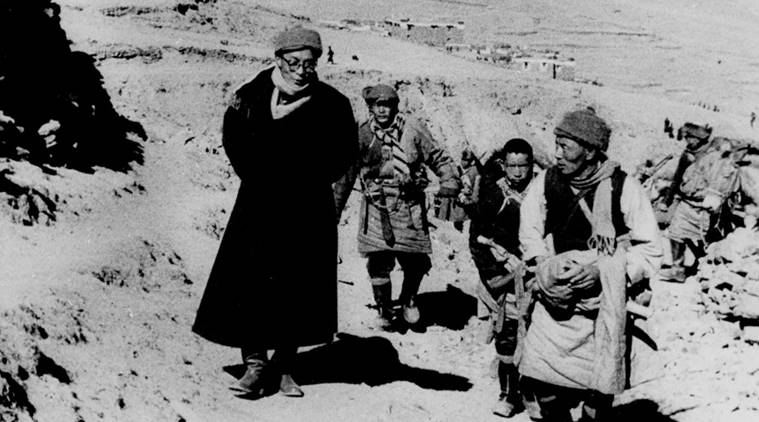
For two weeks, he moved through the Himalayas the way a fugitive does — at night, in silence, hugging the cold and the shadows. The passes were brutal. The risk of discovery was constant. But along the way, Tibetan farmers, villagers, and resistance fighters offered what they had — shelter, guidance, their own safety placed second. On 31 March 1959, he stepped onto Indian soil. He was alive. He was free. And he would never see his homeland again.

RelatedPosts

A series of pieces of evidence point to a secret network between the Dalai Lama and Epstein

The Fall of Lhasa: How Nine Days in 1959 Changed Tibet Forever

How the Dalai Lama’s 1913 Declaration Shattered China’s ‘Tibet Always Been Part of China’ Claim

Load More

What happened on 17 March 1959 ?

To understand the night of the 17th, you have to understand what the years before it had felt like for Tibetans. China had marched into Tibet in the early 1950s, carrying with it the language of liberation — a word that, for most Tibetans, quickly proved hollow. Promises of autonomy were made and then quietly shelved. Religious life was interfered with. The occupation tightened, year by year, until the atmosphere in Lhasa had become almost impossible to breathe.

Then, on 10 March 1959, rumour spread through the city that Chinese officials had summoned the Dalai Lama to a military camp — without his bodyguards. Whether the threat was real or imagined barely mattered. In the minds of his people, it felt exactly like a trap. Thousands came out into the streets and encircled Norbulingka, his summer palace, forming a living barrier between their leader and whatever was coming. The Chinese response was to move troops into position and begin shelling the surrounding areas. Two shells landed in the palace gardens on 17 March. The message was clear enough.

China’s crackdown and occupation exposed

Beijing’s account of these events has remained remarkably consistent over the decades. Tibet was liberated. The Dalai Lama was a feudal overlord who instigated an armed rebellion, lost, and fled. End of story.

But that account has a great deal it prefers not to examine too closely. It does not dwell on the decade of broken autonomy pledges that preceded the uprising. It does not linger on the monasteries destroyed, the thousands killed, or the mass arrests that followed the crackdown. And it says very little about the most straightforward explanation for why tens of thousands of ordinary Tibetans surrounded that palace on 10 March — not because they were organised or incited, but because they were scared, and because the person inside those walls represented something they could not afford to lose.

The Dalai Lama did not flee out of cowardice or conspiracy. He fled because the guns made staying impossible. The uprising Beijing branded as reactionary was, stripped of all the political language, an act of fear and love from a people who could see what was being taken from them.

Birth of the Tibetan leadership in exile

India gave him asylum. What he did with it was remarkable. Within weeks of crossing the border, still carrying the weight of everything he had left behind, the Dalai Lama began laying the foundations of a government in exile. It started in Mussoorie, then moved to Dharamshala — a quiet hill town in northern India that few outside the country had ever heard of, and which would gradually become the beating heart of a displaced civilisation.

That institution, the Central Tibetan Administration, functions to this day. It speaks for Tibetans living under Chinese rule, tends to the needs of refugees scattered across South Asia, and works to ensure that Tibetan identity does not simply dissolve under the pressure of occupation and time. China dismisses it as an illegal separatist body. But institutions do not spring up in exile because things are going well at home. The CTA’s existence is itself an argument — one that Beijing has never quite managed to answer.

Why March 17 still matters ?

Anniversaries can lose their edge over time. They become ceremonies, then habits, then barely noticed. But 17 March has not softened in that way, at least not for Tibetans. Each year, wherever they are in the world, they return to this date — not to wallow in what was lost, but to hold onto something that cannot be confiscated or censored: the memory of a choice made in the dark, on a night when the easier thing would have been to surrender.

There is nothing dramatic, on the surface, about what the Dalai Lama did that night. He did not make a speech or fire a shot. He simply put on a disguise and walked. But the meaning of that walk has only grown with time. It said, in the plainest possible terms, that Tibet would not simply accept its own erasure.

China has invested enormously in the counter-narrative — the surveillance, the propaganda, the carefully managed image of a Tibet that is peaceful, prosperous, and perfectly content. But 17 March sits in the middle of all of that like a splinter that cannot be removed. It is a reminder that Tibetans did not choose exile, that they were forced into it by artillery and fear. It is a reminder that history, however heavily it is managed, has a habit of being remembered by the people who actually lived it. And as long as they keep remembering, that chapter remains open.

Tags: 1959 Tibetan uprisingAsian geopoliticsBuddhist leader Dalai LamaChina India tensionsChina Tibet issueCold War AsiaDalai LamaDalai Lama escapeDharamshala Dalai LamaHimalayan geopoliticshistorical turning pointIndia China RelationsIndia foreign policyIndia Tibet relationsIndo China conflictTibetTibet crisisTibet historyTibetan exileTibetan refugees India
ShareTweetSend
Previous Post

Bhubaneswar to Host World Indoor Athletics Championships in 2028: India on Global Track and Field Map

Next Post

Dhurandhar 2 At Box Office: Ranveer Singh’s Film Storms Past Rs 100 crore; PM Modi Scenes Create Hysteria in Theatres

Related Posts

Calcutta High Court Rebuke: Border Fencing Delay Puts Bengal Government Under Fire
Trending

Calcutta High Court Rebuke: Border Fencing Delay Puts Bengal Government Under Fire

29 April 2026

The sharp observations of the Calcutta High Court over delays in handing over land for India-Bangladesh border fencing have...

West Bengal On Alert After High-Turnout Polls As CEO Urges: ‘ No Post-Poll Violence Should Happen’
Politics

West Bengal On Alert After High-Turnout Polls As CEO Urges: ‘ No Post-Poll Violence Should Happen’

29 April 2026

West Bengal’s Assembly elections concluded today with strong voter participation and a firm warning from Chief Electoral Officer (CEO)...

‘Ram Rajya’ Row: DMK Remark Sparks Fresh Debate Over Faith, Politics and Cultural Identity
Trending

‘Ram Rajya’ Row: DMK Remark Sparks Fresh Debate Over Faith, Politics and Cultural Identity

29 April 2026

A recent statement by DMK spokesperson T. K. S. Elangovan regarding Ram Rajya has triggered political controversy and renewed...

Load More

Leave a Reply Cancel reply

Your email address will not be published. Required fields are marked *

I agree to the Terms of use and Privacy Policy.
This site is protected by reCAPTCHA and the Google Privacy Policy and Terms of Service apply.

Currently Playing

From Runways to Warships: India’s Firefighting Warrior Built for Bases & Battles| IAF | VayuShakti

From Runways to Warships: India’s Firefighting Warrior Built for Bases & Battles| IAF | VayuShakti

00:05:40

Ethanol, EVs and Solar- How India’s Energy Game Is Changing | Modi on LPG & Crude Oil | war| Hormuz

00:05:21

Truth of IRIS Dena: 8 Days That Changed Narrative | War zone Reality, Not an Indian Navy Exercise

00:08:02

300 Million Euros for SCALP: Strategic Necessity or Costly Dependency on France300

00:04:06

Tejas Mk1A: 19th aircraft coupled but Not Delivered: What Is Holding Back the IAF Induction?

00:07:21
Facebook Twitter Instagram Youtube
tfipostTfipost.com
Right Wing | News Analysis | Indian Opinion
  • About us
  • Contact Us
  • Careers
  • Brand Partnerships
  • Terms of use
  • Privacy Policy
  • Sitemap

©2026 TFI Media Private Limited

No Result
View All Result
  • Premium
  • Politics
    • Analysis
    • Opinions
    • Trending
  • Economy
    • Business
    • Finance
  • Defense
    • Defence
    • Strategy
    • Weaponry
  • Geopolitics
    • Africa
    • Americas
    • Asia Pacific
    • Europe
    • South Asia
    • West Asia
  • Knowledge
    • Culture
    • History
    • Indology
  • Law
  • Lounge
    • Books
    • Cinema
    • Food
    • Health
    • Sports
    • technology
    • Travel
    • Satire
TFIPOST हिन्दी
TFIPOST Global

©2026 TFI Media Private Limited