

















TFIPOST हिन्दी
TFIPOST Global
Tfipost.com
Tfipost.com
No Result
View All Result
  • Premium
  • Politics
    • All
    • Analysis
    • Opinions
    • Trending
    Securing the Frontier: Shah Draws a Red Line on Demographic Shifts as Smart Border Project Nears Rollout

    Securing the Frontier: Shah Draws a Red Line on Demographic Shifts as Smart Border Project Nears Rollout

    Did Dawood Ibrahim Want Control Over IPL? Lalit Modi Reveals in Explosive Account of Underworld Pressure

    Did Dawood Ibrahim Want Control Over IPL? Lalit Modi Reveals in Explosive Account of Underworld Pressure

    When a Gold Story Turned Into Dust: Bloomberg Retraction, RBI’s Clarification, and the Debate Over Narrative First Journalism

    When a Gold Story Turned Into Dust: Bloomberg Retraction, RBI’s Clarification, and the Debate Over Narrative First Journalism

    Is Lalit Modi Back? Kochi IPL Controversy Returns With Fresh Claims Over Tharoor Pushkar and Political Pressure

    Is Lalit Modi Back? Kochi IPL Controversy Returns With Fresh Claims Over Tharoor Pushkar and Political Pressure

    • Analysis
    • Opinions
    • Trending
  • Economy
    • All
    • Business
    • Economy1
    • Finance
    When a Gold Story Turned Into Dust: Bloomberg Retraction, RBI’s Clarification, and the Debate Over Narrative First Journalism

    When a Gold Story Turned Into Dust: Bloomberg Retraction, RBI’s Clarification, and the Debate Over Narrative First Journalism

    India Joins Global Digital Elite, Climbs Into Fifth Spot as AI Revolution and Digital Infrastructure Reshape Economy

    India Joins Global Digital Elite, Climbs Into Fifth Spot as AI Revolution and Digital Infrastructure Reshape Economy

    How gaming merchants choose a payment gateway in India

    How gaming merchants choose a payment gateway in India

    The Informal Economy Pays the Price: Street Traders, Small Shops and the Hidden Cost of Trade Policy

    The Informal Economy Pays the Price: Street Traders, Small Shops and the Hidden Cost of Trade Policy

    • Business
    • Finance
  • Defense
    • All
    • Defence
    • Strategy
    • Weaponry
    Securing the Frontier: Shah Draws a Red Line on Demographic Shifts as Smart Border Project Nears Rollout

    Securing the Frontier: Shah Draws a Red Line on Demographic Shifts as Smart Border Project Nears Rollout

    “Not 1962, Not China”: Pema Khandu Reasserts Tibet Border Claim, Dismisses Beijing’s Arunachal Assertions

    “Not 1962, Not China”: Pema Khandu Reasserts Tibet Border Claim, Dismisses Beijing’s Arunachal Assertions

    Rudram-2 Passes Crucial Combat Trial, India Moves Closer to Indigenous SEAD Dominance

    Rudram-2 Passes Crucial Combat Trial, India Moves Closer to Indigenous SEAD Dominance

    Rajesh Kumar Singh Reveals Vietnam BrahMos Deal, Indonesia Agreement in Final Stages

    Rajesh Kumar Singh Reveals Vietnam BrahMos Deal, Indonesia Agreement in Final Stages

    • Defence
    • Strategy
    • Weaponry
  • Geopolitics
    • All
    • Africa
    • Americas
    • Asia Pacific
    • Europe
    • South Asia
    • West Asia
    Why Russia Trusts India: Putin Dismisses Western Pressure on Modi, Backs New Delhi’s Independent Foreign Policy

    Why Russia Trusts India: Putin Dismisses Western Pressure on Modi, Backs New Delhi’s Independent Foreign Policy

    India and Venezuela Signal Energy Recalibration as Rodríguez Visits New Delhi for Crucial Talks

    India and Venezuela Signal Energy Recalibration as Rodríguez Visits New Delhi for Crucial Talks

    Iranian President Pezeshkian Sent Resignation to Supreme Leader, Says IRGC Has Taken Control of State Power

    Iranian President Pezeshkian Sent Resignation to Supreme Leader, Says IRGC Has Taken Control of State Power

    AK-47 Funeral for Pulwama Plotter Exposes Fractures Inside Pakistan’s Terror Networks

    AK-47 Funeral for Pulwama Plotter Exposes Fractures Inside Pakistan’s Terror Networks

    • Africa
    • Americas
    • Asia Pacific
    • Europe
    • South Asia
    • West Asia
  • Knowledge
    • All
    • Culture
    • Education
    • History
    • Indology
    Who Killed Akanksha ? How Many More Students Will Pay the Price for Education Mafias and Paper-Leak Rackets?

    Who Killed Akanksha ? How Many More Students Will Pay the Price for Education Mafias and Paper-Leak Rackets?

    June 3, 1947 Revisited: Nishikant Dubey Blames Nehru-Gandhi Family for Partition and Kashmir Crisis

    June 3, 1947 Revisited: Nishikant Dubey Blames Nehru-Gandhi Family for Partition and Kashmir Crisis

    CBSE OSM Fallout Deepens as 4 Lakh Students Rush for Re-evaluation, Raising Serious Questions on Digital Checking System

    CBSE OSM Fallout Deepens as 4 Lakh Students Rush for Re-evaluation, Raising Serious Questions on Digital Checking System

    Veer Savarkar

    When Nehru Government Imprisoned Veer Savarkar for the Pakistani Prime Minister

    • Culture
    • History
    • Indology
  • Law
  • Lounge
    • All
    • Books
    • Cinema
    • Entertainment
    • Food
    • Games
    • Health
    • Lifestyle
    • Satire
    • Sports
    • technology
    • Travel
    Erythrocyte Sedimentation Rate (ESR) Test: Meaning, Normal Range & Uses

    Erythrocyte Sedimentation Rate (ESR) Test: Meaning, Normal Range & Uses

    Inside the World of Elite Matchmaking in India

    Inside the World of Elite Matchmaking in India

    Best Salicylic Acid Face Wash for Oily & Acne-Prone Skin

    Best Salicylic Acid Face Wash for Oily & Acne-Prone Skin

    Supreme Court Verdict Crushes Opposition’s SIR Narrative, Reasserts Election Commission’s Constitutional Authority

    Judicial Expansion at the Apex: Centre Clears Appointment of Five Judges to Supreme Court, Strength Nearing Full Capacity

    • Books
    • Cinema
    • Food
    • Health
    • Sports
    • technology
    • Travel
    • Satire
Tfipost.com
  • Premium
  • Politics
    • All
    • Analysis
    • Opinions
    • Trending
    Securing the Frontier: Shah Draws a Red Line on Demographic Shifts as Smart Border Project Nears Rollout

    Securing the Frontier: Shah Draws a Red Line on Demographic Shifts as Smart Border Project Nears Rollout

    Did Dawood Ibrahim Want Control Over IPL? Lalit Modi Reveals in Explosive Account of Underworld Pressure

    Did Dawood Ibrahim Want Control Over IPL? Lalit Modi Reveals in Explosive Account of Underworld Pressure

    When a Gold Story Turned Into Dust: Bloomberg Retraction, RBI’s Clarification, and the Debate Over Narrative First Journalism

    When a Gold Story Turned Into Dust: Bloomberg Retraction, RBI’s Clarification, and the Debate Over Narrative First Journalism

    Is Lalit Modi Back? Kochi IPL Controversy Returns With Fresh Claims Over Tharoor Pushkar and Political Pressure

    Is Lalit Modi Back? Kochi IPL Controversy Returns With Fresh Claims Over Tharoor Pushkar and Political Pressure

    • Analysis
    • Opinions
    • Trending
  • Economy
    • All
    • Business
    • Economy1
    • Finance
    When a Gold Story Turned Into Dust: Bloomberg Retraction, RBI’s Clarification, and the Debate Over Narrative First Journalism

    When a Gold Story Turned Into Dust: Bloomberg Retraction, RBI’s Clarification, and the Debate Over Narrative First Journalism

    India Joins Global Digital Elite, Climbs Into Fifth Spot as AI Revolution and Digital Infrastructure Reshape Economy

    India Joins Global Digital Elite, Climbs Into Fifth Spot as AI Revolution and Digital Infrastructure Reshape Economy

    How gaming merchants choose a payment gateway in India

    How gaming merchants choose a payment gateway in India

    The Informal Economy Pays the Price: Street Traders, Small Shops and the Hidden Cost of Trade Policy

    The Informal Economy Pays the Price: Street Traders, Small Shops and the Hidden Cost of Trade Policy

    • Business
    • Finance
  • Defense
    • All
    • Defence
    • Strategy
    • Weaponry
    Securing the Frontier: Shah Draws a Red Line on Demographic Shifts as Smart Border Project Nears Rollout

    Securing the Frontier: Shah Draws a Red Line on Demographic Shifts as Smart Border Project Nears Rollout

    “Not 1962, Not China”: Pema Khandu Reasserts Tibet Border Claim, Dismisses Beijing’s Arunachal Assertions

    “Not 1962, Not China”: Pema Khandu Reasserts Tibet Border Claim, Dismisses Beijing’s Arunachal Assertions

    Rudram-2 Passes Crucial Combat Trial, India Moves Closer to Indigenous SEAD Dominance

    Rudram-2 Passes Crucial Combat Trial, India Moves Closer to Indigenous SEAD Dominance

    Rajesh Kumar Singh Reveals Vietnam BrahMos Deal, Indonesia Agreement in Final Stages

    Rajesh Kumar Singh Reveals Vietnam BrahMos Deal, Indonesia Agreement in Final Stages

    • Defence
    • Strategy
    • Weaponry
  • Geopolitics
    • All
    • Africa
    • Americas
    • Asia Pacific
    • Europe
    • South Asia
    • West Asia
    Why Russia Trusts India: Putin Dismisses Western Pressure on Modi, Backs New Delhi’s Independent Foreign Policy

    Why Russia Trusts India: Putin Dismisses Western Pressure on Modi, Backs New Delhi’s Independent Foreign Policy

    India and Venezuela Signal Energy Recalibration as Rodríguez Visits New Delhi for Crucial Talks

    India and Venezuela Signal Energy Recalibration as Rodríguez Visits New Delhi for Crucial Talks

    Iranian President Pezeshkian Sent Resignation to Supreme Leader, Says IRGC Has Taken Control of State Power

    Iranian President Pezeshkian Sent Resignation to Supreme Leader, Says IRGC Has Taken Control of State Power

    AK-47 Funeral for Pulwama Plotter Exposes Fractures Inside Pakistan’s Terror Networks

    AK-47 Funeral for Pulwama Plotter Exposes Fractures Inside Pakistan’s Terror Networks

    • Africa
    • Americas
    • Asia Pacific
    • Europe
    • South Asia
    • West Asia
  • Knowledge
    • All
    • Culture
    • Education
    • History
    • Indology
    Who Killed Akanksha ? How Many More Students Will Pay the Price for Education Mafias and Paper-Leak Rackets?

    Who Killed Akanksha ? How Many More Students Will Pay the Price for Education Mafias and Paper-Leak Rackets?

    June 3, 1947 Revisited: Nishikant Dubey Blames Nehru-Gandhi Family for Partition and Kashmir Crisis

    June 3, 1947 Revisited: Nishikant Dubey Blames Nehru-Gandhi Family for Partition and Kashmir Crisis

    CBSE OSM Fallout Deepens as 4 Lakh Students Rush for Re-evaluation, Raising Serious Questions on Digital Checking System

    CBSE OSM Fallout Deepens as 4 Lakh Students Rush for Re-evaluation, Raising Serious Questions on Digital Checking System

    Veer Savarkar

    When Nehru Government Imprisoned Veer Savarkar for the Pakistani Prime Minister

    • Culture
    • History
    • Indology
  • Law
  • Lounge
    • All
    • Books
    • Cinema
    • Entertainment
    • Food
    • Games
    • Health
    • Lifestyle
    • Satire
    • Sports
    • technology
    • Travel
    Erythrocyte Sedimentation Rate (ESR) Test: Meaning, Normal Range & Uses

    Erythrocyte Sedimentation Rate (ESR) Test: Meaning, Normal Range & Uses

    Inside the World of Elite Matchmaking in India

    Inside the World of Elite Matchmaking in India

    Best Salicylic Acid Face Wash for Oily & Acne-Prone Skin

    Best Salicylic Acid Face Wash for Oily & Acne-Prone Skin

    Supreme Court Verdict Crushes Opposition’s SIR Narrative, Reasserts Election Commission’s Constitutional Authority

    Judicial Expansion at the Apex: Centre Clears Appointment of Five Judges to Supreme Court, Strength Nearing Full Capacity

    • Books
    • Cinema
    • Food
    • Health
    • Sports
    • technology
    • Travel
    • Satire
No Result
View All Result
Tfipost.com
Tfipost.com
No Result
View All Result
  • Premium
  • Politics
  • Economy
  • Defense
  • Geopolitics
  • Knowledge
  • Law
  • Lounge

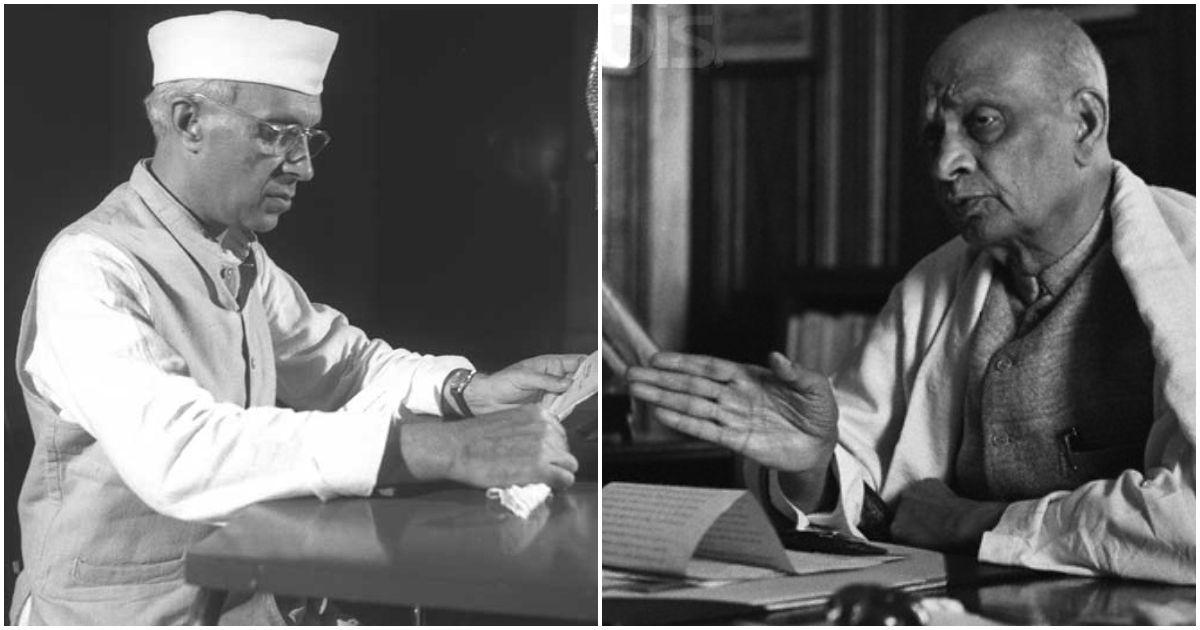
Maniben’s Diary: Nehru Proposed Babri Masjid Funding, Patel Said No

TFI Desk by TFI Desk
4 December 2025
in Trending
Maniben’s Diary: Nehru Proposed Babri Masjid Funding, Patel Said No
Share on FacebookShare on X

History often reveals its most significant truths not through sweeping proclamations but through quiet entries in personal diaries. One such revelation appears in Inside Story of Sardar Patel: The Diary of Maniben Patel (1936–1950), a primary source that records private political conversations at the highest levels of India’s early leadership. The crux of the matter is that according to Maniben’s diary, Jawaharlal Nehru raised the idea of rebuilding the Babri Masjid using government funds, and Sardar Patel firmly declined. The passage forms part of Maniben Patel’s detailed notes, which in turn have been reproduced in a published historical document. The significance lies not in political sensationalism but in what these notes reveal about the differing philosophies of two central figures during India’s formative years.

Maniben’s diary entry describes a conversation dated September 20, 1950. In it, Maniben records that Nehru brought up the Babri Masjid issue with Patel, evidently expecting that the government could take up the project and allocate public money toward the reconstruction of the mosque. Patel, however, responded unequivocally that public funds could not be used for the construction of any place of worship. This direct exchange, as recorded by Maniben, captures a moment in which two divergent approaches to public policy surfaced. Patel’s reply reflected a firm commitment to the neutrality of the state in religious matters, insisting that government expenditure must not be directed toward such projects.

RelatedPosts

“Syndicate Raj to Babri Row”: Shah Sharpens BJP’s Bengal Offensive Against TMC

Terror Talk Is Not Power Because No Democracy Can Be Ruled By Fear

Pakistan’s Senator Palwasha Khan Says Pakistan Army Will Rebuild Babri Mosque on Ram Janmabhoomi, Army Chief to Give First Azaan

Load More

The crux of this historical note becomes even sharper when considered alongside her diary mention of the Somnath Temple restoration. Maniben’s diary records Patel explaining to Nehru that the Somnath reconstruction effort was not funded by government money at all. Rather, it was being carried out by a public trust created specifically for that purpose. According to her account, Patel informed Nehru that nearly thirty lakh rupees had already been raised through voluntary contributions, and that a formal trust structure had been created with a chairman and members, including K M Munshi. The government, therefore, bore no financial burden in the project. Patel’s explanation effectively closed the discussion, at least as her diary presents it.

The importance of these entries does not lie in pitting historical figures against one another but in understanding the nuanced choices and differing ideologies within India’s early leadership. Maniben’s documentation portrays Patel as deeply focused on restoring stability and ensuring clear governance principles after the traumatic upheaval of Partition. Maniben’s diary repeatedly shows him emphasising administrative discipline, national unity and institutional clarity. In contrast, Nehru’s political instincts, as reflected in this specific entry, appear inclined toward projects he believed could contribute to communal harmony, even if those projects risked crossing into areas involving state participation in religious affairs.

Maniben’s diaryn entry becomes especially striking when placed within the broader context of the period in which it was written. In 1950, India was still recovering from massive displacement, communal tensions and constitutional reorganisation. Every decision at the central level had deep implications not only for governance but also for the symbolic direction of the new republic. The question of whether government funds should ever be used for religious reconstruction was not merely a technical debate. It was a philosophical one that would shape the nation’s identity. Patel’s refusal, as recorded by Maniben, therefore highlights a stance that sought an unambiguous separation between state authority and religious restoration.

Another central aspect of the crux is that these details come directly from a primary personal diary maintained by Patel’s daughter. They are not retrospective claims or political reinterpretations but contemporaneous notes written by someone who regularly observed these leaders’ work and conversations. Diaries are, of course, subjective documents. Yet they remain invaluable for understanding the tone and nature of private political interactions that are not always reflected in official records. When such diaries are published, they provide insight into what senior leaders discussed behind closed doors and how they navigated their disagreements.

The fact that this particular entry appears in a published historical document means it forms part of the scholarly conversation about independent India’s early leadership. The text highlights patterns that historians have long studied: the contrast between Nehru’s diplomacy-driven political instincts and Patel’s administrative pragmatism. It does not, however, demand that readers adopt a partisan stance. Rather, it invites them to consider how two leaders approached governance differently and how those differences influenced policy debates during India’s earliest years of self-rule.

The resurfacing of such entries is a reminder that historical narratives are often shaped by what is emphasised and what is left unspoken. Over the decades, public memory has tended to depict Nehru and Patel as a cohesive national leadership, united in shared goals. While they certainly collaborated on major decisions, primary sources like Maniben’s diary show that they also disagreed on many matters of principle. These disagreements were neither small nor inconsequential. They form an important part of understanding how India’s political and administrative foundations were built.

In examining this diary entry, the most responsible approach is to take it for what it is: a personal record by a contemporary observer, offering insight into a conversation between two foundational leaders. It does not need embellishment, and it does not require reinterpretation. It merely requires attention as a historical source. If anything, it encourages readers to revisit the complex interplay of ideas, priorities and philosophies that shaped early independent India.

Ultimately, the crux remains clear. According to Maniben’s diary, Nehru proposed that public funds be used for rebuilding the Babri Masjid, and Patel rejected the idea, insisting on the principle that government money must not support such religious projects. This moment, preserved in writing, invites renewed reflection on how India’s early leaders understood the relationship between state authority and religious life. It also illustrates the enduring value of primary sources in uncovering the layered truths of history, truths that sometimes remain dormant until readers are willing to confront them anew.

Tags: Babri MasjidCongress partisanshipGovernment FundsManiben's diarysecularization of mindset
ShareTweetSend
Previous Post

Jamiat Ulama e Hind and Madani’s pitch for Sharia Laws for Muslims swearing by Secular Constitution

Next Post

India Cannot Be Broken and Peace in Bangladesh Cannot Be Built Upon Delusion

Related Posts

Securing the Frontier: Shah Draws a Red Line on Demographic Shifts as Smart Border Project Nears Rollout
Defence

Securing the Frontier: Shah Draws a Red Line on Demographic Shifts as Smart Border Project Nears Rollout

5 June 2026

Union Home Minister Amit Shah delivered a firm message on border security and demographic change. He said, "The Centre...

Did Dawood Ibrahim Want Control Over IPL? Lalit Modi Reveals in Explosive Account of Underworld Pressure
Cricket

Did Dawood Ibrahim Want Control Over IPL? Lalit Modi Reveals in Explosive Account of Underworld Pressure

5 June 2026

Former Indian Premier League commissioner Lalit Modi has revealed that fugitive underworld figure Dawood Ibrahim wanted control and influence...

When a Gold Story Turned Into Dust: Bloomberg Retraction, RBI’s Clarification, and the Debate Over Narrative First Journalism
Economy

When a Gold Story Turned Into Dust: Bloomberg Retraction, RBI’s Clarification, and the Debate Over Narrative First Journalism

5 June 2026

A report suggesting that India’s central bank had sold gold reserves has collapsed after official pushback and a methodological...

Load More

Leave a Reply Cancel reply

Your email address will not be published. Required fields are marked *

I agree to the Terms of use and Privacy Policy.
This site is protected by reCAPTCHA and the Google Privacy Policy and Terms of Service apply.

Currently Playing

AIRCRAFT CARRIERS: INDIA’S MOST POWERFUL TOOL OF MARITIME POWER PROJECTION | INS Vikrant |

AIRCRAFT CARRIERS: INDIA’S MOST POWERFUL TOOL OF MARITIME POWER PROJECTION | INS Vikrant |

00:03:22

Rudram 2 Success: Made in India Missile Ready To Crush Enemy Radars| DRDO’s Big Breakthrough

00:03:46

From Runways to Warships: India’s Firefighting Warrior Built for Bases & Battles| IAF | VayuShakti

00:05:40

Ethanol, EVs and Solar- How India’s Energy Game Is Changing | Modi on LPG & Crude Oil | war| Hormuz

00:05:21

Truth of IRIS Dena: 8 Days That Changed Narrative | War zone Reality, Not an Indian Navy Exercise

00:08:02
Facebook Twitter Instagram Youtube
tfipostTfipost.com
Right Wing | News Analysis | Indian Opinion
  • About us
  • Contact Us
  • Careers
  • Brand Partnerships
  • Terms of use
  • Privacy Policy
  • Sitemap

©2026 TFI Media Private Limited

No Result
View All Result
  • Premium
  • Politics
    • Analysis
    • Opinions
    • Trending
  • Economy
    • Business
    • Finance
  • Defense
    • Defence
    • Strategy
    • Weaponry
  • Geopolitics
    • Africa
    • Americas
    • Asia Pacific
    • Europe
    • South Asia
    • West Asia
  • Knowledge
    • Culture
    • History
    • Indology
  • Law
  • Lounge
    • Books
    • Cinema
    • Food
    • Health
    • Sports
    • technology
    • Travel
    • Satire
TFIPOST हिन्दी
TFIPOST Global

©2026 TFI Media Private Limited