



















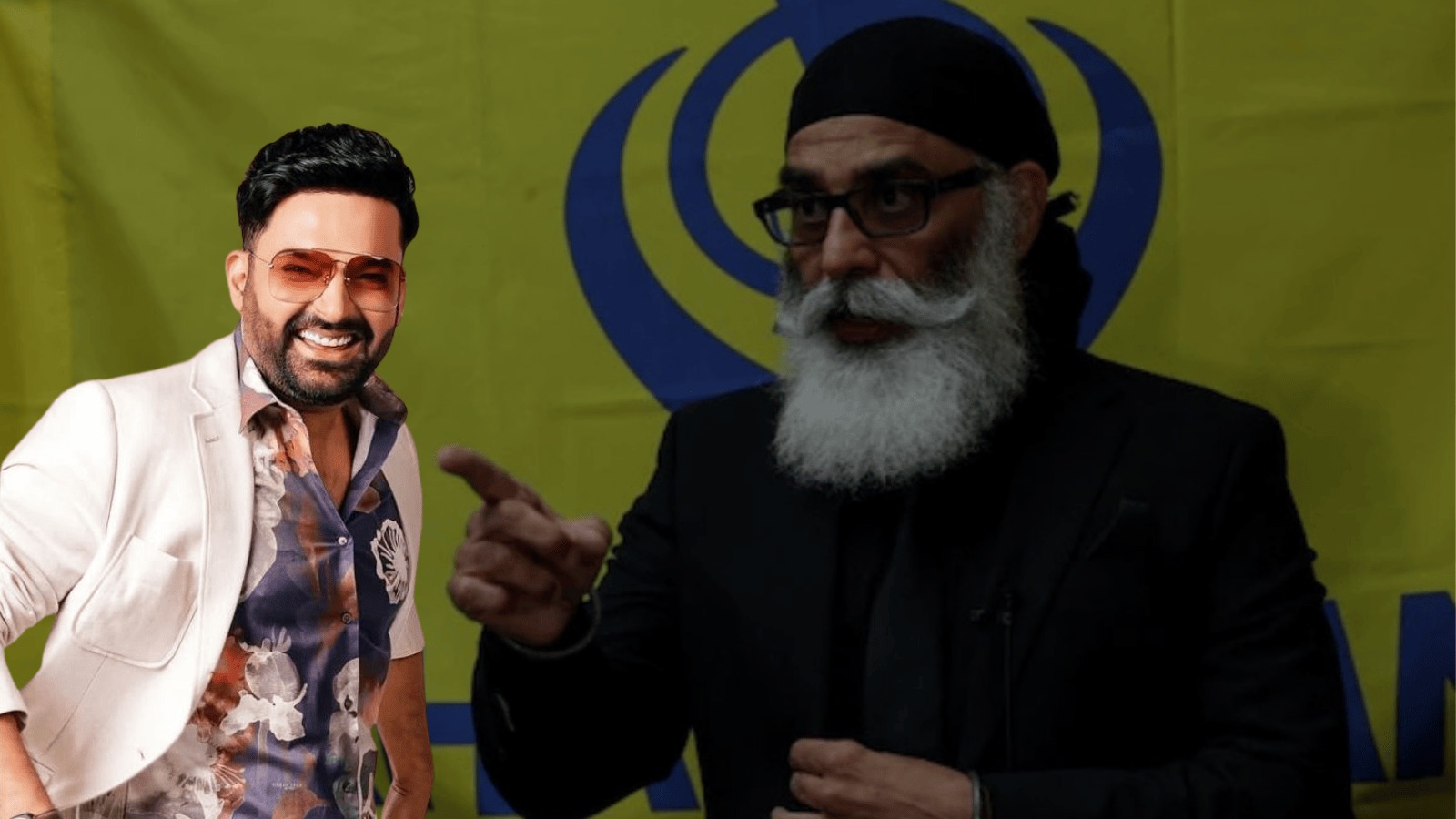
Indian comedian and actor Kapil Sharma has become the latest target of Khalistani separatist threats, after his recently opened Kap’s Cafe in Surrey, British Columbia was attacked by gunmen on Wednesday night. The threat has been issued by Gurpatwant Singh Pannun, the founder of the banned organisation- Sikhs for Justice (SFJ) and a designated terrorist under Indian law.
‘Canada is Not Your Playground’: Pannun’s Direct Threat
In a chilling video message released after the shooting, Pannun accused Sharma of promoting ‘violent Hindutva ideology’ through his business in Canada. Calling Sharma’s venture, a ‘cover for Hindutva expansionism,’ Pannun declared, ‘Canada is not your playground. Take your blood money back to Hindustan.’
He even suggested that Kap’s Cafe might be ‘part of a larger strategy to export Hindutva; one business at a time.’
The message has been widely circulated online and is being viewed as part of a broader propaganda push by pro-Khalistan elements who are increasingly using Canadian soil to stoke anti-India sentiments and threaten prominent Indian nationals.
Gunfire Days After Launch
The threat followed an actual attack on Kap’s Cafe, a venture launched by Kapil Sharma on July 4. Late Wednesday night, unidentified assailants opened fire outside the premises. Fortunately, no injuries were reported.
Soon after, two known Khalistani operatives, Harjit Singh Laddi and Toofan Singh, both with alleged ties to the banned terror outfit Babbar Khalsa International (BKI)- claimed responsibility for the shooting.
BKI is officially designated as a terrorist organisation by both India and Canada and has a long history of involvement in extremist violence dating back to the 1980s.
SFJ’s Long History of Anti-India Activities
Pannun led Sikhs for Justice (SFJ), has been banned in India under the Unlawful Activities (Prevention) Act (UAPA). The Indian Home Ministry has called SFJ a threat to the country’s ‘sovereignty and territorial integrity.’ It has accused the group of working closely with militant outfits and foreign-based separatists to incite secession and violence in Punjab.
Pannun, who is believed to be operating from North America, is the subject of over 100 criminal cases in India, ranging from sedition to terrorism. Many of these are being actively investigated by the NIA.
In the past, Pannun and his associates have openly incited violence, threatened Indian diplomats abroad, and targeted Indian-origin businesses and individuals that do not support the Khalistani ideology.
Kapil’s Team Responds, But the Comedian Remains Silent
While Kapil Sharma has yet to respond publicly to the threats or the shooting, his team posted a brief message on Instagram on Friday, stating they are ‘processing the shock’ of the incident but remain ‘firmly against violence.’ The post did not mention the names of the attackers or refer to the threat video.
Why This Matters
This incident is not isolated. Canada has seen a growing presence of Khalistani separatist elements, many of whom operate under the radar of law enforcement. Despite public concerns raised by the Indian government, groups like SFJ continue to conduct referendums, protests, and now, threats and violence, all aimed at destabilising India from afar.
The attack on Sharma’s Cafe raises serious questions about the safety of Indian-origin entrepreneurs in Canada, especially those seen as popular nationalist or cultural figures.
This episode is also likely to further strain India-Canada relations, which have already been tense due to Canada’s perceived leniency toward Khalistani outfits.
The Larger Danger
At a time when Indian voices abroad are contributing to cross-cultural dialogue, business, and entertainment; such threats by extremist groups are a direct challenge to social harmony, public security, and democratic values, both in India and in countries like Canada that host Indian diaspora.
The targeting of a popular, apolitical figure like Kapil Sharma also marks a worrying shift in Khalistani tactics from political and religious spaces to everyday cultural and business life.
What Lies Ahead?
As investigations continue both in Canada and India, this case is now being seen as a test for Canadian authorities. Will they act decisively against radical elements on their soil, or continue to allow their territory to be misused as a launchpad for extremism?
Meanwhile, Indian agencies remain on high alert, and calls are growing louder for coordinated global action against transnational terrorist networks operating under separatist banners.





