











TFIPOST हिन्दी
TFIPOST Global
Tfipost.com
Tfipost.com
No Result
View All Result
  • Premium
  • Politics
    • All
    • Analysis
    • Opinions
    • Trending
    Army Chief General Dhiraj Seth Reviews Central Command’s Combat Readiness, Pushes for Future-Ready Force

    Army Chief General Dhiraj Seth Reviews Central Command’s Combat Readiness, Pushes for Future-Ready Force

    Bengal Chief Minister Targeted in Alleged JeM Plot

    Bengal Chief Minister Targeted in Alleged JeM Plot

    PoK Protests Intensify as Pakistan Faces Scrutiny Over Media Curbs

    PoK Protests Intensify as Pakistan Faces Scrutiny Over Media Curbs

    Commonwealth Games 2026: India’s Campaign Beyond Medals

    Commonwealth Games 2026: India’s Campaign Beyond Medals

    • Analysis
    • Opinions
    • Trending
  • Economy
    • All
    • Business
    • Economy1
    • Finance
    How to Start Trading Forex and Crypto in India: A Beginner’s Roadmap

    How to Start Trading Forex and Crypto in India: A Beginner’s Roadmap

    Small-Ticket EMIs Are Turning Into India’s New Credit Habit

    Small-Ticket EMIs Are Turning Into India’s New Credit Habit

    Borrowing in the US and India: Their Economic Effects

    Borrowing in the US and India: Their Economic Effects

    ULIP Fund Switching Explained: When, Why, and How to Boost Returns

    ULIP Fund Switching Explained: When, Why, and How to Boost Returns

    • Business
    • Finance
  • Defense
    • All
    • Defence
    • Strategy
    • Weaponry
    Army Chief General Dhiraj Seth Reviews Central Command’s Combat Readiness, Pushes for Future-Ready Force

    Army Chief General Dhiraj Seth Reviews Central Command’s Combat Readiness, Pushes for Future-Ready Force

    INS Nipun, India's second indigenous Diving Support Vessel built by Hindustan Shipyard Limited for the Indian Navy.

    Here’s What Nipun’s Delivery Actually Tells Us About Aatmanirbhar Bharat

    Flags of India and Pakistan with the United Nations emblem, representing the Kashmir dispute and UN resolutions on plebiscite and troop withdrawal.

    Selective Invocation: Pakistan’s Plebiscite-Only Narrative

    From Shipbuilder to Maritime Capability Partner: Navy Outlines Bigger Vision for Defence PSU HSL With Dy Chief of Navy’s visit

    From Shipbuilder to Maritime Capability Partner: Navy Outlines Bigger Vision for Defence PSU HSL With Dy Chief of Navy’s visit

    • Defence
    • Strategy
    • Weaponry
  • Geopolitics
    • All
    • Africa
    • Americas
    • Asia Pacific
    • Europe
    • South Asia
    • West Asia
    Modi-Takaichi Summit Signals India-Japan’s Strategic Pivot Towards a Stronger Indo-Pacific Alliance

    Modi-Takaichi Summit Signals India-Japan’s Strategic Pivot Towards a Stronger Indo-Pacific Alliance

    PoK Leadership Explodes at Islamabad as Khawaja Asif’s Kashmir Remark Sparks Rare Public Break and Identity Showdown

    PoK Leadership Explodes at Islamabad as Khawaja Asif’s Kashmir Remark Sparks Rare Public Break and Identity Showdown

    Canada’s Khalistan Blowback: After 41 Years, Ottawa Finally Admits Canada-Based Khalistani Extremists Blew Up Air India’s Kanishka

    Canada’s Khalistan Blowback: After 41 Years, Ottawa Finally Admits Canada-Based Khalistani Extremists Blew Up Air India’s Kanishka

    From Cells To Networks: NIA Maps Affiliate Terror Structure In JMB–IMK Case, Chargesheets 11 Linked To Northeast Bengal Module

    From Cells To Networks: NIA Maps Affiliate Terror Structure In JMB–IMK Case, Chargesheets 11 Linked To Northeast Bengal Module

    • Africa
    • Americas
    • Asia Pacific
    • Europe
    • South Asia
    • West Asia
  • Knowledge
    • All
    • Culture
    • Education
    • History
    • Indology
    Flags of India and Pakistan with the United Nations emblem, representing the Kashmir dispute and UN resolutions on plebiscite and troop withdrawal.

    Selective Invocation: Pakistan’s Plebiscite-Only Narrative

    Why Choose an MBA After B.Com? Here’s the Case

    Why Choose an MBA After B.Com? Here’s the Case

    Shankaracharya, Dharma, and Politics: The Avimukteshwaranand Question

    Can a Shankaracharya Be Political? The Avimukteshwaranand Debate Through the Lens of Dharma

    ‘Not Refugees, But Warriors’: Mohan Bhagwat Seeks to Redefine the Legacy of Partition Migrants

    ‘Not Refugees, But Warriors’: Mohan Bhagwat Seeks to Redefine the Legacy of Partition Migrants

    • Culture
    • History
    • Indology
  • Law
  • Lounge
    • All
    • Books
    • Cinema
    • Entertainment
    • Food
    • Games
    • Health
    • Lifestyle
    • Satire
    • Sports
    • technology
    • Travel
    The Importance of Personalised Care in IVF Treatment

    The Importance of Personalised Care in IVF Treatment

    Surat to Delhi Flight vs Train: Which One Makes More Sense?

    Surat to Delhi Flight vs Train: Which One Makes More Sense?

    Why Gen Z Travellers Are Choosing Hostels in Rishikesh Over Hotels

    Why Gen Z Travellers Are Choosing Hostels in Rishikesh Over Hotels

    How RajBet’s VIP Program Actually Works

    How RajBet’s VIP Program Actually Works

    • Books
    • Cinema
    • Food
    • Health
    • Sports
    • technology
    • Travel
    • Satire
Tfipost.com
  • Premium
  • Politics
    • All
    • Analysis
    • Opinions
    • Trending
    Army Chief General Dhiraj Seth Reviews Central Command’s Combat Readiness, Pushes for Future-Ready Force

    Army Chief General Dhiraj Seth Reviews Central Command’s Combat Readiness, Pushes for Future-Ready Force

    Bengal Chief Minister Targeted in Alleged JeM Plot

    Bengal Chief Minister Targeted in Alleged JeM Plot

    PoK Protests Intensify as Pakistan Faces Scrutiny Over Media Curbs

    PoK Protests Intensify as Pakistan Faces Scrutiny Over Media Curbs

    Commonwealth Games 2026: India’s Campaign Beyond Medals

    Commonwealth Games 2026: India’s Campaign Beyond Medals

    • Analysis
    • Opinions
    • Trending
  • Economy
    • All
    • Business
    • Economy1
    • Finance
    How to Start Trading Forex and Crypto in India: A Beginner’s Roadmap

    How to Start Trading Forex and Crypto in India: A Beginner’s Roadmap

    Small-Ticket EMIs Are Turning Into India’s New Credit Habit

    Small-Ticket EMIs Are Turning Into India’s New Credit Habit

    Borrowing in the US and India: Their Economic Effects

    Borrowing in the US and India: Their Economic Effects

    ULIP Fund Switching Explained: When, Why, and How to Boost Returns

    ULIP Fund Switching Explained: When, Why, and How to Boost Returns

    • Business
    • Finance
  • Defense
    • All
    • Defence
    • Strategy
    • Weaponry
    Army Chief General Dhiraj Seth Reviews Central Command’s Combat Readiness, Pushes for Future-Ready Force

    Army Chief General Dhiraj Seth Reviews Central Command’s Combat Readiness, Pushes for Future-Ready Force

    INS Nipun, India's second indigenous Diving Support Vessel built by Hindustan Shipyard Limited for the Indian Navy.

    Here’s What Nipun’s Delivery Actually Tells Us About Aatmanirbhar Bharat

    Flags of India and Pakistan with the United Nations emblem, representing the Kashmir dispute and UN resolutions on plebiscite and troop withdrawal.

    Selective Invocation: Pakistan’s Plebiscite-Only Narrative

    From Shipbuilder to Maritime Capability Partner: Navy Outlines Bigger Vision for Defence PSU HSL With Dy Chief of Navy’s visit

    From Shipbuilder to Maritime Capability Partner: Navy Outlines Bigger Vision for Defence PSU HSL With Dy Chief of Navy’s visit

    • Defence
    • Strategy
    • Weaponry
  • Geopolitics
    • All
    • Africa
    • Americas
    • Asia Pacific
    • Europe
    • South Asia
    • West Asia
    Modi-Takaichi Summit Signals India-Japan’s Strategic Pivot Towards a Stronger Indo-Pacific Alliance

    Modi-Takaichi Summit Signals India-Japan’s Strategic Pivot Towards a Stronger Indo-Pacific Alliance

    PoK Leadership Explodes at Islamabad as Khawaja Asif’s Kashmir Remark Sparks Rare Public Break and Identity Showdown

    PoK Leadership Explodes at Islamabad as Khawaja Asif’s Kashmir Remark Sparks Rare Public Break and Identity Showdown

    Canada’s Khalistan Blowback: After 41 Years, Ottawa Finally Admits Canada-Based Khalistani Extremists Blew Up Air India’s Kanishka

    Canada’s Khalistan Blowback: After 41 Years, Ottawa Finally Admits Canada-Based Khalistani Extremists Blew Up Air India’s Kanishka

    From Cells To Networks: NIA Maps Affiliate Terror Structure In JMB–IMK Case, Chargesheets 11 Linked To Northeast Bengal Module

    From Cells To Networks: NIA Maps Affiliate Terror Structure In JMB–IMK Case, Chargesheets 11 Linked To Northeast Bengal Module

    • Africa
    • Americas
    • Asia Pacific
    • Europe
    • South Asia
    • West Asia
  • Knowledge
    • All
    • Culture
    • Education
    • History
    • Indology
    Flags of India and Pakistan with the United Nations emblem, representing the Kashmir dispute and UN resolutions on plebiscite and troop withdrawal.

    Selective Invocation: Pakistan’s Plebiscite-Only Narrative

    Why Choose an MBA After B.Com? Here’s the Case

    Why Choose an MBA After B.Com? Here’s the Case

    Shankaracharya, Dharma, and Politics: The Avimukteshwaranand Question

    Can a Shankaracharya Be Political? The Avimukteshwaranand Debate Through the Lens of Dharma

    ‘Not Refugees, But Warriors’: Mohan Bhagwat Seeks to Redefine the Legacy of Partition Migrants

    ‘Not Refugees, But Warriors’: Mohan Bhagwat Seeks to Redefine the Legacy of Partition Migrants

    • Culture
    • History
    • Indology
  • Law
  • Lounge
    • All
    • Books
    • Cinema
    • Entertainment
    • Food
    • Games
    • Health
    • Lifestyle
    • Satire
    • Sports
    • technology
    • Travel
    The Importance of Personalised Care in IVF Treatment

    The Importance of Personalised Care in IVF Treatment

    Surat to Delhi Flight vs Train: Which One Makes More Sense?

    Surat to Delhi Flight vs Train: Which One Makes More Sense?

    Why Gen Z Travellers Are Choosing Hostels in Rishikesh Over Hotels

    Why Gen Z Travellers Are Choosing Hostels in Rishikesh Over Hotels

    How RajBet’s VIP Program Actually Works

    How RajBet’s VIP Program Actually Works

    • Books
    • Cinema
    • Food
    • Health
    • Sports
    • technology
    • Travel
    • Satire
No Result
View All Result
Tfipost.com
Tfipost.com
No Result
View All Result
  • Premium
  • Politics
  • Economy
  • Defense
  • Geopolitics
  • Knowledge
  • Law
  • Lounge

Same Scheme, Different Prime Minister. And the Result – 1000 Times Better

Vasudeva Reddy by Vasudeva Reddy
1 September 2017
in Economy
nregs congress nda
Share on FacebookShare on X

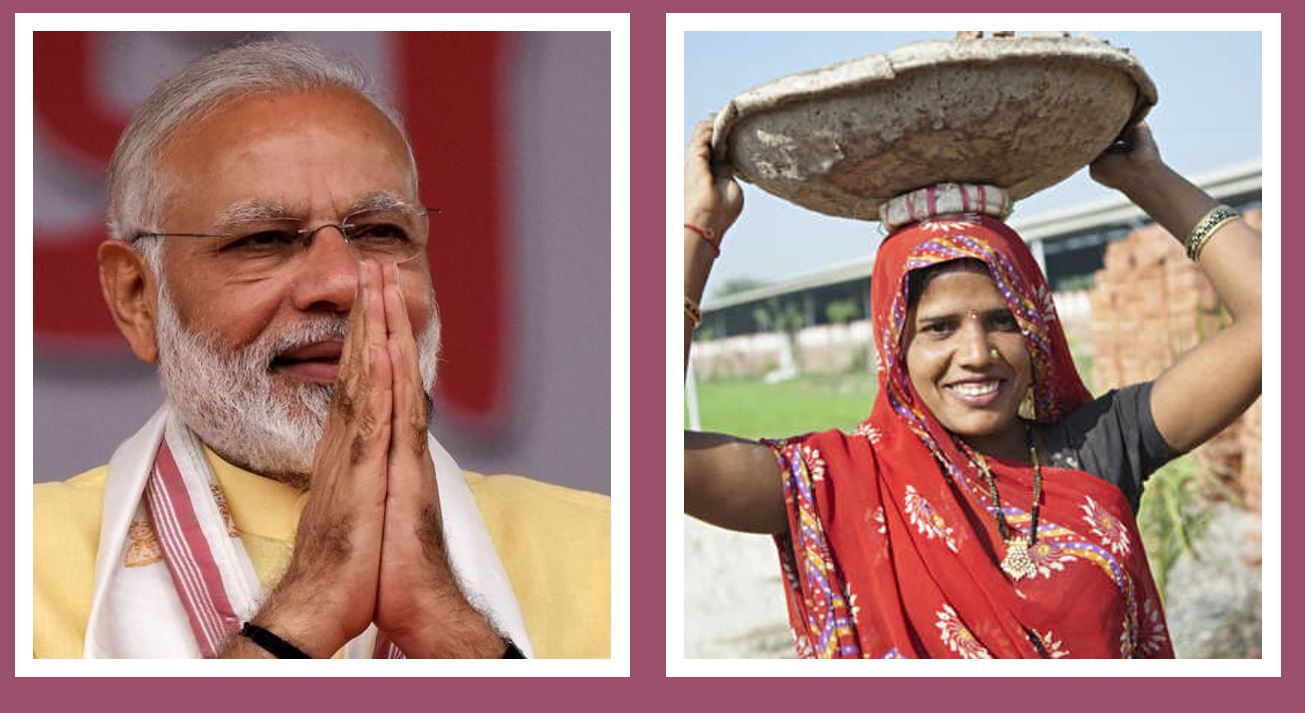
Mahatma Gandhi National Rural Employment Guarantee Scheme (MGNREGS or NREGS in short) is undoubtedly one of the most debated social welfare scheme in India, and it is not surprising given its magnitude. From the time it helped UPA to win 2009 elections to the time when Modi called it as ‘living monumental failure of congress’, it has not failed to hit the headlines. So the real question is, when NDA/Modi hates NREGS, why they have continued it instead of shelving it. In fact, on contrary, they have increased the allocations in the budget to the scheme. Primarily, it had become too big to discontinue due to the political reasons. NDA simply couldn’t afford to stop NREGS, so, they had to continue. But, that doesn’t answer the question, why there was an increase in allocation of funds to the scheme when government was least interested about its existence.

Before getting into the discussion of probable causes, I want to tell you one important thing. When it comes to an economic problem, there won’t be any white or black, everything falls under grey albeit different shades. The following discussion is based on my limited understanding of a complex scheme of highest magnitude. 

RelatedPosts

Maharashtra Police Book Bhai Jagtap Over Alleged AI Deepfake Video of Delhi DCP

Rahul Gandhi Faces Heat Over PM Residence Protest

Yogi Sharpens Political Offensive as Sanatan Debate Returns to Centre Stage

Load More

When it was first created, NREGS was intended for job creation in rural areas by employing agriculture labour or/and the landless labour. Though the act was enacted in 2005, the concept was conceived by former Prime Minister PV Narasimha Rao in 1991. Undoubtedly, it was one of the most ambitious social welfare programme in the world, as claimed by congress at the time of introduction. To set the premise, let me explain the basic characteristics of NREGA. It had promised to provide at least 100 days of employment in a financial year and the same was increased to 150 with certain restrictions. Employment to be provided within 5 km radius from place of residence of applicant and has a certain floor value for the wages. If an applicant is not provided an employment opportunity within 15 days from the application date, applicant is entitled to receive unemployment benefits. As you can see, it has the potential to change the face of rural India, and that doesn’t come free of cost. NDA has allocated about Rs. 48000 crores for NREGS in the financial year 2017-18.

Why such an ambitious programmed was marred by the controversies? The simple reason is, as with anything else in UPA government, poor implementation and corruption. UPA had hurried in expansion of the scheme in a hope to win 2009 elections without proper precautions and preparation. UPA had extended the scheme all over India w.e.f 01.04.2008. But, they failed to consider serious strain it would put on supply chain and pan India applicability.

For example, works that are required to carry out in draught ridden areas like, say, Rajasthan is completely different from the works required in frequent flood affected regions like Assam. There is no point in building watershed for conserving water in an area like Assam. Unfortunately, NREGS had given higher emphasis on activities related to water conservation. Another issue was wage. The minimum wage offered by NREGS was much lower than the prevailing market rate in few areas like Kerala where it had garnered response only from women whose market wages were much lower than that of male counterparts.

By 2009, UPA government had acknowledged the fact that there were leaks in the system, which made them to resort to baking route for wage payments in order to plug the leaks. Not surprisingly, the agencies responsible for implementation of scheme lost interest as their incentive was compromised. Of course, we Indians never give up, at least when it comes to corruption. So, again not surprisingly, they found a way to bypass the same. Agencies/Sarpanch/ gram panchayat heads had become suppliers of the materials, and we got to give it to them, that was a brilliant move.

As I mentioned earlier, lack of preparation while expanding the scheme to overall India created chaos. Till January 2016, Ministry of Rural Development had issued over 1000 circulars on implementation and compliance. The agencies which were supposed to comply with all those ‘over 1000’ circulars, instead of working hard, relaxed. So, slowly the most ambitious programme had become a white elephant. In 2014-15, only 28% of the wages were paid on time. By the end of FY 2015-16, about Rs. 12000 crores of arrears of the state were accumulated. Not just the wages, even the vendors who supplied the materials had to for months to receive the bills. With the delay of wage payments, very purpose of the scheme was defeated. Poor couldn’t afford the delay in payments, so they had chosen other works with immediate payment. With almost constant allocation of funds over the years coupled with revision of minimum wage rates and inclusion of new works, the very purpose of the scheme, job creation, was crippled.

But, things started looking better again by FY 2016-17 with the transfer of 1/3rd of budgeted funds to the states by end of the first quarter. This move by the central government and along with the assurance of state governments to clear all the arrears had rejuvenated the scheme. So, what had changed from 2014-15 to 2016-17 for the paradigm shift in the perceptions of state and union governments? The same government which termed it as ‘a living monumental failure’, praised it as ‘national pride and celebration’ on the occasion of 10th anniversary of the programme. Arun Jaitely emphasised that “the transformation has been brought in the implementation of the scheme.”

What was the transformation Mr. Jaitley was talking about?

There was an ideological shift between UPA and NDA when it comes to benefits of implementation of the scheme. UPA was more tilted towards job generation than asset creation while NDA is more concerned about asset creation over job generation. Let me give an example to understand the difference.

During the UPA rule, in my village, a huge canal was dug up where there wasn’t a water body or even the chances of having one are almost nil. Point is, in the name of job creation, valuable asset (funds) were wasted where it was not necessary. The canal without any chance of water flowing through it is not an asset, it’s more of a liability as it consumes the precious land. And, that was just an example.

NREGS is always surrounded by some or other controversy. The criticism on NREGS under UPA rule includes the corruption, leakages, poor asset creation and also fuelling up inflation to some extent. The logic is simple, when you spend money on something which will be not be useful for future (an asset), the money that you have spent will go waste (or consumption). When there is more consumption, the inflation will automatically rise. One of the causes for higher levels of inflation under UPA-II rule can be attributed to NREGS.

NREG Act says that the cost of wage material ratio should be 60 to 40, means, for every Rs. 100 Govt spent under scheme, Rs. 60 should go to the wages. This clause inherently restricts the usage of quality materials and building of long lasting structures. That is the primary reason behind construction of Kachcha structures instead of pucca structures under NREGS. UPA was happy as long as the jobs were created no matter the assets were generated out of that or not. Though they were right about employment generation for the upliftment of downtrodden people, we can’t continue to pour money into the drain. NDA even declared its intention to reduce above said ratio to 51 to 49 so as to construct durable assets, but they backed out in the last moment to avoid the political flare.

In 2014 election manifesto, BJP promised to take steps to link NREGS with agriculture.

Traditionally, Congress has been a socialist party which thinks growth should come from roots, bottom to top, while BJP believes ‘when pie gets bigger, everybody’s share would get bigger’, top to bottom approach. Technically, speaking neither of them are wrong nor right. Though the implementation was poor under UPA rule, the intention was right. It did help in alleviating the problem of poverty in India. But, we should also consider the costs of implementation. NREGA had run its course in upliftment of poor people and in job creation.

We have come to a stage where we cannot afford to continue it in the same way. We, as a country, can’t continue to throw money without any proper asset creation. Given the current economic conditions, the approach that was adopted by NDA is subtle. Creating proper infrastructure in rural areas will certainly help in growth. When the roads are good, goods move faster, wastage will be less and the end produce will be higher. So, the indirect benefits from the proper long lasting infrastructure/asset outweighs the short terms benefits generated from kachcha structures.

Tags: CongressMahatma Gandhi National Rural Employment Guarantee SchemeMNREGANDANREGSUPA
Share1911TweetSend
Previous Post

Meet Shantanu Gupta, The Hotshot Corporate Who Became an Author and Yogi Adityanath’s First Biographer

Next Post

Things PM Modi does to ensure that he is delivering the right message to the People – It’s Fascinating

Related Posts

How to Start Trading Forex and Crypto in India: A Beginner’s Roadmap
Finance

How to Start Trading Forex and Crypto in India: A Beginner’s Roadmap

3 August 2026

India has produced millions of retail traders over the past decade, drawn by rising internet access, growing financial literacy,...

Small-Ticket EMIs Are Turning Into India’s New Credit Habit
Finance

Small-Ticket EMIs Are Turning Into India’s New Credit Habit

2 August 2026

A phone case, a festival outfit, a two-month gym pass. None of these used to need financing. Now a...

Borrowing in the US and India: Their Economic Effects
Finance

Borrowing in the US and India: Their Economic Effects

21 July 2026

Borrowing takes different shapes all over the world, depending on local economies and the habits of the people who...

Load More

Leave a Reply Cancel reply

Your email address will not be published. Required fields are marked *

I agree to the Terms of use and Privacy Policy.
This site is protected by reCAPTCHA and the Google Privacy Policy and Terms of Service apply.

Currently Playing

INS NIPUN: MEET INDIA’S NEW DSV

INS NIPUN: MEET INDIA’S NEW DSV

00:03:05

POJK ERUPTS IN PROTEST

00:02:53

The Indian Air Force Mission That Broke Pakistan's Backbone at Tiger Hill | Op Safed Sagar

00:58:34

Pakistan’s Plebiscite Claim: The Missing Context of the UN Framework

00:03:23

TRUMP'S PHARMA TARIFF SHOCK

00:03:54
Facebook Twitter Instagram Youtube
tfipostTfipost.com
Right Wing | News Analysis | Indian Opinion
  • About us
  • Contact Us
  • Careers
  • Brand Partnerships
  • Terms of use
  • Privacy Policy
  • Sitemap

©2026 TFI Media Private Limited

No Result
View All Result
  • Premium
  • Politics
    • Analysis
    • Opinions
    • Trending
  • Economy
    • Business
    • Finance
  • Defense
    • Defence
    • Strategy
    • Weaponry
  • Geopolitics
    • Africa
    • Americas
    • Asia Pacific
    • Europe
    • South Asia
    • West Asia
  • Knowledge
    • Culture
    • History
    • Indology
  • Law
  • Lounge
    • Books
    • Cinema
    • Food
    • Health
    • Sports
    • technology
    • Travel
    • Satire
TFIPOST हिन्दी
TFIPOST Global

©2026 TFI Media Private Limited