



















TFIPOST हिन्दी
TFIPOST Global
Tfipost.com
Tfipost.com
No Result
View All Result
  • Premium
  • Politics
    • All
    • Analysis
    • Opinions
    • Trending
    Commissioning PNS Hangor Is the Easy Part. The Real Test Is What KSEW Builds Next

    Commissioning PNS Hangor Is the Easy Part. The Real Test Is What KSEW Builds Next

    Muslim League Decided Keralam congress CM? or Venugopal Sacrificed for Alliance Politics?

    Muslim League Decided Keralam congress CM? or Venugopal Sacrificed for Alliance Politics?

    Pune Hospital IED, Explosives Near PM Modi’s Bengaluru Route, Delhi Terror Alert: Is India Facing A Larger Security Threat?

    Pune Hospital IED, Explosives Near PM Modi’s Bengaluru Route, Delhi Terror Alert: Is India Facing A Larger Security Threat?

    Kerala Becomes Congress’ Latest Political Embarrassment: Majority Secured, Yet No Chief Minister in Sight

    Kerala Becomes Congress’ Latest Political Embarrassment: Majority Secured, Yet No Chief Minister in Sight

    • Analysis
    • Opinions
    • Trending
  • Economy
    • All
    • Business
    • Economy1
    • Finance
    The Wrong Questions People Ask Before Buying Bike Insurance

    The Wrong Questions People Ask Before Buying Bike Insurance

    India–Vietnam Deepen Strategic Reset with $25 Billion Trade Goal, Broaden Indo-Pacific Alignment

    India–Vietnam Deepen Strategic Reset with $25 Billion Trade Goal, Broaden Indo-Pacific Alignment

    The Value of a Diversified Supply Chain: Recent U.S. Agreement Highlights Future Capabilities

    The Value of a Diversified Supply Chain: Recent U.S. Agreement Highlights Future Capabilities

    Lotus Blooms in WB: BJP Goes 200 Paar to Unseat Mamata, Vijay’s TVK Turns Heads Stuns in TN

    Lotus Blooms in WB: BJP Goes 200 Paar to Unseat Mamata, Vijay’s TVK Turns Heads Stuns in TN

    • Business
    • Finance
  • Defense
    • All
    • Defence
    • Strategy
    • Weaponry
    China’s ‘Secret Police Station’ Busted in New York: America Finally Hits Back at Beijing’s Network

    China’s ‘Secret Police Station’ Busted in New York: America Finally Hits Back at Beijing’s Network

    Sacrifice or Strategy? Decoding the Real Meaning Behind Modi’s Repeated Appeals   

    Sacrifice or Strategy? Decoding the Real Meaning Behind Modi’s Repeated Appeals  

    Airports of War: How Pakistan Turned Civil Aviation Infrastructure Into Military Hubs

    Airports of War: How Pakistan Turned Civil Aviation Infrastructure Into Military Hubs

    After Years of Delay, West Bengal Clears 600 Acres for BSF; Bangladesh Border Fencing Set for Revival

    After Years of Delay, West Bengal Clears 600 Acres for BSF; Bangladesh Border Fencing Set for Revival

    • Defence
    • Strategy
    • Weaponry
  • Geopolitics
    • All
    • Africa
    • Americas
    • Asia Pacific
    • Europe
    • South Asia
    • West Asia
    China’s ‘Secret Police Station’ Busted in New York: America Finally Hits Back at Beijing’s Network

    China’s ‘Secret Police Station’ Busted in New York: America Finally Hits Back at Beijing’s Network

    500 Days in Jail, Bail Denied Again: Bangladesh’s Chinmoy Krishna Das Case Puts Tarique Rahman Government Under Fire

    500 Days in Jail, Bail Denied Again: Bangladesh’s Chinmoy Krishna Das Case Puts Tarique Rahman Government Under Fire

    Sacrifice or Strategy? Decoding the Real Meaning Behind Modi’s Repeated Appeals   

    Sacrifice or Strategy? Decoding the Real Meaning Behind Modi’s Repeated Appeals  

    Austerity as Strategy: What Modi’s Consumption Appeal Reveals About India’s Global Risk Outlook

    Austerity as Strategy: What Modi’s Consumption Appeal Reveals About India’s Global Risk Outlook

    • Africa
    • Americas
    • Asia Pacific
    • Europe
    • South Asia
    • West Asia
  • Knowledge
    • All
    • Culture
    • Education
    • History
    • Indology
    Maharana Pratap Jayanti: India Reclaims the Legacy of a King Who Chose Resistance Over Submission, PM Modi Leads Tributes

    Maharana Pratap Jayanti: India Reclaims the Legacy of a King Who Chose Resistance Over Submission, PM Modi Leads Tributes

    Stolen Legacy: How the CCP Hijacked the May Fourth Movement

    Stolen Legacy: How the CCP Hijacked the May Fourth Movement

    NEET 2026 Row: When Rules Target One and Spare Another, It Stops Being Protocol

    NEET 2026 Row: When Rules Target One and Spare Another, It Stops Being Protocol

    Students move closer to a decisive academic milestone as cbse enters final result processing stage

    CBSE Class 12 Results 2026 Expected Soon As Verification Enters Last Stage

    • Culture
    • History
    • Indology
  • Law
  • Lounge
    • All
    • Books
    • Cinema
    • Entertainment
    • Food
    • Games
    • Health
    • Lifestyle
    • Satire
    • Sports
    • technology
    • Travel
    Bharat Forge Cracks Embraer’s Elite Aerospace Network in Major Win for India’s Manufacturing Rise

    Bharat Forge Cracks Embraer’s Elite Aerospace Network in Major Win for India’s Manufacturing Rise

    Why Smarter Expense Management Is a Business Essential

    Why Smarter Expense Management Is a Business Essential

    From Nuclear Resolve to Tech Power: Modi Invokes Pokhran Spirit on National Technology Day

    From Nuclear Resolve to Tech Power: Modi Invokes Pokhran Spirit on National Technology Day

    All Slots Games: Why People Still Spend Hours Spinning Reels

    All Slots Games: Why People Still Spend Hours Spinning Reels

    • Books
    • Cinema
    • Food
    • Health
    • Sports
    • technology
    • Travel
    • Satire
Tfipost.com
  • Premium
  • Politics
    • All
    • Analysis
    • Opinions
    • Trending
    Commissioning PNS Hangor Is the Easy Part. The Real Test Is What KSEW Builds Next

    Commissioning PNS Hangor Is the Easy Part. The Real Test Is What KSEW Builds Next

    Muslim League Decided Keralam congress CM? or Venugopal Sacrificed for Alliance Politics?

    Muslim League Decided Keralam congress CM? or Venugopal Sacrificed for Alliance Politics?

    Pune Hospital IED, Explosives Near PM Modi’s Bengaluru Route, Delhi Terror Alert: Is India Facing A Larger Security Threat?

    Pune Hospital IED, Explosives Near PM Modi’s Bengaluru Route, Delhi Terror Alert: Is India Facing A Larger Security Threat?

    Kerala Becomes Congress’ Latest Political Embarrassment: Majority Secured, Yet No Chief Minister in Sight

    Kerala Becomes Congress’ Latest Political Embarrassment: Majority Secured, Yet No Chief Minister in Sight

    • Analysis
    • Opinions
    • Trending
  • Economy
    • All
    • Business
    • Economy1
    • Finance
    The Wrong Questions People Ask Before Buying Bike Insurance

    The Wrong Questions People Ask Before Buying Bike Insurance

    India–Vietnam Deepen Strategic Reset with $25 Billion Trade Goal, Broaden Indo-Pacific Alignment

    India–Vietnam Deepen Strategic Reset with $25 Billion Trade Goal, Broaden Indo-Pacific Alignment

    The Value of a Diversified Supply Chain: Recent U.S. Agreement Highlights Future Capabilities

    The Value of a Diversified Supply Chain: Recent U.S. Agreement Highlights Future Capabilities

    Lotus Blooms in WB: BJP Goes 200 Paar to Unseat Mamata, Vijay’s TVK Turns Heads Stuns in TN

    Lotus Blooms in WB: BJP Goes 200 Paar to Unseat Mamata, Vijay’s TVK Turns Heads Stuns in TN

    • Business
    • Finance
  • Defense
    • All
    • Defence
    • Strategy
    • Weaponry
    China’s ‘Secret Police Station’ Busted in New York: America Finally Hits Back at Beijing’s Network

    China’s ‘Secret Police Station’ Busted in New York: America Finally Hits Back at Beijing’s Network

    Sacrifice or Strategy? Decoding the Real Meaning Behind Modi’s Repeated Appeals   

    Sacrifice or Strategy? Decoding the Real Meaning Behind Modi’s Repeated Appeals  

    Airports of War: How Pakistan Turned Civil Aviation Infrastructure Into Military Hubs

    Airports of War: How Pakistan Turned Civil Aviation Infrastructure Into Military Hubs

    After Years of Delay, West Bengal Clears 600 Acres for BSF; Bangladesh Border Fencing Set for Revival

    After Years of Delay, West Bengal Clears 600 Acres for BSF; Bangladesh Border Fencing Set for Revival

    • Defence
    • Strategy
    • Weaponry
  • Geopolitics
    • All
    • Africa
    • Americas
    • Asia Pacific
    • Europe
    • South Asia
    • West Asia
    China’s ‘Secret Police Station’ Busted in New York: America Finally Hits Back at Beijing’s Network

    China’s ‘Secret Police Station’ Busted in New York: America Finally Hits Back at Beijing’s Network

    500 Days in Jail, Bail Denied Again: Bangladesh’s Chinmoy Krishna Das Case Puts Tarique Rahman Government Under Fire

    500 Days in Jail, Bail Denied Again: Bangladesh’s Chinmoy Krishna Das Case Puts Tarique Rahman Government Under Fire

    Sacrifice or Strategy? Decoding the Real Meaning Behind Modi’s Repeated Appeals   

    Sacrifice or Strategy? Decoding the Real Meaning Behind Modi’s Repeated Appeals  

    Austerity as Strategy: What Modi’s Consumption Appeal Reveals About India’s Global Risk Outlook

    Austerity as Strategy: What Modi’s Consumption Appeal Reveals About India’s Global Risk Outlook

    • Africa
    • Americas
    • Asia Pacific
    • Europe
    • South Asia
    • West Asia
  • Knowledge
    • All
    • Culture
    • Education
    • History
    • Indology
    Maharana Pratap Jayanti: India Reclaims the Legacy of a King Who Chose Resistance Over Submission, PM Modi Leads Tributes

    Maharana Pratap Jayanti: India Reclaims the Legacy of a King Who Chose Resistance Over Submission, PM Modi Leads Tributes

    Stolen Legacy: How the CCP Hijacked the May Fourth Movement

    Stolen Legacy: How the CCP Hijacked the May Fourth Movement

    NEET 2026 Row: When Rules Target One and Spare Another, It Stops Being Protocol

    NEET 2026 Row: When Rules Target One and Spare Another, It Stops Being Protocol

    Students move closer to a decisive academic milestone as cbse enters final result processing stage

    CBSE Class 12 Results 2026 Expected Soon As Verification Enters Last Stage

    • Culture
    • History
    • Indology
  • Law
  • Lounge
    • All
    • Books
    • Cinema
    • Entertainment
    • Food
    • Games
    • Health
    • Lifestyle
    • Satire
    • Sports
    • technology
    • Travel
    Bharat Forge Cracks Embraer’s Elite Aerospace Network in Major Win for India’s Manufacturing Rise

    Bharat Forge Cracks Embraer’s Elite Aerospace Network in Major Win for India’s Manufacturing Rise

    Why Smarter Expense Management Is a Business Essential

    Why Smarter Expense Management Is a Business Essential

    From Nuclear Resolve to Tech Power: Modi Invokes Pokhran Spirit on National Technology Day

    From Nuclear Resolve to Tech Power: Modi Invokes Pokhran Spirit on National Technology Day

    All Slots Games: Why People Still Spend Hours Spinning Reels

    All Slots Games: Why People Still Spend Hours Spinning Reels

    • Books
    • Cinema
    • Food
    • Health
    • Sports
    • technology
    • Travel
    • Satire
No Result
View All Result
Tfipost.com
Tfipost.com
No Result
View All Result
  • Premium
  • Politics
  • Economy
  • Defense
  • Geopolitics
  • Knowledge
  • Law
  • Lounge

The voteshare/seats conundrum: A case for Mixed-Member Proportional System?

Robert Barker by Robert Barker
21 November 2015
in Opinions, TFIUvaach
The voteshare/seats conundrum: A case for Mixed-Member Proportional System?
Share on FacebookShare on X

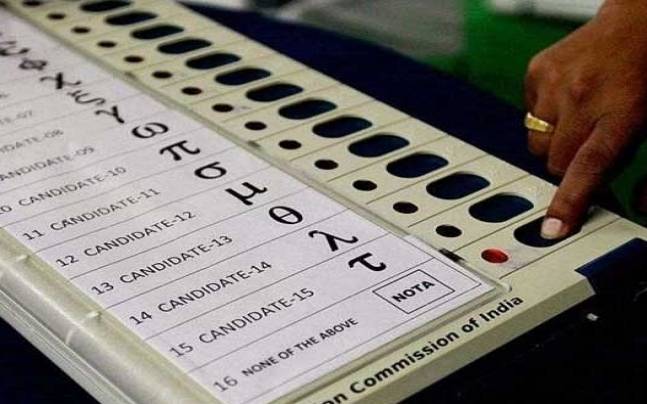
The bizarre counting exercise for Bihar perpetuated by many media houses on the 8th of November might have seen many twists and turns, but at the end of it all, it was conclusively proven that the NDA was no match for the might of the Mahagathbandhan. Nitish Kumar has become the Chief Minister for the fifth time, with a 26 year old RJD scion as his running mate. The results are quite interesting, as the CM is from a party which does not have the highest number of seats (that honor goes to the RJD), and is only third overall in terms of the vote share. The BJP with the largest vote share, is left with a measly 50 odd seats. This is the third, almost consecutive election in the past year and a half (LS-2014, Delhi, Bihar), where the vagaries of the first-past-the-post (FPP) system have resulted in near-brutal majorities for the leading parties, but has also pretty much decimated the opposition. Both of these are questionable developments in a modern democracy, and wouldn’t have come to pass if the election system were far more reflective of the people’s mandate. Indeed, the only major countries still using FPP are India, Canada, the UK, and USA, with most other functioning democracies using a more proportional system, or a form of run-off voting. The question of electoral reforms has rarely included discussions on the actual voting system itself, and as far as this author is concerned, is something that needs to be corrected.

The Indian requirements:

RelatedPosts

Bihar Assembly Elections: As Battle Heats Up, Rahul Gandhi Is Absent Yet Again!

Criticism rises against US amidst allegations of interference 

“Rahul Gandhi is PM Modi’s biggest TRP,” Mamata Banerjee’s latest jibe

Load More

While the search for a new voting system might be construed as a considerable challenge; given the economic, social, and historical realities in India, one’s options are considerably reduced. For a new system to have any realistic chance of being accepted by the electorate, and to pass through parliament, it should try and fulfill, at the very least, the following three criteria:

  1. It should not be too complicated for the voter, and should not alter the logistics of elections drastically.
  2. It should not interfere with existing institutions, and must not alter the parliamentary nature of the Indian republic. Additionally, it should not rescind the idea of directly elected local representatives.
  3. It should try and ensure maximum proportionality.

Any proportional system that involves ranking candidates, such as the single transferable vote, is automatically ruled out. These criteria also rules out other majority systems such as the alternative vote, and a two-round system, as they are not proportional, too complicated to implement, and hard to reconcile with the Westminster system. A purely proportional system, where one just votes for a party, and then the party decides to send representatives according to an internal list, is also not acceptable as the voters have no say in who exactly represents them in parliament. One is thus finally left with a mixed-member proportional system, such as one followed in Germany and New Zealand, which combines the best features of both systems, and tries to minimize the negatives of both.

Mixed-Member Proportional System explained:

On voting day, when the voter goes to the voting booth, he/she has to cast two votes, one for a candidate (as always), but an additional vote to a party. When the votes for the candidates are counted, the person with the most number of votes gets elected to parliament, as is the case now. The votes cast to the party are used to determine the final composition of the house, with a closed party list used to fill up the remaining seats in a proportional way. In cases where a party ends up with more directly elected candidates than its vote share (so-called overhang seats), the house is simply expanded, and other parties get more seats to achieve proportionality. At no point are the directly elected candidates forced to give up their seats. One could also impose an additional vote share criteria (5% being the norm) for parties to qualify for any additional seats over their directly elected representatives.

Bihar-a test case:

It is interesting to consider how the composition of the current Bihar assembly would be right now within an Mixed-Member Proportional System. At the start, let us assume that all parties have the exact same number of seats as they do now in this election. This is not particularly scientific, but will do for illustrative purposes. For simplicity’s sake, we show only the alliances, and not the individual parties in this example:

PartySeats% of seats% of votes
MGB1787341.9
NDA582431.8
others7326.3

This table clearly illustrates the problem with the FPP system. The MGB has nearly 75% of the seats despite commanding only 41% of votes, while the non-MGB/non-NDA parties are an order of magnitude off from what they deserve. Interestingly, the NDA is relatively better represented, with the offset between seats and votes only about 8%.

Now, in a purely proportional system, the composition of the house would have been:

PartySeats% of seats% of votes
MGB10241.941.9
NDA7731.831.8
others6326.326.3

The MGB drops off seats considerably, while the non-MGB/non-BJP parties gain a substantial number of seats. While this might seem like a fractured mandate, politically speaking, the MGB is in a better position than the NDA to attract 19 more seats from the Others column. This system however does not take into account the 76 extra MLAs that the MGB won. Mixed-Member Proportional System accommodates these extra MLAs, and ensures proportionality at the same time. The house would therefore be:

PartySeats% of seats% of votes
MGB1784241.9
NDA1353231.8
Others1102626.3

Due to the substantial overhang in this election, the house expands from 243 seats to 423 in order to accommodate the extra directly-elected representatives of the MGB, and to ensure true proportionality. Though the MGB does not have a clear majority in this scenario, it is only 34 seats away from achieving one, and is the most realistic alliance that will form the Govt. in Bihar. In this example, the house seems to be quite bloated, which might raise some concerns about the system. This is largely due to our hypothetical assumption here that the alliances will retain all of their directly elected representatives as it stands in this particular election. In a true Mixed-Member Proportional System , this is unlikely to happen, and the overhang is typically of the order of 15-20 seats at the most. Moreover, we have not considered a minimum threshold for parties to return party-list seats to the assembly, which would once again reduce the number of seats than what is shown here.

A constant criticism of proportional systems is that they never ensure a majority for any party, and would always result in coalition governments. Leaving aside the question of propriety of having a Govt. that is supported by a minority of the electorate (as is normally the case in a multi-party polity), this is a genuine concern in India, and could be catastrophic for the passage of legislation, and for ensuring a stable Govt. for five years. One way of sorting this out in an Mixed-Member Proportional System, is to bring the under-represented parties to the numbers they would have had in the original composition of the house, but allow the overhang. To put it in numbers for this particular election:

PartySeats% of seats% of votes
MGB1785641.9
NDA772431.8
Others632026.3


In this hypothetical scenario, the house expands to 318 seats, with the MGB emerging as the clear winner, but with a reduced percentage of seats. True proportionality is not achieved, but a much better representation of the voters’ will is achieved here than in FPP, without sacrificing stability. In a wave election where the largest party has a substantial plurality, but not a majority (as was witnessed in Bihar, Delhi, and the LS polls), this version of the system will always ensure a clear winner, but will prevent brutal majorities, and a more empowered opposition than in FPP.

The political context of Mixed-Member Proportional System :

For Mixed-Member Proportional System to have a realistic chance of ever being adopted by parliament, it needs to be attractive to a majority of political parties. The party that would benefit the most from Mixed-Member Proportional System would be the BJP, which despite commanding up to 30% of the votes in its strong states, still ends up performing badly due to the vagaries of the FPP system. Indeed, the only time where the BJP benefited from FPP was in LS-2014, where despite winning only a plurality of the votes, ended up with a majority on its own due to the division of the anti-BJP votes, a blue-moon event that is unlikely to repeat itself in 2019, even if it ends up winning that election. The Congress is also sure to benefit from the Mixed-Member Proportional System , and return more seats than it has in recent times, thanks to a large number of loyal voters in most states. Regional parties such as the BSP which have done poorly in recent elections, despite commanding a committed chunk of voters, will also do much better in an Mixed-Member Proportional System. The only parties that might see their returns take a turn for the worse are those that have less than a 10% vote share, and depend on vote division to win a few seats in the assembly. At least to his author, there does not seem to be a major negative for most parties to shift towards Mixed-Member Proportional System , especially since nearly all of them have borne the brunt of being decimated in wave elections in the recent past, and this system would have brought their final tally to something more respectable than it stands now.

Considering the challenges involved in changing to a new voting system, Mixed-Member Proportional System would have to be introduced in a phased manner, ideally for local body elections first, followed by a few states, and then for parliamentary polls. This is a process that is sure to take a decade or two, but it will give the EC enough time to educate the electorate (and study any problems with the system), and for the average voter to adjust to the new system.

Whether the Mixed-Member Proportional System (or an alternative system) would come to pass is open to speculation. Nevertheless, it is important to start discussing this issue that few have addressed since the formation of the Indian Union, if one is to ensure a truly modern democracy for the 21st century.


Tags: first-past-the-postIndia ElectionsMahagathbandhanMixed-Member Proportional SystemMMP
ShareTweetSend
Previous Post

Four of the Best Stock Tips for First Time Investors

Next Post

Vellapally Natesan, a rare Malyalee, who believes it’s his karma to unite Hindus in Kerala

Related Posts

Metro Beneath Parliament Is Fine, But Beneath a Graveyard? Bhopal Row Exposes India’s Selective Development Politics
Analysis

Metro Beneath Parliament Is Fine, But Beneath a Graveyard? Bhopal Row Exposes India’s Selective Development Politics

11 May 2026

The Bhopal Metro controversy has moved beyond a routine infrastructure dispute. Objections to an underground metro alignment linked to...

Resolve of a Changing Bengal: Youth, Potential, and Call for Transformation
Opinions

Resolve of a Changing Bengal: Youth, Potential, and Call for Transformation

21 April 2026

The yearning for change in the soil of Bengal is not a sudden wave, it is a convergence of...

Redefining Terms of Truly Mutual Trade Deal: Sovereignty and Strategy in the US–Bangladesh Framework
Economy

Redefining Terms of Truly Mutual Trade Deal: Sovereignty and Strategy in the US–Bangladesh Framework

15 April 2026

The debate around Bangladesh’s emerging trade framework with the United States cannot be reduced to a binary choice of...

Load More

Leave a Reply Cancel reply

Your email address will not be published. Required fields are marked *

I agree to the Terms of use and Privacy Policy.
This site is protected by reCAPTCHA and the Google Privacy Policy and Terms of Service apply.

Currently Playing

From Runways to Warships: India’s Firefighting Warrior Built for Bases & Battles| IAF | VayuShakti

From Runways to Warships: India’s Firefighting Warrior Built for Bases & Battles| IAF | VayuShakti

00:05:40

Ethanol, EVs and Solar- How India’s Energy Game Is Changing | Modi on LPG & Crude Oil | war| Hormuz

00:05:21

Truth of IRIS Dena: 8 Days That Changed Narrative | War zone Reality, Not an Indian Navy Exercise

00:08:02

300 Million Euros for SCALP: Strategic Necessity or Costly Dependency on France300

00:04:06

Tejas Mk1A: 19th aircraft coupled but Not Delivered: What Is Holding Back the IAF Induction?

00:07:21
Facebook Twitter Instagram Youtube
tfipostTfipost.com
Right Wing | News Analysis | Indian Opinion
  • About us
  • Contact Us
  • Careers
  • Brand Partnerships
  • Terms of use
  • Privacy Policy
  • Sitemap

©2026 TFI Media Private Limited

No Result
View All Result
  • Premium
  • Politics
    • Analysis
    • Opinions
    • Trending
  • Economy
    • Business
    • Finance
  • Defense
    • Defence
    • Strategy
    • Weaponry
  • Geopolitics
    • Africa
    • Americas
    • Asia Pacific
    • Europe
    • South Asia
    • West Asia
  • Knowledge
    • Culture
    • History
    • Indology
  • Law
  • Lounge
    • Books
    • Cinema
    • Food
    • Health
    • Sports
    • technology
    • Travel
    • Satire
TFIPOST हिन्दी
TFIPOST Global

©2026 TFI Media Private Limited