













Back in 2012, when India was reeling a governmental crisis, plagued by scams and lack of foreign investments, there was a dearth of any political alternative. Though PM Modi (then CM), had started making inroads on social media, the country was quite far from an ideal political solution to the crisis it found itself in. Governance crisis is not alien to democracies across the globe, for unstable governments have been a norm since 1945, but these crises have always been resolved by the emergence of an able political alternative. Turkey, however, was an exception and has to be the first country in the 21st century to voluntary move away from a democratic setup to a fascist one.
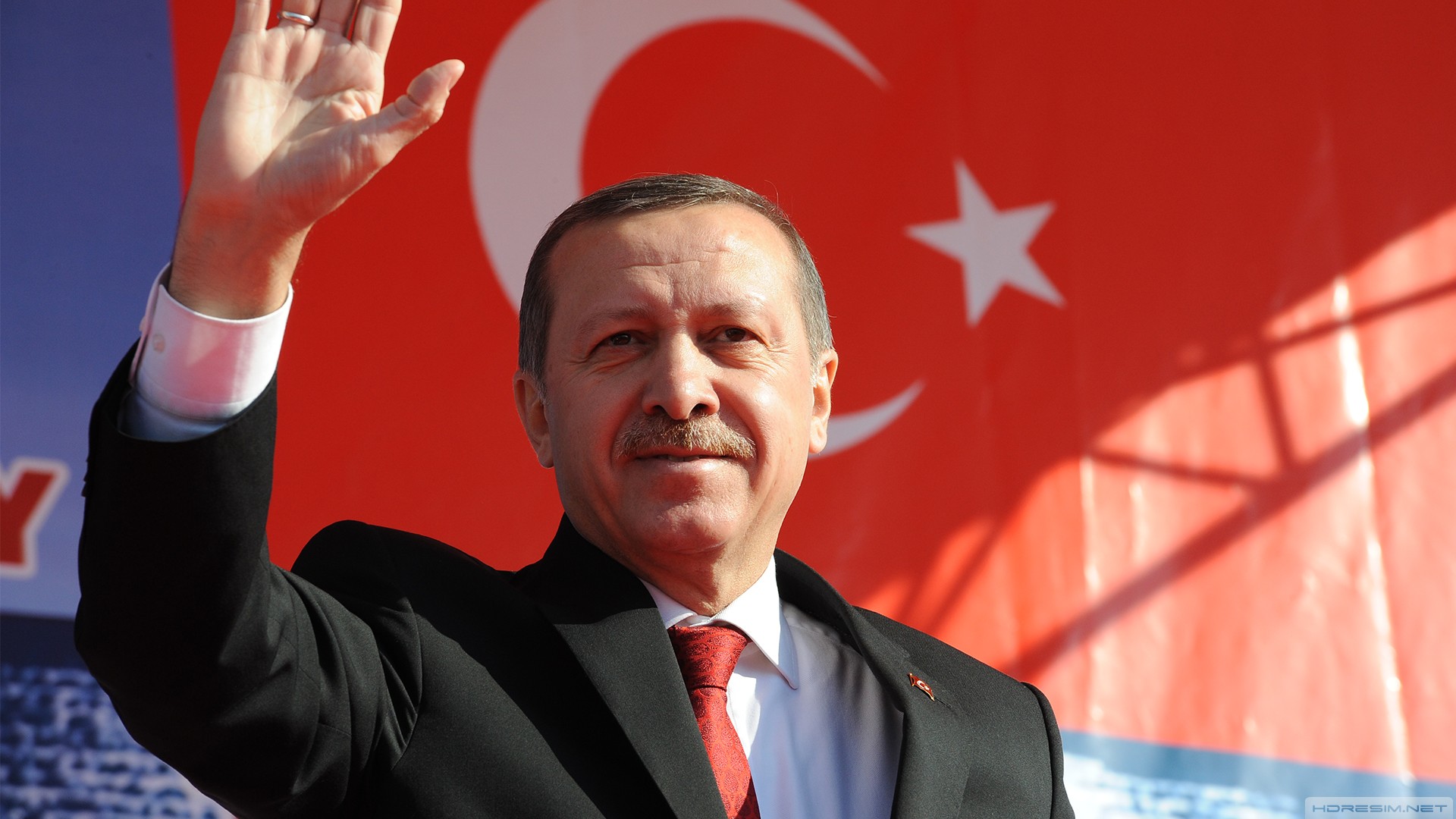
One could easily confuse the outcome of the Sunday Referendum with a nationalist surge, but there is a fine line between Nationalism and Dictatorship, and Turkey has ended up on the latter side. Plagued by repeated acts of terrorism, cultural divide, and in the backdrop of a failed coup, Turkey’s political sustainability was murky, without any alternative. Erdogan, the President, managed to hold on to power after a coup which was more of an impulsive attempt of some factions to ascend themselves. In this backdrop, Erdogan found himself, before the people, with a referendum that has now pushed the country towards an unprecedented political future, making it the ideal grazing land for extremists and clerics looking to strengthen their religious agendas.
Held under a state of emergency, the Sunday Referendum attempted to move the country away from a Parliamentary System of Governance, to a Presidential one. With 18 proposed amendments from President Erdogan’s Justice and Development Party (AKP), a significant percentage of the public felt rattled by the idea of an elected dictatorship.
The referendum was propagated more as a need of the hour, than a democratic choice. Since the 1960s, up to 2003, when Erdogan took over as the Prime Minister (he took over after the second election since the first was declared void), Turkey had been plagued by unstable governments, corrupted bureaucratic structures, and a stagnant economy. All this changed when Erdogan took over, as the Middle-Class of the country found hope for their nation’s economy in the swift reforms carried out by Erdogan. In order to sustain this stability, the Presidential System of governance had been proposed way back in 2005. It would have continued to rot in endless discussions and arguments had Turkey’s political history not been altered by the events of July 15, 2016.
Not so inconspicuous in its inception, the coup was aimed at state institutions as a whole, while President Erdogan was holidaying away from the capital. As factions within the Turkish Armed Forces organised themselves to stage the coup, having planes bomb the parliament building, Ankara and Istanbul fell into a complete disarray. Before the coup, the relatively free media and experts had been critical of the lack of regard for human rights in Turkey, president’s diplomatic misadventures with its neighbours, growing number of terrorist attacks, and a planned erosion of democracy, which pushed the country towards regressive Islamic practices and ideologies. Launched in the evening, an unusual time for any coup, it led to mass confusion amongst the citizens. A night of bombing and firing followed, with pro-government forces fighting against the factions that had led the coup in the first place, and by morning, the entire country awoke from a short but significant political nightmare. The era of regulated democracy had just engulfed Turkey.
With over 300 people killed, 2100 injured, a bombed and ravaged Turkish Parliament and Presidential Palace, the coup didn’t yield any results. The government blamed it on the Gulen movement, labelled as a terrorist organisation by Turkey. Fethullah Gulen, a businessman and cleric living in the US, and leader of the Gulen movement inside Turkey, was accused of staging the entire coup through the US-backed agencies. Denials from both US and Gulen proved to be futile, as Erdogan saw the defeated coup attempt as the ideal opportunity to showcase the imminent threat to democracy in Turkey. Within hours of the failed coup, 40,000 people were detained, with over 30,000 civilians amongst them. The judiciary wasn’t spared either as almost 3000 judges were suspended. Educationalists, artists, think-tanks, speakers, private institutions were in the midst of the storm as over 15,000 educationalists and 21,000 teachers found their licenses cancelled. The number of people otherwise purged, by law or by force, to this day, remains unaccounted. What the pursuit for a Presidential System of Governance couldn’t achieve in a decade, was achieved in a day; a fascist referendum cloaked in the principles of democracy was coming.
Back in 2003, when Erdogan came to power as the PM, he was expected to appeal to the Turks as a whole, beyond the conventional and conservative Islamist base, the same that is now back to haunt the prospects of a progressive Turkey. AKP, Erdogan’s party was founded by Yakis, a leading name in the Turkish diplomatic circles, and the foreign minister, who was cleverly ousted by Erdogan after the former’s appointment in 2002. Thus, the political aggressiveness of Erdogan is no surprise to anyone and can be compared to a similar figure back home, who for years, used the legacy of her family and the party to further her ambitions.
Taking globalisation into retrospect, Turkey finds itself in a complicated position today. With over 25% of the youth population out of work, a major part of the human resources is prone to exploitation by the prevailing extremism in the country, much of which is a product of the Syrian war that has spilt over to the Turkish countryside. The country hasn’t recovered from the recession of the last decade and with Erdogan unable to find a clear stand in the Syrian civil war, he finds himself staring at three million refugees from Syria, and without any plan to inculcate them within the social structure or the economy. Not that Erdogan didn’t try to eliminate Assad, for his proxies did try hard in collaboration with the West, but none of it yielded any results. With the emergence of Kurds in Northern Turkey, backed by US and Russia in separate occupied states, Erdogan’s political mandate before the referendum was indeed slippery. Turkey has managed to crush some Kurdish uprisings in the South, but that further complicated the situation, rather than resolving it. ISIS continues to wreak havoc, with the New Year bombings still fresh in the minds of the population.
One expected Erdogan to ally with the West, especially with the European Union, but he has only added toxicity to an otherwise volatile diplomatic relationship. Calling Germany and Netherlands dens of Nazism during the campaigning days of the referendum, he has alienated the union further, leaving many Turks disappointed, especially when they were hopeful of a progressive social structure in Turkey through an alliance with Europe and across the Atlantic. Russia continues to back Turkey, even after the referendum that was severely criticised by the countries in the West. December, last year, Russia witnessed the death of its diplomat after a Turkish police offer shot him dead, hailing his action as a revenge for Russia’s bombing for Aleppo, and yet, the countries have continued to fuel their alliance, but with Islamic extremism set to become a norm in Turkey in the coming years, for how long shall Russia look to accommodate this erratic Ally?
The referendum, where people were asked to vote either ‘Yes’ or ‘No’ gives Erdogan an array of additional powers. For a start, there will no longer be a Prime Minister, leaving him alone as the executive head. The other government branches, at best, will only manage to voice their opinions on the decisions taken, with little hope of reversing them for the better. The president will be limited to two five-year terms, with the third one being possible if elections are called early. Thus, Erdogan, with some tweaks, can easily retain the presidency beyond the prescribed two terms. Erdogan now has the power to issue decrees (the Islamists must be chest thumping), can appoint all the top officials with little resistance from anyone in the system, curate the National Budget, without having to worry about any legal checks for the expenditure. In case his Parliament rejects the budget (not going to happen, given his powers), he can simply put the previous year’s budget in place. Beyond executive, Erdogan will now be able to manipulate the judiciary as well, with 12 out of the 15 judges of the constitutional court to be appointed directly by him. Thus, the people to legally evaluate his issued decrees will be installed by him, and that’s not all, for he shall also appoint 6 of the 13 members of the country’s senior judiciary, equipped with the power to appoint close to 15,000 judges and prosecutors. The remaining few will have to depend upon the mercy of the Parliament, where Erdogan will have all the say. To keep a check on the civil servants responsible for satisfying his whims and fancies, Erdogan will have unrestricted power to order disciplinary enquiries, making these servants an indirect representation of the power Erdogan holds. To sum it up, Erdogan will be the public, will be the judge, will be the jury, and will be the executioner, and yes, he’ll be all this in a democratic framework (slow claps).
With press freedom curtailed to an extent where 9 out of 10 journalists are pro-government, there was no hope for the referendum to be carried out without any bias. In the days following up to the referendum, maximum airtime was allotted to experts pitching for Erdogan, with insignificant coverage to anyone who was willing to take the discourse towards a ‘No’. With thousands of artists, educationalists, political thinkers, and liberals rotting in prisons without any legal aid, Erdogan did not have much to fear during the referendum, for his victory wasn’t a result of vote count manipulation alone, but can also be attributed to his strong civilian base.
As I learnt from my source in Turkey, there is no dearth of people ready to rally behind Erdogan, for in him, they see the hope of a stabilised Turkey, moving away from terrorism and an unprecedented overthrow of the government. For social stability, people are willing to give up democratic accountability, for there is no use of the latter without the former. The military coup last year, for Erdogan followers, was an attempt by the military to take over a democratic Turkey and take back the country to the era of the 1980s when cultural fault lines, corruption, economic disarray, and instability were rampant. These people prefer an elected dictator against an unelected leader, with many hoping for him to take a revamped stand against ISIS once re-elected and working out a solution with the Kurds. Anyone in disagreement with the followers of Erdogan is either inside some isolated prison or risks being in one, for they voice their opinion.
However, one must acknowledge the turbulent geography Turkey finds itself in. With threats from all the sides, unpredictable diplomatic encounters, and no end in sight to the Syrian war, Turkey could gain by uniting under a common leader, as the referendum showed. My source told me that during the voting, they were asked to hand over their ballots in an envelope, which were then sealed by the inspectors and reserved for the count. However, the manipulation occurred by having an additional number of sealed envelopes for ‘Yes’. For instance, a polling centre has 200 voting, even if 100 of them voted for ‘Yes’, and the remaining for ‘No’, the end result showcased close to 65-70% of the 200 people voting for ‘Yes’. Thus, simple manipulation paved away for a rigged referendum.
Today, Erdogan stands firm as the elected dictator of Turkey. With the last year’s coup giving him the opportunity to establish a stronghold on the executive, there is little one can do inside Turkey to question him. There have been theories of Erdogan himself staging the coup, for one doesn’t expect over 50,000 people to be detained in a couple of hours without some initial planning, and an evening is no time for a coup. His critics have compared him to Hitler who staged a coup in 1933, Germany, to single himself out as the worthy leader of a nation wrecked by war debts and decimated economy. With severe backlash from the West and his left over critics back home to the referendum, is it possible that Erdogan managed to pull off the political heist of the 21st century?
Beyond this unsustainable grab of power, lies another, but the most important agenda, that of the Islamists. While the civilian population craves for social stability coupled with progressiveness, there is a strong probability of Erdogan bowing down to Islamic extremists who, in the future, will look to implement regressive Islamic practices within Turkey. A possible alliance with clerics is possible, in order to sustain the power centre being run by Erdogan, and that could decimate the already restless cultural divide within the country.
As of now, Turkey has chosen Erdogan to be their elected dictator. Clearly, he is not the first of his kind, and won’t be the last too, given it’s the Middle East we are talking about.
But what remains to be seen is that Turkey going to go the Iran way, eventually becoming a regressive Islamic nation without federalism or a transparent democracy? The emergence of an Islamic State won’t be alarmingly evident, but gradually, will follow the eroding democratic structures.
Already, many people are looking to leave the country in search of better shores, while few are content and have chosen to stay back for they see a stable and sustained economy in the making. For everyone else across the globe, the only option is to wait and watch as the biggest political experiment of recent times unfolds. If moving one’s country towards fascism is acceptable in order to save it from falling apart, how will we ever be able to judge Adolf Hitler again?