





















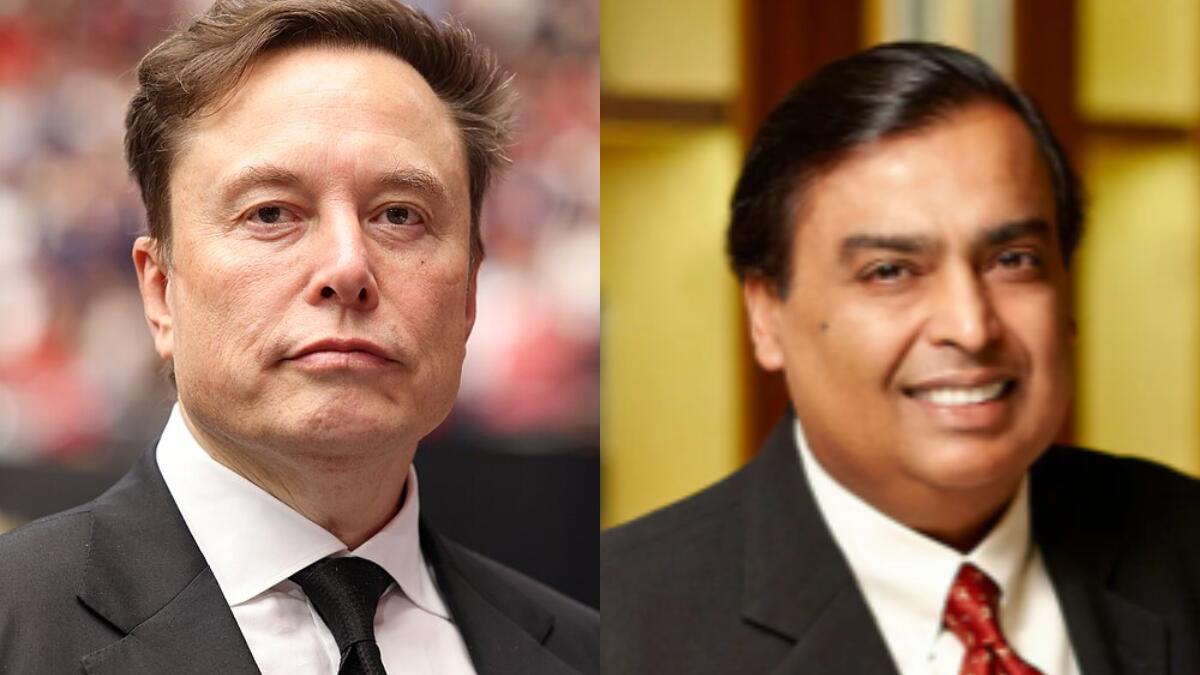
Elon Musk has discovered a principle: business should not be cosy with politics. He found it the moment his satellite broadband service ran into delays in India.
On Saturday he mocked Mukesh Ambani as “Prime Minister Ambani,” Orissa Post reported, and accused him of protecting a monopoly. The Tribune (Pakistan) reported that he followed with the line “Please accept my humble apologies for not realising that you are the real boss of India.” Hours later, he posted screenshots of a 2022 Al Jazeera report on a Reliance-funded firm boosting BJP campaigns on Facebook and a 2024 Indian Express report on Qwik Supply, a Reliance-linked company, donating ₹385 crore to the BJP via electoral bonds.
Outrage on a licensing timetable
The timing gives the game away. WION reported that the attack follows sharp criticism from Musk over continuing delays to Starlink’s rollout in India, and Latestly tied the row to licensing and regulatory approvals. Nothing in the reports he shared is new. They are two and four years old, and they surfaced only when Starlink’s commercial interests were at stake.
Musk did not discover Reliance’s political funding this week. He discovered it was useful. The Tribune (Pakistan) noted that he offered no evidence against Ambani, so a four-year-old press clipping did the work a case should have done.
The double standard is the story
The target of the outrage, political money shaping business outcomes, describes Musk’s own career. Al Jazeera has described him as the largest contributor to Trump’s 2024 presidential campaign and noted that his businesses benefit from lucrative US federal contracts. A man whose companies depend on federal contracts and who bankrolled the president is now scandalised that a rival in India has political friends.
The sequence of the past few days shows how he operates. On October 8, Trump presented Musk with the National Medal of Science and hailed him as “our modern-day Thomas Edison,” Al Jazeera reported. Two days later, Musk was in India’s papers posing as a critic of cosy ties between industry and ruling parties. In Washington, closeness to power is a medal. In Delhi, closeness to power is a scandal. Which one it is depends on whether Musk is the beneficiary.
A record of changing sides when it pays
This is a pattern. After his bitter 2025 break with Trump, in which the two traded vicious attacks, the Daily Beast reported that Musk reshared Trump’s posts as an apparent olive branch and deleted many of his harshest attacks, including the Epstein allegation. The man who builds a feud and then scrubs it when the relationship becomes useful again is not guided by principle. He is guided by position.
The same logic runs through the Ambani posts. Musk’s outrage has no consistent target, only a consistent beneficiary.
India should notice
The posts tell India how Musk regards it. He treats the country as a market to be unlocked and a regulator to be pressured, and he uses insinuation to do it. The claim that Ambani is the “real boss” amounts to a charge that India’s regulators answer to one man. That is a serious allegation about India’s institutions, made by a businessman waiting on one of their decisions.
IBTimes India carried a related report that the government rejected the charge that Starlink’s entry has been blocked. Akash Ambani, WION noted, stayed out of the fight at the India Mobile Congress. Both responses suggest India is not rattled by a rival’s theatrics.
The verdict
Musk has attacked Ambani over what he calls a monopoly while asking for the same regulatory favour on his own behalf. He has presented a commercial grievance as a moral crusade, and he has done so as a man who funded a president, collected federal contracts and accepted a presidential medal days earlier. If political money is the offence, he is not the one to prosecute it. What he is doing is lobbying, in public, with other people’s reporting.