
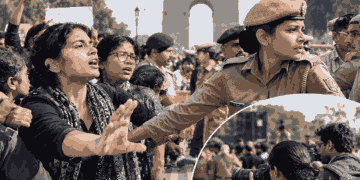












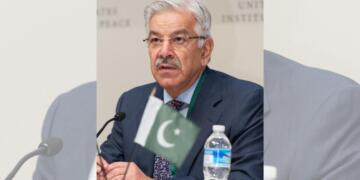









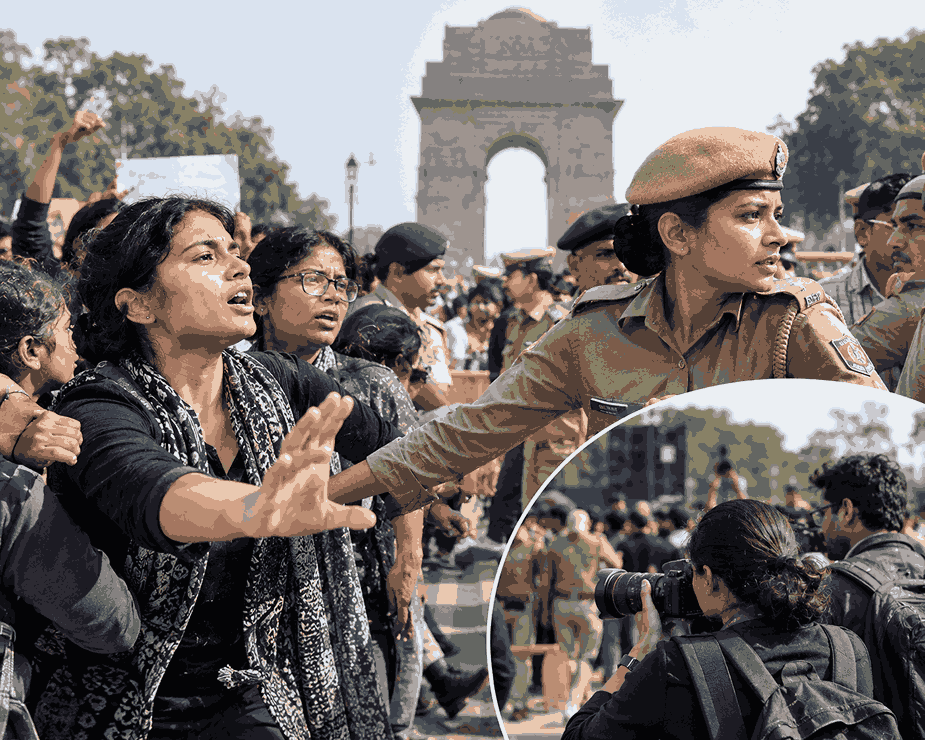
The Delhi Police has rejected allegations circulating on social media that women protesters were physically assaulted during recent demonstrations at Jantar Mantar, describing the claims as “baseless and misleading” and insisting that female protesters were handled by women personnel with dignity and in accordance with prescribed procedures. The statement comes amid a wider controversy surrounding police action during protests in the national capital.
The controversy relates to demonstrations held around Jantar Mantar against Chief Election Commissioner Gyanesh Kumar and alleged irregularities connected with the Special Intensive Revision of electoral rolls. Police authorities had imposed prohibitory orders in the New Delhi district, and several protesters were detained after attempting to reach the protest site despite restrictions. The subsequent circulation of videos and allegations on social media intensified criticism of the police response.
According to the Delhi Police, however, the online narrative does not accurately represent what happened at the protest site. New Delhi DCP Sachin Sharma said allegations that female protesters had been physically assaulted did not reflect the actual sequence of events. He stated that women protesters were dealt with by female staff and were treated with dignity and due regard.
The Delhi Police response is particularly significant because the allegations emerged alongside separate complaints made by three women journalists who said they were sexually harassed while covering the October 3 demonstration. Those complaints have been transferred to the Crime Branch for what authorities have described as a fair and impartial inquiry. The allegations remain subject to investigation, and the competing accounts have made the issue especially sensitive.
The police have also sought to distinguish between verified incidents and material being circulated without adequate context. During a period of heightened political activity, short video clips can rapidly acquire a narrative of their own, particularly when they are shared without information about what happened immediately before or after the recorded moment. That makes independent verification important before accusations are treated as established facts.
At the same time, the Delhi Police has acknowledged the need for journalists covering demonstrations to follow certain identification and safety protocols. In an advisory issued after the controversy, journalists were asked to carry valid organisational identification or recognised accreditation and keep their identification visibly displayed while covering protests. They were also advised not to obstruct police operations or the movement of law-enforcement personnel.
Such guidelines have generated their own discussion because journalists covering public demonstrations must be able to report freely while also operating in rapidly changing and sometimes tense environments. The Delhi Police has argued that clear identification can help officers distinguish accredited media personnel from protesters, particularly during situations involving detentions, crowd movement or clashes.
The controversy has also been complicated by allegations against ACP Vivek Bhagat, who was accused by a woman journalist in connection with the October 3 incident. The matter is part of the broader complaints being examined by investigators. Bhagat was subsequently promoted to Additional DCP, prompting questions from critics, although senior officials have said the promotion was part of a routine process and that the proposal had been initiated earlier. Eleven other officers were also promoted.
For the Delhi Police, the episode presents a difficult test of public communication. A force responsible for maintaining order at politically charged demonstrations must explain its actions quickly, but it must also ensure that serious allegations against individual personnel receive an impartial examination. Denials alone cannot settle disputed incidents; evidence, witness accounts, video footage and formal investigations ultimately have to establish what occurred.
The Delhi Police has said that detained protesters were dealt with according to prescribed procedures and applicable law, rejecting claims that suggested otherwise. The force’s position is that the emerging social-media narrative has exaggerated or distorted events surrounding the demonstrations.
For the public, the most responsible approach is to distinguish between allegations, official denials and facts established through investigation. Neither viral posts nor blanket dismissals can substitute for evidence. The complaints involving journalists deserve a transparent inquiry, while unsupported claims of physical assault should not be treated as proven merely because they gain traction online.
The Jantar Mantar controversy therefore goes beyond one demonstration. It highlights the growing challenge faced by law-enforcement agencies, journalists and protesters in an era when events can be recorded, edited and circulated globally within minutes. Accountability requires scrutiny of police conduct, but it also requires accuracy from those reporting on it. Ultimately, the credibility of every side will depend not on the loudest accusation or strongest denial, but on what the evidence shows.