







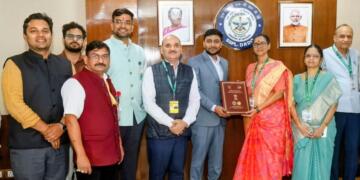














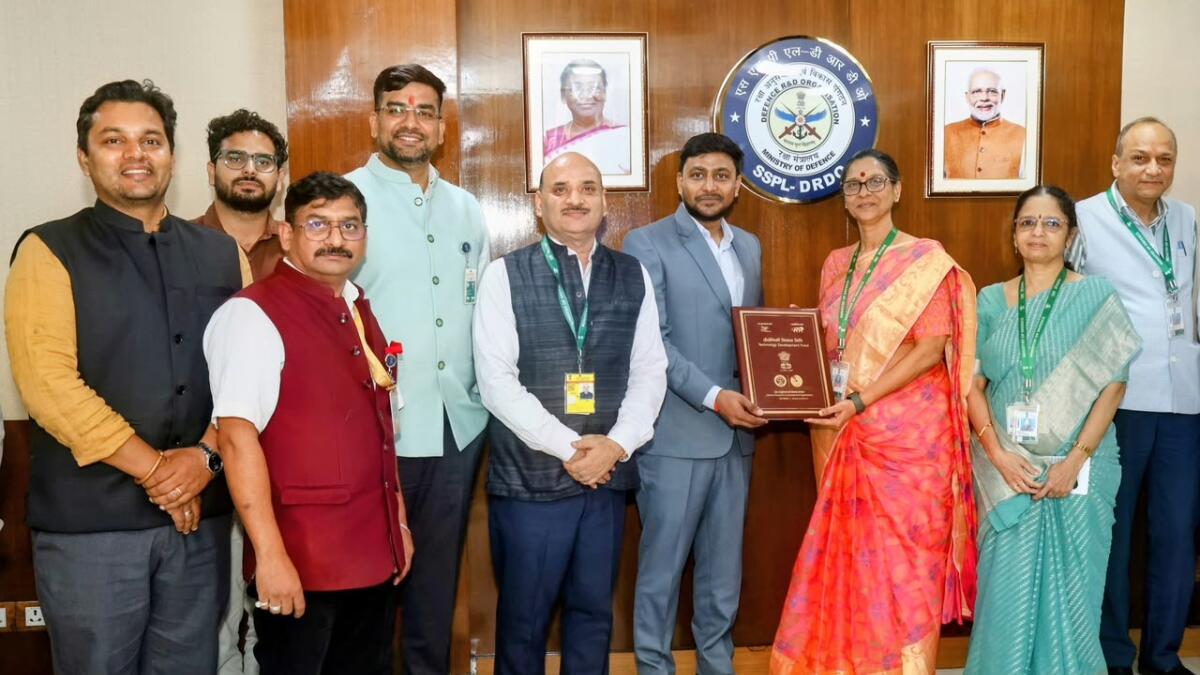
The Defence Research and Development Organisation (DRDO) has signed its first high-value deep-tech project agreement under the Technology Development Fund (TDF) scheme, partnering with start-up Zero mK India Private Limited to indigenously develop a 20 mK dilution refrigerator for quantum applications.
The agreement was signed in New Delhi between the Director, TDF, and Zero mK India Private Limited, a start-up based in Alwar, Rajasthan. It marks the first high-value project to be sanctioned under the Rs 500 crore corpus that Defence Minister Rajnath Singh had earlier approved specifically for deep-tech and cutting-edge projects, positioning it as a marquee agreement under the broader TDF framework rather than a routine one.
Why a dilution refrigerator matters
Dilution refrigerators are specialised cryogenic systems capable of reaching extremely low temperatures in the millikelvin range — far colder than conventional cooling technology. That ultra-low-temperature environment is essential for operating and testing several quantum computing platforms and related quantum technologies, which require near-absolute-zero conditions to function reliably.
Developing a 20 mK-class refrigerator domestically is being framed as directly aligned with India’s National Quantum Mission, strengthening the country’s capabilities across quantum technology, advanced cryogenics and strategic technology domains. Officials say the project is aimed at building a self-reliant, quantum-ready ecosystem and, in particular, reducing India’s dependence on imported cryogenic infrastructure — equipment that currently has to be sourced from abroad for quantum research and development.
Defence Minister Rajnath Singh complimented DRDO, industry partners, and all stakeholders involved in the project, and said he was confident the partnership would set an important precedent for future collaborations between DRDO and industry in emerging technology domains.
Defence Secretary and Chairman of DRDO, Rajesh Kumar Singh, congratulated the teams associated with the initiative and wished them success in meeting the project’s objectives.
The signing was attended by the Director General of Micro Electronic Devices & Computational System and Cyber Security (DG MCC), the Director General of Technology Management (DG TM), the Director of the Solid State Physics Laboratory (SSPL), and other stakeholders. The project itself will be monitored and mentored by the Director of SSPL and his team going forward.
The agreement reflects a broader push to route India’s deep-tech and defence-relevant R&D funding toward domestic start-ups rather than established defence contractors alone, with quantum technology emerging as one of the priority areas where India is trying to reduce reliance on imported critical infrastructure. As the first project of its scale under the dedicated deep-tech corpus, this agreement is likely to be closely watched as a template for how DRDO structures similar high-value start-up partnerships going forward.