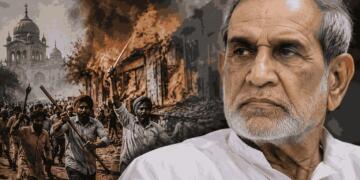



















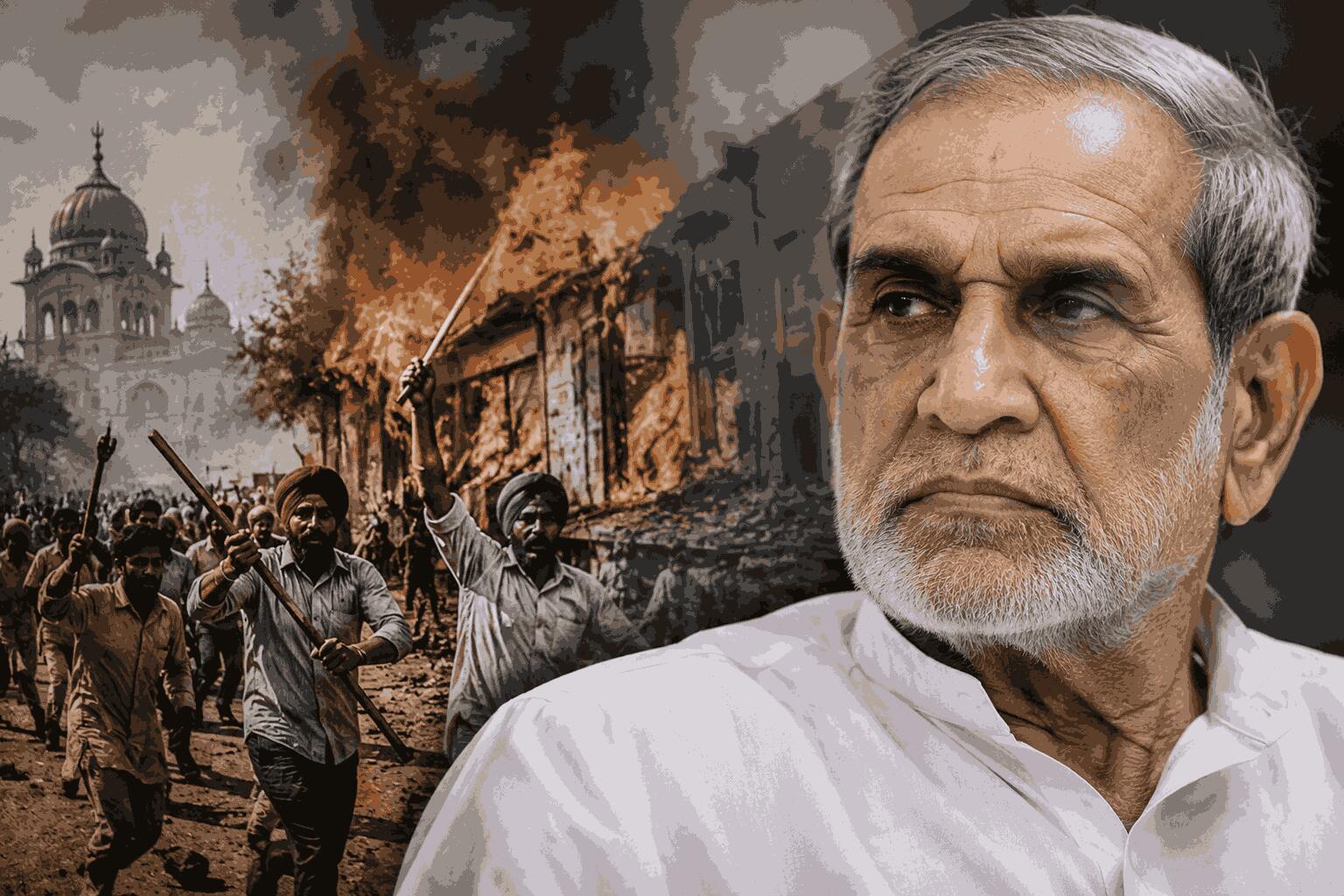
The death of former Congress MP Sajjan Kumar at the age of 80 has brought renewed attention to a controversial political career in modern Delhi. Once a powerful Congress organisation man and three-time Member of Parliament, Kumar spent decades as an influential figure in the capital before his political legacy became inseparable from the 1984 anti-Sikh riots and the long legal battle that followed. He died on August 20, 2026, while serving a life sentence in Tihar Jail.
Born in Delhi, Kumar rose through the Congress ranks when local political networks and grassroots organisation mattered greatly in elections. His influence was particularly strong in west Delhi, where he built a substantial support base. He entered Parliament from the Outer Delhi constituency and represented the seat three times, becoming a prominent Congress leader in the capital.
Yet the events following Prime Minister Indira Gandhi’s assassination on October 31, 1984, permanently changed the trajectory of his career. Delhi witnessed horrific violence against Sikhs in the days that followed, with thousands killed across the country. Sajjan Kumar was accused of involvement in the violence, allegations he consistently contested. For years, cases against him moved slowly, with investigations criticised by victims’ families and rights groups.
The legal history of Sajjan Kumar is complex and cannot be reduced to a single verdict. In 2013, a trial court acquitted him in a major case involving killings in Delhi while convicting other accused persons. The Central Bureau of Investigation challenged the acquittal, and the Delhi High Court reversed it in 2018. The High Court sentenced Kumar to life imprisonment after finding him guilty of conspiracy and other offences connected with the massacre. The judgment marked a major moment in the search for accountability.
Kumar resigned from Congress after the 2018 conviction and began serving his sentence. His legal battles continued. He sought relief from the courts, including bail on medical grounds, while his appeal against the High Court conviction remained pending before the Supreme Court. In January 2026, a Delhi court acquitted him in another case concerning allegations of violence in Janakpuri and Vikaspuri, holding that the prosecution had failed to establish his involvement beyond reasonable doubt.
The controversy deepened again in February 2025 when Sajjan Kumar was convicted in the murder of Jaswant Singh and his son Tarundeep Singh, who were killed during the violence in November 1984. A Delhi court sentenced him to life imprisonment after finding him guilty. The case represented another significant development in a judicial process that had continued for more than four decades.
For survivors and families of victims, the story of Sajjan Kumar is inseparable from the demand for justice after the 1984 killings. The extraordinary delay between the violence and several convictions remains one of the defining features of the case. Investigations were reopened in some matters years after the original incidents, while witnesses and families pursued cases through successive governments and investigative agencies. Time also brought the loss of witnesses and documentary evidence.
His death has now brought an unusual legal conclusion to the remaining proceedings against him. Reports said pending cases against him will abate following his death, while his convictions and imprisonment remain part of the historical and judicial record. Sajjan Kumar’s death has also revived political debate over how parties and leaders remember figures associated with painful episodes of India’s past.
The legacy of Sajjan Kumar will consequently remain contested. To political associates from his earlier years, he was a formidable grassroots organiser with a significant electoral presence. For Sikh survivors and families who spent decades seeking justice, his name became synonymous with one of the darkest episodes in independent India’s history. That contrast explains the sharply different reactions to his death.
His political legacy cannot rest simply on electoral successes or later convictions. It must also account for the human cost of the violence, institutional failures that delayed justice and a judicial process producing convictions and acquittals in different cases. The passage of four decades has not erased the memories of those who lost relatives, homes and livelihoods during the violence. Sajjan Kumar’s story is ultimately a reminder that political power can shape a career for decades, but it cannot permanently place a controversial past beyond scrutiny.