















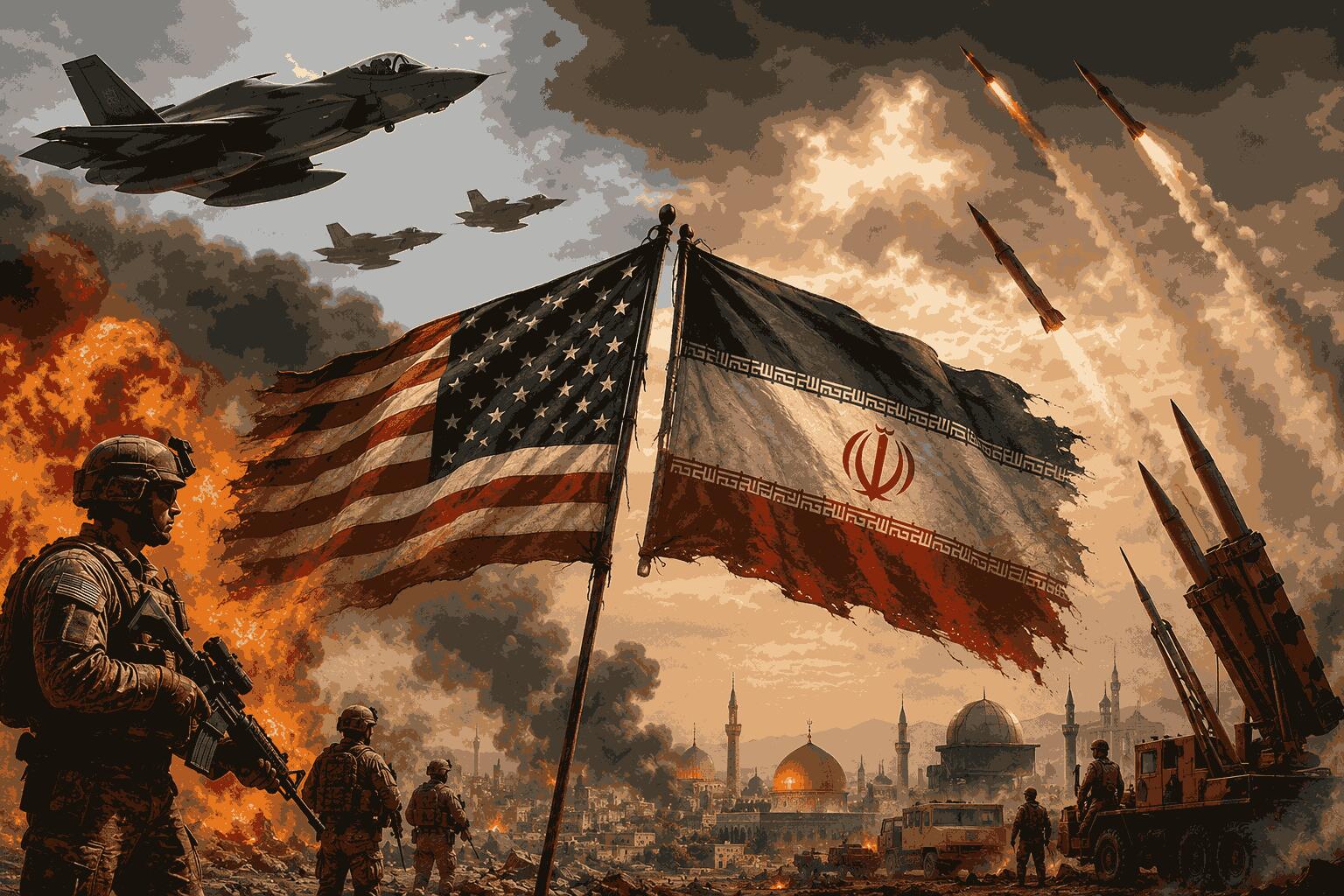
The latest escalation in USA-Iran tensions has renewed fears of a wider conflict across West Asia, a region already burdened by multiple security crises. Military actions and retaliatory threats have once again highlighted how quickly regional confrontations can expand beyond national borders, drawing neighbouring countries, global powers, and international markets into a rapidly evolving security challenge.
What makes the current situation particularly significant is not merely the exchange of military force but the broader strategic implications. Unlike isolated incidents of the past, any sustained confrontation carries the risk of disrupting regional stability, commercial shipping routes, energy supplies, and diplomatic relations. Governments around the world are therefore closely monitoring developments, aware that even limited military operations could have consequences far beyond the immediate battlefield.
The USA-Iran rivalry has shaped Middle Eastern geopolitics for decades. Differences over regional influence, security alliances, nuclear policy, and support for various armed groups have repeatedly brought both countries into confrontation. While periods of diplomacy have occasionally reduced tensions, fundamental disagreements have continued to fuel mistrust. Every new military incident is therefore viewed within this larger historical context rather than as a standalone event.
Regional governments now face the difficult task of protecting their own security while avoiding deeper involvement in a conflict between two powerful adversaries. Countries hosting foreign military installations or maintaining close defence partnerships may find themselves under increased pressure as both sides seek strategic advantages. The evolving USA-Iran situation illustrates how interconnected security arrangements have become throughout West Asia.
Financial markets are equally sensitive to geopolitical instability. Investors often react quickly to signs of conflict, particularly when events occur near major energy-producing regions or maritime trade corridors. Oil prices, insurance costs for shipping, and currency markets can all experience volatility during periods of heightened uncertainty. Although economic disruptions may initially appear temporary, prolonged instability can influence inflation, investment decisions, and global supply chains for months.
Diplomatic efforts remain essential even when military tensions dominate international headlines. Throughout history, many serious confrontations have eventually been contained through negotiations, third-party mediation, or confidence-building measures. The present USA-Iran crisis demonstrates why diplomatic communication channels remain indispensable, especially when misunderstandings or rapid military responses could unintentionally trigger wider escalation.
Another important dimension is the humanitarian impact of any prolonged conflict. Civilians living near areas of military activity often bear the greatest burden through displacement, disruption of essential services, and economic hardship. International humanitarian organisations typically prepare contingency plans whenever regional tensions increase, recognising that civilian populations require protection regardless of political or military developments. Long-term peace ultimately depends not only on military calculations but also on preserving human security.
The international community has also emphasised the importance of respecting international law and preventing actions that could broaden the conflict. Global institutions frequently encourage restraint while urging all parties to pursue dialogue wherever possible. The current USA-Iran confrontation therefore represents not only a bilateral dispute but also a test of international mechanisms designed to reduce the risk of regional war.
Military analysts caution against assuming that modern conflicts remain geographically confined. Advanced missile systems, cyber capabilities, drones, and proxy actors have transformed the nature of warfare. Even limited exchanges can generate strategic uncertainty across multiple countries. This evolving security environment makes crisis management considerably more complex than in previous decades.
For policymakers, balancing deterrence with diplomacy remains one of the greatest challenges. Strong military postures may be intended to discourage further attacks, yet they can also increase the possibility of miscalculation. The ongoing USA-Iran tensions underline the importance of clear communication, calibrated responses, and political leadership capable of preventing unintended escalation.
Looking ahead, much will depend on whether diplomatic engagement can regain momentum before military developments overtake political efforts. Regional partners, international organisations, and influential global powers all have roles to play in encouraging dialogue while discouraging further escalation. A stable West Asia remains essential not only for the countries directly involved but also for global economic and strategic security.
Ultimately, the current USA-Iran crisis serves as a reminder that modern conflicts rarely remain local. Decisions taken by national leaders can affect energy markets, international trade, diplomatic relations, and the lives of millions far beyond the region. As events continue to unfold, the world’s attention will remain focused on whether diplomacy can prevail over confrontation and whether the USA-Iran relationship can move away from military escalation toward a more sustainable framework for regional stability.