


















The Indian Navy has taken a long-stalled project to its next stage. Vice Chief Vice Admiral Ajay Kochhar said on Monday that a request for proposal had been issued to shortlisted shipyards the previous week for four landing platform docks, or LPDs. The document asks domestic builders to submit technical and commercial bids, moving the project into a formal procurement stage.
The numbers are large. Each ship is expected to displace more than 30,000 tonnes and measure about 220 metres in length, and the programme is estimated at nearly ₹50,000 crore. They would be the largest combat ships built in India after INS Vikrant, the 45,000-tonne aircraft carrier. The RFP is not a contract. The next steps are evaluating bids, selecting a shipyard or shipyards, and awarding a contract, and the ships will take years to design, build and integrate.
What is a landing platform dock?
An LPD is a ship built to put an army on a beach. It combines three things in one hull.
The first is a well dock, a flooding chamber at the stern. Water is let in, and landing craft and hovercraft float out through an open stern gate, loaded and ready to head for shore. The second is a flight deck and hangar for helicopters that carry troops and cargo over the beach. The third is a cavernous interior of vehicle decks, troop quarters, stores and a hospital.
The effect is that a force can be launched from the sea, miles offshore, without a port. In the Tribune’s account, such a ship can deliver men and equipment near a beach and needs no berthing dock, so thousands of troops can land near a chosen spot.
What India’s ships are meant to carry
The Navy’s plans give a sense of scale. Each LPD will have a crew of 60 officers and 525 sailors, and carry 900 fully equipped Army personnel along with vehicles, tanks and artillery. Their equipment will include specialised landing craft to move personnel and equipment ashore, two heavy-lift helicopters and 12 special-operations helicopters. The ships can also support other warships through onboard workshop facilities.
How an amphibious assault works
Amphibious warfare means striking from the sea against land that may be defended. The idea is to move fast, choose a landing point the enemy did not expect, and get enough force ashore before the defenders can react. That requires several things working in sequence: ships that carry the force, craft that move it from ship to shore, aircraft that add reach, and escorts that protect everything at sea.
The LPD is the central piece. Landing craft take vehicles and troops directly to the beach, while helicopters move people over defences or past obstacles. Together they let a commander land troops at more than one point at once.
The same capability is used far more often in peacetime. These ships evacuate civilians from crisis zones, deliver relief after cyclones and earthquakes, and serve as floating hospitals and command posts.
A single ship doing a big job
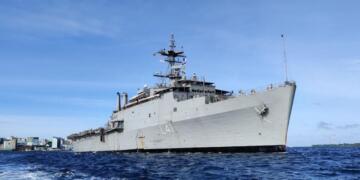
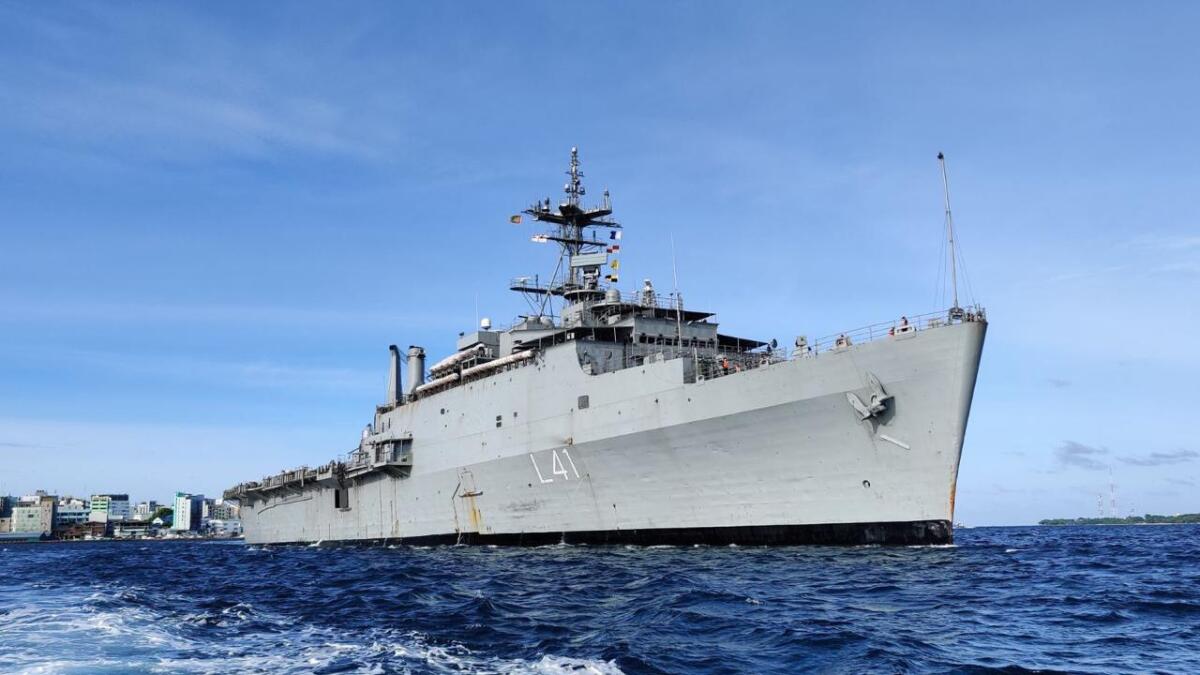
India’s present amphibious capability rests on one ship. The Navy operates a single LPD, INS Jalashwa, acquired from the United States. It began life as USS Trenton and was bought in 2007. It is supported by smaller landing ships. An earlier estimate said this fleet could move about a brigade, some 5,000 men, an estimate from the time of that earlier Tribune report rather than a current figure.
The new ships are meant to widen that gap. They are expected to be a major step up in size, capacity and firepower over anything the Navy now fields in this role.
Why the strategic focus is sharpening
The project’s backdrop is the Indian Ocean. China’s naval expansion is among the primary strategic drivers behind the programme, and China’s navy operates a growing fleet of amphibious vessels, including Type 071 landing platform docks and Type 075 amphibious assault ships.
India’s ships would give it a way to project force across the ocean, whether that means reinforcing island territories, responding to a crisis in a friendly country or protecting Indian citizens abroad.
A long road to this point
The idea is not new. The Navy froze its requirements for the ships in 2008. A tender followed in 2013, when it floated a $2.6 billion domestic tender for four LPDs, with bids sent to Larsen & Toubro, Pipavav Defence and Offshore Engineering, and ABG Shipyard. The plan stalled. In October 2020, the Navy scrapped the tender, nearly seven years after launching the acquisition process.
A fresh start came with an information request in 2021, which allowed Indian yards to work with foreign partners. The ships have also grown. Early plans spoke of 20,000-tonne vessels, and the present design is well past 30,000.
What comes next
The bids will now be evaluated, and the Navy has not named the shortlisted yards in the reports available so far. The programme sits within a far wider shipbuilding push. Vice Admiral Kochhar said initial approvals had been given for 78 naval platforms and 120 fast interceptor craft worth ₹2.41 trillion, with the purchase processes at different stages.
For now, the ships exist only on paper. If the project survives its long history of delays, the Navy will eventually have four ships able to carry an army across the water, and the first real test will be whether a shipyard can build them on time.