
















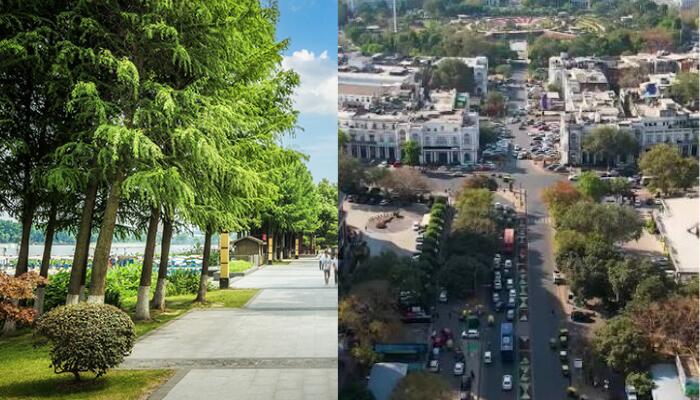
The National Capital Region is poised for a major urban transformation as the Centre has announced plans to develop four new greenfield cities, to be known as “Namo Cities”, under the Regional Plan 2041. Backed by a dedicated fund of ₹5,000 crore, the initiative aims to reduce pressure on Delhi while creating new centres of economic activity, employment and modern urban living across the NCR.
The decision was taken during the 42nd meeting of the National Capital Region Planning Board (NCRPB), chaired by Union Housing and Urban Affairs Minister Manohar Lal. The meeting was attended by Delhi Chief Minister Rekha Gupta, Haryana Chief Minister Nayab Singh Saini, and representatives from Uttar Pradesh and Rajasthan.
Announcing the proposal, Manohar Lal said that four greenfield cities would be developed and branded as “Namo Cities”. The states will submit proposals, and the final selection will take place through a competitive challenge process.
Under the proposed framework, participating states will identify three potential locations each and submit detailed plans. From these submissions, four cities will be selected for development. The Centre has earmarked ₹5,000 crore for the project over the next five years, making it one of the most significant urban development initiatives planned for the NCR in recent years.
A Response to NCR’s Explosive Growth
The proposal stems from projections that point towards unprecedented urban expansion in the region. According to discussions held during the NCRPB meeting, the NCR’s urban population is expected to reach nearly 57 per cent by 2031 and around 67 per cent by 2041.
Officials also indicated that the region’s overall population could witness a dramatic rise in the coming decades. Manohar Lal noted that the NCR’s population could touch nearly 15 crore in the next decade, making the creation of new urban centres essential for sustaining growth and maintaining quality of life.
The proposed Namo Cities are envisioned as integrated urban ecosystems equipped with housing, employment opportunities, public transport networks and social infrastructure. Speaking about the planning model, the minister said the cities would be developed in conjunction with expanding metro connectivity and transit-oriented development policies, similar to those being pursued in Delhi.
States Join the Race
Even before the final framework is approved, states have begun positioning their preferred locations.
Uttar Pradesh Urban Development Minister A.K. Sharma proposed the Noida-Dadri-Jewar-Bulandshahr belt as a strong contender, arguing that the region is well suited to accommodate NCR’s future expansion and economic activity.
Rajasthan has put forward Alwar and Bharatpur as potential candidates, citing their strategic location and long-term growth prospects within the NCR framework.
The announcement comes as the NCRPB moves closer to finalising the Regional Plan 2041. Although the plan has not yet received formal approval, officials said broad consensus has been achieved on most issues, and the final document is expected to be cleared within the next two months after the resolution of remaining technical matters.
Beyond the creation of four new cities, the broader objective of the Regional Plan 2041 is to reshape the NCR’s development model itself. Through balanced regional growth, improved connectivity via the Regional Rapid Transit System (RRTS), and the emergence of new urban magnet centres, policymakers aim to reduce Delhi’s disproportionate burden and create a more distributed and resilient regional economy. If realised as envisioned, the Namo Cities could become the cornerstone of NCR’s next phase of growth, marking a decisive shift from Delhi-centric expansion to a more balanced urban future.