






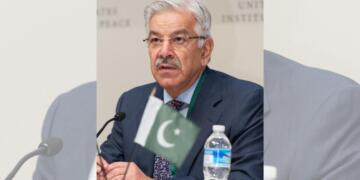
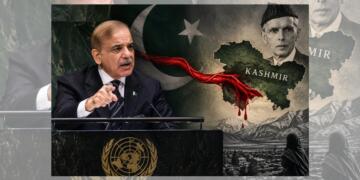








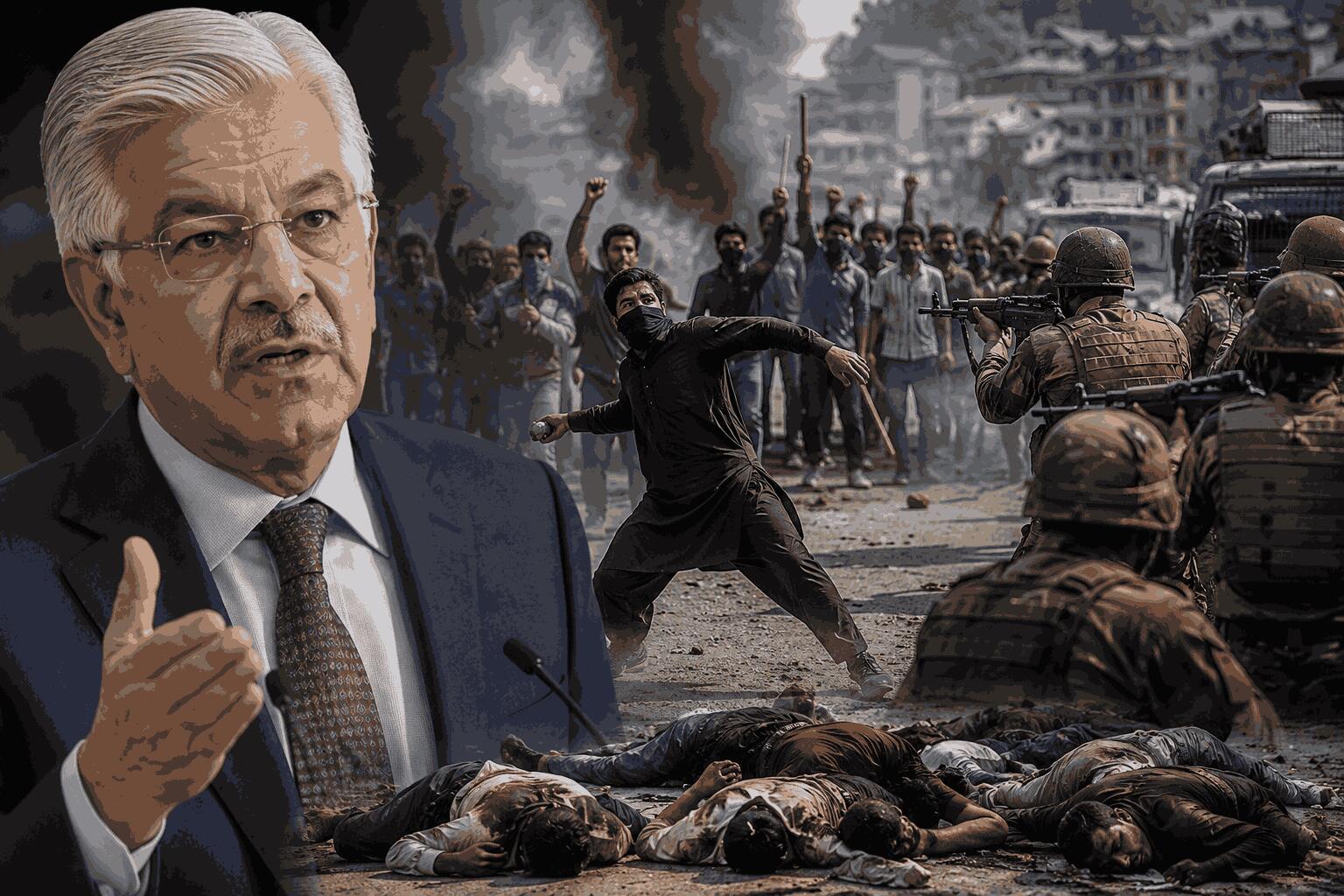
Pakistan’s Defence Minister Khawaja Asif has triggered fresh controversy after describing protesters in Pakistan-occupied Kashmir (PoK) as Enemies like India, amid a widening political crisis that has drawn international attention. The remarks came as reports indicated that at least 14 activists were killed during a security crackdown on demonstrators demanding greater political rights and accountability. The comments have intensified criticism of Islamabad’s handling of unrest in the region and raised questions about civil liberties in PoK.
The unrest has been building for several months, with activists accusing the Pakistani administration of suppressing dissent through arrests, restrictions on public gatherings, and the use of force against political workers. Demonstrators have alleged that local voices demanding constitutional rights, economic reforms, and greater autonomy have increasingly been met with coercive measures rather than dialogue.
Speaking on the escalating situation, Khawaja Asif defended the government’s actions and claimed that individuals challenging the state’s authority were acting against Pakistan’s interests. His remarks referring to protesters as Enemies like India immediately became the focal point of political debate, drawing criticism from rights groups and opposition figures who argued that equating domestic dissent with external adversaries risks deepening tensions instead of resolving them.
According to reports emerging from the region, security forces launched operations following widespread demonstrations that allegedly turned confrontational in several locations. Local activists claimed that police and paramilitary personnel used force to disperse crowds, resulting in multiple fatalities and injuries. While official figures and independent accounts have differed on certain details, the reported deaths have intensified calls for a transparent investigation into the incident.
The description of protesters as Enemies like India has also generated strong reactions on social media, where critics questioned whether political dissent should be viewed through the lens of national security. Several commentators argued that democratic systems require governments to distinguish between peaceful political activism and genuine security threats, particularly when dealing with citizens voicing grievances.
Human rights advocates have renewed concerns over restrictions on freedom of expression and assembly in Pakistan-administered Kashmir. International watchdogs have, on previous occasions, highlighted allegations of arbitrary detentions, limitations on political activity, and pressure on journalists covering sensitive issues in the region. The latest developments are expected to renew scrutiny of Pakistan’s human rights record in territories under its administration.
Analysts believe that branding protesters as Enemies like India could further polarize an already volatile political environment. Rather than encouraging negotiations, such rhetoric may strengthen perceptions that legitimate political demands are being framed as acts of disloyalty. Observers note that governments facing prolonged civil unrest often struggle to balance national security considerations with the protection of democratic freedoms.
The latest crackdown has also revived discussion over governance and political representation in Pakistan-occupied Kashmir. Protest leaders have repeatedly asserted that they seek greater transparency, improved public services, and increased participation in decision-making. Authorities, however, have maintained that security concerns necessitate firm action whenever public order is threatened.
Diplomatic observers say the controversy may also influence broader regional discourse involving India and Pakistan. References to Enemies like India by a senior cabinet minister inevitably carry diplomatic significance, particularly given the longstanding tensions between the two nuclear-armed neighbours. While New Delhi has consistently maintained that Pakistan-occupied Kashmir is an integral part of India, Islamabad continues to reject that position, making statements from senior officials closely watched on both sides of the border.
Political analysts further argue that the language employed by senior leaders often shapes public perception during periods of unrest. Describing protesters as Enemies like India may resonate with some domestic audiences concerned about national security, but critics contend that it also risks alienating sections of the local population who insist their demands are rooted in governance rather than separatism or foreign influence.
As reports of casualties continue to emerge, pressure is mounting on Pakistani authorities to clarify the circumstances surrounding the deaths and the conduct of security personnel during the operation. Rights organizations have called for impartial inquiries and accountability where excessive force is found to have been used.
The controversy surrounding Khawaja Asif’s remarks has ensured that the focus now extends beyond the immediate violence. Whether the government chooses dialogue, further security measures, or a combination of both will likely determine how the situation evolves in the coming weeks. For now, the repeated characterization of protesters as Enemies like India has become one of the defining features of a crisis that has drawn renewed international attention to conditions in Pakistan-occupied Kashmir.