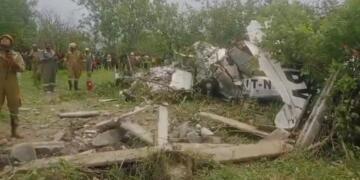



















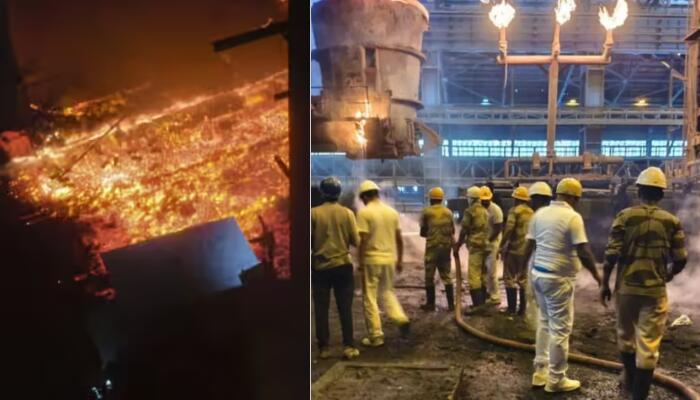
Preliminary assessments indicate that the explosion may have been caused either by impurities in the molten metal or a process-related failure. Officials have also not ruled out operational lapses during the casting sequence. The scale of the blast has been described as unprecedented within recent memory by both plant personnel and fire officials.
Probe Underway as Experts Examine Failure Points
A three-member external expert committee, led by the director-in-charge of the Bokaro Steel Plant, has been tasked with investigating the incident. The panel is expected to interact with management, engineers and union representatives before submitting its findings to the Union government.
Officials noted that the last comparable tragedy at the plant occurred in 2012, when 19 workers died in an oxygen pressure-reducing station explosion. However, authorities have emphasised that the current incident took place under different operational conditions within the steel melting unit.
Workers Allege Systemic Strain and Staffing Cuts
While the investigation continues, employee unions have raised serious concerns over what they describe as a gradual weakening of the plant’s operational backbone. According to CITU Visakhapatnam district secretary RKSV Kumar, around 3,000 permanent workers and 5,000 contract workers have been laid off in recent years without adequate replacement.
Workers also complain that procurement standards have deteriorated, leading to the use of substandard raw materials and ageing equipment, including ladles and conveyor systems. Several employees claim that administrative pressure to increase production has intensified, even as staffing levels declined sharply, forcing non-specialised personnel to handle technical responsibilities.
Senior foreman KM Srinivas, who has worked at the plant for 36 years, said that repeated warnings about safety and material quality were not acted upon, making it difficult to adhere strictly to standard operating procedures during high-risk operations.
Political Tensions and Privatisation Debate Resurface
The incident has reignited long-standing political tensions over the future of the public sector plant. The unit, operated under the Union Ministry of Steel through Rashtriya Ispat Nigam Limited, has been at the centre of debates over strategic disinvestment since 2021.
Union movements have consistently opposed privatisation attempts, arguing that the plant represents both regional identity and economic rights in Andhra Pradesh. The slogan “Visakha Ukku Andhrula Hakku” continues to symbolise that sentiment.
Andhra Pradesh Deputy Chief Minister Pawan Kalyan, after visiting the site, acknowledged that workers had raised allegations regarding staffing and safety, while cautioning that these claims required formal verification through expert inquiry.
Chief Minister N. Chandrababu Naidu had earlier criticised employees in 2025, drawing comparisons with private steel producers and questioning efficiency levels, further intensifying labour tensions.
Compensation Announced, But Questions Persist
Following the tragedy, compensation packages have been announced for victims’ families, along with promises of permanent employment for dependents of deceased workers. Union Minister for Steel and Heavy Industries H.D. Kumaraswamy and Minister of State K. Rammohan Naidu confirmed financial assistance of up to ₹1.72 crore for permanent employees and lower amounts for contract workers, alongside insurance and terminal benefits.
Despite these measures, uncertainty persists inside the plant. Employees and unions insist that without structural corrections in staffing, safety enforcement and procurement systems, the incident may not remain isolated.
As investigations proceed, the blast has become more than an industrial accident. It now stands as a sharp reminder of unresolved tensions between policy direction, labour conditions and industrial safety in one of India’s most politically charged public sector enterprises.