

















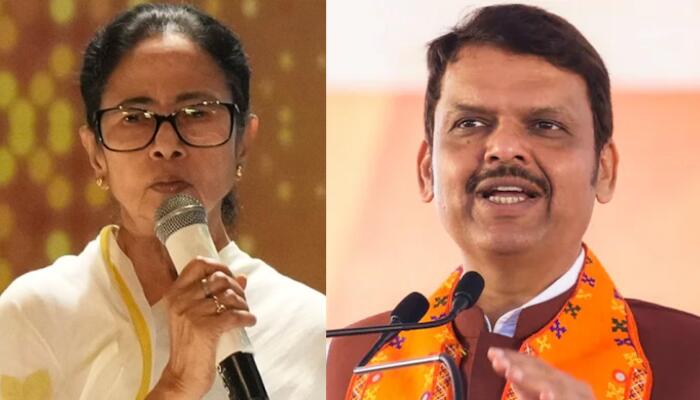
In an escalation of political attacks ahead of the 2026 West Bengal Assembly elections, Maharashtra Chief Minister Devendra Fadnavis launched a scathing critique of the ruling Trinamool Congress, questioning its economic record, industrial performance, and governance framework.
Addressing his first press conference in the state, Fadnavis challenged the government to disclose comprehensive data on registered businesses and those that have exited West Bengal. He alleged a widening gap between investment commitments and actual industrial output, arguing that while Memorandums of Understanding continue to be signed, the conversion of these agreements into tangible production remains incomplete. For all the paperwork, he suggested, Bengal’s industrial revival has yet to move beyond paper.
He contrasted this with the state’s past economic standing, noting that West Bengal once ranked among the top five economies in the country. That momentum, he said, has visibly eroded. Despite repeated announcements and agreements, industries have declined, and the outcomes remain largely invisible.
Mounting debt and administrative lag
Fadnavis raised serious concerns over the state’s financial situation, citing data that places West Bengal’s debt-to-GSDP ratio at around 39 per cent, significantly higher than the recommended 25 per cent benchmark. He warned that such fiscal trends could push the state into a debt trap if not addressed in time.
He also pointed to what he described as administrative stagnation, highlighting that while most states have implemented the 7th Pay Commission and are progressing towards the 8th, West Bengal continues to operate under the 5th or 6th Pay Commission structure. According to him, this reflects both financial strain and a systemic lag in governance.
On natural resources, Fadnavis questioned the state’s handling of mining revenues. Despite significant activity, he alleged that the benefits are not adequately reaching the exchequer. He argued that while expenditure continues to rise, earnings remain limited, raising concerns over fiscal efficiency and priorities.
Governance questions and political positioning
Taking a direct swipe at Chief Minister Mamata Banerjee, Fadnavis questioned the credibility of the TMC’s “Maa, Mati, Manush” slogan, stating that the condition of people, land, and governance does not reflect its promise and requires serious introspection.
He also raised concerns about institutional accountability, alleging that constitutional bodies operate under pressure and questioning what he described as a deteriorating democratic environment.
Responding to TMC’s allegations of attacks on Bengali-speaking migrants in BJP-ruled states, including Maharashtra, Fadnavis dismissed the claims. However, he turned the focus back on West Bengal, stating that the steady migration of its workforce for employment raises fundamental questions about the state’s economic conditions.
With the 2026 Assembly elections approaching, Fadnavis asserted that the Bharatiya Janata Party will centre its campaign on governance and development, positioning itself not merely as an alternative, but as a direct political challenge to the incumbent regime.