














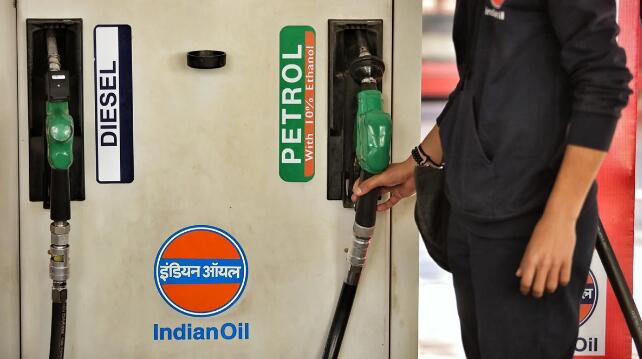
As geopolitical tensions set energy infrastructure ablaze and global crude prices soar, Indian motorists are witnessing a phenomenon that defies market logic, petrol and diesel are flowing into tanks at prices virtually unchanged from four years ago.
This fiscal stillness is a stark anomaly on the global map. According to the research platform Global Petrol Prices, more than 120 nations have succumbed to the pressure, raising fuel costs by as much as 40%.
Yet, India remains a rare island of price stability, joined only by a handful of nations like Madagascar, standing as the only major economy to effectively freeze fuel rates in the face of an international inferno.
As per reports, decoupling from global reality is particularly striking when compared to major world powers and regional neighbors. The United States, despite its vast reserves, saw gasoline prices climb from $2.94 per gallon in February to over $4.11 by early April following the outbreak of war on Iran.
Closer to home, the economic toll is even more visible as Pakistan was forced to hike petrol prices by over 42% to PKR 458.40 per litre, with officials citing an inability to shield consumers from global volatility.
Even China, the world’s other great growth engine, opted for a moderate 20% increase to cushion its industry. Yet, in Delhi, retail prices remain anchored at Rs 94.77 for petrol and Rs 87.67 for diesel, even as state-owned oil marketing companies (OMCs) reportedly bleed Rs 18 per litre on petrol and Rs 35 on diesel.
Reason for the Miracle?
The “miracle” at the pumps is a carefully engineered shield composed of two main layers: fiscal intervention and deep-discount diplomacy. To keep retail prices from exploding, the Indian government has aggressively slashed central excise duties, effectively absorbing a significant portion of the tax revenue it would typically collect.
Simultaneously, India has masterfully navigated the global energy crisis by dramatically increasing its imports of discounted Russian crude oil, which skyrocketed from less than 1% of total imports to over 35% in recent years.
This cheaper feedstock has allowed State-owned Oil Marketing Companies (OMCs) to build a “buffer” during periods of lower global rates, which they are now using to absorb massive daily under-recoveries (losses) of approximately Rs 18 per litre on petrol and Rs 35 on diesel.
In essence, the low prices are not a reflection of the global market, but a byproduct of the government’s willingness to let state refiners take the financial hit to keep domestic inflation in check.
Economic Tightrope and the Price of Silence
Fuel is the lifeblood of industrial momentum, and its cost has a direct, two-pronged bearing on inflation. High crude prices typically slow down manufacturing while simultaneously forcing the government into “fiscal prudence,” often at the expense of other developmental allocations.
For a fast-growing economy like India, which imports roughly 90% of its oil, a sharp rise in crude is usually disastrous. While the government has mandated ethanol blending and cut excise duties to ease the burden on OMCs, the math remains unsustainable.
Private retailers like Nayara Energy have already signaled the pressure by passing on modest hikes, but the state-linked giants that dominate the market have largely held the line on normal-grade fuels.
The government’s information arm, the PIB, has moved to preempt panic, stating that the country’s fuel supply remains “stable and secure” with a total reserve capacity of 74 days.
However, the international climate suggests this security comes at a steep premium. On Monday, Brent crude surged over 6% to $95.89 a barrel following the seizure of an Iranian-flagged ship and drone strikes on American vessels. The International Energy Agency has labeled this the worst oil shock the world has seen, yet the Indian consumer remains largely insulated from the firestorm raging across the Strait of Hormuz.
The ‘Magic’ of the Ballot Box
If there is a secret ingredient to this Indian “miracle,” many observers suggest it is not found in a refinery, but in a polling booth. The timing of the price freeze coincides perfectly with crucial Assembly elections in West Bengal, Assam, Kerala, Puducherry, and Tamil Nadu.
Satirist Kamlesh Singh famously dubbed the conclusion of voting as “Tankful Day,” suggesting that the price gates will fly open once the last ballot is cast. This political link has become a focal point for the Opposition.
Rahul Gandhi, Leader of the Opposition in the Lok Sabha, took to X to warn that “the Modi government has neither direction nor strategy—just empty rhetoric,” predicting a sharp hike in petrol, diesel, and LPG post-election.
This pattern of “election-linked stability” is echoed in the recent history of neighboring Bangladesh. After attempting to stave off hikes following its own February elections, Dhaka eventually surrendered to market realities on April 18, raising petrol prices to Taka 135 a litre.
Even with India’s assistance in supplying diesel, the shortage in Bangladesh has manifested in six-hour queues at pumps. In India, political leaders like Abhishek Banerjee and Jairam Ramesh have used the current freeze as a campaign tool, daring the government to promise that prices won’t skyrocket after April 30.
A Storm on the Horizon
Prime Minister Narendra Modi has already issued a somber warning that hard times are around the corner, urging the nation to stand united as they did during the pandemic. While the government has managed to prevent the kind of chaos seen during past LPG shortages, the reality of a burning Middle East cannot be ignored forever.
Currently, Indians seem to be living like the proverbial ostrich with its head in the sand, only this time, the sand belongs to a region in conflict. As the blockade of the Strait of Hormuz continues and global supplies tighten, the transition from this “miracle” back to market reality is inevitable.
The only remaining question is whether the government can manage a gradual adjustment or if the Indian public is headed for a post-election price shock.