





















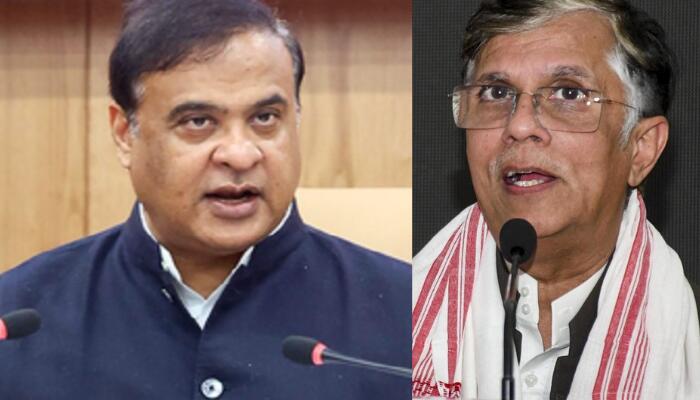
The Supreme Court today dealt a significant setback to Congress leader Pawan Khera, refusing to extend his transit anticipatory bail and effectively directing him to seek relief from courts in Assam, where a case has been registered against him over targeting Assam Chief Minister Himanta Biswa Sarma’s wife.
A bench of Justices JK Maheshwari and Atul S Chandurkar declined Khera’s plea to continue interim protection till April 20, making it clear that there would be no judicial cushion beyond what had already been granted earlier by the Telangana High Court, an order that now stands stayed.
In doing so, the top court also reinforced a key legal principle: jurisdiction cannot be bypassed for convenience.
‘Forum shopping’ under scrutiny
At the heart of the case lies a fundamental question the court was unwilling to ignore. Why was relief sought in Telangana when the FIR was registered in Assam?
The state had argued that Khera engaged in “forum shopping”, attempting to secure favourable relief from a court that did not have direct jurisdiction over the matter. The Supreme Court had earlier expressed surprise at the Telangana High Court entertaining the plea, and today’s order signals a clear unwillingness to legitimise such legal manoeuvres.
Khera has now been told, in no uncertain terms, to approach the Assam court, which alone will decide his anticipatory bail plea on its own merits.
Aadhaar ‘mix-up’ or something more?
The hearing also saw sharp exchanges over the documents submitted before the Telangana High Court. The Solicitor General had alleged that Khera relied on a questionable combination of Aadhaar documents to establish residence in Telangana, raising the spectre of fabrication.
Senior advocate Abhishek Manu Singhvi, appearing for Khera, dismissed this as a “mix-up” made in haste, insisting that the error was later corrected with additional documents placed on record. He even termed it a “small error”.
The bench was clearly not convinced. Justice Maheshwari’s pointed response indicated that such discrepancies cannot be brushed aside lightly, especially when they go to the root of jurisdiction.
No interim relief, but no prejudice either
While denying any extension of transit bail, the Supreme Court clarified that its earlier observations, as well as those of the Telangana High Court, would not prejudice the Assam court. The anticipatory bail plea, when filed, must be decided independently.
The court also noted that procedural hurdles such as court closure cannot be cited indefinitely, suggesting that Khera could approach the registry to have the matter listed urgently if required.
FIR invokes serious charges, police action escalates
The case stems from a press conference on April 5, where Khera alleged that Riniki Bhuyan Sharma held multiple passports and undisclosed foreign assets not declared in election filings. The allegations were swiftly rejected as false and fabricated.
An FIR was subsequently registered at the Guwahati Crime Branch under multiple provisions of the Bharatiya Nyaya Sanhita, including Sections 175, 35, 36, 318, 338, 337, 340, 352, and 356, covering offences ranging from false statements and cheating to forgery, use of forged documents, intentional insult, and defamation.
Assam Police action followed quickly, with teams reaching Hyderabad and even visiting Khera’s residence in Delhi, signalling the seriousness with which the state is pursuing the case.
Liberty vs procedure
Khera’s defence attempted to frame the case as one of personal liberty, arguing that the FIR was essentially defamation and that the scale of police action was excessive. Singhvi questioned whether Khera was being treated like a “hardened criminal” and warned against curtailing liberty over what he described as a procedural lapse.
The court, however, was unmoved.
A clear message from the top court
From the April 5 remarks to the April 17 order, the timeline reflects a rapidly escalating legal battle. With the Telangana High Court’s relief stayed on April 15 and no extension granted now, the Supreme Court has drawn a firm line.
The message is unambiguous. Jurisdiction matters. Procedure matters. And any attempt to bypass the appropriate legal forum will not find easy acceptance.
For Pawan Khera, the legal fight now shifts decisively to Assam, without the cushion he had sought to retain.