
















TFIPOST हिन्दी
TFIPOST Global
Tfipost.com
Tfipost.com
No Result
View All Result
  • Premium
  • Politics
    • All
    • Analysis
    • Opinions
    • Trending
    Tiananmen Square, Rajiv Gandhi, China, Congress, Doordarshan

    When Rajiv Gandhi told Doordarshan to tone down its coverage on Tiananmen Square Massacre in China

    Who Killed Akanksha ? How Many More Students Will Pay the Price for Education Mafias and Paper-Leak Rackets?

    Dhruv Rathee Connect, Protest Politics and a McKinsey Past: Meet the Three Faces of Cockroach Janta Party

    Dhruv Rathee Connect, Protest Politics and a McKinsey Past: Meet the Three Faces of Cockroach Janta Party

    Kawagoe Mosque Faces Demolition Review as Japan Confronts Legal, Community and Immigration Tensions

    Kawagoe Mosque Faces Demolition Review as Japan Confronts Legal, Community and Immigration Tensions

    • Analysis
    • Opinions
    • Trending
  • Economy
    • All
    • Business
    • Economy1
    • Finance
    India Joins Global Digital Elite, Climbs Into Fifth Spot as AI Revolution and Digital Infrastructure Reshape Economy

    India Joins Global Digital Elite, Climbs Into Fifth Spot as AI Revolution and Digital Infrastructure Reshape Economy

    How gaming merchants choose a payment gateway in India

    How gaming merchants choose a payment gateway in India

    The Informal Economy Pays the Price: Street Traders, Small Shops and the Hidden Cost of Trade Policy

    The Informal Economy Pays the Price: Street Traders, Small Shops and the Hidden Cost of Trade Policy

    Bank Guarantee Process: Ensuring Trust in Tenders, Contracts, and Trade Agreements

    Bank Guarantee Process: Ensuring Trust in Tenders, Contracts, and Trade Agreements

    • Business
    • Finance
  • Defense
    • All
    • Defence
    • Strategy
    • Weaponry
    Rudram-2 Passes Crucial Combat Trial, India Moves Closer to Indigenous SEAD Dominance

    Rudram-2 Passes Crucial Combat Trial, India Moves Closer to Indigenous SEAD Dominance

    Rajesh Kumar Singh Reveals Vietnam BrahMos Deal, Indonesia Agreement in Final Stages

    Rajesh Kumar Singh Reveals Vietnam BrahMos Deal, Indonesia Agreement in Final Stages

    Delhi Police Arrest Nine Linked to ISI-Dawood Network; Nuclear Facilities, Airports and Railway Stations Among Targets

    Delhi Police Arrest Nine Linked to ISI-Dawood Network; Nuclear Facilities, Airports and Railway Stations Among Targets

    Operation Sindoor Kept Pakistan Navy Docked as India Tightened Its Grip at Sea, Says Rajnath Singh

    Operation Sindoor Kept Pakistan Navy Docked as India Tightened Its Grip at Sea, Says Rajnath Singh

    • Defence
    • Strategy
    • Weaponry
  • Geopolitics
    • All
    • Africa
    • Americas
    • Asia Pacific
    • Europe
    • South Asia
    • West Asia
    India and Venezuela Signal Energy Recalibration as Rodríguez Visits New Delhi for Crucial Talks

    India and Venezuela Signal Energy Recalibration as Rodríguez Visits New Delhi for Crucial Talks

    Iranian President Pezeshkian Sent Resignation to Supreme Leader, Says IRGC Has Taken Control of State Power

    Iranian President Pezeshkian Sent Resignation to Supreme Leader, Says IRGC Has Taken Control of State Power

    AK-47 Funeral for Pulwama Plotter Exposes Fractures Inside Pakistan’s Terror Networks

    AK-47 Funeral for Pulwama Plotter Exposes Fractures Inside Pakistan’s Terror Networks

    Global Food Chains Collapse After the Ukraine War

    When the World Ran Dry: India’s Wheat Corridor Kept Bangladesh Fed During the Russia–Ukraine Shock

    • Africa
    • Americas
    • Asia Pacific
    • Europe
    • South Asia
    • West Asia
  • Knowledge
    • All
    • Culture
    • Education
    • History
    • Indology

    Who Killed Akanksha ? How Many More Students Will Pay the Price for Education Mafias and Paper-Leak Rackets?

    June 3, 1947 Revisited: Nishikant Dubey Blames Nehru-Gandhi Family for Partition and Kashmir Crisis

    June 3, 1947 Revisited: Nishikant Dubey Blames Nehru-Gandhi Family for Partition and Kashmir Crisis

    CBSE OSM Fallout Deepens as 4 Lakh Students Rush for Re-evaluation, Raising Serious Questions on Digital Checking System

    CBSE OSM Fallout Deepens as 4 Lakh Students Rush for Re-evaluation, Raising Serious Questions on Digital Checking System

    Veer Savarkar

    When Nehru Government Imprisoned Veer Savarkar for the Pakistani Prime Minister

    • Culture
    • History
    • Indology
  • Law
  • Lounge
    • All
    • Books
    • Cinema
    • Entertainment
    • Food
    • Games
    • Health
    • Lifestyle
    • Satire
    • Sports
    • technology
    • Travel
    Best Salicylic Acid Face Wash for Oily & Acne-Prone Skin

    Best Salicylic Acid Face Wash for Oily & Acne-Prone Skin

    Supreme Court Verdict Crushes Opposition’s SIR Narrative, Reasserts Election Commission’s Constitutional Authority

    Judicial Expansion at the Apex: Centre Clears Appointment of Five Judges to Supreme Court, Strength Nearing Full Capacity

    How Online Gambling Platforms Are Changing With Games Like Tower Rush

    How Online Gambling Platforms Are Changing With Games Like Tower Rush

    India’s Fastest Man: Gurindervir Singh Breaks the Barrier That Indian Sprinting Was Told Never to Cross

    India’s Fastest Man: Gurindervir Singh Breaks the Barrier That Indian Sprinting Was Told Never to Cross

    • Books
    • Cinema
    • Food
    • Health
    • Sports
    • technology
    • Travel
    • Satire
Tfipost.com
  • Premium
  • Politics
    • All
    • Analysis
    • Opinions
    • Trending
    Tiananmen Square, Rajiv Gandhi, China, Congress, Doordarshan

    When Rajiv Gandhi told Doordarshan to tone down its coverage on Tiananmen Square Massacre in China

    Who Killed Akanksha ? How Many More Students Will Pay the Price for Education Mafias and Paper-Leak Rackets?

    Dhruv Rathee Connect, Protest Politics and a McKinsey Past: Meet the Three Faces of Cockroach Janta Party

    Dhruv Rathee Connect, Protest Politics and a McKinsey Past: Meet the Three Faces of Cockroach Janta Party

    Kawagoe Mosque Faces Demolition Review as Japan Confronts Legal, Community and Immigration Tensions

    Kawagoe Mosque Faces Demolition Review as Japan Confronts Legal, Community and Immigration Tensions

    • Analysis
    • Opinions
    • Trending
  • Economy
    • All
    • Business
    • Economy1
    • Finance
    India Joins Global Digital Elite, Climbs Into Fifth Spot as AI Revolution and Digital Infrastructure Reshape Economy

    India Joins Global Digital Elite, Climbs Into Fifth Spot as AI Revolution and Digital Infrastructure Reshape Economy

    How gaming merchants choose a payment gateway in India

    How gaming merchants choose a payment gateway in India

    The Informal Economy Pays the Price: Street Traders, Small Shops and the Hidden Cost of Trade Policy

    The Informal Economy Pays the Price: Street Traders, Small Shops and the Hidden Cost of Trade Policy

    Bank Guarantee Process: Ensuring Trust in Tenders, Contracts, and Trade Agreements

    Bank Guarantee Process: Ensuring Trust in Tenders, Contracts, and Trade Agreements

    • Business
    • Finance
  • Defense
    • All
    • Defence
    • Strategy
    • Weaponry
    Rudram-2 Passes Crucial Combat Trial, India Moves Closer to Indigenous SEAD Dominance

    Rudram-2 Passes Crucial Combat Trial, India Moves Closer to Indigenous SEAD Dominance

    Rajesh Kumar Singh Reveals Vietnam BrahMos Deal, Indonesia Agreement in Final Stages

    Rajesh Kumar Singh Reveals Vietnam BrahMos Deal, Indonesia Agreement in Final Stages

    Delhi Police Arrest Nine Linked to ISI-Dawood Network; Nuclear Facilities, Airports and Railway Stations Among Targets

    Delhi Police Arrest Nine Linked to ISI-Dawood Network; Nuclear Facilities, Airports and Railway Stations Among Targets

    Operation Sindoor Kept Pakistan Navy Docked as India Tightened Its Grip at Sea, Says Rajnath Singh

    Operation Sindoor Kept Pakistan Navy Docked as India Tightened Its Grip at Sea, Says Rajnath Singh

    • Defence
    • Strategy
    • Weaponry
  • Geopolitics
    • All
    • Africa
    • Americas
    • Asia Pacific
    • Europe
    • South Asia
    • West Asia
    India and Venezuela Signal Energy Recalibration as Rodríguez Visits New Delhi for Crucial Talks

    India and Venezuela Signal Energy Recalibration as Rodríguez Visits New Delhi for Crucial Talks

    Iranian President Pezeshkian Sent Resignation to Supreme Leader, Says IRGC Has Taken Control of State Power

    Iranian President Pezeshkian Sent Resignation to Supreme Leader, Says IRGC Has Taken Control of State Power

    AK-47 Funeral for Pulwama Plotter Exposes Fractures Inside Pakistan’s Terror Networks

    AK-47 Funeral for Pulwama Plotter Exposes Fractures Inside Pakistan’s Terror Networks

    Global Food Chains Collapse After the Ukraine War

    When the World Ran Dry: India’s Wheat Corridor Kept Bangladesh Fed During the Russia–Ukraine Shock

    • Africa
    • Americas
    • Asia Pacific
    • Europe
    • South Asia
    • West Asia
  • Knowledge
    • All
    • Culture
    • Education
    • History
    • Indology

    Who Killed Akanksha ? How Many More Students Will Pay the Price for Education Mafias and Paper-Leak Rackets?

    June 3, 1947 Revisited: Nishikant Dubey Blames Nehru-Gandhi Family for Partition and Kashmir Crisis

    June 3, 1947 Revisited: Nishikant Dubey Blames Nehru-Gandhi Family for Partition and Kashmir Crisis

    CBSE OSM Fallout Deepens as 4 Lakh Students Rush for Re-evaluation, Raising Serious Questions on Digital Checking System

    CBSE OSM Fallout Deepens as 4 Lakh Students Rush for Re-evaluation, Raising Serious Questions on Digital Checking System

    Veer Savarkar

    When Nehru Government Imprisoned Veer Savarkar for the Pakistani Prime Minister

    • Culture
    • History
    • Indology
  • Law
  • Lounge
    • All
    • Books
    • Cinema
    • Entertainment
    • Food
    • Games
    • Health
    • Lifestyle
    • Satire
    • Sports
    • technology
    • Travel
    Best Salicylic Acid Face Wash for Oily & Acne-Prone Skin

    Best Salicylic Acid Face Wash for Oily & Acne-Prone Skin

    Supreme Court Verdict Crushes Opposition’s SIR Narrative, Reasserts Election Commission’s Constitutional Authority

    Judicial Expansion at the Apex: Centre Clears Appointment of Five Judges to Supreme Court, Strength Nearing Full Capacity

    How Online Gambling Platforms Are Changing With Games Like Tower Rush

    How Online Gambling Platforms Are Changing With Games Like Tower Rush

    India’s Fastest Man: Gurindervir Singh Breaks the Barrier That Indian Sprinting Was Told Never to Cross

    India’s Fastest Man: Gurindervir Singh Breaks the Barrier That Indian Sprinting Was Told Never to Cross

    • Books
    • Cinema
    • Food
    • Health
    • Sports
    • technology
    • Travel
    • Satire
No Result
View All Result
Tfipost.com
Tfipost.com
No Result
View All Result
  • Premium
  • Politics
  • Economy
  • Defense
  • Geopolitics
  • Knowledge
  • Law
  • Lounge

Redefining Terms of Truly Mutual Trade Deal: Sovereignty and Strategy in the US–Bangladesh Framework

As Dhaka seeks to climb the global value chain, the refusal to endorse a restrictive US trade pact serves as strategic leverage to ensure that future agreements deliver tangible technology transfers and equitable labor gains.

TFI Desk by TFI Desk
15 April 2026
in Economy, Geopolitics, Opinions, Trending
Redefining Terms of Truly Mutual Trade Deal: Sovereignty and Strategy in the US–Bangladesh Framework

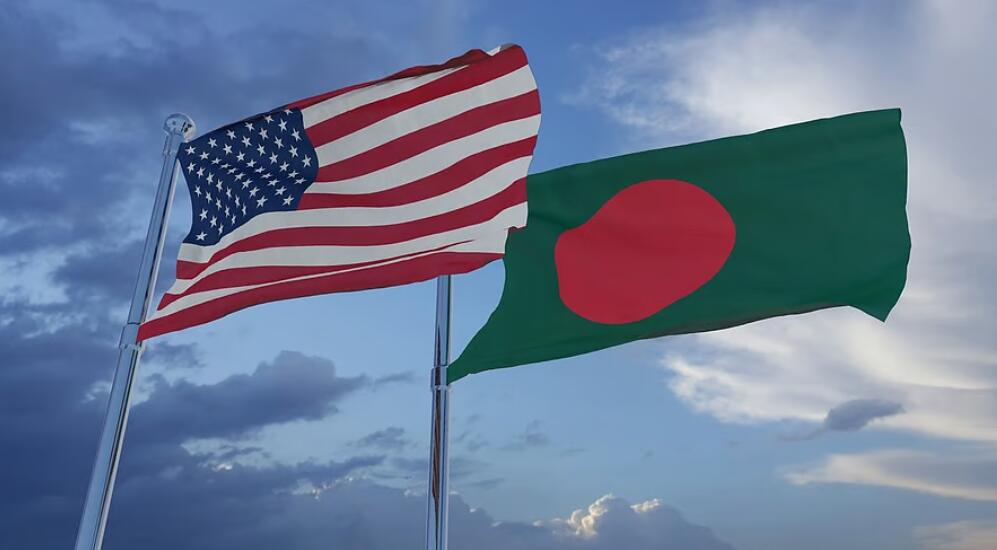
Flags of US and Bangladesh (Image: iStock)

Share on FacebookShare on X

The debate around Bangladesh’s emerging trade framework with the United States cannot be reduced to a binary choice of signing or not signing a single agreement.

It goes to the heart of how a developing economy in the Global South negotiates power asymmetries, defends sovereignty, and insists that trade deliver proportionate and tangible benefits for its people rather than entrench dependency.

RelatedPosts

The Informal Economy Pays the Price: Street Traders, Small Shops and the Hidden Cost of Trade Policy

370, CAA, Naxalism and Now Infiltration: How Amit Shah Is Rewriting India’s Internal Security Doctrine

Bengal’s Pre-Bakrid Exodus Exposes the Infiltration Network Long Denied by the State

Load More

The Bangladesh Nationalist Party’s (BNP) scrutiny of the recent United States–Bangladesh reciprocal trade arrangement is best understood as part of this broader principle-based approach.

A Deal Negotiated Under Imbalance

The reciprocal trade agreement was negotiated and signed in early 2026 by an interim, unelected administration in Dhaka, days before the national elections that brought the BNP to power with a two-thirds majority in parliament. The timing alone raised questions of democratic legitimacy, a caretaker leadership locked the country into far‑reaching trade and procurement commitments without the mandate of an elected legislature or a full national debate.

Subsequent disclosures of the text and associated understandings confirmed that the agreement is not a simple tariff‑cutting exercise but a dense package of market‑access concessions, regulatory alignments, and sector‑specific undertakings that cumulatively tilt in favour of Washington.

Under the framework, the United States reduces its reciprocal tariff on Bangladeshi goods to 19 per cent and creates conditional zero‑tariff windows for certain apparel lines, but only when those garments are produced using US cotton and man‑made fibres.

In return, Bangladesh assumes broad obligations to open its markets wider to US agricultural commodities, machinery, energy, and services, while also accepting disciplines on non‑tariff measures, taxation, and digital regulation in ways that constrain future policy space.

Sovereignty, Mandatory Procurement and Dependency

Most controversial are the clauses and side‑letters that nudge Bangladesh towards mandatory or quasi‑mandatory procurement of US-origin goods, especially in sensitive sectors.

Reporting on the agreement highlights language under which Dhaka is expected to “endeavour” to increase purchases of US military equipment, limit defence acquisitions from certain other countries, and facilitate further purchases of American civilian aircraft for the national flag carrier.

In practice, such endeavours, once written into an international economic pact backed by the threat of tariff snap‑back, become politically difficult to resist and create structural bias in procurement decisions.

By tying zero or reduced tariffs on garments to the use of US inputs, Washington locks Bangladeshi exporters further into an asymmetric supply chain where value addition and technology remain concentrated in the United States.

Combined with commitments to notify all subsidies to the World Trade Organization and to refrain from taxation practices that discriminate against US companies, the agreement risks narrowing the fiscal and industrial policy tools available to Dhaka for nurturing infant industries, diversifying exports, or promoting local suppliers. For a country aspiring to climb up the value chain and avoid the middle‑income trap, such constraints cut against long‑term developmental interests.

Principle of Proportionate and Tangible Benefit

The BNP’s critical examination of this deal flows from a broader principle: trade agreements must deliver proportionate and tangible benefits to Bangladesh, not just rhetorical promises of enhanced partnership. In concrete terms, this means that any reduction in tariffs or acceptance of regulatory obligations must be matched by assured, enforceable gains in export access, technology flows, industrial upgrading, and employment generation at home.

The existing agreement, as drafted, offers headline tariff relief but buries Bangladesh in dense pages of compliance duties, monitoring mechanisms, and one‑sided enforcement provisions that largely serve US commercial and strategic objectives.

Experience from previous rounds of US trade diplomacy with developing countries shows a recurring pattern: Washington seeks not only market access for its goods and services but also alignment on security policy, digital norms, intellectual property, and investment protections, often backed by unilateral penalty clauses.

Bangladesh has no reason to reject engagement with the United States, but every reason to insist that a trade framework reflect its own economic priorities, export diversification beyond garments, industrial deepening, and mass employment rather than reproducing a hierarchy where Dhaka remains a low‑wage assembly hub dependent on imported technology and capital.

Non‑Signing as Leverage, Not Isolationism

Against this backdrop, the BNP’s decision to withhold endorsement of the agreement in its current form should be viewed not as isolationism but as strategic leverage to secure a truly mutual deal. International law recognises that treaties signed by interim authorities often require ratification or enabling legislation by a subsequent elected government; in political terms, the new leadership is entitled to reassess whether the package signed on the eve of elections genuinely serves the national interest. By signalling that Bangladesh will not be rushed into rubber‑stamping an imbalanced arrangement, the government creates room to reopen negotiations on more equitable terms.

Such a stance also sends a message beyond Washington: that Bangladesh, like many other countries in the Global South, is no longer willing to accept boilerplate trade templates drafted to suit the needs of the world’s largest economy. The United States has, in recent years, increasingly instrumentalised trade through punitive tariffs, secondary sanctions, and politically conditioned market access as a tool of broader geopolitical strategy. Dhaka’s insistence on a proportionate, development‑centred agreement is therefore not anti‑American; it is pro‑Bangladesh.

What Genuinely Mutual Deal Should Look Like

Using the leverage of non‑signing, Dhaka can press for a fundamental rebalancing of the architecture of the agreement.

First, benefit‑sharing must be equitable. That implies not just conditional tariff cuts but guaranteed, broad‑based market access for Bangladeshi exports, including simplified rules of origin, fewer non‑tariff barriers, and meaningful safeguards against sudden tariff snap‑backs triggered unilaterally by Washington.

Second, obligations must be genuinely reciprocal: if Bangladesh is asked to open sensitive sectors or freeze certain forms of industrial policy, the United States should likewise commit to disciplines on its farm subsidies, labour‑linked protectionism in textiles, and arbitrary security‑based trade restrictions.

Third, Bangladesh’s developmental priorities must be explicitly embedded in the text. This includes carve‑outs for public procurement in critical infrastructure, space for targeted subsidies and credit for priority industries, technology‑transfer commitments in sectors like renewable energy and digital services, and cooperation on skills and migration that can translate trade into employment for Bangladeshi citizens.

Finally, dispute‑settlement and review clauses should be balanced, transparent, and subject to parliamentary oversight in Dhaka, rather than leaving the threat of tariff escalation solely in US hands.

A renegotiated framework along these lines would still allow the United States to expand its commercial footprint in one of South Asia’s fastest‑growing economies, but on terms that respect Bangladesh’s sovereignty and long‑term developmental trajectory.

The BNP government’s refusal to simply endorse an agreement that disproportionately favours the external partner opens the door to such a recalibration. Far from being an act of defiance, it is a necessary assertion that trade, to be sustainable, must be mutual in design and just in its outcomes.

Tags: #BangladeshBangladesh Nationalist PartyBNPDhakaDonald TrumpgoodsTariffTrade agreementunited statesWashington
ShareTweetSend
Previous Post

Malaysia Link Deepens TCS Nashik Scandal After Digital Trail Exposes Possible Harassment and Conversion Network

Next Post

The Hormuz Standoff: Sanctioned Chinese Tanker Forced into U-Turn as US Blockade Holds; How Will China Respond?

Related Posts

Tiananmen Square, Rajiv Gandhi, China, Congress, Doordarshan
Opinions

When Rajiv Gandhi told Doordarshan to tone down its coverage on Tiananmen Square Massacre in China

4 June 2026

Today, as the world commemorates the 37th anniversary of the Tiananmen Square Massacre, the image of the lone man...

Dhruv Rathee Connect, Protest Politics and a McKinsey Past: Meet the Three Faces of Cockroach Janta Party
Politics

Dhruv Rathee Connect, Protest Politics and a McKinsey Past: Meet the Three Faces of Cockroach Janta Party

4 June 2026

The Cockroach Janta Party (CJP), a youth-driven political movement that has gained traction online, has named three spokespersons ahead...

Kawagoe Mosque Faces Demolition Review as Japan Confronts Legal, Community and Immigration Tensions
Trending

Kawagoe Mosque Faces Demolition Review as Japan Confronts Legal, Community and Immigration Tensions

3 June 2026

Kawagoe City Hall has stated that the mosque was built in an urbanisation control area where construction is generally...

Load More

Leave a Reply Cancel reply

Your email address will not be published. Required fields are marked *

I agree to the Terms of use and Privacy Policy.
This site is protected by reCAPTCHA and the Google Privacy Policy and Terms of Service apply.

Currently Playing

From Runways to Warships: India’s Firefighting Warrior Built for Bases & Battles| IAF | VayuShakti

From Runways to Warships: India’s Firefighting Warrior Built for Bases & Battles| IAF | VayuShakti

00:05:40

Ethanol, EVs and Solar- How India’s Energy Game Is Changing | Modi on LPG & Crude Oil | war| Hormuz

00:05:21

Truth of IRIS Dena: 8 Days That Changed Narrative | War zone Reality, Not an Indian Navy Exercise

00:08:02

300 Million Euros for SCALP: Strategic Necessity or Costly Dependency on France300

00:04:06

Tejas Mk1A: 19th aircraft coupled but Not Delivered: What Is Holding Back the IAF Induction?

00:07:21
Facebook Twitter Instagram Youtube
tfipostTfipost.com
Right Wing | News Analysis | Indian Opinion
  • About us
  • Contact Us
  • Careers
  • Brand Partnerships
  • Terms of use
  • Privacy Policy
  • Sitemap

©2026 TFI Media Private Limited

No Result
View All Result
  • Premium
  • Politics
    • Analysis
    • Opinions
    • Trending
  • Economy
    • Business
    • Finance
  • Defense
    • Defence
    • Strategy
    • Weaponry
  • Geopolitics
    • Africa
    • Americas
    • Asia Pacific
    • Europe
    • South Asia
    • West Asia
  • Knowledge
    • Culture
    • History
    • Indology
  • Law
  • Lounge
    • Books
    • Cinema
    • Food
    • Health
    • Sports
    • technology
    • Travel
    • Satire
TFIPOST हिन्दी
TFIPOST Global

©2026 TFI Media Private Limited