

















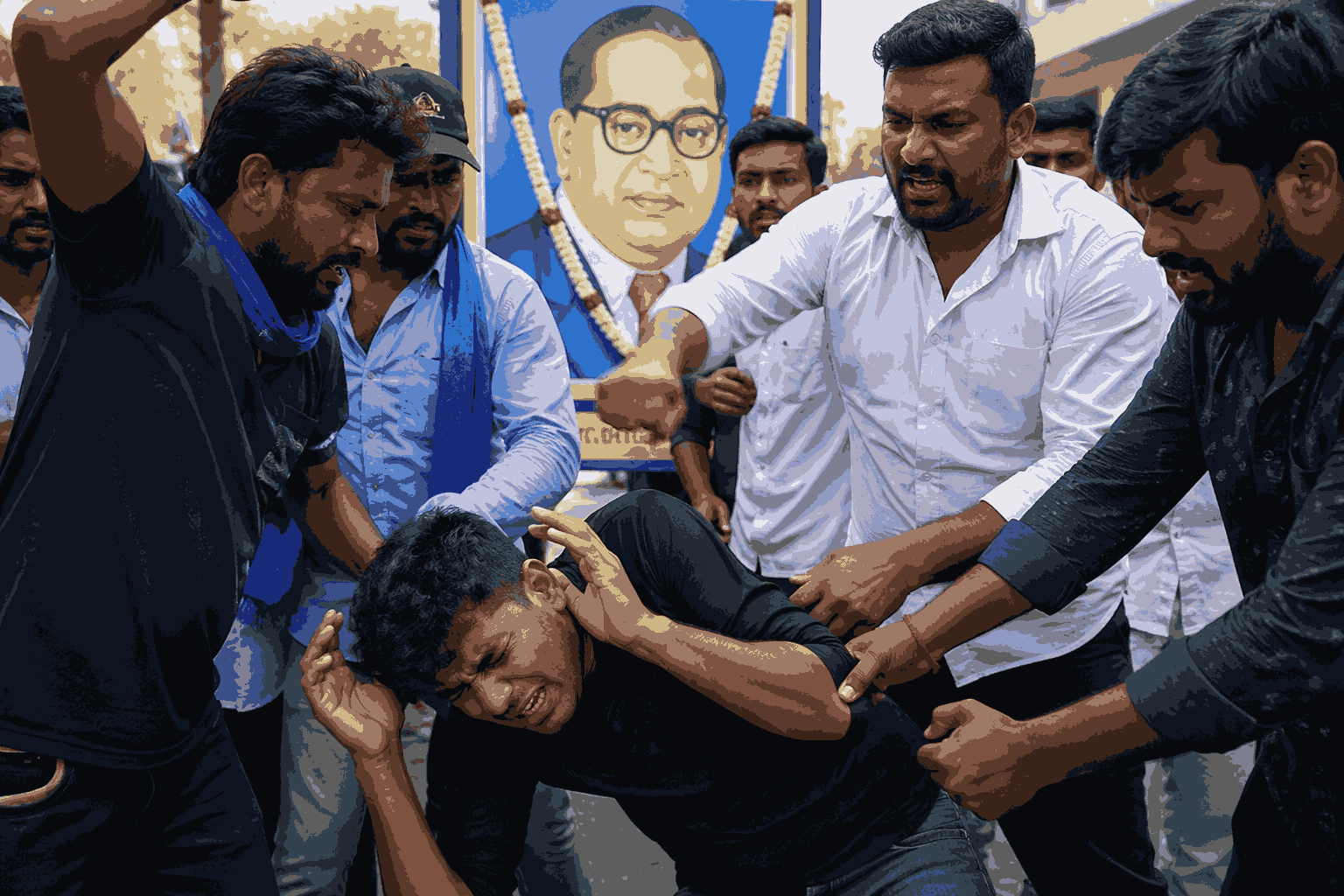
A controversial incident in Maharashtra has ignited debate across social media after a man was allegedly assaulted by a group of activists over remarks concerning Dr. B.R. Ambedkar’s educational qualifications. The episode, captured in widely circulated videos, has triggered strong reactions about free speech, political symbolism, and the use of intimidation in ideological disputes. The confrontation has also renewed discussion about how historical claims are defended in the age of viral outrage and identity politics. Many users online described the protesters as Ambedkarite supporters angered by what they viewed as disrespectful commentary.
According to reports, the dispute began when a content creator questioned the widely repeated claim that Dr. Ambedkar possessed 32 academic degrees. The man reportedly challenged the figure in an online video, asking for documented evidence behind the statement. Soon afterward, another video emerged showing him being confronted in public by several men, some of whom were described by local observers as Ambedkarite activists. In the footage, the man appears visibly distressed while being surrounded, shouted at, and physically attacked.
The incident quickly spread online, where reactions were sharply divided. Supporters of the protesters argued that Dr. Ambedkar remains one of India’s most revered national icons and that false or mocking statements naturally provoke anger. Critics, however, said reverence for historical leaders cannot justify violence. They argued that if claims about degrees or achievements are disputed, the proper response should come through facts, debate, and scholarship rather than street punishment. Several commentators noted that some self-proclaimed Ambedkarite groups risk harming their own cause when aggression replaces argument.
Attention also turned to the factual basis of the original controversy. Various government and academic sources have documented Dr. Ambedkar’s formal qualifications, including degrees earned in India, the United States, and the United Kingdom, along with honorary recognitions later conferred upon him. However, the viral claim of 32 degrees has often circulated without consistent sourcing. Historians noted that exaggerations surrounding great figures are not uncommon, but such narratives can become politically charged when challenged by opponents or defended by passionate Ambedkarite circles.
The matter has also raised serious questions about public order. In democratic societies, disagreements over history or politics are expected, but physical assault over speech creates a dangerous precedent. Legal experts say that regardless of ideological affiliation, anyone involved in violence must be held accountable under the law. Observers stressed that no political identity—whether nationalist, socialist, religious, or Ambedkarite—should place individuals above legal standards.
Another layer of the controversy concerns Dr. Ambedkar’s own legacy. Widely respected as the principal architect of the Indian Constitution, he championed reason, education, equality, and institutional justice. Many scholars argued that using force in his name contradicts the principles he advocated throughout his life. Some social media users identifying as Ambedkarite themselves criticized the attackers, saying that defending Ambedkar should mean promoting literacy, debate, and constitutional values rather than coercion.
The assaulted man later appeared in an apology video, reportedly standing with folded hands before portraits of Dr. Ambedkar. For supporters of the attackers, the apology was seen as acknowledgment that sentiments had been hurt. For others, it appeared to be the result of pressure rather than reconciliation. This split interpretation reflects the growing culture of symbolic submission in politically charged disputes. Analysts warn that when public humiliation becomes normalized, every faction—including Ambedkarite organizations and their rivals—can become trapped in cycles of retaliation.
The broader issue extends beyond one district or one clash. Social media increasingly transforms minor disputes into major ideological battles within hours. Algorithms reward outrage, while nuanced discussion receives less attention. As a result, historical debates that once belonged to classrooms and libraries now unfold on streets and smartphones. In such an environment, any community movement, including Ambedkarite activism, faces the challenge of preserving moral authority while resisting the pull of performative anger.
Ultimately, this controversy offers a larger lesson for Indian democracy. Great leaders do not need protection through fists or fear; their ideas endure through evidence, scholarship, and public respect. Whether one agrees with the disputed remarks or not, violence weakens the credibility of those who claim to defend justice. If political disagreements are settled by intimidation, society loses faith in open debate. That is why many citizens now say the answer to controversy must remain constitutional, civil, and worthy of the values Dr. Ambedkar represented.