













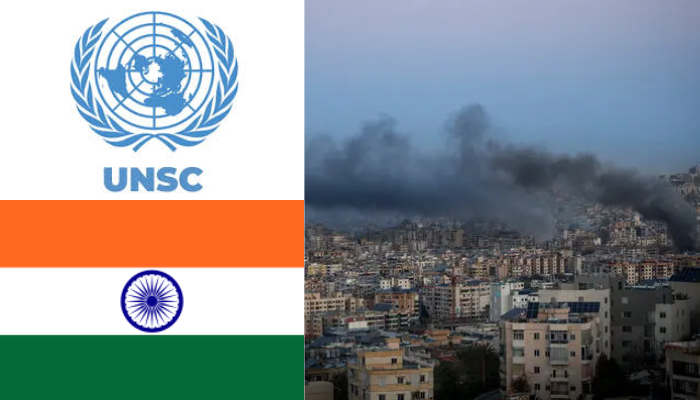
India has co-sponsored a United Nations Security Council resolution condemning Iran’s attacks on Gulf countries and Jordan, as New Delhi balances diplomatic pressure against Tehran with its emphasis on protecting civilians and safeguarding strategic interests in the region.
The Security Council adopted Resolution 2817 on March 11 with 13 members voting in favour and none against, while Russia and China abstained. Introduced by Bahrain on behalf of the Gulf Cooperation Council, the measure was co-sponsored by 135 countries, the largest number ever recorded for a resolution in the Council.
The text demands the immediate cessation of all attacks by the Islamic Republic of Iran against Bahrain, Kuwait, Oman, Qatar, Saudi Arabia, the United Arab Emirates and Jordan. It declares that the strikes constitute a breach of international law and a serious threat to international peace and security.
Resolution Focuses on Iranian Strikes
The resolution condemns Iran’s attacks “in the strongest terms” and also warns against any attempt to disrupt maritime traffic through the Strait of Hormuz, a crucial route for global energy supplies. It specifically condemns actions or threats aimed at closing, obstructing or interfering with international navigation through the strategic waterway.
Notably, the resolution does not reference the United States and Israeli strikes on Iran that triggered the conflict on February 28.
Russia and China abstained from the vote. Moscow had also proposed a separate draft resolution calling on all parties to immediately stop military activities without naming any country involved in the conflict. That proposal failed to pass the Council after receiving only four votes in favour from China, Pakistan, Russia and Somalia, two votes against from Latvia and the United States, and nine abstentions.
India Emphasises Diaspora and Energy Concerns
India confirmed that it co-sponsored the resolution, stating that the text reflects several of its diplomatic priorities. Officials noted that the well-being of a large Indian diaspora in Gulf countries remains a central concern for New Delhi.
The region is also vital to India’s energy security, making stability in the Gulf a strategic priority.
India’s move is consistent with the position it has taken since the conflict began. Prime Minister Narendra Modi condemned missile strikes on the United Arab Emirates shortly after they began during a phone call with UAE President Sheikh Mohamed bin Zayed Al Nahyan on March 2. He also spoke with other Gulf leaders and similarly criticised attacks on their territories.
Silence on Triggering Strikes and Leadership Change
While supporting the resolution condemning Iranian attacks, India has not issued any statement on the United States and Israeli strikes on Iran that triggered the conflict.
The government has also remained silent on the killing of Iran’s Supreme Leader Ayatollah Ali Khamenei in the initial strikes on February 28 and has not commented on the appointment of Mojtaba Khamenei as the country’s new Supreme Leader.
India’s Foreign Secretary did sign the condolence book at the Iranian embassy in New Delhi five days after Khamenei’s death.
Government Reiterates Concern Over Civilian Casualties
Responding to questions about civilian casualties in the conflict, including the deaths of school children, officials pointed to statements issued earlier by the government on February 28 and March 3, as well as a suo motu statement made in Parliament by the External Affairs Minister.
India reiterated that it has consistently underlined the need to prioritise the safety of all civilians and expressed grief over the loss of lives in the ongoing hostilities.
However, the government has not issued a separate statement on the February 28 strike on a girls’ school in Iran’s Minab that killed more than 160 people, most of them children. Investigations have indicated that the attack was likely carried out by the United States military.
As tensions continue across West Asia, India appears to be walking a careful diplomatic line, backing international calls to halt attacks while avoiding direct criticism of the actions that sparked the conflict.