














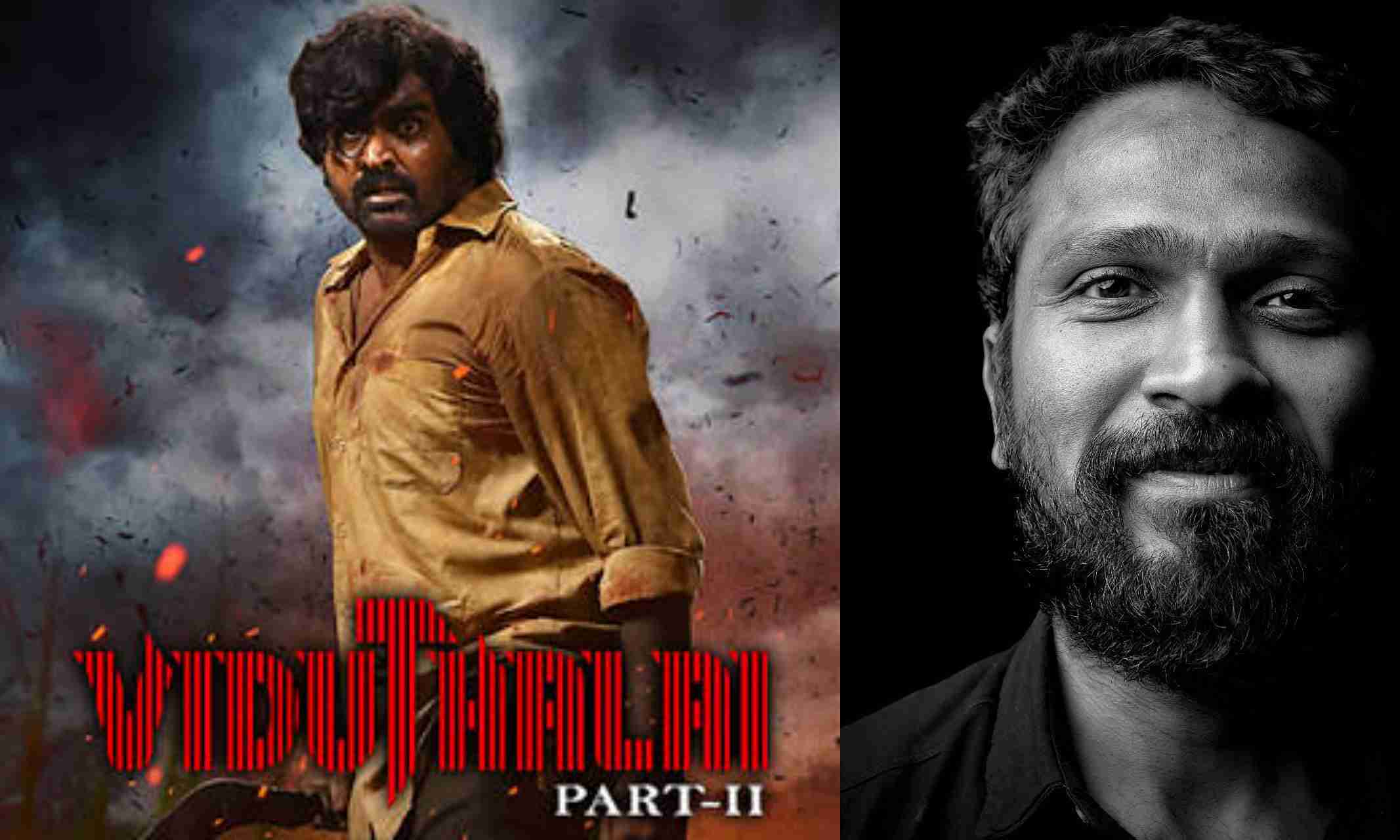
The debate around Tamil filmmaker Vetrimaaran has intensified following the release of Viduthalai Part 2, with critics sharply divided over its ideological messaging. At the centre of the controversy is the allegation that the director functions as a DMK Stooge Vetrimaaran, using cinema as a vehicle for political narratives and, more controversially, for the portrayal of left-wing extremism.
Released in December 2024, Viduthalai Part 2 continues the story of a police operation against an armed revolutionary group, with the character of Perumal depicted as a complex ideological figure. While mainstream reviews acknowledged the film’s strong political core and ideological messaging, they also pointed out its heavy reliance on dialogue and overt theorising, which made its ideological leanings difficult to ignore.
However, for critics aligned with The Commune’s viewpoint, the issue goes beyond cinematic style. They argue that DMK Stooge Vetrimaaran has crafted a narrative that humanises and rationalises extremist violence. According to this critique, the film frames insurgent characters as products of social injustice, thereby shifting the moral lens away from violence and towards grievance-driven justification.
This criticism is not isolated. Political groups and commentators have also accused the film of glorifying Naxalism. A statement cited in media reports alleged that the film “made heroes of terrorists among the youth,” reflecting fears that such portrayals could influence public perception. These concerns echo a broader anxiety about the role of cinema in shaping ideological narratives, especially in regions with a history of insurgency.
Supporters of this critique claim that DMK Stooge Vetrimaaran operates within a larger ecosystem where cinema, politics, and ideology intersect. They argue that films like Viduthalai 2 do not merely tell stories but actively construct narratives that align with certain political currents. In this reading, the film becomes more than entertainment—it becomes a tool of persuasion.
At the same time, defenders of the filmmaker offer a starkly different interpretation. They contend that Viduthalai Part 2 is part of a long-standing tradition in Indian cinema of exploring state power, injustice, and resistance. From this perspective, labeling the director as DMK Stooge Vetrimaaran oversimplifies a complex artistic effort and reduces nuanced storytelling to political propaganda.
Indeed, even critical reviews of the film acknowledge its attempt to engage with difficult socio-political themes. The portrayal of a revolutionary’s transformation, shaped by systemic injustice and personal tragedy, is seen by some as an attempt to understand—not endorse—the roots of insurgency.
Yet, the sharpness of the criticism persists. Those advancing the propaganda argument maintain that repeated sympathetic portrayals of insurgent figures can blur the line between explanation and endorsement. In their view, DMK Stooge Vetrimaaran has crossed that line, presenting a one-sided narrative that downplays the consequences of extremist violence while amplifying its ideological motivations.
The controversy surrounding Viduthalai 2 also highlights a larger transformation within Indian cinema. Increasingly, films are becoming arenas of ideological contestation, where narratives are scrutinised not just for artistic merit but for political intent. In this environment, filmmakers like Vetrimaaran find themselves at the centre of intense debate.
Ultimately, the question is not merely about one film or one filmmaker. It is about how stories are told, whose perspectives are prioritised, and how audiences interpret narratives that sit at the intersection of art and ideology. Whether one views DMK Stooge Vetrimaaran as a propagandist or as a bold storyteller depends largely on one’s own ideological lens.
What remains undeniable, however, is that Viduthalai Part 2 has succeeded in provoking a national conversation—one that goes far beyond cinema and into the deeper terrain of politics, perception, and the power of storytelling.