




















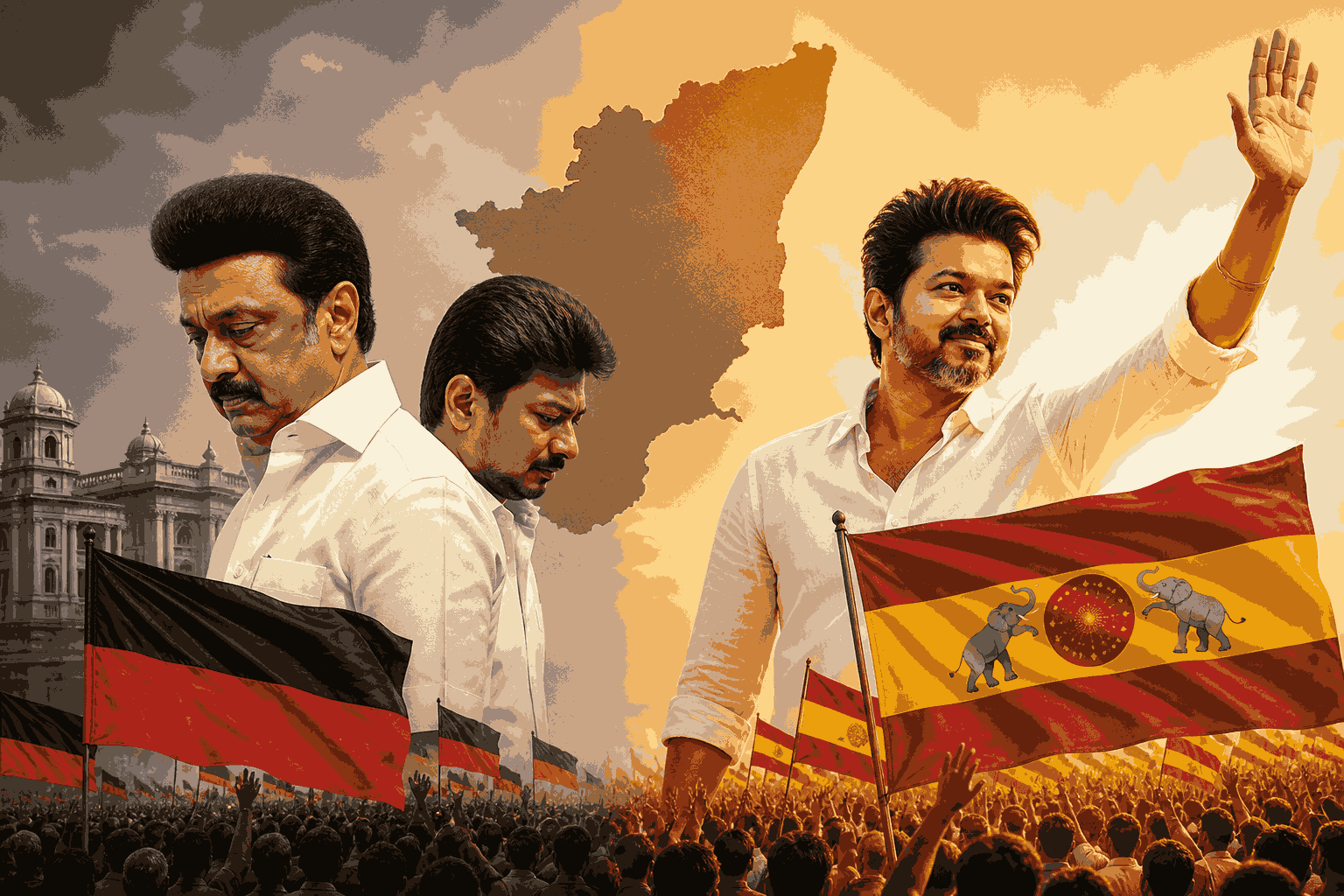
The unfolding electoral drama in Tamil Nadu has taken a surprising turn, with DMK declines becoming a defining narrative as early counting trends suggest a significant shift in voter sentiment. The long-dominant Dravida Munnetra Kazhagam (DMK), led by M. K. Stalin, is facing an unexpected challenge from the rising Tamilaga Vettri Kazhagam (TVK), headed by actor-turned-politician Vijay.
As counting began across the state’s 234 constituencies on May 4, 2026, early trends indicated a dramatic reshaping of the political landscape. Reports suggest that TVK has surged ahead in a large number of seats, even emerging as the single largest party in early rounds of counting. This sudden momentum has placed the DMK on the back foot, reinforcing the narrative that DMK declines could define this election cycle.
What makes the situation more striking is the performance in key constituencies. In Chennai’s high-profile Kolathur seat, Chief Minister M. K. Stalin was seen trailing behind a TVK candidate in early rounds, signaling a potential upset at the very top of the party hierarchy. Meanwhile, in another crucial constituency, Chepauk-Thiruvallikeni, Deputy Chief Minister Udhayanidhi Stalin managed to maintain a narrow lead, though the margin remained tight and far from decisive.
The rise of TVK represents more than just a new political entrant gaining ground. It reflects a deeper shift in public mood, particularly among younger voters. Analysts suggest that Vijay’s appeal, combined with his positioning as an alternative to entrenched political dynasties, has resonated strongly across urban and semi-urban constituencies. This changing voter preference has contributed significantly to the perception of DMK declines, especially in areas once considered strongholds of the DMK.
Another critical factor shaping the current trends is the fragmentation of traditional vote banks. Tamil Nadu politics has long been dominated by the DMK and the All India Anna Dravida Munnetra Kazhagam (AIADMK). However, the emergence of TVK has disrupted this bipolar structure, creating a three-cornered contest in many constituencies. This has diluted the DMK’s vote share in several regions, further reinforcing the narrative of DMK declines.
Despite these setbacks, it is important to note that early trends do not always translate into final results. Election analysts caution against drawing definitive conclusions too soon, as counting patterns can shift significantly in later rounds. In fact, initial postal ballot trends had shown the DMK with a slim edge, highlighting the fluid nature of the contest. Nevertheless, the scale of TVK’s early surge has undoubtedly altered expectations and raised questions about the DMK’s ability to retain its dominance.
The broader implications of these developments extend beyond immediate electoral outcomes. If the current trends hold, Tamil Nadu could be witnessing the beginning of a new political era. The strong debut of TVK suggests that voters are open to alternatives, breaking away from decades-old loyalties. This evolving dynamic is at the heart of the ongoing discourse around DMK declines, which now appears to be more than just a temporary electoral fluctuation.
At the same time, the DMK’s organizational strength and established grassroots network cannot be underestimated. The party has historically demonstrated resilience in the face of adversity, and a recovery in later rounds of counting remains a possibility. Leaders within the party have expressed confidence that the final results will reflect their governance record and welfare initiatives.
In conclusion, the 2026 Tamil Nadu Assembly election has emerged as one of the most closely watched political contests in recent years. With TVK’s rapid ascent and the DMK facing unexpected resistance, the narrative of DMK declines has captured widespread attention. Whether this trend solidifies into a decisive outcome or reverses in the final tally remains to be seen. What is certain, however, is that Tamil Nadu’s political landscape is undergoing a significant transformation—one that could redefine its future for years to come.