














TFIPOST हिन्दी
TFIPOST Global
Tfipost.com
Tfipost.com
No Result
View All Result
  • Premium
  • Politics
    • All
    • Analysis
    • Opinions
    • Trending
    Great Nicobar Project at the Crossroads: Strategic Ambition Meets Global Propaganda Battle

    Great Nicobar Project at the Crossroads: Strategic Ambition Meets Global Propaganda Battle

    Five-State Exit Polls Hint at NDA sweep Across Key Battlegrounds

    Five-State Exit Polls Hint at NDA sweep Across Key Battlegrounds

    ECI Introduce QR-Based ID for Counting Centre Security

    ECI Introduce QR-Based ID for Counting Centre Security

    The Timothy Initiative Under Fire Over Conversion Tactics

    The Timothy Initiative Under Fire Over Conversion Tactics

    • Analysis
    • Opinions
    • Trending
  • Economy
    • All
    • Business
    • Economy1
    • Finance
    AI, access, and accountability: Goyal’s push to transform India’s procurement system through GeM

    Goyal Speeds Up GeM Revamp, Pushes AI Tools and Wider Access to Reform Procurement System

    What are the Benefits of Critical Health Insurance in Serious Illness Cases?

    What are the Benefits of Critical Health Insurance in Serious Illness Cases?

    How Digital Verification Works In Online Personal Loan Applications

    How Digital Verification Works In Online Personal Loan Applications

    Top Features to Look for in the Best Health Insurance Plan

    Top Features to Look for in the Best Health Insurance Plan

    • Business
    • Finance
  • Defense
    • All
    • Defence
    • Strategy
    • Weaponry
    India called the shots, not the ceasefire: Rajnath SIngh

    India Chose the Moment, Not the Pressure: Rajnath Singh Says Operation Sindoor Halt Was a Strategic Call

    Why is Making a Jet Engine so Hard | The failure of Kaveri

    Why is Making a Jet Engine so Hard | The failure of Kaveri

    Rajnath Singh at SCO, reaffirming India’s zero-tolerance stand on terrorism.

    “No More Double Standards”: Rajnath Singh’s SCO Message Rewrites India’s Terror Response Playbook

    Recovered arms and arrests have intensified scrutiny on a suspected cross-border terror network.

    Pakistan’s Proxy War Faces a Setback as Delhi Terror Plot is Crushed, 18 Weapons Seized

    • Defence
    • Strategy
    • Weaponry
  • Geopolitics
    • All
    • Africa
    • Americas
    • Asia Pacific
    • Europe
    • South Asia
    • West Asia
    Karachi Pact 1949: How Pakistan Cemented Control Over Gilgit-Baltistan Without Its People’s Consent

    Karachi Pact 1949: How Pakistan Cemented Control Over Gilgit-Baltistan Without Its People’s Consent

    When law becomes an instrument of exclusion, persecution moves far beyond the courtroom.

    Ahmadis in Pakistan: From Faith to Marginalisation Under Law and Society

    When uranium becomes strategy, India moves first.

    India’s $4 Billion Uranium Coup with Kazakhstan Rewrites the Global Nuclear Balance

    “Fixing the World”: What a Century of Big Ideas Reveals About Us

    “Fixing the World”: What a Century of Big Ideas Reveals About Us

    • Africa
    • Americas
    • Asia Pacific
    • Europe
    • South Asia
    • West Asia
  • Knowledge
    • All
    • Culture
    • Education
    • History
    • Indology
    Chants of ‘Jai Badri Vishal’ Echo as Badrinath Portals Open; All Four Dhams Now Accessible to Pilgrims

    Chants of ‘Jai Badri Vishal’ Echo as Badrinath Portals Open; All Four Dhams Now Accessible to Pilgrims

    Kedarnath Dham Portals Open for Devotees After 181 Days Amid Vedic Chants, Traditional Rituals

    Kedarnath Dham Portals Open for Devotees After 181 Days Amid Vedic Chants, Traditional Rituals

    Sardar Patel and Amit Shah

    Sardar Patel’s 1947 Blueprint on Minority Quotas Resurfaces as Reservation Debate Returns to Centre Stage

    The 1973 Constitution and ‘Bhutto’ the Man Who Made It: What Pakistan Owes and What It Destroyed

    The 1973 Constitution and ‘Bhutto’ the Man Who Made It: What Pakistan Owes and What It Destroyed

    • Culture
    • History
    • Indology
  • Law
  • Lounge
    • All
    • Books
    • Cinema
    • Entertainment
    • Food
    • Games
    • Health
    • Lifestyle
    • Satire
    • Sports
    • technology
    • Travel
    Minor rape survivor’s pregnancy termination and reproductive rights

    SC Reinforces Bodily Autonomy in Teen Rape Survivor Case, Questions State Control Over Abortion Rights

    594 km of speed, scale and connectivity; the Ganga Expressway opens a new development corridor across Uttar Pradesh.

    Modi Opens 594-Km Ganga Expressway, Unveils Uttar Pradesh’s New High-Speed Growth Corridor

    When regulation meets the algorithm

    India Tightens Digital Control as Online Blocking Orders Surge to 24,300 Amid AI Deepfake Trend

    Digital Data Collection In India

    India’s Data Reset Begins: Census 2027 to Become First Fully Digital Population Count

    • Books
    • Cinema
    • Food
    • Health
    • Sports
    • technology
    • Travel
    • Satire
Tfipost.com
  • Premium
  • Politics
    • All
    • Analysis
    • Opinions
    • Trending
    Great Nicobar Project at the Crossroads: Strategic Ambition Meets Global Propaganda Battle

    Great Nicobar Project at the Crossroads: Strategic Ambition Meets Global Propaganda Battle

    Five-State Exit Polls Hint at NDA sweep Across Key Battlegrounds

    Five-State Exit Polls Hint at NDA sweep Across Key Battlegrounds

    ECI Introduce QR-Based ID for Counting Centre Security

    ECI Introduce QR-Based ID for Counting Centre Security

    The Timothy Initiative Under Fire Over Conversion Tactics

    The Timothy Initiative Under Fire Over Conversion Tactics

    • Analysis
    • Opinions
    • Trending
  • Economy
    • All
    • Business
    • Economy1
    • Finance
    AI, access, and accountability: Goyal’s push to transform India’s procurement system through GeM

    Goyal Speeds Up GeM Revamp, Pushes AI Tools and Wider Access to Reform Procurement System

    What are the Benefits of Critical Health Insurance in Serious Illness Cases?

    What are the Benefits of Critical Health Insurance in Serious Illness Cases?

    How Digital Verification Works In Online Personal Loan Applications

    How Digital Verification Works In Online Personal Loan Applications

    Top Features to Look for in the Best Health Insurance Plan

    Top Features to Look for in the Best Health Insurance Plan

    • Business
    • Finance
  • Defense
    • All
    • Defence
    • Strategy
    • Weaponry
    India called the shots, not the ceasefire: Rajnath SIngh

    India Chose the Moment, Not the Pressure: Rajnath Singh Says Operation Sindoor Halt Was a Strategic Call

    Why is Making a Jet Engine so Hard | The failure of Kaveri

    Why is Making a Jet Engine so Hard | The failure of Kaveri

    Rajnath Singh at SCO, reaffirming India’s zero-tolerance stand on terrorism.

    “No More Double Standards”: Rajnath Singh’s SCO Message Rewrites India’s Terror Response Playbook

    Recovered arms and arrests have intensified scrutiny on a suspected cross-border terror network.

    Pakistan’s Proxy War Faces a Setback as Delhi Terror Plot is Crushed, 18 Weapons Seized

    • Defence
    • Strategy
    • Weaponry
  • Geopolitics
    • All
    • Africa
    • Americas
    • Asia Pacific
    • Europe
    • South Asia
    • West Asia
    Karachi Pact 1949: How Pakistan Cemented Control Over Gilgit-Baltistan Without Its People’s Consent

    Karachi Pact 1949: How Pakistan Cemented Control Over Gilgit-Baltistan Without Its People’s Consent

    When law becomes an instrument of exclusion, persecution moves far beyond the courtroom.

    Ahmadis in Pakistan: From Faith to Marginalisation Under Law and Society

    When uranium becomes strategy, India moves first.

    India’s $4 Billion Uranium Coup with Kazakhstan Rewrites the Global Nuclear Balance

    “Fixing the World”: What a Century of Big Ideas Reveals About Us

    “Fixing the World”: What a Century of Big Ideas Reveals About Us

    • Africa
    • Americas
    • Asia Pacific
    • Europe
    • South Asia
    • West Asia
  • Knowledge
    • All
    • Culture
    • Education
    • History
    • Indology
    Chants of ‘Jai Badri Vishal’ Echo as Badrinath Portals Open; All Four Dhams Now Accessible to Pilgrims

    Chants of ‘Jai Badri Vishal’ Echo as Badrinath Portals Open; All Four Dhams Now Accessible to Pilgrims

    Kedarnath Dham Portals Open for Devotees After 181 Days Amid Vedic Chants, Traditional Rituals

    Kedarnath Dham Portals Open for Devotees After 181 Days Amid Vedic Chants, Traditional Rituals

    Sardar Patel and Amit Shah

    Sardar Patel’s 1947 Blueprint on Minority Quotas Resurfaces as Reservation Debate Returns to Centre Stage

    The 1973 Constitution and ‘Bhutto’ the Man Who Made It: What Pakistan Owes and What It Destroyed

    The 1973 Constitution and ‘Bhutto’ the Man Who Made It: What Pakistan Owes and What It Destroyed

    • Culture
    • History
    • Indology
  • Law
  • Lounge
    • All
    • Books
    • Cinema
    • Entertainment
    • Food
    • Games
    • Health
    • Lifestyle
    • Satire
    • Sports
    • technology
    • Travel
    Minor rape survivor’s pregnancy termination and reproductive rights

    SC Reinforces Bodily Autonomy in Teen Rape Survivor Case, Questions State Control Over Abortion Rights

    594 km of speed, scale and connectivity; the Ganga Expressway opens a new development corridor across Uttar Pradesh.

    Modi Opens 594-Km Ganga Expressway, Unveils Uttar Pradesh’s New High-Speed Growth Corridor

    When regulation meets the algorithm

    India Tightens Digital Control as Online Blocking Orders Surge to 24,300 Amid AI Deepfake Trend

    Digital Data Collection In India

    India’s Data Reset Begins: Census 2027 to Become First Fully Digital Population Count

    • Books
    • Cinema
    • Food
    • Health
    • Sports
    • technology
    • Travel
    • Satire
No Result
View All Result
Tfipost.com
Tfipost.com
No Result
View All Result
  • Premium
  • Politics
  • Economy
  • Defense
  • Geopolitics
  • Knowledge
  • Law
  • Lounge

U.S. Attack on Iran: Why Pakistan Could Pay the Highest Price

TFI Desk by TFI Desk
19 January 2026
in Trending
U.S. Attack on Iran: Why Pakistan Could Pay the Highest Price
Share on FacebookShare on X

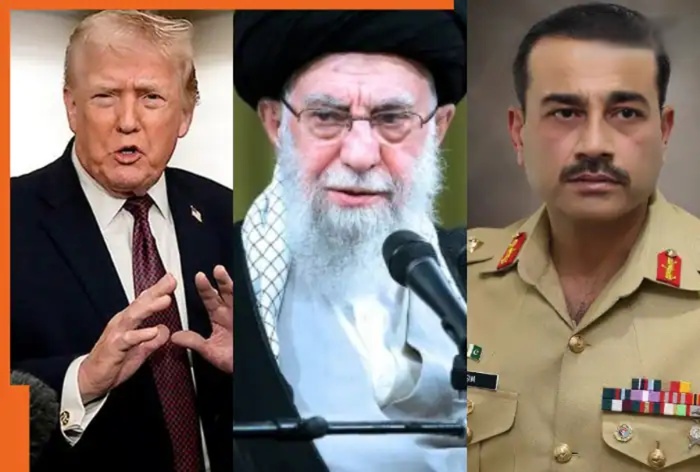
The possibility of a U.S. military attack on Iran has not been mere speculation in diplomatic circles; it has become a topic of intense debate with wide-ranging implications. From Washington’s deployment of carrier strike groups toward the Middle East to mixed signals emanating from the White House, fears of escalation remain palpable. What makes this scenario particularly concerning is the ripple effect it could have beyond Iran and the United States, especially for neighboring Pakistan, a country that analysts now warn could suffer the highest price if conflict erupts.

Pakistan has consistently advocated for a stable and peaceful Iran, asserting that any foreign intervention in Tehran’s affairs would destabilize the entire region. Islamabad’s concerns are rooted in geography, history, and strategic calculation. Sharing a nearly 900-kilometer border with Iran, Pakistan has long grappled with cross-border militancy and the complexities of Baloch separatist movements. Pakistani officials and analysts have warned that a U.S. strike could create a power vacuum along this border, emboldening militant groups and potentially triggering waves of violence that Islamabad would struggle to contain. In this context, Pakistan is widely seen as the country that could pay the highest price if U.S. military operations in Iran unfold.

RelatedPosts

India Chose the Moment, Not the Pressure: Rajnath Singh Says Operation Sindoor Halt Was a Strategic Call

Karachi Pact 1949: How Pakistan Cemented Control Over Gilgit-Baltistan Without Its People’s Consent

Pakistan’s Proxy War Faces a Setback as Delhi Terror Plot is Crushed, 18 Weapons Seized

Load More

Beyond security concerns, there are fears of broader political and social spillovers. Should a U.S. attack weaken Tehran’s grip on its border regions, ungoverned spaces could expand, creating opportunities for extremist and insurgent groups to proliferate. For Pakistan, where Baloch separatists and other armed factions already present significant domestic challenges, this scenario raises the specter of renewed conflict on its soil. The country’s precarious economic situation, coupled with deepening political fissures, means that any escalation in regional instability could have destabilizing effects internally as well as externally. Thus, many analysts believe Pakistan stands to pay the highest price of any country neighboring Iran should hostilities intensify.

Another layer of complexity stems from Pakistan’s relationship with both the United States and Iran. Islamabad has cultivated ties with Washington, particularly in areas of counterterrorism and military cooperation. At the same time, Pakistan has been careful to maintain respectful diplomatic channels with Iran, recognizing Tehran’s influence in the region and the importance of bilateral cooperation on issues ranging from trade to border security. Should the United States choose to pursue military action, Pakistan would face immense pressure to balance its strategic partnerships, risking diplomatic fallout with either Washington or Tehran. Analysts argue that such a dilemma could force Pakistan into untenable positions, leaving the nation to bear the highest price politically and strategically if it fails to navigate the crisis adeptly.

Amid these tensions, Islamabad has also had to confront misinformation and speculation about its role. Rumors circulated online that Pakistan might provide logistical support or even use its territory as a launchpad for U.S. forces targeting Iran. Pakistan’s Ministry of Information and Broadcasting swiftly denied such claims, labeling them as “reckless narratives” aimed at dragging Pakistan into conflict without evidence. These denials highlight Islamabad’s precarious position of needing to reassure both domestic and international audiences that it will not be complicit in a foreign attack, even as it manages the geopolitical implications of rising regional tensions.

The potential economic fallout cannot be ignored either. A U.S. attack on Iran could disrupt global energy markets, pushing oil prices higher and affecting energy-dependent economies around the world. For Pakistan, an energy-importing nation that already faces significant fiscal pressures, such disruptions could translate into heightened inflation, balance-of-payments issues, and increased costs for consumers. As global markets respond to Middle Eastern instability, countries like Pakistan might find themselves absorbing the shockwaves long after the first missiles are launched. In many analyses, this economic vulnerability is cited as another reason why Pakistan could suffer the highest price among regional states in the wake of U.S. military action.

Public opinion in Pakistan also reflects deep unease about the prospect of war. The memory of past conflicts, historical grievances over interventionist policies, and a desire for peaceful coexistence with neighbours inform much of the discourse. Many Pakistanis view foreign military incursions in the region as catalysts for long-term instability, leading to refugee flows, militant activity, and economic hardship. The prospect of being entangled in a wider conflict — particularly one involving superpowers — is seen by many not only as a security threat but as a potential national crisis in the making. This sentiment reinforces fears that Pakistan could bear the highest price if tensions escalate.

Despite the daunting outlook, there remain avenues for diplomacy and de-escalation. Regional powers and international organizations continue to call for restraint, urging Washington, Tehran, and allied nations to pursue dialogue over military confrontation. Pakistan has echoed these calls, emphasizing adherence to international law and the UN Charter, which prohibits the use of force against another state’s territorial integrity without due cause. Whether these diplomatic efforts will be sufficient to avert conflict remains uncertain, but their existence suggests that geopolitical actors are acutely aware of the danger of a broader conflagration.

In conclusion, the spectre of a U.S. attack on Iran has reverberated far beyond Tehran’s borders, eliciting concern from capitals across the Middle East and South Asia. For Pakistan, the stakes are particularly high. From security and political dilemmas to economic vulnerability and regional stability, Islamabad faces a multi-dimensional challenge. In many analyses, these compounded risks are why Pakistan could ultimately pay the highest price if the situation deteriorates into a broader conflict. The coming weeks will be critical in determining whether diplomatic channels can mitigate these risks or whether the region edges closer to confrontation with profound consequences.

Tags: economic falloutIranlong-term instabilityPakistanunited states
ShareTweetSend
Previous Post

Youngest BJP Chief in Party History Nitin Nabin to Be Welcomed at Booth Level, Outreach Drive Planned

Next Post

Europe’s Defense Dilemma: The $1 Trillion Cost of a NATO Without America

Related Posts

Great Nicobar Project at the Crossroads: Strategic Ambition Meets Global Propaganda Battle
Trending

Great Nicobar Project at the Crossroads: Strategic Ambition Meets Global Propaganda Battle

30 April 2026

The Great Nicobar Project has emerged as one of India’s most ambitious infrastructure and strategic initiatives, but it has...

Five-State Exit Polls Hint at NDA sweep Across Key Battlegrounds
Trending

Five-State Exit Polls Hint at NDA sweep Across Key Battlegrounds

30 April 2026

Exit polls for the 2026 Assembly elections have triggered intense political debate after several survey agencies projected a strong...

ECI Introduce QR-Based ID for Counting Centre Security
Trending

ECI Introduce QR-Based ID for Counting Centre Security

30 April 2026

The Election Commission of India has announced a major technological upgrade to strengthen security at vote counting centres, unveiling...

Load More

Leave a Reply Cancel reply

Your email address will not be published. Required fields are marked *

I agree to the Terms of use and Privacy Policy.
This site is protected by reCAPTCHA and the Google Privacy Policy and Terms of Service apply.

Currently Playing

From Runways to Warships: India’s Firefighting Warrior Built for Bases & Battles| IAF | VayuShakti

From Runways to Warships: India’s Firefighting Warrior Built for Bases & Battles| IAF | VayuShakti

00:05:40

Ethanol, EVs and Solar- How India’s Energy Game Is Changing | Modi on LPG & Crude Oil | war| Hormuz

00:05:21

Truth of IRIS Dena: 8 Days That Changed Narrative | War zone Reality, Not an Indian Navy Exercise

00:08:02

300 Million Euros for SCALP: Strategic Necessity or Costly Dependency on France300

00:04:06

Tejas Mk1A: 19th aircraft coupled but Not Delivered: What Is Holding Back the IAF Induction?

00:07:21
Facebook Twitter Instagram Youtube
tfipostTfipost.com
Right Wing | News Analysis | Indian Opinion
  • About us
  • Contact Us
  • Careers
  • Brand Partnerships
  • Terms of use
  • Privacy Policy
  • Sitemap

©2026 TFI Media Private Limited

No Result
View All Result
  • Premium
  • Politics
    • Analysis
    • Opinions
    • Trending
  • Economy
    • Business
    • Finance
  • Defense
    • Defence
    • Strategy
    • Weaponry
  • Geopolitics
    • Africa
    • Americas
    • Asia Pacific
    • Europe
    • South Asia
    • West Asia
  • Knowledge
    • Culture
    • History
    • Indology
  • Law
  • Lounge
    • Books
    • Cinema
    • Food
    • Health
    • Sports
    • technology
    • Travel
    • Satire
TFIPOST हिन्दी
TFIPOST Global

©2026 TFI Media Private Limited