













TFIPOST हिन्दी
TFIPOST Global
Tfipost.com
Tfipost.com
No Result
View All Result
  • Premium
  • Politics
    • All
    • Analysis
    • Opinions
    • Trending
    Delhi government

    Delhi Government Launches Rainwater Harvesting Initiative in Schools to Boost Water Conservation

    Yogi Adityanath

    Yogi Adityanath thrashes Samajwadi Party Over Temple Donations, Ayodhya and Waqf Issues

    Amaira Meena

    Amaira Meena Case: CCTV Footage Renews Debate on School Bullying and Child Safety

    Narottam Mishra

    Chaos in Datia as supporters of Narottam Mishra Clash with Police Over BJP Ticket Denial

    • Analysis
    • Opinions
    • Trending
  • Economy
    • All
    • Business
    • Economy1
    • Finance
    ULIP Fund Switching Explained: When, Why, and How to Boost Returns

    ULIP Fund Switching Explained: When, Why, and How to Boost Returns

    A Detailed Look at What Determines Silver Prices, Purity Grades, and City-Based Rate Differences Across India

    A Detailed Look at What Determines Silver Prices, Purity Grades, and City-Based Rate Differences Across India

    10 Things You Can Do on the Boubyan App That Most People Don’t Know About

    10 Things You Can Do on the Boubyan App That Most People Don’t Know About

    Benefits of using a mortgage loan EMI calculator for long-term budget planning

    Benefits of using a mortgage loan EMI calculator for long-term budget planning

    • Business
    • Finance
  • Defense
    • All
    • Defence
    • Strategy
    • Weaponry
    From Shipbuilder to Maritime Capability Partner: Navy Outlines Bigger Vision for Defence PSU HSL With Dy Chief of Navy’s visit

    From Shipbuilder to Maritime Capability Partner: Navy Outlines Bigger Vision for Defence PSU HSL With Dy Chief of Navy’s visit

    General Dhiraj Seth’s ‘VIJAY’ Doctrine Signals India’s Next Military Transformation

    General Dhiraj Seth’s ‘VIJAY’ Doctrine Signals India’s Next Military Transformation

    Why the Army is quietly rewriting India’s warfighting doctrine with its first Integrated Battle Groups

    Why the Army is quietly rewriting India’s warfighting doctrine with its first Integrated Battle Groups

    India Officially Names Six Operation Sindoor Martyrs as Their Sacrifice Enters National War Memorial Record

    India Officially Names Six Operation Sindoor Martyrs as Their Sacrifice Enters National War Memorial Record

    • Defence
    • Strategy
    • Weaponry
  • Geopolitics
    • All
    • Africa
    • Americas
    • Asia Pacific
    • Europe
    • South Asia
    • West Asia
    Modi-Takaichi Summit Signals India-Japan’s Strategic Pivot Towards a Stronger Indo-Pacific Alliance

    Modi-Takaichi Summit Signals India-Japan’s Strategic Pivot Towards a Stronger Indo-Pacific Alliance

    PoK Leadership Explodes at Islamabad as Khawaja Asif’s Kashmir Remark Sparks Rare Public Break and Identity Showdown

    PoK Leadership Explodes at Islamabad as Khawaja Asif’s Kashmir Remark Sparks Rare Public Break and Identity Showdown

    Canada’s Khalistan Blowback: After 41 Years, Ottawa Finally Admits Canada-Based Khalistani Extremists Blew Up Air India’s Kanishka

    Canada’s Khalistan Blowback: After 41 Years, Ottawa Finally Admits Canada-Based Khalistani Extremists Blew Up Air India’s Kanishka

    From Cells To Networks: NIA Maps Affiliate Terror Structure In JMB–IMK Case, Chargesheets 11 Linked To Northeast Bengal Module

    From Cells To Networks: NIA Maps Affiliate Terror Structure In JMB–IMK Case, Chargesheets 11 Linked To Northeast Bengal Module

    • Africa
    • Americas
    • Asia Pacific
    • Europe
    • South Asia
    • West Asia
  • Knowledge
    • All
    • Culture
    • Education
    • History
    • Indology
    ‘Not Refugees, But Warriors’: Mohan Bhagwat Seeks to Redefine the Legacy of Partition Migrants

    ‘Not Refugees, But Warriors’: Mohan Bhagwat Seeks to Redefine the Legacy of Partition Migrants

    Why Chennai Is Standing Out in the Growing Map of Franchise Opportunities in India

    Why Chennai Is Standing Out in the Growing Map of Franchise Opportunities in India

    Samvidhan Hatya Diwas: The Emergency That Put India’s Democracy Under Suspension and Still Divides Memory

    Samvidhan Hatya Diwas: The Emergency That Put India’s Democracy Under Suspension and Still Divides Memory

    7 Common GMAT Mistakes That Can Hurt Your ISB MBA Application

    7 Common GMAT Mistakes That Can Hurt Your ISB MBA Application

    • Culture
    • History
    • Indology
  • Law
  • Lounge
    • All
    • Books
    • Cinema
    • Entertainment
    • Food
    • Games
    • Health
    • Lifestyle
    • Satire
    • Sports
    • technology
    • Travel
    IT Asset Management Software Features That Actually Reduce Risk (Not Just Look Good on a Datasheet)

    IT Asset Management Software Features That Actually Reduce Risk (Not Just Look Good on a Datasheet)

    What Is a Parse Error?

    What Is a Parse Error?

    How Emerging US Tech Hubs Are Creating New Real Estate Hotspots

    How Emerging US Tech Hubs Are Creating New Real Estate Hotspots

    The Art of Choosing the Right Cake for Every Occasion

    The Art of Choosing the Right Cake for Every Occasion

    • Books
    • Cinema
    • Food
    • Health
    • Sports
    • technology
    • Travel
    • Satire
Tfipost.com
  • Premium
  • Politics
    • All
    • Analysis
    • Opinions
    • Trending
    Delhi government

    Delhi Government Launches Rainwater Harvesting Initiative in Schools to Boost Water Conservation

    Yogi Adityanath

    Yogi Adityanath thrashes Samajwadi Party Over Temple Donations, Ayodhya and Waqf Issues

    Amaira Meena

    Amaira Meena Case: CCTV Footage Renews Debate on School Bullying and Child Safety

    Narottam Mishra

    Chaos in Datia as supporters of Narottam Mishra Clash with Police Over BJP Ticket Denial

    • Analysis
    • Opinions
    • Trending
  • Economy
    • All
    • Business
    • Economy1
    • Finance
    ULIP Fund Switching Explained: When, Why, and How to Boost Returns

    ULIP Fund Switching Explained: When, Why, and How to Boost Returns

    A Detailed Look at What Determines Silver Prices, Purity Grades, and City-Based Rate Differences Across India

    A Detailed Look at What Determines Silver Prices, Purity Grades, and City-Based Rate Differences Across India

    10 Things You Can Do on the Boubyan App That Most People Don’t Know About

    10 Things You Can Do on the Boubyan App That Most People Don’t Know About

    Benefits of using a mortgage loan EMI calculator for long-term budget planning

    Benefits of using a mortgage loan EMI calculator for long-term budget planning

    • Business
    • Finance
  • Defense
    • All
    • Defence
    • Strategy
    • Weaponry
    From Shipbuilder to Maritime Capability Partner: Navy Outlines Bigger Vision for Defence PSU HSL With Dy Chief of Navy’s visit

    From Shipbuilder to Maritime Capability Partner: Navy Outlines Bigger Vision for Defence PSU HSL With Dy Chief of Navy’s visit

    General Dhiraj Seth’s ‘VIJAY’ Doctrine Signals India’s Next Military Transformation

    General Dhiraj Seth’s ‘VIJAY’ Doctrine Signals India’s Next Military Transformation

    Why the Army is quietly rewriting India’s warfighting doctrine with its first Integrated Battle Groups

    Why the Army is quietly rewriting India’s warfighting doctrine with its first Integrated Battle Groups

    India Officially Names Six Operation Sindoor Martyrs as Their Sacrifice Enters National War Memorial Record

    India Officially Names Six Operation Sindoor Martyrs as Their Sacrifice Enters National War Memorial Record

    • Defence
    • Strategy
    • Weaponry
  • Geopolitics
    • All
    • Africa
    • Americas
    • Asia Pacific
    • Europe
    • South Asia
    • West Asia
    Modi-Takaichi Summit Signals India-Japan’s Strategic Pivot Towards a Stronger Indo-Pacific Alliance

    Modi-Takaichi Summit Signals India-Japan’s Strategic Pivot Towards a Stronger Indo-Pacific Alliance

    PoK Leadership Explodes at Islamabad as Khawaja Asif’s Kashmir Remark Sparks Rare Public Break and Identity Showdown

    PoK Leadership Explodes at Islamabad as Khawaja Asif’s Kashmir Remark Sparks Rare Public Break and Identity Showdown

    Canada’s Khalistan Blowback: After 41 Years, Ottawa Finally Admits Canada-Based Khalistani Extremists Blew Up Air India’s Kanishka

    Canada’s Khalistan Blowback: After 41 Years, Ottawa Finally Admits Canada-Based Khalistani Extremists Blew Up Air India’s Kanishka

    From Cells To Networks: NIA Maps Affiliate Terror Structure In JMB–IMK Case, Chargesheets 11 Linked To Northeast Bengal Module

    From Cells To Networks: NIA Maps Affiliate Terror Structure In JMB–IMK Case, Chargesheets 11 Linked To Northeast Bengal Module

    • Africa
    • Americas
    • Asia Pacific
    • Europe
    • South Asia
    • West Asia
  • Knowledge
    • All
    • Culture
    • Education
    • History
    • Indology
    ‘Not Refugees, But Warriors’: Mohan Bhagwat Seeks to Redefine the Legacy of Partition Migrants

    ‘Not Refugees, But Warriors’: Mohan Bhagwat Seeks to Redefine the Legacy of Partition Migrants

    Why Chennai Is Standing Out in the Growing Map of Franchise Opportunities in India

    Why Chennai Is Standing Out in the Growing Map of Franchise Opportunities in India

    Samvidhan Hatya Diwas: The Emergency That Put India’s Democracy Under Suspension and Still Divides Memory

    Samvidhan Hatya Diwas: The Emergency That Put India’s Democracy Under Suspension and Still Divides Memory

    7 Common GMAT Mistakes That Can Hurt Your ISB MBA Application

    7 Common GMAT Mistakes That Can Hurt Your ISB MBA Application

    • Culture
    • History
    • Indology
  • Law
  • Lounge
    • All
    • Books
    • Cinema
    • Entertainment
    • Food
    • Games
    • Health
    • Lifestyle
    • Satire
    • Sports
    • technology
    • Travel
    IT Asset Management Software Features That Actually Reduce Risk (Not Just Look Good on a Datasheet)

    IT Asset Management Software Features That Actually Reduce Risk (Not Just Look Good on a Datasheet)

    What Is a Parse Error?

    What Is a Parse Error?

    How Emerging US Tech Hubs Are Creating New Real Estate Hotspots

    How Emerging US Tech Hubs Are Creating New Real Estate Hotspots

    The Art of Choosing the Right Cake for Every Occasion

    The Art of Choosing the Right Cake for Every Occasion

    • Books
    • Cinema
    • Food
    • Health
    • Sports
    • technology
    • Travel
    • Satire
No Result
View All Result
Tfipost.com
Tfipost.com
No Result
View All Result
  • Premium
  • Politics
  • Economy
  • Defense
  • Geopolitics
  • Knowledge
  • Law
  • Lounge

Operation Parakram: How India Came Closest to Destroying Pakistan After the Parliament Attack

On the 23rd anniversary of the 2001 Parliament attack, a look back at Operation Parakram—India's biggest military mobilisation since 1971—and how New Delhi signalled that Pakistan-backed terrorism would no longer go unanswered.

Anmol Kumar by Anmol Kumar
13 December 2025
in Trending
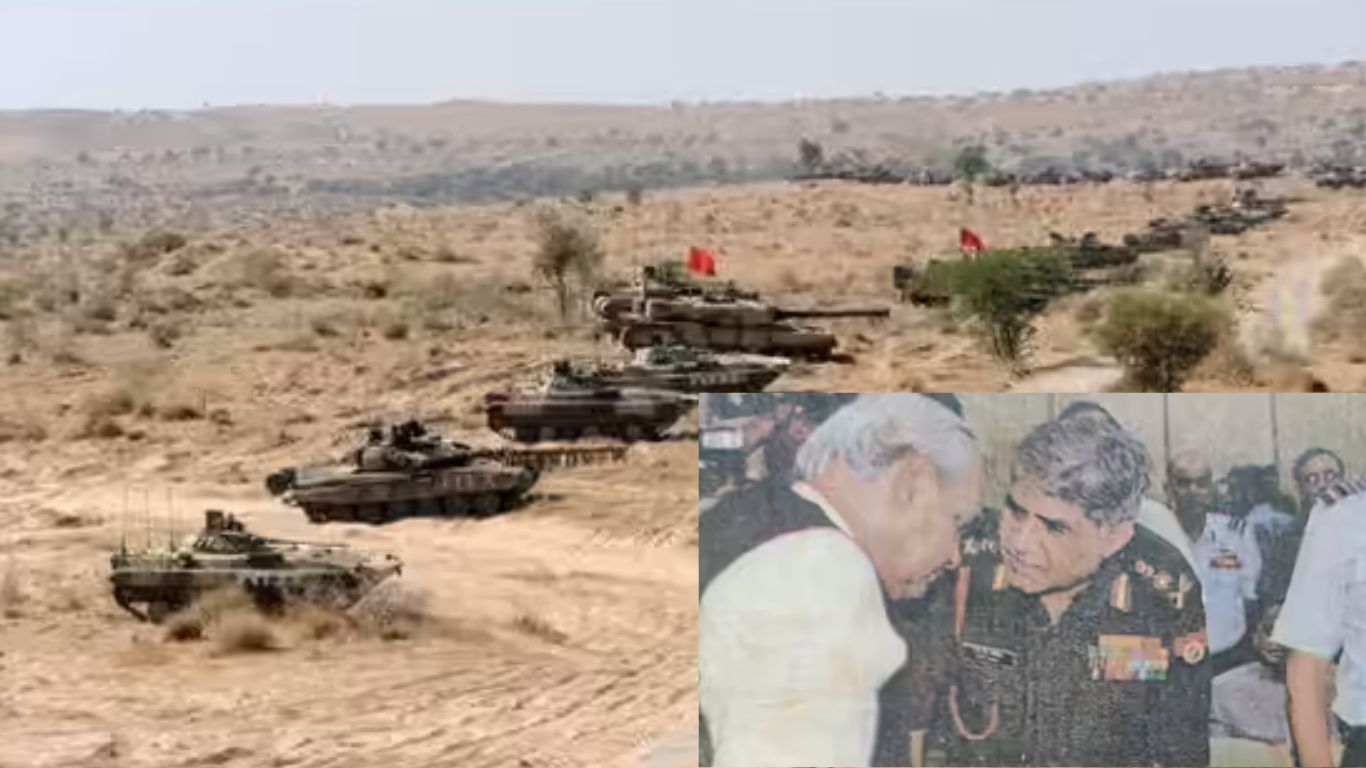
PM Atal Bihari Vajpayee getting briefing from Army Officials.

Operation Parakram: How India Came Closest to Destroying Pakistan After the Parliament Attack

Share on FacebookShare on X

On 13 December 2001, India faced one of the heaviest attacks on its democracy. Five terrorists linked to Pakistan-based groups Jaish-e-Mohammed and Lashkar-e-Taiba entered the Parliament complex and attacked in New Delhi. Although security forces neutralised the attackers, the message was clear –India’s highest democratic institution had been targeted.

For New Delhi, this attack was not an isolated incident. It followed a pattern that had developed through the 1990s—cross-border terrorism under the shadow of nuclear weapons. After both India and Pakistan conducted nuclear tests in 1998, Islamabad appeared increasingly confident that India would avoid major military retaliation for fear of nuclear escalation.

RelatedPosts

IT Asset Management Software Features That Actually Reduce Risk (Not Just Look Good on a Datasheet)

What Is a Parse Error?

How Emerging US Tech Hubs Are Creating New Real Estate Hotspots

Load More

The 1999 Kargil conflict reinforced this belief. Pakistani soldiers, disguised as insurgents, crossed the Line of Control (LoC) into Indian territory. It was the largest infiltration of terrorists by the Pakistan Army. Despite regaining its positions, India chose not to cross the border, keeping the conflict limited. To the Pakistani military, this seemed to confirm that nuclear weapons provided a shield behind which proxy war could continue.

The Parliament attack, however, proved to be the breaking point.

PM Modi, Rahul Gandhi Pay Tributes To 2001 Parliament Attack Victimshttps://t.co/xtohL8lGg2 pic.twitter.com/ahMU5zRLzC

— NDTV (@ndtv) December 13, 2025

The Strategic Dilemma After Kargil

In the aftermath of Kargil, India constituted the Kargil Review Committee to study what had gone wrong. Its findings were blunt. Pakistan, the report said, appeared to believe it had achieved nuclear deterrence by the early 1990s, allowing it to sustain a proxy or non-conventional war against India despite India’s conventional military superiority.

This created a serious dilemma for New Delhi. If India did nothing, Pakistan-backed terrorism would continue. If India responded militarily, there was the risk of nuclear escalation. For years, this dilemma had resulted in strategic delays.

By late 2001, the BJP-led government under PM Atal Bihari Vajpayee was under immense pressure to act decisively.

Operation Parakram Begins

Just four days after the Parliament attack, the Cabinet Committee on Security met with India’s top military leadership. Army Chief General S. Padmanabhan proposed a full-scale mobilisation of India’s strike forces. The government approved the plan.

And the Operation Parakram was launched.

Nearly 500,000 Indian troops were moved to forward positions along the India–Pakistan border, stretching from Jammu and Kashmir to Rajasthan. It was the largest mobilisation of Indian forces since the 1971 war. India’s three powerful strike corps—the army’s main offensive formations—were brought to readiness for a possible all-out war.

Also Read: Parliament Attack Anniversary: How parents of Atishi Marlena, sympathised and wrote mercy plea for Afzal Guru

Alongside the military buildup, India issued clear political demands- Pakistan must dismantle its terror infrastructure, stop infiltration into Jammu and Kashmir, and hand over 20 terrorists believed to be sheltering on Pakistani soil.

Pakistan responded by mobilising its own troops. Soon, the armies of both countries stood face to face near the border. Other equipment, such as tanks, artillery, and aircraft, is on high alert. The Indian subcontinent was closer to a full-scale war, and India had planned to go to Lahore to teach a lesson to Pakistan.

A New Willingness to Take Risks

For the first time since going nuclear, India appeared willing to test Pakistan’s assumption that nuclear weapons made it immune to retaliation.

Senior leaders spoke openly about India’s resolve. Defence Minister George Fernandes said that “Pakistan could not use nuclear weapons without facing devastating consequences.” The logic was clear- nuclear deterrence worked both ways. Just as India feared Pakistani nuclear weapons, Pakistan also feared India’s.

This was a notable shift. For a decade, India had avoided military escalation and confrontation. The launch of Operation Parakram was a signal that the BJP government was prepared to teach Islamabad a lesson if terrorism continued.

However, due to the military mobilisation, World powers, especially the US, are concerned about its long-time ally Pakistan.  

Washington Steps In

These developments alarmed the US. At the time, American forces were deeply engaged in Afghanistan following the 9/11 attacks. Pakistan was a key US ally in that war, providing logistical support and controlling its border areas.

A war between India and Pakistan would have destabilised Pakistan and have diverted Pakistani troops away from the Afghanistan border. That would have been a catastrophe for American troops stationed in Afghanistan.

In fact, it was during this period that Al-Qaeda leader Osama bin Laden and Taliban chief Mullah Omar reportedly entered into Pakistan.

Hence, Washington launched an intense diplomatic effort to prevent war in order to keep its national interests in Afghanistan. US officials pressured both sides, but Pakistan faced particularly strong demands to curb terrorism.

Musharraf’s Promises and India’s Scepticism

On 12 January 2002, under international pressure, Pakistani President Pervez Musharraf addressed the nation. He denounced terrorism, announced bans on groups like Jaish-e-Mohammed and Lashkar-e-Taiba, and promised action against extremists.

However, Musharraf refused to hand over the terrorists India had demanded. New Delhi remained deeply sceptical, aware of Pakistan’s history of making promises under pressure and quietly reversing course later.

India chose to pause but not withdraw. Troops stayed in position, keeping pressure firmly on Pakistan.

A Long and Costly Standoff

As months passed, the standoff dragged on. Pakistan strengthened its defences along the border. In response, India revised its plans, considering concentrating its strike corps at a single point in Rajasthan. This required additional preparation time.

This delay worked to Washington’s advantage. In May and June 2002, the US escalated pressure further, evacuating non-essential personnel from its embassies and issuing travel warnings. In New Delhi, this was seen as a signal that India could face economic sanctions if it went to war.

The US was not India’s friend at that time. The Western perception was also a bit negative due to the nuclear test conducted by India.

Senior US diplomat Richard Armitage shuttled between Islamabad and New Delhi. After meeting Musharraf on 6 June, he conveyed a promise—vague but politically useful—that Pakistan would stop cross-border terrorism permanently.

Reluctantly, India decided to wait.

The Withdrawal and Its Aftermath

In the months that followed, India observed a temporary decline in infiltration across the Line of Control. Citing this as evidence of Pakistani restraint, the government began pulling back troops. By October 2002, Operation Parakram officially ended, concluding a ten-month military buildup.

The reasons for India’s withdrawal remain debated. Some argue that the military pressure worked, as major attacks did not occur again until 2008. Others point to the high economic loss. As Operation Parakram would have cost around Rs. 3 crore per day. Growing domestic and international pressure on the government also plays a role.

However, what is clear is that Operation Parakram marked a turning point.

Why Operation Parakram Still Matters

Operation Parakram exposed serious weaknesses in India’s ability to respond quickly to terror attacks. This led to later military reforms. India’s current posture towards Pakistani terrorism and the operations such as Ops Sindoor are the learnings from the past. The aggressive posture of India on terrorism and Pakistan comes from these previous operations.

On the 23rd anniversary of the Parliament attack, Operation Parakram stands as a reminder of a moment when India came closest to war—not out of aggression, but out of a determination to defend its sovereignty and dignity.

For ordinary citizens, it was a stark lesson: peace is precious, but it must be backed by strength and resolve.
ShareTweetSend
Previous Post

Parliament Attack Anniversary: Remembering CRPF Braveheart Kamlesh Kumari, the Unarmed Woman Constable Who Stood Between Terror and India’s Democracy

Next Post

Union Minister Pankaj Chaudhary Set to Become New UP BJP State President

Related Posts

Amaira Meena
Trending

Amaira Meena Case: CCTV Footage Renews Debate on School Bullying and Child Safety

11 July 2026

The release of CCTV footage related to the death of nine-year-old Amaira Meena at Jaipur's Neerja Modi School has...

Narottam Mishra
Politics

Chaos in Datia as supporters of Narottam Mishra Clash with Police Over BJP Ticket Denial

11 July 2026

A major political controversy unfolded in Madhya Pradesh’s Datia district after the Bharatiya Janata Party (BJP) denied a bypoll...

From Shipbuilder to Maritime Capability Partner: Navy Outlines Bigger Vision for Defence PSU HSL With Dy Chief of Navy’s visit
Defence

From Shipbuilder to Maritime Capability Partner: Navy Outlines Bigger Vision for Defence PSU HSL With Dy Chief of Navy’s visit

8 July 2026

The Indian Navy has signalled a much larger role for Hindustan Shipyard Limited (HSL), the Defence Ministry's Miniratna public...

Load More

Leave a Reply Cancel reply

Your email address will not be published. Required fields are marked *

I agree to the Terms of use and Privacy Policy.
This site is protected by reCAPTCHA and the Google Privacy Policy and Terms of Service apply.

Currently Playing

What's Really Behind Xinjiang's Global Supply Chains?

What's Really Behind Xinjiang's Global Supply Chains?

00:03:26

IRAN HITS UAE OIL TANKERS

00:03:28

THE CAMPS AFTER URUMQI

00:03:51

BANGKOK PUB FIRE HORROR

00:04:07

Vietnam Speedboat Tragedy: How 15 Indian Tourists Lost Their Lives

00:03:35
Facebook Twitter Instagram Youtube
tfipostTfipost.com
Right Wing | News Analysis | Indian Opinion
  • About us
  • Contact Us
  • Careers
  • Brand Partnerships
  • Terms of use
  • Privacy Policy
  • Sitemap

©2026 TFI Media Private Limited

No Result
View All Result
  • Premium
  • Politics
    • Analysis
    • Opinions
    • Trending
  • Economy
    • Business
    • Finance
  • Defense
    • Defence
    • Strategy
    • Weaponry
  • Geopolitics
    • Africa
    • Americas
    • Asia Pacific
    • Europe
    • South Asia
    • West Asia
  • Knowledge
    • Culture
    • History
    • Indology
  • Law
  • Lounge
    • Books
    • Cinema
    • Food
    • Health
    • Sports
    • technology
    • Travel
    • Satire
TFIPOST हिन्दी
TFIPOST Global

©2026 TFI Media Private Limited