






















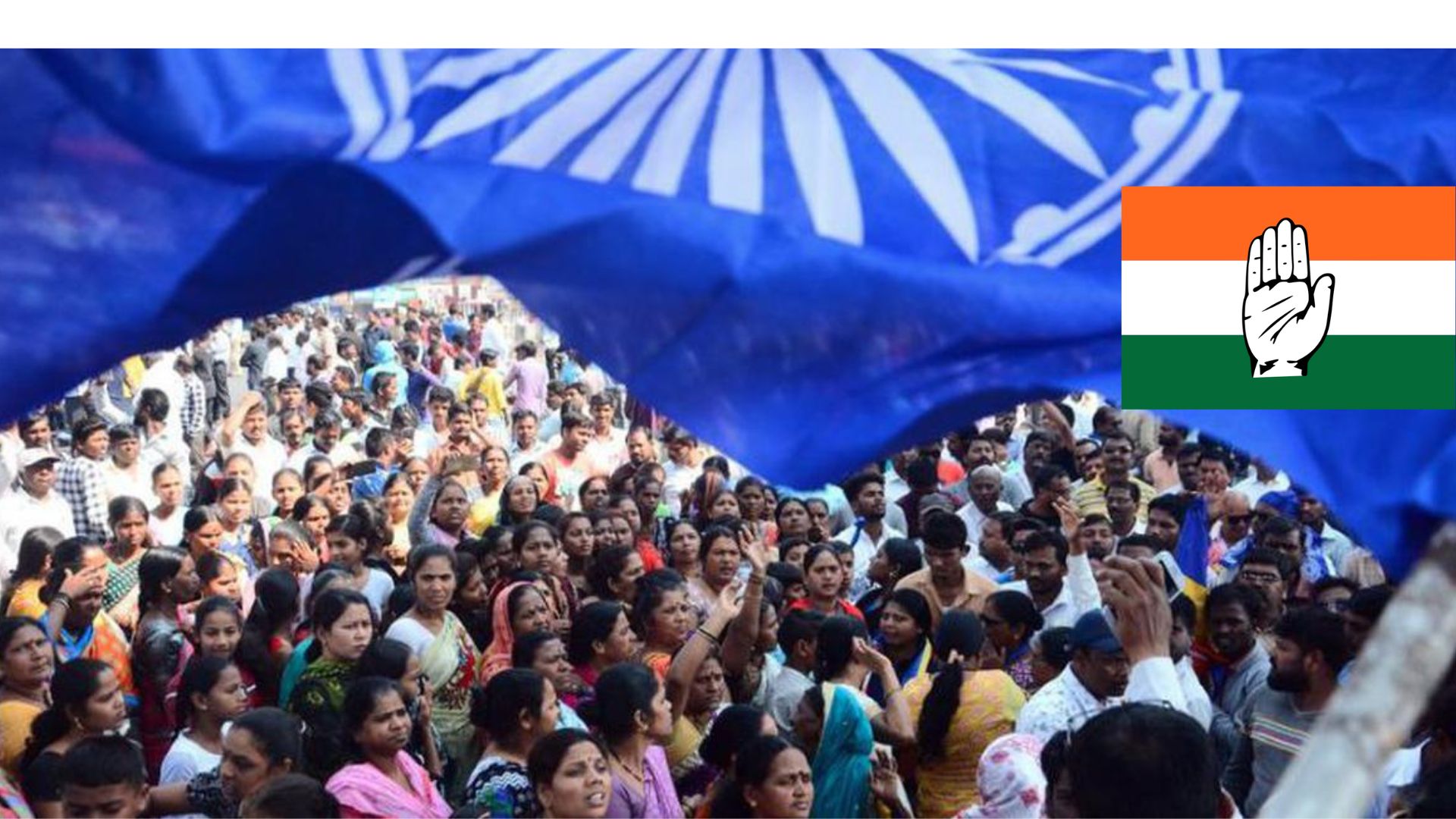
On Friday, 17 October, Congress MP and Leader of the Opposition Rahul Gandhi visited Raebareli to meet the grieving family of Hariom Valmiki, a Dalit man who was allegedly beaten to death by a group of miscreants over suspicion of theft. The visit, though framed as an act of solidarity, yet again brought to light a recurring pattern — the Congress party’s longstanding tendency to politicise Dalit tragedies, using caste-based narratives not to uplift the community, but to serve electoral and ideological objectives.
Before Gandhi’s visit, Hariom’s family had made it explicitly clear they did not want the incident to be politicised. In a widely circulated video message, Shivam Valmiki, Hariom’s younger brother, stated, “Since he died, we have received all possible help, financial and legal, from the state government… We request the politicians of other parties to refrain from politicising this tragedy.” Despite this appeal, Gandhi proceeded with his visit and, unsurprisingly, attempted to frame the incident through the lens of caste violence, alleging systemic oppression of Dalit under the Yogi Adityanath government — a claim that the victim’s own family contradicted.
This isn’t the first time the Congress party has stepped in to ‘mourn’ a Dalit tragedy, only to spin it into a weapon against its political opponents. In fact, such moves have long been part of Congress’s political playbook. Whenever a Dalit individual becomes a victim of crime, the Congress leadership is quick to label it a caste atrocity, often without waiting for a proper investigation or considering the facts on the ground. While genuine issues of caste discrimination should be addressed with sensitivity and justice, the selective outrage displayed by the Congress reveals a deeper, more cynical motive — vote-bank politics.
Historically, Congress has claimed to be the finest Dalit custodian. However, its record tells a different story. For decades, Dalits remained at the margins of political and social power even when Congress ruled both at the Centre and in many states. The implementation of affirmative action policies was often delayed or diluted. Grassroots empowerment remained largely symbolic, and real leadership from within the Dalit community was rarely allowed to emerge without Congress filtering it through its own dynastic structure.
The irony lies in the fact that even as Congress projects itself as a champion of the marginalised, it has actively undermined strong, independent Dalit leaders who could have posed a challenge to its centralised power. From B.R. Ambedkar’s uneasy relationship with the Congress during the pre-independence era to the party’s sidelining of leaders like Jagjivan Ram and later others who tried to break away from its influence, the pattern has been consistent. The party has historically preferred Dalit leaders who toe the party line rather than those who assert community interests independently.
In contrast, in cases like Hariom Valmiki’s, where the state government acts swiftly and decisively, Congress appears more interested in creating a narrative than acknowledging the administrative response. According to the family, two cabinet ministers visited them, financial aid was provided, and a job was offered to a family member — steps that are seldom seen when state systems genuinely fail. Instead of recognising these efforts, Rahul Gandhi chose to frame the incident as yet another symbol of “Dalit oppression”, completely disregarding the wishes of the grieving family and the facts as stated by them.
This approach raises fundamental questions: Is Congress truly interested in justice for Dalits, or is it more interested in reaping electoral mileage from their tragedies? When every crime against a Dalit is treated not as a case of criminal justice but as a caste atrocity — even against the family’s own version of events — it dilutes the fight against real systemic discrimination. It turns victims into pawns, not citizens deserving of dignity and justice.
Moreover, such interventions can do more harm than good. By injecting politics into personal grief, Congress not only disrespects the affected families but also deepens communal and caste divisions in society. In the long run, this approach erodes trust in institutions and law enforcement, making justice seem like a political bargaining chip rather than a guaranteed right.
If Congress genuinely wants to work for Dalits, it must stop using their pain as political fodder. Building institutions, empowering grassroots leadership, supporting education and economic upliftment — these are the real markers of commitment, not photo-ops and inflammatory rhetoric at moments of tragedy.
The case of Hariom Valmiki is tragic. It deserved a solemn and just response. But once again, Congress chose optics over honesty, politics over people — and in doing so, exposed its decades-old strategy of exploiting Dalit issues not to solve them, but to sustain its own relevance.