





















TFIPOST हिन्दी
TFIPOST Global
Tfipost.com
Tfipost.com
No Result
View All Result
  • Premium
  • Politics
    • All
    • Analysis
    • Opinions
    • Trending
    From Nuclear Resolve to Tech Power: Modi Invokes Pokhran Spirit on National Technology Day

    From Nuclear Resolve to Tech Power: Modi Invokes Pokhran Spirit on National Technology Day

    Petals of the Lotus: Inside BJP’s First Bengal Cabinet Under CM Suvendu Adhikari

    Petals of the Lotus: Inside BJP’s First Bengal Cabinet Under CM Suvendu Adhikari

    From Syama Prasad Mookerjee to BJP’s Bengal Victory: The Story Behind Modi’s Gesture

    From Syama Prasad Mookerjee to BJP’s Bengal Victory: The Story Behind Modi’s Gesture

    India’s Military Leadership Reset: Subramani Named CDS, Swaminathan to Take Charge of Navy in Strategic Transition

    India’s Military Leadership Reset: Subramani Named CDS, Swaminathan to Take Charge of Navy in Strategic Transition

    • Analysis
    • Opinions
    • Trending
  • Economy
    • All
    • Business
    • Economy1
    • Finance
    The Wrong Questions People Ask Before Buying Bike Insurance

    The Wrong Questions People Ask Before Buying Bike Insurance

    India–Vietnam Deepen Strategic Reset with $25 Billion Trade Goal, Broaden Indo-Pacific Alignment

    India–Vietnam Deepen Strategic Reset with $25 Billion Trade Goal, Broaden Indo-Pacific Alignment

    The Value of a Diversified Supply Chain: Recent U.S. Agreement Highlights Future Capabilities

    The Value of a Diversified Supply Chain: Recent U.S. Agreement Highlights Future Capabilities

    Lotus Blooms in WB: BJP Goes 200 Paar to Unseat Mamata, Vijay’s TVK Turns Heads Stuns in TN

    Lotus Blooms in WB: BJP Goes 200 Paar to Unseat Mamata, Vijay’s TVK Turns Heads Stuns in TN

    • Business
    • Finance
  • Defense
    • All
    • Defence
    • Strategy
    • Weaponry
    From Nuclear Resolve to Tech Power: Modi Invokes Pokhran Spirit on National Technology Day

    From Nuclear Resolve to Tech Power: Modi Invokes Pokhran Spirit on National Technology Day

    Pakistan’s Silent Admission After Operation SINDOOR

    Exposed and Outgunned: How Operation SINDOOR Forced Pakistan to the Ceasefire Table

    India’s Military Leadership Reset: Subramani Named CDS, Swaminathan to Take Charge of Navy in Strategic Transition

    India’s Military Leadership Reset: Subramani Named CDS, Swaminathan to Take Charge of Navy in Strategic Transition

    One Year Of Operation Sindoor: The Strike That Told Pakistan India’s Patience Had Expired

    One Year Of Operation Sindoor: The Strike That Told Pakistan India’s Patience Had Expired

    • Defence
    • Strategy
    • Weaponry
  • Geopolitics
    • All
    • Africa
    • Americas
    • Asia Pacific
    • Europe
    • South Asia
    • West Asia
    India-Australia Defence Axis Gains Sharp Strategic Edge Amid Indo-Pacific Flux

    India-Australia Defence Axis Gains Sharp Strategic Edge Amid Indo-Pacific Flux

    One Year Of Operation Sindoor: The Strike That Told Pakistan India’s Patience Had Expired

    One Year Of Operation Sindoor: The Strike That Told Pakistan India’s Patience Had Expired

    India–Vietnam Deepen Strategic Reset with $25 Billion Trade Goal, Broaden Indo-Pacific Alignment

    India–Vietnam Deepen Strategic Reset with $25 Billion Trade Goal, Broaden Indo-Pacific Alignment

    Stolen Legacy: How the CCP Hijacked the May Fourth Movement

    Stolen Legacy: How the CCP Hijacked the May Fourth Movement

    • Africa
    • Americas
    • Asia Pacific
    • Europe
    • South Asia
    • West Asia
  • Knowledge
    • All
    • Culture
    • Education
    • History
    • Indology
    Maharana Pratap Jayanti: India Reclaims the Legacy of a King Who Chose Resistance Over Submission, PM Modi Leads Tributes

    Maharana Pratap Jayanti: India Reclaims the Legacy of a King Who Chose Resistance Over Submission, PM Modi Leads Tributes

    Stolen Legacy: How the CCP Hijacked the May Fourth Movement

    Stolen Legacy: How the CCP Hijacked the May Fourth Movement

    NEET 2026 Row: When Rules Target One and Spare Another, It Stops Being Protocol

    NEET 2026 Row: When Rules Target One and Spare Another, It Stops Being Protocol

    Students move closer to a decisive academic milestone as cbse enters final result processing stage

    CBSE Class 12 Results 2026 Expected Soon As Verification Enters Last Stage

    • Culture
    • History
    • Indology
  • Law
  • Lounge
    • All
    • Books
    • Cinema
    • Entertainment
    • Food
    • Games
    • Health
    • Lifestyle
    • Satire
    • Sports
    • technology
    • Travel
    From Nuclear Resolve to Tech Power: Modi Invokes Pokhran Spirit on National Technology Day

    From Nuclear Resolve to Tech Power: Modi Invokes Pokhran Spirit on National Technology Day

    All Slots Games: Why People Still Spend Hours Spinning Reels

    All Slots Games: Why People Still Spend Hours Spinning Reels

    The 5 Best Betting Websites in 2026: Spartans.com Takes Vital Lead Against, Stake, Roobet, Rainbet & Gamdom

    The 5 Best Betting Websites in 2026: Spartans.com Takes Vital Lead Against, Stake, Roobet, Rainbet & Gamdom

    India’s Digital Census: When Numbers Start Shaping How a Country Runs

    India’s Digital Census: When Numbers Start Shaping How a Country Runs

    • Books
    • Cinema
    • Food
    • Health
    • Sports
    • technology
    • Travel
    • Satire
Tfipost.com
  • Premium
  • Politics
    • All
    • Analysis
    • Opinions
    • Trending
    From Nuclear Resolve to Tech Power: Modi Invokes Pokhran Spirit on National Technology Day

    From Nuclear Resolve to Tech Power: Modi Invokes Pokhran Spirit on National Technology Day

    Petals of the Lotus: Inside BJP’s First Bengal Cabinet Under CM Suvendu Adhikari

    Petals of the Lotus: Inside BJP’s First Bengal Cabinet Under CM Suvendu Adhikari

    From Syama Prasad Mookerjee to BJP’s Bengal Victory: The Story Behind Modi’s Gesture

    From Syama Prasad Mookerjee to BJP’s Bengal Victory: The Story Behind Modi’s Gesture

    India’s Military Leadership Reset: Subramani Named CDS, Swaminathan to Take Charge of Navy in Strategic Transition

    India’s Military Leadership Reset: Subramani Named CDS, Swaminathan to Take Charge of Navy in Strategic Transition

    • Analysis
    • Opinions
    • Trending
  • Economy
    • All
    • Business
    • Economy1
    • Finance
    The Wrong Questions People Ask Before Buying Bike Insurance

    The Wrong Questions People Ask Before Buying Bike Insurance

    India–Vietnam Deepen Strategic Reset with $25 Billion Trade Goal, Broaden Indo-Pacific Alignment

    India–Vietnam Deepen Strategic Reset with $25 Billion Trade Goal, Broaden Indo-Pacific Alignment

    The Value of a Diversified Supply Chain: Recent U.S. Agreement Highlights Future Capabilities

    The Value of a Diversified Supply Chain: Recent U.S. Agreement Highlights Future Capabilities

    Lotus Blooms in WB: BJP Goes 200 Paar to Unseat Mamata, Vijay’s TVK Turns Heads Stuns in TN

    Lotus Blooms in WB: BJP Goes 200 Paar to Unseat Mamata, Vijay’s TVK Turns Heads Stuns in TN

    • Business
    • Finance
  • Defense
    • All
    • Defence
    • Strategy
    • Weaponry
    From Nuclear Resolve to Tech Power: Modi Invokes Pokhran Spirit on National Technology Day

    From Nuclear Resolve to Tech Power: Modi Invokes Pokhran Spirit on National Technology Day

    Pakistan’s Silent Admission After Operation SINDOOR

    Exposed and Outgunned: How Operation SINDOOR Forced Pakistan to the Ceasefire Table

    India’s Military Leadership Reset: Subramani Named CDS, Swaminathan to Take Charge of Navy in Strategic Transition

    India’s Military Leadership Reset: Subramani Named CDS, Swaminathan to Take Charge of Navy in Strategic Transition

    One Year Of Operation Sindoor: The Strike That Told Pakistan India’s Patience Had Expired

    One Year Of Operation Sindoor: The Strike That Told Pakistan India’s Patience Had Expired

    • Defence
    • Strategy
    • Weaponry
  • Geopolitics
    • All
    • Africa
    • Americas
    • Asia Pacific
    • Europe
    • South Asia
    • West Asia
    India-Australia Defence Axis Gains Sharp Strategic Edge Amid Indo-Pacific Flux

    India-Australia Defence Axis Gains Sharp Strategic Edge Amid Indo-Pacific Flux

    One Year Of Operation Sindoor: The Strike That Told Pakistan India’s Patience Had Expired

    One Year Of Operation Sindoor: The Strike That Told Pakistan India’s Patience Had Expired

    India–Vietnam Deepen Strategic Reset with $25 Billion Trade Goal, Broaden Indo-Pacific Alignment

    India–Vietnam Deepen Strategic Reset with $25 Billion Trade Goal, Broaden Indo-Pacific Alignment

    Stolen Legacy: How the CCP Hijacked the May Fourth Movement

    Stolen Legacy: How the CCP Hijacked the May Fourth Movement

    • Africa
    • Americas
    • Asia Pacific
    • Europe
    • South Asia
    • West Asia
  • Knowledge
    • All
    • Culture
    • Education
    • History
    • Indology
    Maharana Pratap Jayanti: India Reclaims the Legacy of a King Who Chose Resistance Over Submission, PM Modi Leads Tributes

    Maharana Pratap Jayanti: India Reclaims the Legacy of a King Who Chose Resistance Over Submission, PM Modi Leads Tributes

    Stolen Legacy: How the CCP Hijacked the May Fourth Movement

    Stolen Legacy: How the CCP Hijacked the May Fourth Movement

    NEET 2026 Row: When Rules Target One and Spare Another, It Stops Being Protocol

    NEET 2026 Row: When Rules Target One and Spare Another, It Stops Being Protocol

    Students move closer to a decisive academic milestone as cbse enters final result processing stage

    CBSE Class 12 Results 2026 Expected Soon As Verification Enters Last Stage

    • Culture
    • History
    • Indology
  • Law
  • Lounge
    • All
    • Books
    • Cinema
    • Entertainment
    • Food
    • Games
    • Health
    • Lifestyle
    • Satire
    • Sports
    • technology
    • Travel
    From Nuclear Resolve to Tech Power: Modi Invokes Pokhran Spirit on National Technology Day

    From Nuclear Resolve to Tech Power: Modi Invokes Pokhran Spirit on National Technology Day

    All Slots Games: Why People Still Spend Hours Spinning Reels

    All Slots Games: Why People Still Spend Hours Spinning Reels

    The 5 Best Betting Websites in 2026: Spartans.com Takes Vital Lead Against, Stake, Roobet, Rainbet & Gamdom

    The 5 Best Betting Websites in 2026: Spartans.com Takes Vital Lead Against, Stake, Roobet, Rainbet & Gamdom

    India’s Digital Census: When Numbers Start Shaping How a Country Runs

    India’s Digital Census: When Numbers Start Shaping How a Country Runs

    • Books
    • Cinema
    • Food
    • Health
    • Sports
    • technology
    • Travel
    • Satire
No Result
View All Result
Tfipost.com
Tfipost.com
No Result
View All Result
  • Premium
  • Politics
  • Economy
  • Defense
  • Geopolitics
  • Knowledge
  • Law
  • Lounge

Banning the RSS for thrice seems to be motivated decisions!

Vinod Kumar Shukla by Vinod Kumar Shukla
14 October 2025
in Analysis
Banning the RSS for thrice seems to be motivated decisions!
Share on FacebookShare on X

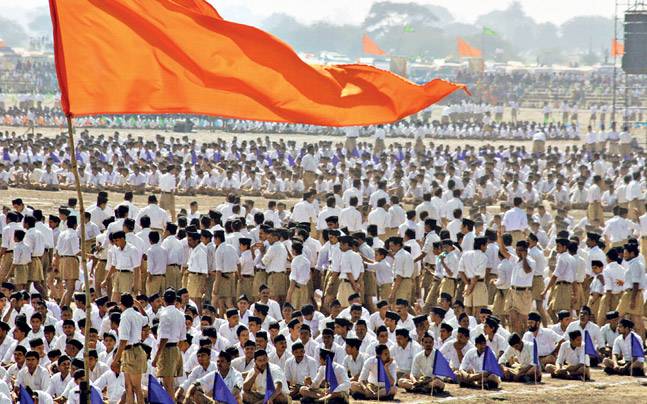
The Rahstriya Swayamsevak Sangh has completed 100 years of its formation this Vijayadashmi but all these years have been a bumpy ride for the organisation for not only being in the line of fire of dominant political outfits but also of the Congress governments at the Centre and states. The magnitude of attacks on the RSS was no less than persecution. But the more severely the RSS was attacked, the stronger it emerged.

The most common allegation against the RSS was that its activities were communal which were used as the reason to ban it thrice in its 100-year-long history but interestingly the people, organisation and the government who had put a ban on it are the one who had lifted it. Despite being faced with many hurdles including politically motivated targeting, the RSS and its Swayamsevaks remained committed to the cause for which the first Sarsanghchalak K B Hedgewar had formed the RSS.

RelatedPosts

Congress’s Tamil Nadu Pivot Backfires, Triggers DMK Fury and Exposes Cracks in INDIA Bloc

From Nandigram to Bhabanipur, Suvendu Adhikari Emerges as Bengal’s Leading CM Contender

CPIM trounced as Congress-Led UDF Surges to Power in Kerala

Load More

The RSS is also accused of being divisive, having no role in the freedom struggle and the then British government being lenient on the organisation but all these allegations are not only far from truth but are no less than a canard. Historians to were not just with the organisation. There are limited but credible books on how distorted history writings have done injustice to people in general and country in particular and RSS being the worst victim. But how did it all begin? All it began with the banning of the RSS on February 4, 1948 by accusing it of inciting communalism by its leaders, its role in the assassination of Gandhi and interestingly proof offered for such a serious allegation was that the RSS workers were distributing sweets on the death of Gandhi. This is even mentioned in a letter written on September 11, 1948 by the then Home Minister Sardar Patel to Second Sarsanghchalak M S Golwalkar. Even if it was true, this may be an immoral act by some fringe elements but certainly not the ground for banning any organisation and would have certainly not stood the ground of legal scrutiny.

Golwalkar and many other RSS leaders were arrested after banning the organisation by the Nehru government. In the same letter dated September 11 in which Sardar Patel accused the RSS workers of distributing sweets on Gandhi’s murder, he writes, “I am thoroughly convinced that the RSS men can carry on their patriotic endeavour only by joining the Congress and not by keeping separate or by opposing.” Two questions arise out of this; First if Sardar Patel wanted communal people of the RSS to join the Congress; and Second the Congress’ opposition, possibly on handling refugee issues, by the RSS was not accepted to the ruling party.

But the correspondence among Patel, Nehru and Golwalkar continued till it had hit a roadblock. On February 26, 1948 Nehru wrote to Patel, “While the investigation about Bapu’s assassination by [Nathuram] Godse is proceeding here and [in] Bombay and elsewhere, there appears to be a certain lack of efforts in tracing the larger conspiracy. More and more, I have come to the conclusion that Bapu’s murder was not an isolated business but part of a much wider campaign organised chiefly by the RSS.”

But his deputy in the government was even swifter in his reply when on February 27, 1948 Patel writes, “I have kept myself almost in daily touch with the progress of the investigation regarding Bapu’s assassination case…The centres of activity were Poona, Bombay, Ahmednagar and Gwalior. Delhi was, of course, the terminating point of their activity, but by no means its centre; nor do they seem to have spent more than a day or two at a time, and that too only twice between 19 and 30 January. It also clearly emerges from these statements that the RSS was not involved in it all.” Still, it took around 17 months for the government to lift the ban from the organisation.

RSS’ never give up approach was eloquently displayed when Golwalkar kept on writing to the Nehru government with the plea that the RSS succeeded in rising above provincial, linguistic, sectarian and other differences and in building up to real solid brotherhood. The government was not at all amused by any of these submissions but neither the government nor the RSS buzzed from their respective stands despite the RSS submitting its written draft constitution to the government on former’s insistence addressing various issues raised by it from its alleged secret functioning to providing commitment for democratic organisational structure to its opinion on National Flag to auditing proofs of its account to innumerable other issues. Still, that was not enough for the government to lift the ban on the RSS as per Secretary in the government of India, H V R Iyengar’s letter dated May 3, 1949. Golwalkar responded on May 17, 1949 that, “If the government believed that the information on which they had based these charges was reliable, they should have… come forward to prove them before any impartial tribunal.”

The communication between the government and the RSS reached a dead end for both not moving even an inch from their respective stands and Golwalkar on June 1, 2025 wrote to the ICS officer Iyengar, “Since my direct words seem to be unpalpable to the government, I think it best to desist from writing any further from the present.” The reply of Iyengar to Golwalkar was no less curt that in such circumstances continuing correspondence would not serve any useful purpose.

After hitting a dead end, Golwalkar wrote the same things to Pandit Maulichandra Sharma, originally a Congressman who started Janadhikar Samiti to campaign for lifting the ban on the RSS, on July 10, 1949, what he has been writing to the government and after that some meetings were organized by the government with the jailed RSS leaders, the government finally announced the removal of ban on July 11, 1949. Sharma was not such a big leader who can prevail upon any Congress leader specially a leader to the stature of Patel. So why did the truce happen? It appears that the government was looking for some escape route and also to stroke the ego of the then Prime Minister all through the correspondence with the second RSS chief. Nehru’s paranoia for the RSS was manifested on many occasions that the organisation wanted to dethrone him.

The fact of the matter was that if the government really had any evidence against the RSS that the organisation was dangerous for the country, then why negotiators were sent to jail. Moreover, in a response to a question by a journalist on July 22, 1949, Golwalkar said that they had given up nothing of their original principle and added, “The government of India wanted us put down our constitution in writing. We have done so. People might call it clarification if they chose.”

Another major allegation seems to be of the RSS being a communal organisation and it is said that due to these activities, the organisation was banned, but such campaigns were full of mischief and were attempts to intimidate and also to keep new people away from the RSS. But they failed miserably as the organisation that was started with a handful of people today has support of billions, workers in millions, Sakha in lakhs and organised at thousands of places.

Moving further, the RSS was banned for the second time when Prime Minister Indira Gandhi imposed National Emergency on June 25, 1975. The ban was imposed on July 4, 1975 and lifted on March 22, 1977. The third ban took place on December 10, 1992 after the demolition of the Babri structure on December 6 by offering the same logic of the RSS causing communal disturbance and ban ended on June 4, 1993 when the Tribunal headed by the Delhi High Court Judge Justice P K Bahri found it unjustified. The tribunal also ruled that the government had failed to produce any evidence showing that the RSS had pre-planned the destruction of the structure.

And those who argue that why did the British not make any attempt to ban the RSS? They are ill informed as it appears to be more of a propaganda than laced with facts. The British government issued an order in 1932 in Central Province and Barar [today’s Madhya Pradesh] and banned government employees from taking membership of the RSS. Still the RSS grew gradually to become a very strong organization in the Central Province in 1939. The Home Department had recommended the Central Province government to ban the RSS using Section 16 of the Criminal Law Amendment Act in June 1939, but the provincial government could not dare to do so and refused for the fear of possible fierce remonstration.

Besides various Congress governments banning the RSS thrice – 1948, 1975 and 1992, the Indira Gandhi government put a restriction on government employees to participate in any activity of the RSS on November 30, 1966 and the Ministry of Home Affairs issued another order to make it more stringent on July 25, 1970. The new order outlined that disciplinary action would be taken against government employees participating in any activity of the RSS. The Ministry of Home Affairs repeated two previous orders on October 28, 1980, emphasized on the secular approach of the government employees which became part of the preamble of the Constitution of India after 42nd amendment of the constitution that was passed during National Emergency in 1976. But on July 9, 2024, the Modi government made a correction by issuing a government notification to cancel the orders of 1966, 1970 and 1980. This order of the Modi government not only annulled the partisan decision against the RSS but gave it the due that it deserved. These decisions will not stop unsubstantiated attacks on the RSS but its actions and work for the society and the nation is the answer to its detractors to say the least.

 

Tags: British RajCongressRashtriya Swayamsevak Sanghrss
ShareTweetSend
Previous Post

‘Go to the Election Commission’: Supreme Court on “Vote Chori” Allegations. Will The Congress And Rahul Gandhi Stop Their False Propaganda Now?

Next Post

Dattopant Thengadi: A Tribute to the Visionary Architect of India’s Indigenous Labour Movement

Related Posts

Pakistan’s Silent Admission After Operation SINDOOR
Analysis

Exposed and Outgunned: How Operation SINDOOR Forced Pakistan to the Ceasefire Table

10 May 2026

When Pakistan's military agreed to a ceasefire on 10 May 2025, its generals presented it to their public as...

Operation Sindoor exposes Pakistan false narrative, asserts India's precision strategy
Analysis

Operation Sindoor: India’s Precision Doctrine Exposes Pakistan’s False Flag Narrative at the UN

10 April 2026

In May 2026, South Asia's geopolitical and military landscape witnessed a decisive shift. India's Operation Sindoor, to avenge the...

Rare 1,000-km Rain Band Brings Storms Across India in Unusual Late-March Weather Shift; Delhi Sees Wettest March In 3 Years
Analysis

Rare 1,000-km Rain Band Brings Storms Across India in Unusual Late-March Weather Shift; Delhi Sees Wettest March In 3 Years

20 March 2026

An unusual weather phenomenon is currently unfolding across parts of India, Pakistan, and Afghanistan, bringing intense rainfall, thunderstorms, gusty...

Load More

Leave a Reply Cancel reply

Your email address will not be published. Required fields are marked *

I agree to the Terms of use and Privacy Policy.
This site is protected by reCAPTCHA and the Google Privacy Policy and Terms of Service apply.

Currently Playing

From Runways to Warships: India’s Firefighting Warrior Built for Bases & Battles| IAF | VayuShakti

From Runways to Warships: India’s Firefighting Warrior Built for Bases & Battles| IAF | VayuShakti

00:05:40

Ethanol, EVs and Solar- How India’s Energy Game Is Changing | Modi on LPG & Crude Oil | war| Hormuz

00:05:21

Truth of IRIS Dena: 8 Days That Changed Narrative | War zone Reality, Not an Indian Navy Exercise

00:08:02

300 Million Euros for SCALP: Strategic Necessity or Costly Dependency on France300

00:04:06

Tejas Mk1A: 19th aircraft coupled but Not Delivered: What Is Holding Back the IAF Induction?

00:07:21
Facebook Twitter Instagram Youtube
tfipostTfipost.com
Right Wing | News Analysis | Indian Opinion
  • About us
  • Contact Us
  • Careers
  • Brand Partnerships
  • Terms of use
  • Privacy Policy
  • Sitemap

©2026 TFI Media Private Limited

No Result
View All Result
  • Premium
  • Politics
    • Analysis
    • Opinions
    • Trending
  • Economy
    • Business
    • Finance
  • Defense
    • Defence
    • Strategy
    • Weaponry
  • Geopolitics
    • Africa
    • Americas
    • Asia Pacific
    • Europe
    • South Asia
    • West Asia
  • Knowledge
    • Culture
    • History
    • Indology
  • Law
  • Lounge
    • Books
    • Cinema
    • Food
    • Health
    • Sports
    • technology
    • Travel
    • Satire
TFIPOST हिन्दी
TFIPOST Global

©2026 TFI Media Private Limited