















TFIPOST हिन्दी
TFIPOST Global
Tfipost.com
Tfipost.com
No Result
View All Result
  • Premium
  • Politics
    • All
    • Analysis
    • Opinions
    • Trending
    From pilgrimage to metros, now without the wait

    From Kashi to Mumbai and Ayodhya to Pune: Modi Expands Rail Network with New Amrit Bharat Express Services

    Why is Making a Jet Engine so Hard | The failure of Kaveri

    Why is Making a Jet Engine so Hard | The failure of Kaveri

    Rajnath Singh at SCO, reaffirming India’s zero-tolerance stand on terrorism.

    “No More Double Standards”: Rajnath Singh’s SCO Message Rewrites India’s Terror Response Playbook

    Nepal PM Faces Fresh Controversy as Church Demolition Row Triggers Political Storm

    Nepal PM Faces Fresh Controversy as Church Demolition Row Triggers Political Storm

    • Analysis
    • Opinions
    • Trending
  • Economy
    • All
    • Business
    • Economy1
    • Finance
    India–New Zealand FTA signed in New Delhi, marking a “once in a lifetime” moment in trade ties.

    India, New Zealand Seal Fast-Tracked Trade Pact to Expand Duty-Free Access, Jobs and $5 Billion Trade Target

    Ahmadis in Pakistan: From Faith to Marginalisation Under Law and Society

    Ahmadis in Pakistan: From Faith to Marginalisation Under Law and Society

    Open Demat Account with Zero Annual Maintenance Charges What to Look For

    Open Demat Account with Zero Annual Maintenance Charges What to Look For

    Blood in the Meadows: How the Pahalgam Terror Attack Exposed Calculated Targeting of Civilians in Kashmir

    Blood in the Meadows: How the Pahalgam Terror Attack Exposed Calculated Targeting of Civilians in Kashmir

    • Business
    • Finance
  • Defense
    • All
    • Defence
    • Strategy
    • Weaponry
    Why is Making a Jet Engine so Hard | The failure of Kaveri

    Why is Making a Jet Engine so Hard | The failure of Kaveri

    Rajnath Singh at SCO, reaffirming India’s zero-tolerance stand on terrorism.

    “No More Double Standards”: Rajnath Singh’s SCO Message Rewrites India’s Terror Response Playbook

    Recovered arms and arrests have intensified scrutiny on a suspected cross-border terror network.

    Pakistan’s Proxy War Faces a Setback as Delhi Terror Plot is Crushed, 18 Weapons Seized

    The scars of Pahalgam endure, even as the nation moves forward

    Pahalgam Anniversary: Modi Signals Firm National Stand as India Reasserts Anti-Terror Resolve

    • Defence
    • Strategy
    • Weaponry
  • Geopolitics
    • All
    • Africa
    • Americas
    • Asia Pacific
    • Europe
    • South Asia
    • West Asia
    When law becomes an instrument of exclusion, persecution moves far beyond the courtroom.

    Ahmadis in Pakistan: From Faith to Marginalisation Under Law and Society

    When uranium becomes strategy, India moves first.

    India’s $4 Billion Uranium Coup with Kazakhstan Rewrites the Global Nuclear Balance

    “Fixing the World”: What a Century of Big Ideas Reveals About Us

    “Fixing the World”: What a Century of Big Ideas Reveals About Us

    Pakistan Tried to Bury an NYT Report. It Only Exposed Asim Munir’s Panic

    Pakistan Tried to Bury an NYT Report. It Only Exposed Asim Munir’s Panic

    • Africa
    • Americas
    • Asia Pacific
    • Europe
    • South Asia
    • West Asia
  • Knowledge
    • All
    • Culture
    • Education
    • History
    • Indology
    Chants of ‘Jai Badri Vishal’ Echo as Badrinath Portals Open; All Four Dhams Now Accessible to Pilgrims

    Chants of ‘Jai Badri Vishal’ Echo as Badrinath Portals Open; All Four Dhams Now Accessible to Pilgrims

    Kedarnath Dham Portals Open for Devotees After 181 Days Amid Vedic Chants, Traditional Rituals

    Kedarnath Dham Portals Open for Devotees After 181 Days Amid Vedic Chants, Traditional Rituals

    Sardar Patel and Amit Shah

    Sardar Patel’s 1947 Blueprint on Minority Quotas Resurfaces as Reservation Debate Returns to Centre Stage

    The 1973 Constitution and ‘Bhutto’ the Man Who Made It: What Pakistan Owes and What It Destroyed

    The 1973 Constitution and ‘Bhutto’ the Man Who Made It: What Pakistan Owes and What It Destroyed

    • Culture
    • History
    • Indology
  • Law
  • Lounge
    • All
    • Books
    • Cinema
    • Entertainment
    • Food
    • Games
    • Health
    • Lifestyle
    • Satire
    • Sports
    • technology
    • Travel
    When regulation meets the algorithm

    India Tightens Digital Control as Online Blocking Orders Surge to 24,300 Amid AI Deepfake Trend

    Digital Data Collection In India

    India’s Data Reset Begins: Census 2027 to Become First Fully Digital Population Count

    5 Facilities in Bengaluru Specializing in Mental Health Treatment for Those with Cancer

    5 Facilities in Bengaluru Specializing in Mental Health Treatment for Those with Cancer

    UNESCO World Book Day and Copyright Day

    World Book Day 2026: UNESCO’s Multilingual Push Aligns with India’s Deep Literary Continuum

    • Books
    • Cinema
    • Food
    • Health
    • Sports
    • technology
    • Travel
    • Satire
Tfipost.com
  • Premium
  • Politics
    • All
    • Analysis
    • Opinions
    • Trending
    From pilgrimage to metros, now without the wait

    From Kashi to Mumbai and Ayodhya to Pune: Modi Expands Rail Network with New Amrit Bharat Express Services

    Why is Making a Jet Engine so Hard | The failure of Kaveri

    Why is Making a Jet Engine so Hard | The failure of Kaveri

    Rajnath Singh at SCO, reaffirming India’s zero-tolerance stand on terrorism.

    “No More Double Standards”: Rajnath Singh’s SCO Message Rewrites India’s Terror Response Playbook

    Nepal PM Faces Fresh Controversy as Church Demolition Row Triggers Political Storm

    Nepal PM Faces Fresh Controversy as Church Demolition Row Triggers Political Storm

    • Analysis
    • Opinions
    • Trending
  • Economy
    • All
    • Business
    • Economy1
    • Finance
    India–New Zealand FTA signed in New Delhi, marking a “once in a lifetime” moment in trade ties.

    India, New Zealand Seal Fast-Tracked Trade Pact to Expand Duty-Free Access, Jobs and $5 Billion Trade Target

    Ahmadis in Pakistan: From Faith to Marginalisation Under Law and Society

    Ahmadis in Pakistan: From Faith to Marginalisation Under Law and Society

    Open Demat Account with Zero Annual Maintenance Charges What to Look For

    Open Demat Account with Zero Annual Maintenance Charges What to Look For

    Blood in the Meadows: How the Pahalgam Terror Attack Exposed Calculated Targeting of Civilians in Kashmir

    Blood in the Meadows: How the Pahalgam Terror Attack Exposed Calculated Targeting of Civilians in Kashmir

    • Business
    • Finance
  • Defense
    • All
    • Defence
    • Strategy
    • Weaponry
    Why is Making a Jet Engine so Hard | The failure of Kaveri

    Why is Making a Jet Engine so Hard | The failure of Kaveri

    Rajnath Singh at SCO, reaffirming India’s zero-tolerance stand on terrorism.

    “No More Double Standards”: Rajnath Singh’s SCO Message Rewrites India’s Terror Response Playbook

    Recovered arms and arrests have intensified scrutiny on a suspected cross-border terror network.

    Pakistan’s Proxy War Faces a Setback as Delhi Terror Plot is Crushed, 18 Weapons Seized

    The scars of Pahalgam endure, even as the nation moves forward

    Pahalgam Anniversary: Modi Signals Firm National Stand as India Reasserts Anti-Terror Resolve

    • Defence
    • Strategy
    • Weaponry
  • Geopolitics
    • All
    • Africa
    • Americas
    • Asia Pacific
    • Europe
    • South Asia
    • West Asia
    When law becomes an instrument of exclusion, persecution moves far beyond the courtroom.

    Ahmadis in Pakistan: From Faith to Marginalisation Under Law and Society

    When uranium becomes strategy, India moves first.

    India’s $4 Billion Uranium Coup with Kazakhstan Rewrites the Global Nuclear Balance

    “Fixing the World”: What a Century of Big Ideas Reveals About Us

    “Fixing the World”: What a Century of Big Ideas Reveals About Us

    Pakistan Tried to Bury an NYT Report. It Only Exposed Asim Munir’s Panic

    Pakistan Tried to Bury an NYT Report. It Only Exposed Asim Munir’s Panic

    • Africa
    • Americas
    • Asia Pacific
    • Europe
    • South Asia
    • West Asia
  • Knowledge
    • All
    • Culture
    • Education
    • History
    • Indology
    Chants of ‘Jai Badri Vishal’ Echo as Badrinath Portals Open; All Four Dhams Now Accessible to Pilgrims

    Chants of ‘Jai Badri Vishal’ Echo as Badrinath Portals Open; All Four Dhams Now Accessible to Pilgrims

    Kedarnath Dham Portals Open for Devotees After 181 Days Amid Vedic Chants, Traditional Rituals

    Kedarnath Dham Portals Open for Devotees After 181 Days Amid Vedic Chants, Traditional Rituals

    Sardar Patel and Amit Shah

    Sardar Patel’s 1947 Blueprint on Minority Quotas Resurfaces as Reservation Debate Returns to Centre Stage

    The 1973 Constitution and ‘Bhutto’ the Man Who Made It: What Pakistan Owes and What It Destroyed

    The 1973 Constitution and ‘Bhutto’ the Man Who Made It: What Pakistan Owes and What It Destroyed

    • Culture
    • History
    • Indology
  • Law
  • Lounge
    • All
    • Books
    • Cinema
    • Entertainment
    • Food
    • Games
    • Health
    • Lifestyle
    • Satire
    • Sports
    • technology
    • Travel
    When regulation meets the algorithm

    India Tightens Digital Control as Online Blocking Orders Surge to 24,300 Amid AI Deepfake Trend

    Digital Data Collection In India

    India’s Data Reset Begins: Census 2027 to Become First Fully Digital Population Count

    5 Facilities in Bengaluru Specializing in Mental Health Treatment for Those with Cancer

    5 Facilities in Bengaluru Specializing in Mental Health Treatment for Those with Cancer

    UNESCO World Book Day and Copyright Day

    World Book Day 2026: UNESCO’s Multilingual Push Aligns with India’s Deep Literary Continuum

    • Books
    • Cinema
    • Food
    • Health
    • Sports
    • technology
    • Travel
    • Satire
No Result
View All Result
Tfipost.com
Tfipost.com
No Result
View All Result
  • Premium
  • Politics
  • Economy
  • Defense
  • Geopolitics
  • Knowledge
  • Law
  • Lounge

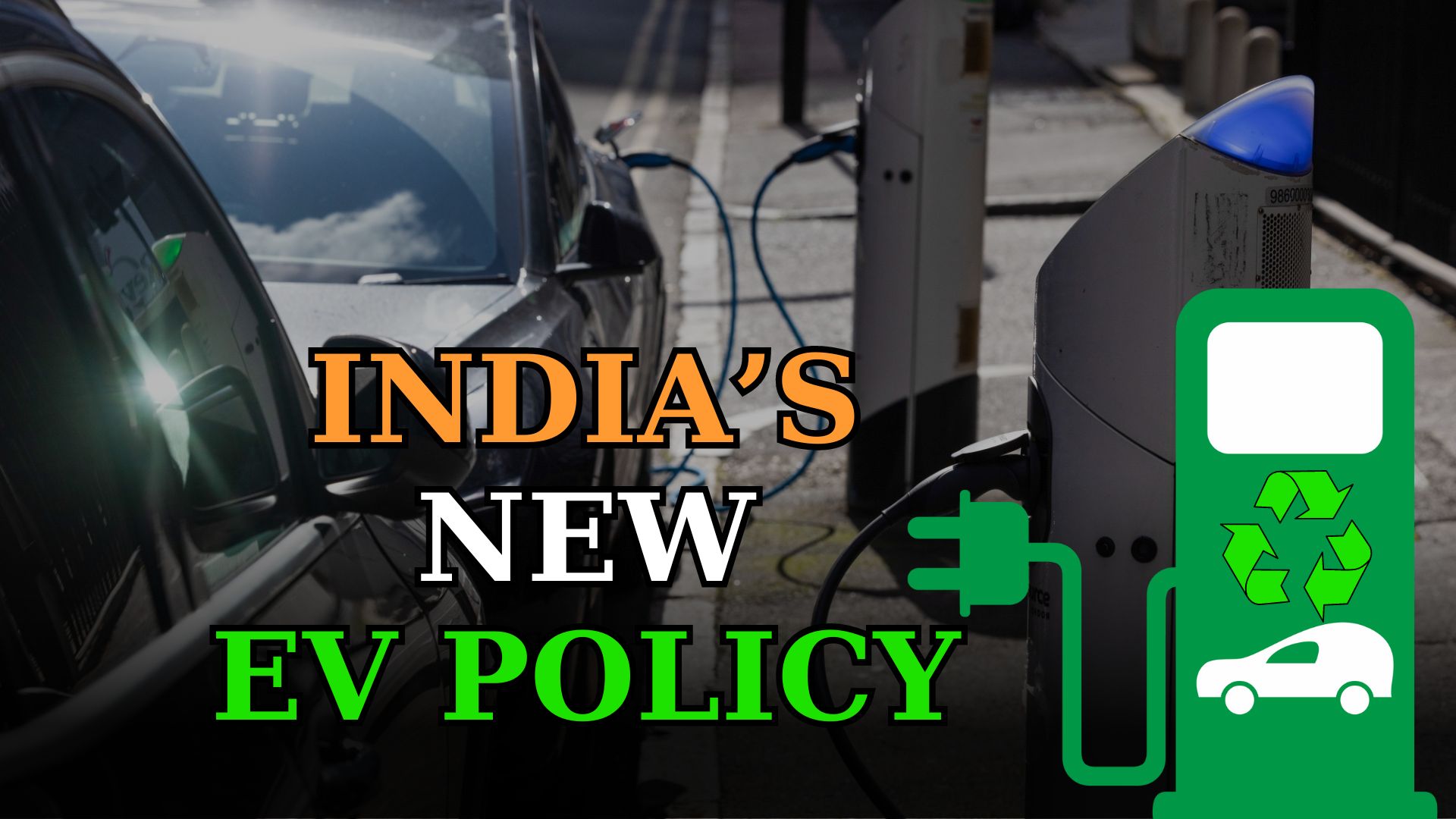
India’s New Electric Vehicle Policy: Revolution for Global EV Manufacturing Hub

Muskan Goel by Muskan Goel
20 March 2024
in Economy, technology, Trending
EV Policy, Electric Vehicle, Green future, Sustainability, Global manufacturing hub
Share on FacebookShare on X

India’s recently unveiled electric vehicle (EV) policy marks a significant milestone in the nation’s journey towards sustainable mobility. With a focus on attracting global players and fostering a competitive EV manufacturing ecosystem, the policy aims to propel India into a leading position in the global EV market. Key components include investment incentives, import duty reductions, and minimum investment requirements, aimed at incentivizing both domestic and foreign investment in the EV sector. By creating a conducive environment for EV manufacturing, the policy sets the stage for India to emerge as a prominent player in the global transition towards electric mobility.

The Policy’s Impact on Global EV Manufacturers

India’s new electric vehicle (EV) policy, often referred to as the ‘Tesla policy’, presents a significant opportunity for global players to penetrate the Indian market. Companies like Tesla, VinFast, Foxconn, MG Motor, Ford, and Volkswagen stand to benefit from the policy’s provisions aimed at facilitating their entry into India’s burgeoning EV sector. With favorable manufacturing policies and incentives, these companies can establish a strong foothold in one of the world’s fastest-growing economies.

RelatedPosts

India’s Defence Exports Surge to Record ₹38,424 Crore in FY 2025–26, Marking Significant Growth

PepsiCo India Claims 1.48 Billion Litres Replenished in Groundwater Push, but Critics Question True Impact

The Environmental Benefits of Recycling Metal at a Junk Yard

Load More

Influx of Foreign Direct Investment (FDI)

The policy is expected to catalyze a substantial influx of foreign direct investment (FDI) into India’s EV manufacturing space. By offering attractive investment incentives and reducing import duties, the government aims to incentivize global players to invest in establishing manufacturing facilities in India. This infusion of FDI is crucial for accelerating the development of India’s EV ecosystem, driving innovation, and creating employment opportunities.

Positioning India as a Competitive Manufacturing Base

India’s EV policy plays a pivotal role in positioning the country as a competitive manufacturing base for EVs catering to global markets. With a growing per capita income, large consumer base, and favorable manufacturing cost base, India offers an attractive destination for global manufacturers seeking to leverage economies of scale. The policy’s emphasis on local manufacturing and value addition further strengthens India’s position as a preferred destination for EV production, with the potential to serve both domestic and international markets.

Incentives and Regulations

One of the key incentives provided under the policy is a reduction in import taxes for EVs, with a minimum CIF value threshold of USD 35,000. This reduction aims to make imported EVs more affordable for consumers and incentivize global manufacturers to enter the Indian market. Additionally, the policy offers production-linked incentives to encourage domestic manufacturing of EVs, providing financial benefits based on production volumes.

Also Read: Maldives’ Economic Mirage and The Toll of the Missing Indian Tourists.

Level Playing Field for New and Existing Players

The policy aims to create a level playing field by extending benefits to both new entrants and existing players in the EV space. By lowering import taxes and offering production-linked incentives, the government ensures that all manufacturers, regardless of their tenure in the market, have an equal opportunity to compete and thrive. This approach fosters healthy competition, innovation, and market diversification.

Requirements for Domestic Value Addition (DVA)

To promote indigenous production capabilities, the policy mandates a certain level of domestic value addition (DVA) and local manufacturing. Manufacturers are required to achieve a specified DVA percentage within a designated timeframe, encouraging them to source components locally and invest in domestic manufacturing infrastructure. This requirement not only stimulates the growth of the domestic EV supply chain but also enhances the country’s self-reliance in EV production.

Tata Motors and Mahindra & Mahindra

Tata Motors and Mahindra & Mahindra, as early movers in the EV space, stand to benefit significantly from the policy’s incentives and regulations. Their inclusion in the production-linked incentive scheme provides them with financial benefits based on their EV production volumes, enhancing their competitiveness in the market.

With the policy’s emphasis on domestic manufacturing and value addition, Tata Motors and Mahindra & Mahindra can leverage their existing infrastructure and supply chain networks to meet the requirements and offer competitive EV models.

Potential for Offering Competitive EV Models

The policy creates an environment conducive to innovation and technological advancement, enabling domestic players to develop and launch competitive EV models.

Tata Motors and Mahindra & Mahindra can capitalize on their expertise in automotive design, engineering, and manufacturing to introduce EVs tailored to the needs of the Indian market. By leveraging the incentives provided under the policy, domestic players can enhance their research and development efforts, driving the evolution of EV technology and improving product offerings.

Strategies for Market Expansion and Technological Advancement

Domestic players can adopt various strategies to leverage the policy for market expansion and technological advancement. This may include investing in research and development to enhance the performance and affordability of their EVs, expanding their manufacturing capabilities to meet growing demand, and strengthening their distribution and service networks to ensure a seamless customer experience. Collaborations and partnerships with technology providers, academic institutions, and government agencies can also accelerate innovation and foster the development of new EV technologies.

Also Read: Elvish Yadav With His Self-Contaminated Zone: Arrested Again!!

Key Features of the EV Policy

Minimum Investment Requirement and Timelines for Establishment

The policy sets a minimum investment requirement of Rs. 4150 crores (approximately USD 500 million) for companies venturing into EV manufacturing in India. Manufacturers have a three-year window to establish their operations and commence production, ensuring timely implementation of manufacturing facilities.

Reduction in Import Duty and Compliance Measures

Import duty for EVs with a minimum CIF value of USD 35,000 is reduced to 15%, contingent upon manufacturers establishing manufacturing facilities within three years and investing USD 500 million in India. Compliance measures include a cap on duty forgone, bank guarantees equivalent to the duty forgone, and regulations on imported EVs to ensure adherence to domestic value addition and investment criteria.

Significance of Bank Guarantees

Bank guarantees serve as a safeguard to ensure compliance with the prescribed criteria for domestic value addition and investment. Manufacturers are required to furnish bank guarantees equivalent to the duty forgone, providing assurance that they will fulfill their obligations under the policy framework.

Opportunities

India’s EV policy offers a platform to accelerate adoption and foster sustainable development by attracting investment, stimulating innovation, and reducing carbon emissions. It creates opportunities for job creation, technology advancement, and economic growth, while also addressing environmental concerns through the promotion of clean mobility solutions.

Challenges

Challenges such as infrastructure development, supply chain management, and regulatory compliance pose significant hurdles to the successful implementation of the policy. Building adequate charging infrastructure, ensuring a robust supply chain for EV components, and navigating complex regulatory frameworks require concerted efforts from stakeholders.

Collaborative Solutions

Stakeholders, including government, industry players, and academia, can collaborate to address challenges and capitalize on opportunities. This collaboration may involve investment in infrastructure, fostering partnerships for technology transfer, and streamlining regulatory processes to create an enabling environment for sustainable EV adoption and development.

In conclusion, India’s new EV policy holds immense potential to position the nation as a global hub for EV manufacturing, attracting investment and fostering innovation. Collaboration between government, industry, and stakeholders is crucial for successful implementation. Looking ahead, India’s EV sector is poised for exponential growth, driving sustainable development and offering opportunities for global partnerships. This trajectory not only benefits India but also contributes to the transformation of the global automotive industry towards a more sustainable future.

Also Read: Dogs Ban: India’s Bark-lash Against the Bite

Tags: Electric VehicleEV PolicyGlobal manufacturing hubGreen futuresustainability
ShareTweetSend
Previous Post

Meta’s Pledge to Combat Misinformation Ahead of India’s General Elections

Next Post

Melbet India Review: An In-Depth Analysis

Related Posts

From pilgrimage to metros, now without the wait
Trending

From Kashi to Mumbai and Ayodhya to Pune: Modi Expands Rail Network with New Amrit Bharat Express Services

28 April 2026

Prime Minister Narendra Modi flagged off two new Amrit Bharat Express trains, widening India’s long-distance rail network with direct...

Why is Making a Jet Engine so Hard | The failure of Kaveri
Defense

Why is Making a Jet Engine so Hard | The failure of Kaveri

28 April 2026

To a nation that roots itself in history as ancient and sacred as ours, that finds pride and affection...

Rajnath Singh at SCO, reaffirming India’s zero-tolerance stand on terrorism.
Defense

“No More Double Standards”: Rajnath Singh’s SCO Message Rewrites India’s Terror Response Playbook

28 April 2026

Defence Minister Rajnath Singh delivered a clear and uncompromising message at the Shanghai Cooperation Organisation (SCO) Defence Ministers’ Meeting...

Load More

Leave a Reply Cancel reply

Your email address will not be published. Required fields are marked *

I agree to the Terms of use and Privacy Policy.
This site is protected by reCAPTCHA and the Google Privacy Policy and Terms of Service apply.

Currently Playing

From Runways to Warships: India’s Firefighting Warrior Built for Bases & Battles| IAF | VayuShakti

From Runways to Warships: India’s Firefighting Warrior Built for Bases & Battles| IAF | VayuShakti

00:05:40

Ethanol, EVs and Solar- How India’s Energy Game Is Changing | Modi on LPG & Crude Oil | war| Hormuz

00:05:21

Truth of IRIS Dena: 8 Days That Changed Narrative | War zone Reality, Not an Indian Navy Exercise

00:08:02

300 Million Euros for SCALP: Strategic Necessity or Costly Dependency on France300

00:04:06

Tejas Mk1A: 19th aircraft coupled but Not Delivered: What Is Holding Back the IAF Induction?

00:07:21
Facebook Twitter Instagram Youtube
tfipostTfipost.com
Right Wing | News Analysis | Indian Opinion
  • About us
  • Contact Us
  • Careers
  • Brand Partnerships
  • Terms of use
  • Privacy Policy
  • Sitemap

©2026 TFI Media Private Limited

No Result
View All Result
  • Premium
  • Politics
    • Analysis
    • Opinions
    • Trending
  • Economy
    • Business
    • Finance
  • Defense
    • Defence
    • Strategy
    • Weaponry
  • Geopolitics
    • Africa
    • Americas
    • Asia Pacific
    • Europe
    • South Asia
    • West Asia
  • Knowledge
    • Culture
    • History
    • Indology
  • Law
  • Lounge
    • Books
    • Cinema
    • Food
    • Health
    • Sports
    • technology
    • Travel
    • Satire
TFIPOST हिन्दी
TFIPOST Global

©2026 TFI Media Private Limited