









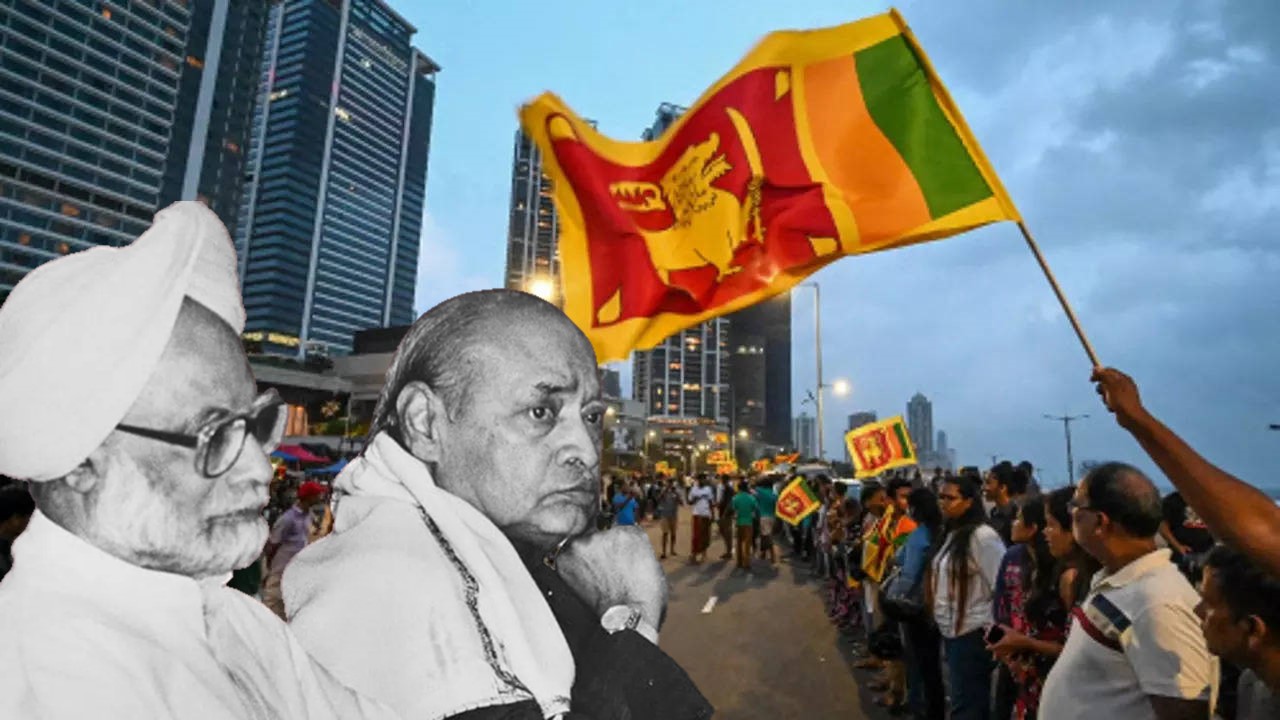
The temptation to draw an analogy from India’s Balance of Payment crisis, also known as the Currency crisis of 1991, while undertaking a comprehensive review of the current Sri Lankan calamity is easy but may not be fully appropriate, owing to a sundry range of aspects.
Conceivably, the geographical proximity and the pluralistic nature of the two Socialist Republics are a major incentive to persuade a sizable section within the “concerned” analyst community for them to advocate in favour of replicating the solution India embraced between 1991 and 1992. It was done to avert the imminent sovereign default as soon as PVN Rao became the Prime Minister, who in turn chose Dr Manmohan Singh to be the man in charge of the most delicate business of Treasury.
While the common problem statement remains as the inadequacy of Forex reserves to fund the essential imports, the remedial measures envisaged for the island nation may need to be more gravitated towards structural resolutions instead of placing reliance only on instantaneous assistance.
Even if India’s responses to the crisis at the time does match the existing challenges of Sri Lanka, it is important to recognize the difference in nature and dimension.
Cutting the long story short, India had its own set of issues that got accentuated with the force of external events, such as the Gulf war and the disintegration of USSR. Those issues are qualitatively distinct for Sri Lanka, as it had witnessed civil war of the worst kind, spanning over decades. As part of dealing with insurgency, it sought help from the world community, and in the process slipped into the clutches of the wrong hands.
One other major piece is the acute trust deficit with the incumbent dispensation, and being a softer issue, may not have a readymade hardware solution. Besides, COVID as a dampener barely spared any part of the world economy with tourism being among the worst hit sectors. The impact of the pandemic was worse for economies like Sri Lanka for whom tourism was a vital segment. And of course, in the hindsight, opinions are expressed against some of the unwise policy decisions, such as placing an embargo on the manufacture of chemical fertilizer leading to a drastic drop in agricultural produce coupled with populist measures like tax cuts, resulting in consequential contraction in the tax base.
The combined effect of all these issues manifested in the depletion of Forex reserves, impairing the capacity to import. Among the major imports are petroleum products that have been affected ever since the problem surfaced. The latest issue being added to the long list of woes is the fear raised by doctors about the possible shortage of medicine in the absence of inventory replenishment. Needless to say, an unprecedented level of inflation is the organic outcome of such a situation.
To restore normalcy, the supply side must be fixed soon, and as such it’s inevitable that the nation is intuitionally funded forthwith, to prevent any fatal consequences arising from a resource crunch.
That being said, this is only a band-aid approach similar to the effect of first aid. However, for achieving a sustainable solution, the country must embark upon a well-thought-out and structured reform program, which will address both its mid and long-range needs.
The package may well include both fiscal and monetary measures. And as a word of caution, the transformation of the economic governance model ought not to be guided by any foreign player, but rather to be authentic and original to Sri Lanka, to reflect the true aspiration of its own citizens. “Others, that can at best advice, shall seldom own the problem” must be borne in the mind at the time of formulating the action plans.
Recap of India’s watershed moment in 1991
There was a huge Macroeconomic imbalance of high current account deficit and high fiscal deficit. The crisis did not develop overnight. It was caused by decades of imprudence. There was a huge reliance on populist measures. After years of mismanagement and living beyond one’s means, it was payback time. The government had been spending more than its revenues (fiscal deficit), and the country was importing more than it was exporting (current account deficit). A sharp rise in crude prices, triggered by the oil shock of 1990-91, meant that India was suddenly paying more for fuel, while its exports to the region slowed down to a trickle.
India’s Forex reserves started depleting at a fast rate, as it was suddenly forced to pay much more for its imports. By June 1991, India had less than $1 billion in foreign reserves, just about enough dollars to meet about three weeks of imports. This was even after substantial borrowing from the IMF earlier in the year.
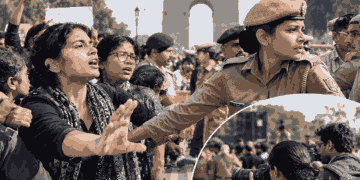
By July, when PV Narasimha Rao had just taken charge as the prime minister, it looked like India would default on its international debt obligations. Which is when push came to shove. It was a time when India was struggling to recuperate from one of the darkest periods in its economy. The unemployment rate was on the rise, prices of essentials were skyrocketing, and depression among the public widened. Consequently, people had been left with no option but to take their desperations to the streets and express their emotions against the ruling administration.
Unprecedented challenges were looming. But, on the other side, serious like-minded intellectuals had already started working around the clock to find solutions to mitigate the impact of this national calamity. Their profound commitments and dedications structurally transformed India.
It was the height of the Gulf War and the collapse of the USSR, India’s top diplomatic collaborator that enabled bilateral trade in local currency. On the other hand, the power of Prime Minister P.V. Narasimha Rao, the successor of Rajiv Gandhi, was challenged by political instability. But, Rao, despite all hurdles, seized the opportunity and deployed correct and unspoiled economic enablers in place by giving them the freedom to think and demonstrate their duties. He was honest about the subject he did not know so much but his political wisdom enlightened him to choose the right person at the right moment. “I don’t understand economics… Pranab and you have to explain,” he once told Jairam Ramesh and Pranab Mukherjee during the peak of the economic crisis.
Today, Sri Lanka is passing through a difficult time due to the severe economic crisis, manifested through chronological events starting since independence but more recently the 2019 Easter blasts, unwise tax reduction, and COVID-19 pandemic have multiplied the crisis. A series of events contributed to the depletion of the foreign exchange beyond recovery due to which imports of essentials were restricted tremendously resulting in the worst economic crisis in the island nation. However, Sri Lanka is not the first of its kind to go through such an economic crisis nor will it be the last one, the only way out is through a proper strategy and genuine expert involvement.
PV Narsimha Rao is the 3rd Prime Minister that India got in a space of 2 years and the turbulence in the political landscape of the country was at an all-time high not just because the country did witness an intense transition in the political philosophies, but even the socio-economic narratives were shaping up differently. India lost Rajiv Gandhi one of its most promising leaders and that is when the Rao government took charge with Dr Manmohan Singh as the finance minister. External factors were at play. Be it the skyrocketing crude prices as a direct result of the Gulf war or the collapse of the USSR rendering the Soviet Model redundant.
To put a context for ensuring higher clarity, the 1990-91 Gulf War had led to a sharp increase in oil prices and a fall in remittances from the Indian workers working overseas. This led to a sharp depletion in India’s Forex reserves — at less than $6 billion, and this was just enough to meet around two weeks of the country’s imports. That was a Himalayan nervous factor but the intelligent brains were working overtime to find an exit route which would ease out the present woes at the same time bring in enduring reparation for the design defects.
It’s but natural we went for a full scope overhauling of our economic reengineering which included abandoning the Soviet Model and adopting the Market Economy not just for managing the situation at hand but to put the economy on a rapid growth trajectory. Indian economy got a renewed identity since then and there are ample data and analytics to demonstrate how the unshackling of the economy was a defining occasion.
On 24 July 1991, Dr Manmohan Singh presented his first ever budget, just a month after being sworn in the PV Narasimha Rao’s cabinet. The government also unveiled a game-changing new industrial policy removing many roadblocks that hindered industries from flourishing.
Despite the minority government being faced with politically difficult decisions in the first few weeks of assuming office, the two legends, one being politically astute, the other an accomplished economist, led the economy by experimenting with some of the ideas never imagined before in Indian context. The deteriorating fiscal deficit situation and burgeoning foreign debt levels did not help the government either. A fiscal deficit of 8 per cent of gross domestic product (GDP) and a current account deficit of 2.5 per cent of GDP all added to the government’s woes. Double-digit inflation numbers also added to the burden of the common man.
As the saying goes, extraordinary times require extraordinary measures; thus, keeping in line with the preconditions of a bailout from IMF, the economic restructuring was meticulously planned out and proposed by the veteran economist Dr Manmohan Singh. The economic reform proposed by Dr Singh includes both long-term structural measures and short-term stabilization measures.
The long-term measures are aimed at improving the efficiency of the economy and increasing its international competitiveness by removing the rigidities in various segments of the Indian economy and liberalizing the Indian economy by making avenues for foreign direct investments.
The short-term measures were proposed to address the immediate way out of the 1991 economic crisis which included correcting the weakness which resulted in the balance of payments crisis and steps to bring the inflation and crisis under control. Other proposed reforms were tax reforms, foreign exchange reforms, and trade and investment policy reforms.
Immediate measures to mitigate the crisis
The immediate priority for the Rao government was to prevent a sovereign default — an ignominy that India had managed to avoid till then. It took two immediate measures.
Devaluation of the rupee: The government, along with the Reserve Bank of India (RBI), undertook a two-step devaluation of the rupee, which was first devalued against major currencies by around 9 per cent on 1 July 1991, followed by another devaluation of 11 per cent two days later. This was
done to make Indian exports more competitive.
Rao, known for his political astuteness, preferred to undertake the devaluation in two phases to make it more palatable to all stakeholders. Pledging gold holdings to shore up Forex reserves: The central bank pledged India’s gold holdings with the Bank of England in four tranches from 4-18 July 1991 raising around $400 million through this route.
Prior to this, amid national elections, the State Bank of India sold 20 tons of gold on 16 May to the Union Bank of Switzerland or UBS to raise around $200 million.
The government had also got emergency loans from the International Monetary Fund in two tranches totalling around $2 billion earlier in the year.
Structural reforms
Trade policy: As part of its efforts to boost exports, the Indian government announced a new trade policy that sought to bring a change in the licensing process. It also linked non-essential imports to exports to discourage such imports.
Considering the boost to exports from the massive devaluation of the rupee, the government did away with export subsidies. It introduced the concept of tradable Exim scrips, granting such scrips to exporters for their use or for sale. Such scrips were calculated based on the value of exports.
The policy also did away with the need for routing imports through state-owned firms. The private sector was allowed to make its own imports. New industrial policy: The game-changing new industrial policy was unveiled on the eve of Budget 1991. It proposed some massive changes in the way India treated its industries and foreign investment by moving away from a license raj regime.
The policy relaxed some of the provisions in Monopolies and Restrictive Trade Practices Act to facilitate easier entry and restructuring of businesses by facilitating mergers and amalgamations. The policy ended the public sector monopoly in many sectors and announced a policy of automatic approval for foreign direct investment up to 51 per cent as against the earlier cap of 40 per cent for foreign equity investments. Public sector monopoly was restricted to only a few sectors important from the point of view of national security. It also abolished industrial licensing for all industries barring 18 irrespective of levels of investment.
All these changes made it easier to do business in India and saw a deluge of foreign goods and investments flooding the Indian market in the subsequent years.
Faced with a rising fiscal deficit, the budget increased corporate tax rates by 5 percentage points to 45 per cent and introduced the concept of tax deducted at source for some financial transactions like bank deposits. It also increased the prices of cooking gas cylinders, fertilizers and petrol and removed the subsidy on sugar. It opened up mutual funds to the private sector and relaxed rules for investment by non-residents. A scheme for people to declare unaccounted wealth was also announced. People were given immunity from prosecution and the levy of interest and penalty. Notably, the reform push continued after the budget: Over the next eight months, the government announced many steps to continue the reform’s momentum and pull India out of the crisis. These included a second trade policy package to boost exports and a package for developing small firms. The government also announced a committee under former RBI governor M. Narasimham for proposing financial sector reforms. This was followed by the constitution of another committee for recommending tax reforms under well-known public finance economist Raja Chelliah.
As last words, Sri Lanka’s leadership would have to display its profound commitment to mending its economic predicament by resorting to the right approach considering the positive as well as adverse factors both internal and external, to the country. To sort out the problem, first, it must be owned.
Unfortunately, outsourcing or delegation is not a feasible option for remediating the daunting task staring at the tiny island nation. Let us not overlook the fault lines and cracks are vulnerable and hence sooner the stability is restored, the better for the country and region as well! It’s a country everyone loves and cares about in the end.
Article By
Sabyasachee Dash