























As I was about to go to sleep few nights ago, like so many of us, I took out my phone for the ‘last scroll’. The compulsion was to get my nightly dose of fuel for the furnace of over-thinking and anxiety; the usual Instagram, Facebook, etc. That sort of firewood does the trick. But, this time I opened news and the first news item read something like ‘King Leopold II Statue Removed in Belgium’.
Based on the chain of events triggered by the murder of Mr. George Floyd, and myself being a history student, I immediately knew what it meant to bring down the statute of Leopold II. Self-righteousness had taken a selfie with narcissism. Slavery and Colonialism played crucial roles in building the ‘modern west’ and shaping the ‘western liberal ideas’. Without understanding the essence of this umbilical relationship, this sort of acts at best qualifies as ‘vandalism’.
So, who was King Leopold II?
Leopold II was the longest serving king of Belgium. With the help of explorers and surveyors, he gradually brought the entire Congo River Basin under his control during a period now famously known as the ‘Scramble for Africa’. Later, he convinced his country’s Parliament and other countries, including USA, to treat a vast area which roughly corresponds to modern Democratic Republic of Congo as his personal property. He called it, the ‘Congo Free State’ in the 1880s. Leopold II was mainly interested in the raw material that this vast, hitherto untamed land and people, could provide. And, oh boy, did he take it.
In the pre-plastic era, ivory was carved into a variety of shapes. Though, nothing could be as versatile as plastic. Then, due to the invention of inflatable rubber tyre, a worldwide ‘rubber boom’ soon started. Sowing rubber plantation in the tropical areas was the long term policy. But, these plantations took years to mature and profit could not wait, so collecting rubber from forest was another option. How did they do it?
Detachments of the 19000 strong private militia of Leopold II would go to the villages; kidnap women and children and force the men to go into nearby forest to collect rubber. As more and more wild rubber was extracted, it became harder to find. Men, desperate to free their family, would roam in forest for weeks to collect their quota of rubber. Many would starve to death, both in the jungle and in the villages. Extraction of forced labor for road building, wood chopping, etc. took a huge toll as well. Often villages would rebel and be suppressed violently. To ensure that the soldiers of the king (Force Publique) did not waste their bullets while suppressing natives, they were asked to bring the severed heads of their victims. The number of bullets fired and the heads collected had to match or else. If the soldiers fired and missed, they would simply cut fingers of living so as to match the bullet count. Nobody would ever know the exact number of Leopold II’s victims, but it is estimated that between 1880 CE to 1920 CE, the population of Congo dropped from 20 million to 10 million. This practice was adopted by the French, Portuguese and Germans in some of their own colonies with equally devastating effects.
However, in various international conferences where being in or out of different alliances equaled being right or wrong, this wicked business could be easily blamed on one king of a tiny west European country without any staunch ally. So, Leopold II had to surrender his private property of ‘Congo Free State’ to the Belgian government, which renamed it, the ‘Belgian Congo’ in 1908 CE. He was, however, duly compensated for parting with his personal property.
Here, two things should be duly noted. First, that the slavery or at least, international trade in slaves had been fully prohibited till then. So, technically, no slaves were shipped off of the Congo coast. And, second, Belgium still has a continuous monarchy. Therefore, it should be clear that apart from slavery, there were many other ways in which the Afro-Asian world was brutally exploited, and, that apart from statues, many other relics from that era are still intact. It took the murder of a black man in a far away ‘the home of Brave and the Land of Free’, for the Belgians to realise that they should perhaps stop showing respect to that man.
But, what changed now?
It made sense when the massive rallies erupted in USA in response to the extra-judicial killing of George Floyd. That country has a unique history with racism and such chains of events are neither the first nor the last. But, when the protest spread to Europe, amidst a raging novel corona virus that has already claimed more than 400000 lives globally, something had clearly shifted. Why are these symbols of a certain strand of past being attacked? What is the European experience of slavery? Most of the European non-white population comes from their former colonies, unlike the African-Americans who were forcefully brought to the new world. So, why are the Europeans bothered? What is this moral guilt? King Leopold II is just one example. He is perhaps the worst of all, but there were many more.
Blast from the Ancient Past:
It is hard to say, how old is the institution of slavery? Apart from all the economic gains, there is a primal instinct involved in subjugating others- other individuals, people, societies, nations. The institution of slavery is certainly as old as the first urban civilisations. Mosses freed the Jews, toiling as slaves of Pharaoh. In the absence of conclusive evidence, we can’t say for sure whether slavery existed in the Harappan civilisation, but given the track record of other contemporary civilisations, it certainly seems plausible. The oldest inscriptional reference to slavery comes from the Code of Hammurabi c. 1754 CE. Basically, in the pre-industrial era, it was impossible to built cities, monuments, etc. without slave labor. For one man to sit down and paint, other man had to grind.
But, slavery is not only about drudgery. Slaves have performed myriad roles. In a television drama, ‘Rome’, young Augustus Ceaser says that the Roman elite has occupied all the good land and distributed all the jobs among their slaves. Proper Romans have nothing left to do. The gladiators of Spartacus shook the Rome, to say the least.
In case of India, slavery was a bit more sophisticated. They were not clearly visible; for the Megasthenes says that there are no slaves in India. He was wrong. Arthashashtra tells us there were. In fact, labor was never in short supply in India. Therefore, slaves were generally not employed in productive activities on any large scale. But, from Jataka stories to Dharma Sutras, slaves are regularly mentioned, classified and imparted with rights and responsibilities.
Perhaps, the ‘best kind of slaves’, if you pardon the expression, were the Turkish slaves of Abbasid Caliphs and successive Sultans. Later on, the descendents of these slaves (Mamluks) set up many medieval ruling dynasties, including one in India.
Roots of modern world slavery:
The economic logic of slavery was fairly simple. Conquered people had to serve the victorious- with their labor, their sexuality and sometimes their mind. But, the modern understanding of slavery is largely based on the ‘Atlantic Slave Trade’ (16th to 18th century). The discovery of ‘New World’ at the end of 15th century meant that a vast untamed land, teeming with economic resources had been found. So, it had to be settled and exploited for economic gains.
From 1000 CE to 1300 CE, due to an increased food security and rising population, Europe entered a new phase of urbanisation and commerce. Changed circumstances triggered Renaissance and Commercial Revolution. These two together brought transformative changes in the European and World History.
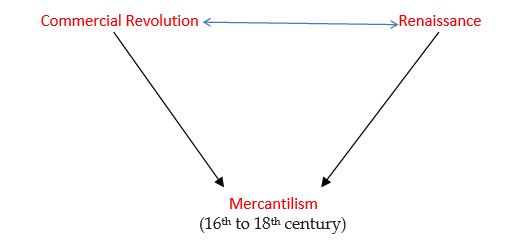
During the medieval feudalism, the main economic motive was consumption. So, the demand for goods was fairly limited and mostly met at the local level. But, beginning with the commercial revolution, the profit motive became the dominant economic impulse. Consequently, Mercantilism emphasised upon a few economic policies. Among which, setting up new colonies in newly discovered areas and exploiting them for the benefit of Metropolitan state, was the main one. The 13 original European colonies on the Atlantic coast of North America came into existence in this context.
But, there was an acute shortage of labor for an extensive plantation economy. Throughout the New World, both, North and South America, native population had been decimated from the new diseases that came along with the new people. Also, natives were obdurate and strongly resisted the attempts to harness them to commercial plantations of cotton, sugar, etc. Ancient practice of slavery was going to be rediscovered in these new circumstances.
There were many shades of slavery, but the trans-Atlantic slave trade was fairest. Although, the Europeans were not the first ones to sell Africans to outside civilisations, they certainly took it to the bold new heights of cruelty. To summarise, captured African slaves were taken to the New World to work on the plantations that supplied raw material to the European markets and industries.
This triangular trans-Atlantic slave trade lasted for centuries until it had to be abolished during the 19th century. Two things had happened till then that made slavery untenable. First, industrial revolution made slavery redundant. Captive labor was not only unnecessary, it was now a burden. Free and mobile labor was needed. Second, European consciousness had advanced to a stage where it could visualize non-white people as humans, if not equals. The Abolitionist movement had started in Britain in late 18th century, and notably, Britain played a major role in enforcing the abolition of international slave trade. The ‘Slave Trade Act, 1807’, officially, ‘An Act for the Abolition of the Slave Trade’ of the British Parliament prohibited the slave trade in the British Empire. Throughout the 19th century; British Navy enforced their Parliamentary acts across major sea lines of communication, confiscating slave ships and prosecuting enslavers and slave traders. The British Abolitionist Movement has a rich history that should be read for its own merit. Ironically, USA too had banned international slave trade through its Act Prohibiting Importation of Slaves, 1807.
One feels compelled to weigh the relative importance of two forces behind the slavery abolition- moral factor and material imperatives. Unlike the Marxist historiography, which believes that history is the outcome of interplay between vast impersonal forces, I believe that human agency is a major force behind shaping history. If, material circumstances favour your enterprise, better. But, nothing would have if humans don’t desire it. So, on balance, I would give more weight to the moral guilt than industrial revolution in removing the stain of active slavery.
End of Slavery?
But, a pertinent issue remains unresolved, which also brings us back to the King Leopold II and his cohort. Profit from Slavery and Colonialism fuelled European industrialisation and the ensuing cycle of material and ideological prosperity. Cheap raw material extracted from colonies fuelled European industries- during both first and second industrialisation- and the finished goods produced in these factories were sold at inflated prices in the former colonies. The profit from this whole cycle of exploitation lined the pockets of western ‘Neuve Rich’. But, did they spend all that money only on themselves?
Basically, the Atlantic slave trade lasted for a few centuries. It was a profitable enterprise and attracted many adventurous men. Some participated more directly and some simply brought the shares in the Joint Stock Companies that traded in slaves. These men, during their life time and in their death, bequeathed resources on the western universities, of Britain, USA, etc.
The modern political and economic ideas owe much to these universities. They were mostly, if not entirely, shaped in these western universities. Actually, in many western universities, an incipient ‘soul searching’ has already begun in last few years, about how they were linked and how they benefited from slavery. One might wonder what these young vandals would like to do their university degrees. Some examples of this relationship are as follows:
Track Record:
Tobias Rustat was a prominent investor in the Royal African Company (RAC) that trafficked more Africans than any other British institution. According to one historian, the RAC shipped close to 150,000 enslaved Africans, mostly to the Caribbean. He had made a handsome donation to Cambridge University, which allowed orphans to go to Cambridge Universities for three centuries. Very recently, his name was dropped from annual festivities of the university.
When slavery was abolished, the British Government had to borrow a large sum of money to compensate former slave owners. Reparations were paid until 2015. On the basis of a forensic audit, University College London (UCL) has created a database of British slave-owners who were compensated in this manner. It names roughly 46000 slave owners. It has been critical in pushing higher education institutions to examine how they had dipped into the profit from slave trade. Many British slave-owners, among them thousands of widows, were responsible members of the Victorian society; they championed civic causes, particularly education.
After London, other important cities on this list are Bristol, Edinburgh, Glasgow and Liverpool. Universities in most of those cities have started studying their connections with slavery. Bristol, the site of a controversial statue of Edward Colston, a wealthy slave trader, has just appointed Britain’s first professor of the history of enslavement, memory and the politics of memorialisation of the past. Edward Colston’s statue was vandalized a few days back.
Glasgow University drew up a list of 23 donors- whose family fortunes came from slavery or trade in slave-produced goods- to the university between 1866 and 1880 to build its new campus. But, the more important question is that, what, if anything should be done to atone- affirmative action? free tuition? scholarships to the descendents of former slaves? reparations? It is perhaps impossible to come at a consensus on these questions. Meanwhile, Glasgow has teamed up with the University of the West Indies on a new initiative, the Glasgow-Caribbean Centre for Development Research in Kingston, Jamaica. The programme focuses on areas that specially interest the Caribbean communities: health care; coastal environment; and creation of an online history museum. But, it is clear that such projects bring easy funding from international charities like the Bill and Melinda Gates Foundation. More importantly, someone in the business of studying, studying their own past should hardly count as penance.
Similarly, universities of other western European countries, and especially, USA, have undoubtedly benefitted from the profit from the slave trade. University of Virginia in Charlottesville is naming buildings for enslaved people who worked there. Apart from such sporadic innocent initiatives, not much research and soul searching is going on in USA. Many scholars agree that the universities – the ones opened before the Civil War- were significantly funded from profit derived from slave labor. How many statues would have to be tore down to compensate for that? Or there are other ways to really atone for the past sins?
Then, there are rabid colonialists like Cecile Rhode, behind the international Rhodes scholarship. Many leading intellectuals and world politicians like Bill Clinton and Tony Abbot have benefitted from the Rhodes scholarship. His colonisation zeal could be the topic of another thrilling article.
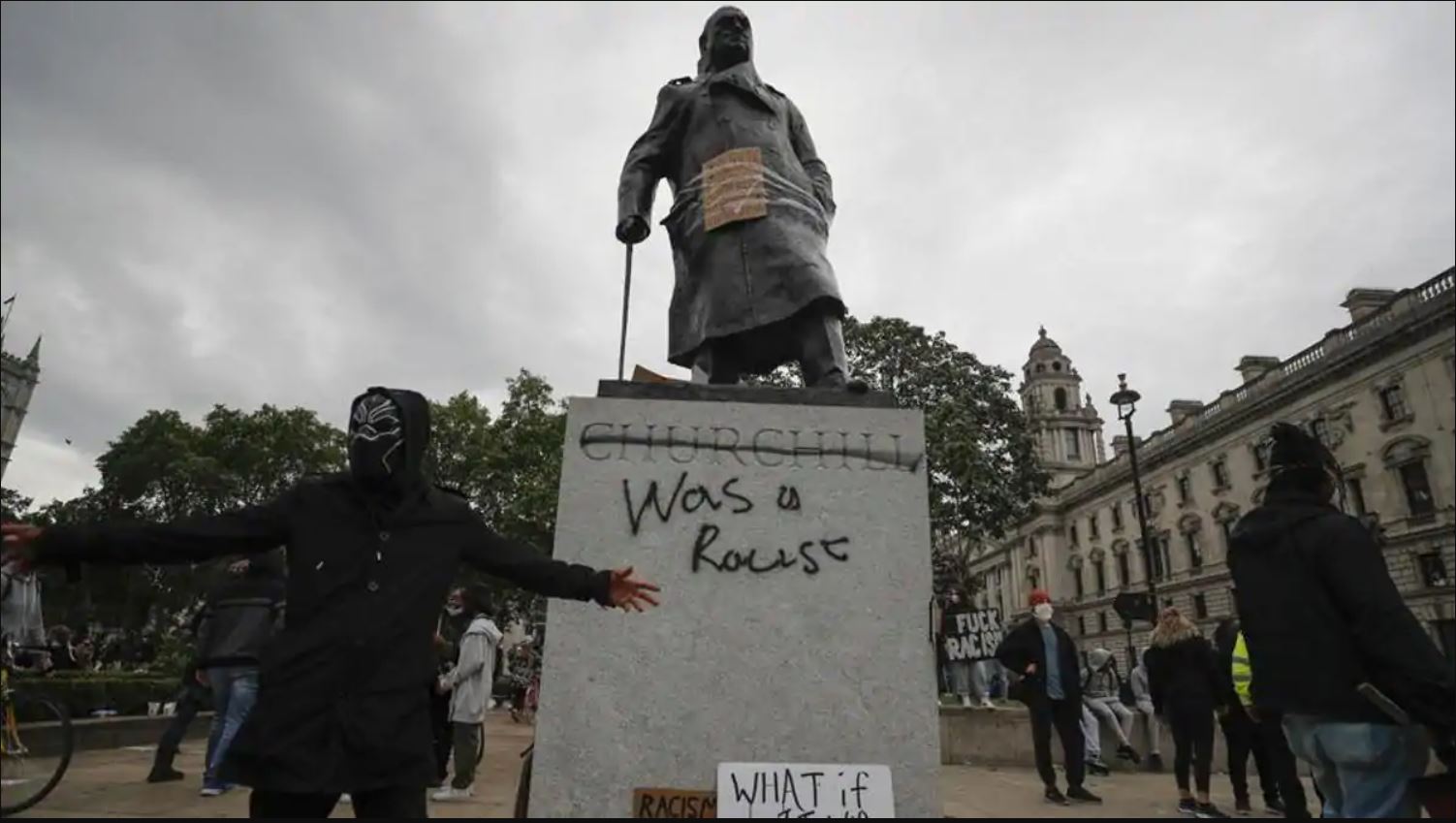
Then, why stop only at that? Of course, King Leopold II was one of the worst. But, there are many leading western figures that directly orchestrated barbarism in the former colonies. Winston Churchill first comes to mind. His casual response to the Great Bengal Famine of 1943 CE was largely informed by his racist attitude towards Indians.
Conclusion:
The key point here is that these crimes of past will require a much deeper soul searching then the simple mob mentality. Does anyone have the answer to the connection between slavery and western universities? Would we discard all western science and ideas? Certainly, we will not. Then, what? Please don’t stop with removing statues. It won’t solve anything.
The great John Locke’s relationship with slave trade is well known. European Enlightenment is considered to be at the foundation of modern world. Enlightenment thinkers argued that human reason – and not the king or the church- should dictate what is good or bad. Yet, the same thinkers were often lackeys of imperial powers in justify and theorizing the principles behind colonialism. Napoleon had reinstated slavery. He is revered in many parts of the world as the embodiment of indomitable human spirit. Should we tear down all the statues of Napoleon?
Please, let this be the first step in the long process of rational and honest self-reflection. Different societies and nations stand on different echelons of human development. These bust-busters must reflect upon how slave trade contributed to it and more importantly, how did they personally benefit from it? Perhaps some sins are beyond redemption. Perhaps, there is indeed a way to atone. Perhaps, the responsibilities are so diffused that justice can’t be done to one group without being unjust to another. But, it is most certain that simply removing statues won’t serve any purpose.
Sources:
- A History of Ancient and Early Medieval India by Upinder Singh
- Britannica Encyclopedia for information of Leopold II
- Any standard world history book for information on commercial revolution and mercantilism
- British universities are examining how they benefited from slavery
(Note: The author of the article is Aman Kumar Jha. He is a graduate from Gujarat University and teaches for civil services examination)