




















TFIPOST हिन्दी
TFIPOST Global
Tfipost.com
Tfipost.com
No Result
View All Result
  • Premium
  • Politics
    • All
    • Analysis
    • Opinions
    • Trending
    From pilgrimage to metros, now without the wait

    From Kashi to Mumbai and Ayodhya to Pune: Modi Expands Rail Network with New Amrit Bharat Express Services

    Why is Making a Jet Engine so Hard | The failure of Kaveri

    Why is Making a Jet Engine so Hard | The failure of Kaveri

    Rajnath Singh at SCO, reaffirming India’s zero-tolerance stand on terrorism.

    “No More Double Standards”: Rajnath Singh’s SCO Message Rewrites India’s Terror Response Playbook

    Nepal PM Faces Fresh Controversy as Church Demolition Row Triggers Political Storm

    Nepal PM Faces Fresh Controversy as Church Demolition Row Triggers Political Storm

    • Analysis
    • Opinions
    • Trending
  • Economy
    • All
    • Business
    • Economy1
    • Finance
    India–New Zealand FTA signed in New Delhi, marking a “once in a lifetime” moment in trade ties.

    India, New Zealand Seal Fast-Tracked Trade Pact to Expand Duty-Free Access, Jobs and $5 Billion Trade Target

    Ahmadis in Pakistan: From Faith to Marginalisation Under Law and Society

    Ahmadis in Pakistan: From Faith to Marginalisation Under Law and Society

    Open Demat Account with Zero Annual Maintenance Charges What to Look For

    Open Demat Account with Zero Annual Maintenance Charges What to Look For

    Blood in the Meadows: How the Pahalgam Terror Attack Exposed Calculated Targeting of Civilians in Kashmir

    Blood in the Meadows: How the Pahalgam Terror Attack Exposed Calculated Targeting of Civilians in Kashmir

    • Business
    • Finance
  • Defense
    • All
    • Defence
    • Strategy
    • Weaponry
    Why is Making a Jet Engine so Hard | The failure of Kaveri

    Why is Making a Jet Engine so Hard | The failure of Kaveri

    Rajnath Singh at SCO, reaffirming India’s zero-tolerance stand on terrorism.

    “No More Double Standards”: Rajnath Singh’s SCO Message Rewrites India’s Terror Response Playbook

    Recovered arms and arrests have intensified scrutiny on a suspected cross-border terror network.

    Pakistan’s Proxy War Faces a Setback as Delhi Terror Plot is Crushed, 18 Weapons Seized

    The scars of Pahalgam endure, even as the nation moves forward

    Pahalgam Anniversary: Modi Signals Firm National Stand as India Reasserts Anti-Terror Resolve

    • Defence
    • Strategy
    • Weaponry
  • Geopolitics
    • All
    • Africa
    • Americas
    • Asia Pacific
    • Europe
    • South Asia
    • West Asia
    When law becomes an instrument of exclusion, persecution moves far beyond the courtroom.

    Ahmadis in Pakistan: From Faith to Marginalisation Under Law and Society

    When uranium becomes strategy, India moves first.

    India’s $4 Billion Uranium Coup with Kazakhstan Rewrites the Global Nuclear Balance

    “Fixing the World”: What a Century of Big Ideas Reveals About Us

    “Fixing the World”: What a Century of Big Ideas Reveals About Us

    Pakistan Tried to Bury an NYT Report. It Only Exposed Asim Munir’s Panic

    Pakistan Tried to Bury an NYT Report. It Only Exposed Asim Munir’s Panic

    • Africa
    • Americas
    • Asia Pacific
    • Europe
    • South Asia
    • West Asia
  • Knowledge
    • All
    • Culture
    • Education
    • History
    • Indology
    Chants of ‘Jai Badri Vishal’ Echo as Badrinath Portals Open; All Four Dhams Now Accessible to Pilgrims

    Chants of ‘Jai Badri Vishal’ Echo as Badrinath Portals Open; All Four Dhams Now Accessible to Pilgrims

    Kedarnath Dham Portals Open for Devotees After 181 Days Amid Vedic Chants, Traditional Rituals

    Kedarnath Dham Portals Open for Devotees After 181 Days Amid Vedic Chants, Traditional Rituals

    Sardar Patel and Amit Shah

    Sardar Patel’s 1947 Blueprint on Minority Quotas Resurfaces as Reservation Debate Returns to Centre Stage

    The 1973 Constitution and ‘Bhutto’ the Man Who Made It: What Pakistan Owes and What It Destroyed

    The 1973 Constitution and ‘Bhutto’ the Man Who Made It: What Pakistan Owes and What It Destroyed

    • Culture
    • History
    • Indology
  • Law
  • Lounge
    • All
    • Books
    • Cinema
    • Entertainment
    • Food
    • Games
    • Health
    • Lifestyle
    • Satire
    • Sports
    • technology
    • Travel
    When regulation meets the algorithm

    India Tightens Digital Control as Online Blocking Orders Surge to 24,300 Amid AI Deepfake Trend

    Digital Data Collection In India

    India’s Data Reset Begins: Census 2027 to Become First Fully Digital Population Count

    5 Facilities in Bengaluru Specializing in Mental Health Treatment for Those with Cancer

    5 Facilities in Bengaluru Specializing in Mental Health Treatment for Those with Cancer

    UNESCO World Book Day and Copyright Day

    World Book Day 2026: UNESCO’s Multilingual Push Aligns with India’s Deep Literary Continuum

    • Books
    • Cinema
    • Food
    • Health
    • Sports
    • technology
    • Travel
    • Satire
Tfipost.com
  • Premium
  • Politics
    • All
    • Analysis
    • Opinions
    • Trending
    From pilgrimage to metros, now without the wait

    From Kashi to Mumbai and Ayodhya to Pune: Modi Expands Rail Network with New Amrit Bharat Express Services

    Why is Making a Jet Engine so Hard | The failure of Kaveri

    Why is Making a Jet Engine so Hard | The failure of Kaveri

    Rajnath Singh at SCO, reaffirming India’s zero-tolerance stand on terrorism.

    “No More Double Standards”: Rajnath Singh’s SCO Message Rewrites India’s Terror Response Playbook

    Nepal PM Faces Fresh Controversy as Church Demolition Row Triggers Political Storm

    Nepal PM Faces Fresh Controversy as Church Demolition Row Triggers Political Storm

    • Analysis
    • Opinions
    • Trending
  • Economy
    • All
    • Business
    • Economy1
    • Finance
    India–New Zealand FTA signed in New Delhi, marking a “once in a lifetime” moment in trade ties.

    India, New Zealand Seal Fast-Tracked Trade Pact to Expand Duty-Free Access, Jobs and $5 Billion Trade Target

    Ahmadis in Pakistan: From Faith to Marginalisation Under Law and Society

    Ahmadis in Pakistan: From Faith to Marginalisation Under Law and Society

    Open Demat Account with Zero Annual Maintenance Charges What to Look For

    Open Demat Account with Zero Annual Maintenance Charges What to Look For

    Blood in the Meadows: How the Pahalgam Terror Attack Exposed Calculated Targeting of Civilians in Kashmir

    Blood in the Meadows: How the Pahalgam Terror Attack Exposed Calculated Targeting of Civilians in Kashmir

    • Business
    • Finance
  • Defense
    • All
    • Defence
    • Strategy
    • Weaponry
    Why is Making a Jet Engine so Hard | The failure of Kaveri

    Why is Making a Jet Engine so Hard | The failure of Kaveri

    Rajnath Singh at SCO, reaffirming India’s zero-tolerance stand on terrorism.

    “No More Double Standards”: Rajnath Singh’s SCO Message Rewrites India’s Terror Response Playbook

    Recovered arms and arrests have intensified scrutiny on a suspected cross-border terror network.

    Pakistan’s Proxy War Faces a Setback as Delhi Terror Plot is Crushed, 18 Weapons Seized

    The scars of Pahalgam endure, even as the nation moves forward

    Pahalgam Anniversary: Modi Signals Firm National Stand as India Reasserts Anti-Terror Resolve

    • Defence
    • Strategy
    • Weaponry
  • Geopolitics
    • All
    • Africa
    • Americas
    • Asia Pacific
    • Europe
    • South Asia
    • West Asia
    When law becomes an instrument of exclusion, persecution moves far beyond the courtroom.

    Ahmadis in Pakistan: From Faith to Marginalisation Under Law and Society

    When uranium becomes strategy, India moves first.

    India’s $4 Billion Uranium Coup with Kazakhstan Rewrites the Global Nuclear Balance

    “Fixing the World”: What a Century of Big Ideas Reveals About Us

    “Fixing the World”: What a Century of Big Ideas Reveals About Us

    Pakistan Tried to Bury an NYT Report. It Only Exposed Asim Munir’s Panic

    Pakistan Tried to Bury an NYT Report. It Only Exposed Asim Munir’s Panic

    • Africa
    • Americas
    • Asia Pacific
    • Europe
    • South Asia
    • West Asia
  • Knowledge
    • All
    • Culture
    • Education
    • History
    • Indology
    Chants of ‘Jai Badri Vishal’ Echo as Badrinath Portals Open; All Four Dhams Now Accessible to Pilgrims

    Chants of ‘Jai Badri Vishal’ Echo as Badrinath Portals Open; All Four Dhams Now Accessible to Pilgrims

    Kedarnath Dham Portals Open for Devotees After 181 Days Amid Vedic Chants, Traditional Rituals

    Kedarnath Dham Portals Open for Devotees After 181 Days Amid Vedic Chants, Traditional Rituals

    Sardar Patel and Amit Shah

    Sardar Patel’s 1947 Blueprint on Minority Quotas Resurfaces as Reservation Debate Returns to Centre Stage

    The 1973 Constitution and ‘Bhutto’ the Man Who Made It: What Pakistan Owes and What It Destroyed

    The 1973 Constitution and ‘Bhutto’ the Man Who Made It: What Pakistan Owes and What It Destroyed

    • Culture
    • History
    • Indology
  • Law
  • Lounge
    • All
    • Books
    • Cinema
    • Entertainment
    • Food
    • Games
    • Health
    • Lifestyle
    • Satire
    • Sports
    • technology
    • Travel
    When regulation meets the algorithm

    India Tightens Digital Control as Online Blocking Orders Surge to 24,300 Amid AI Deepfake Trend

    Digital Data Collection In India

    India’s Data Reset Begins: Census 2027 to Become First Fully Digital Population Count

    5 Facilities in Bengaluru Specializing in Mental Health Treatment for Those with Cancer

    5 Facilities in Bengaluru Specializing in Mental Health Treatment for Those with Cancer

    UNESCO World Book Day and Copyright Day

    World Book Day 2026: UNESCO’s Multilingual Push Aligns with India’s Deep Literary Continuum

    • Books
    • Cinema
    • Food
    • Health
    • Sports
    • technology
    • Travel
    • Satire
No Result
View All Result
Tfipost.com
Tfipost.com
No Result
View All Result
  • Premium
  • Politics
  • Economy
  • Defense
  • Geopolitics
  • Knowledge
  • Law
  • Lounge

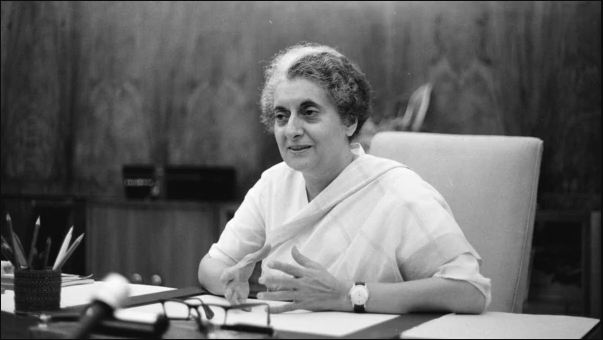
Indira Gandhi could have won back Pakistan occupied Kashmir in 1971, but she had other ideas

Akshay Narang by Akshay Narang
31 October 2019
in Opinions
Indira Gandhi, Pakistan

(PC: Livemint)

Share on FacebookShare on X

October 31 is a day of mixed emotions in India’s independent history. On one hand, it is the birth anniversary of the man behind India’s integration, India’s first Home Minister, Sardar Vallabhai Patel, and today on October 31, 2019, the Modi government has also undone a historical wrong by bifurcating the state of Jammu & Kashmir into separate Union Territories of Jammu & Kashmir and Ladakh. On the other hand, it also happens to be the death anniversary of India’s only woman Prime Minister till date, Indira Gandhi.

Having served for around 15 long years, in two different terms, first from 1966 to 1977 and then from 1980 to 1984, before she was assassinated by her bodyguards on the fateful day of October 31, 1984, Indira Gandhi is also the second longest serving Prime Minister of India till date, next only to her father. One of her achievements that continues to define her political career is the 1971 war. Her fans claim that it was due to Indira Gandhi’s visionary leadership that Pakistan could be partitioned and a new country, Bangladesh could be formed. She is largely credited with India’s exceptional military exploits.

RelatedPosts

Pakistan’s Proxy War Faces a Setback as Delhi Terror Plot is Crushed, 18 Weapons Seized

Ahmadis in Pakistan: From Faith to Marginalisation Under Law and Society

Ahmadis in Pakistan: From Faith to Marginalisation Under Law and Society

Load More

https://services.tfipost.com/

However, something that is rarely discussed is whether we made full use of the sacrifices and battlefield exploits of our defence forces. The three defence forces inflicted a humiliating defeat upon the Pakistani military establishment. It was only due to the deadly assaults like the Operation Trident by the Indian Navy in which the Karachi Harbour of Pakistan was absolutely annihilated that the Pakistani forces were forced to surrender in not more than 14 days. In what came as a massive embarrassment for the Pakistani Army, Lt. General AAK Nizai, its Commander of the Eastern Command surrendered before the Indian Army’s Lt. General, Jagjit Singh Aurora, paving the way for creation of Bangladesh. The war had left Pakistan absolutely devastated. The Islamic Republic of Pakistan had suffered extensive damage. A major part of its territory was partitioned, while yet another part of its territory came under the occupation of the Indian military forces and on top of that 93,000 Pakistani soldiers and Razakars were taken as Prisoners of War by India.

At that time, India enjoyed a massive advantage over Pakistan having toppled the latter in the battlefield. The Simla Agreement was signed on July 2 1972, while the 1971 war had ended on December 16, 1971 itself. Indira Gandhi had considerable time to chalk out a strategy on how to make full use of the battlefield exploits, the 93,000 Pakistani prisoners at her disposal along with the territorial gains that India had made in Pakistan. As such, India had two broad objectives to achieve, viz. to get Zulfikar Ali Bhutto, then Pakistan PM into recognising Bangladesh and secondly, getting Pakistan to agree upon a final solution on Kashmir for once and for all. While the former was not that much of an issue, the latter could have been a major achievement had the Indira Gandhi government managed to make full use of the massive upper hand it enjoyed over Pakistan.

It is relevant to mention here that the war resulted in dire consequences for Pakistan. There was irresistible anxiety and widespread concern in Pakistan over the prisoners of war who fell into India’s custody. Public opinion in Pakistan was also centred around repatriation of Pakistani Prisoners of War. Pakistani politicians said, ‘Pakistanis are prepared to sacrifice their land for the sake of the prisoners — it is better to have the POWs returned than to have the land back.’

Pakistani PM, Zulfikar Ali Bhutto couldn’t have resisted succumbing to the popular public opinion within the country. The political climate in Pakistan with the elimination of its military establishment as a factor had set the stage perfectly for a forceful negotiation by India. Moreover, India could have used withdrawal of its troops and early return of Pakistani Prisoners of War as effective bargaining tools in order to secure a permanent solution on Kashmir, largely on its own terms and conditions. Pakistani public opinion was in favour of even giving away its territory in order to secure the early return of its men and the Zulfikar regime couldn’t have possibly resisted this opinion for very long. India never really had any ambitions of holding onto this territory, but could have at least secured a favourable, permanent solution on Kashmir in return of its goodwill measure of withdrawing its troops from the Pakistani territory.

Foreign observers have pointed out, ‘Bhutto was willing to forsake the Indian-held two-thirds of Kashmir and agree that the ceasefire line, to be negotiated, would gradually become the border between the two countries.’ However, Indira Gandhi seems to have missed a trick by unnecessarily expanding the scope of the Simla Agreement to repatriation of Pakistani Prisoners of War and withdrawal of troops. Moreover, DP Dhar, one of Indira Gandhi’s key advisors, who went to Pakistan for a pre-summit dialogue was clearly more interested in securing recognition of Bangladesh rather than securing a favourable solution on Kashmir. The former as stated earlier was not much of an issue. Once Bangladesh had been liberated, Pakistan couldn’t really have done much about it. The Indira Gandhi government should actually have been more concerned about how to use the massive gains India made out of the 1971 war to secure a favourable solution on Kashmir.

What the Simla Agreement did was to enact an instrument for settling the Kashmir issue peacefully and bilaterally. It is beyond comprehension that when India had already managed to humiliate Pakistan, then what was the need of securing peace from the Zulfikar regime. India could have made far bigger gains in the Accord. Pakistan did not even stick to the mutual agreement of peacefully resolving the Kashmir issue. It has been consistently resorting to cross-border terrorism in Kashmir for the past three decades. On his part, Zulfikar Ali Bhutto was able to convince the Indian side that he couldn’t agree on a permanent solution on Kashmir, owing to the domestic pressure and that he couldn’t go back to Pakistan empty-handed. However, this shouldn’t have bothered the Indian side. Pakistan had lost the war and it was for Pakistan and Zulfikar to manage its domestic issues. India should have been steadfast in its demand of securing the Pakistan occupied Kashmir from Pakistan and correcting the blunder committed by Jawaharlal Nehru. However, the Indira Gandhi government signed a bilateral agreement for peaceful resolution and with time even that has become a dead letter which has not been honoured by Pakistan.

Tags: Indira GandhiPakistanPOK
Share466TweetSend
Previous Post

Girish Chandra Murmu and RK Mathur: Meet the new Lt-Govs of J&K and Ladakh and know why they were chosen

Next Post

The way Umar Khalid discusses Kamlesh Tiwari incident with The Wire is outright repulsive

Related Posts

Resolve of a Changing Bengal: Youth, Potential, and Call for Transformation
Opinions

Resolve of a Changing Bengal: Youth, Potential, and Call for Transformation

21 April 2026

The yearning for change in the soil of Bengal is not a sudden wave, it is a convergence of...

Redefining Terms of Truly Mutual Trade Deal: Sovereignty and Strategy in the US–Bangladesh Framework
Economy

Redefining Terms of Truly Mutual Trade Deal: Sovereignty and Strategy in the US–Bangladesh Framework

15 April 2026

The debate around Bangladesh’s emerging trade framework with the United States cannot be reduced to a binary choice of...

Race Against Iran Deadline: Was Pakistan’s Ceasefire Bid Driven by the White House?
Geopolitics

Race Against Iran Deadline: Was Pakistan’s Ceasefire Bid Driven by the White House?

9 April 2026

Pakistan attempted to position itself as a peacemaker in the escalating tensions involving Iran, but the reality behind the...

Load More

Leave a Reply Cancel reply

Your email address will not be published. Required fields are marked *

I agree to the Terms of use and Privacy Policy.
This site is protected by reCAPTCHA and the Google Privacy Policy and Terms of Service apply.

Currently Playing

From Runways to Warships: India’s Firefighting Warrior Built for Bases & Battles| IAF | VayuShakti

From Runways to Warships: India’s Firefighting Warrior Built for Bases & Battles| IAF | VayuShakti

00:05:40

Ethanol, EVs and Solar- How India’s Energy Game Is Changing | Modi on LPG & Crude Oil | war| Hormuz

00:05:21

Truth of IRIS Dena: 8 Days That Changed Narrative | War zone Reality, Not an Indian Navy Exercise

00:08:02

300 Million Euros for SCALP: Strategic Necessity or Costly Dependency on France300

00:04:06

Tejas Mk1A: 19th aircraft coupled but Not Delivered: What Is Holding Back the IAF Induction?

00:07:21
Facebook Twitter Instagram Youtube
tfipostTfipost.com
Right Wing | News Analysis | Indian Opinion
  • About us
  • Contact Us
  • Careers
  • Brand Partnerships
  • Terms of use
  • Privacy Policy
  • Sitemap

©2026 TFI Media Private Limited

No Result
View All Result
  • Premium
  • Politics
    • Analysis
    • Opinions
    • Trending
  • Economy
    • Business
    • Finance
  • Defense
    • Defence
    • Strategy
    • Weaponry
  • Geopolitics
    • Africa
    • Americas
    • Asia Pacific
    • Europe
    • South Asia
    • West Asia
  • Knowledge
    • Culture
    • History
    • Indology
  • Law
  • Lounge
    • Books
    • Cinema
    • Food
    • Health
    • Sports
    • technology
    • Travel
    • Satire
TFIPOST हिन्दी
TFIPOST Global

©2026 TFI Media Private Limited