



















TFIPOST हिन्दी
TFIPOST Global
Tfipost.com
Tfipost.com
No Result
View All Result
  • Premium
  • Politics
    • All
    • Analysis
    • Opinions
    • Trending
    New address, old controversy as “Sheesh Mahal 2”

    From Flagstaff Road To Lodhi Estate: Kejriwal’s New Bungalow Triggers Fresh “Sheesh Mahal 2” Political Controversy

    The Bengal campaign takes a more aggressive turn.

    “Bengal Under Mafia Grip”: Yogi Adityanath Escalates Attack On TMC, Flags ‘Identity Crisis’ In Rally

    From AAP dissenter to BJP rebel, Swati Maliwal sharpens her attack on Kejriwal

    Did Swati Maliwal Just Puncture AAP’s Politics of Virtue?

    Ahmadis in Pakistan: From Faith to Marginalisation Under Law and Society

    Ahmadis in Pakistan: From Faith to Marginalisation Under Law and Society

    • Analysis
    • Opinions
    • Trending
  • Economy
    • All
    • Business
    • Economy1
    • Finance
    Ahmadis in Pakistan: From Faith to Marginalisation Under Law and Society

    Ahmadis in Pakistan: From Faith to Marginalisation Under Law and Society

    Open Demat Account with Zero Annual Maintenance Charges What to Look For

    Open Demat Account with Zero Annual Maintenance Charges What to Look For

    Blood in the Meadows: How the Pahalgam Terror Attack Exposed Calculated Targeting of Civilians in Kashmir

    Blood in the Meadows: How the Pahalgam Terror Attack Exposed Calculated Targeting of Civilians in Kashmir

    Indian economy is stronger than the ranking.

    IMF Ranking Jolt Misread: India’s Economy Strong, Sixth Spot Just a Statistical Glitch

    • Business
    • Finance
  • Defense
    • All
    • Defence
    • Strategy
    • Weaponry
    The scars of Pahalgam endure, even as the nation moves forward

    Pahalgam Anniversary: Modi Signals Firm National Stand as India Reasserts Anti-Terror Resolve

    Precision Strike: Indian Army Approves Procurement of Indigenous MPATGM to Modernise Infantry Wings

    Precision Strike: Indian Army Approves Procurement of Indigenous MPATGM to Modernise Infantry Wings

    Amit Shah on sensitive Gorkha land issue

    Shah Assures Constitutional Path for Gorkha Issue, Intensifies Attack on TMC at Bengal Rally

    Historic Leap for ‘Aatmanirbhar Bharat’ as First India-Made BrahMos Missiles from Lucknow Join Indian Army

    Historic Leap for ‘Aatmanirbhar Bharat’ as First India-Made BrahMos Missiles from Lucknow Join Indian Army

    • Defence
    • Strategy
    • Weaponry
  • Geopolitics
    • All
    • Africa
    • Americas
    • Asia Pacific
    • Europe
    • South Asia
    • West Asia
    Pakistan Tried to Bury an NYT Report. It Only Exposed Asim Munir’s Panic

    Pakistan Tried to Bury an NYT Report. It Only Exposed Asim Munir’s Panic

    The Strategic Double-Game: Pakistan’s Fatal Gambit in the US-Iran War

    The Strategic Double-Game: Pakistan’s Fatal Gambit in the US-Iran War

    When a repost became a foreign policy problem

    Trump’s India ‘Hellhole’ Insult Triggers Backlash as New Delhi Hits Back, US Scrambles for Damage Control

    PLA Navy Day Spectacle vs South China Sea Reality: How Beijing’s Naval Pageantry Masks Maritime Coercion

    PLA Navy Day Spectacle vs South China Sea Reality: How Beijing’s Naval Pageantry Masks Maritime Coercion

    • Africa
    • Americas
    • Asia Pacific
    • Europe
    • South Asia
    • West Asia
  • Knowledge
    • All
    • Culture
    • Education
    • History
    • Indology
    Chants of ‘Jai Badri Vishal’ Echo as Badrinath Portals Open; All Four Dhams Now Accessible to Pilgrims

    Chants of ‘Jai Badri Vishal’ Echo as Badrinath Portals Open; All Four Dhams Now Accessible to Pilgrims

    Kedarnath Dham Portals Open for Devotees After 181 Days Amid Vedic Chants, Traditional Rituals

    Kedarnath Dham Portals Open for Devotees After 181 Days Amid Vedic Chants, Traditional Rituals

    Sardar Patel and Amit Shah

    Sardar Patel’s 1947 Blueprint on Minority Quotas Resurfaces as Reservation Debate Returns to Centre Stage

    The 1973 Constitution and ‘Bhutto’ the Man Who Made It: What Pakistan Owes and What It Destroyed

    The 1973 Constitution and ‘Bhutto’ the Man Who Made It: What Pakistan Owes and What It Destroyed

    • Culture
    • History
    • Indology
  • Law
  • Lounge
    • All
    • Books
    • Cinema
    • Entertainment
    • Food
    • Games
    • Health
    • Lifestyle
    • Satire
    • Sports
    • technology
    • Travel
    Digital Data Collection In India

    India’s Data Reset Begins: Census 2027 to Become First Fully Digital Population Count

    5 Facilities in Bengaluru Specializing in Mental Health Treatment for Those with Cancer

    5 Facilities in Bengaluru Specializing in Mental Health Treatment for Those with Cancer

    UNESCO World Book Day and Copyright Day

    World Book Day 2026: UNESCO’s Multilingual Push Aligns with India’s Deep Literary Continuum

    Fashion Fusion Accessory Pairings That Modernize Your Look

    Fashion Fusion Accessory Pairings That Modernize Your Look

    • Books
    • Cinema
    • Food
    • Health
    • Sports
    • technology
    • Travel
    • Satire
Tfipost.com
  • Premium
  • Politics
    • All
    • Analysis
    • Opinions
    • Trending
    New address, old controversy as “Sheesh Mahal 2”

    From Flagstaff Road To Lodhi Estate: Kejriwal’s New Bungalow Triggers Fresh “Sheesh Mahal 2” Political Controversy

    The Bengal campaign takes a more aggressive turn.

    “Bengal Under Mafia Grip”: Yogi Adityanath Escalates Attack On TMC, Flags ‘Identity Crisis’ In Rally

    From AAP dissenter to BJP rebel, Swati Maliwal sharpens her attack on Kejriwal

    Did Swati Maliwal Just Puncture AAP’s Politics of Virtue?

    Ahmadis in Pakistan: From Faith to Marginalisation Under Law and Society

    Ahmadis in Pakistan: From Faith to Marginalisation Under Law and Society

    • Analysis
    • Opinions
    • Trending
  • Economy
    • All
    • Business
    • Economy1
    • Finance
    Ahmadis in Pakistan: From Faith to Marginalisation Under Law and Society

    Ahmadis in Pakistan: From Faith to Marginalisation Under Law and Society

    Open Demat Account with Zero Annual Maintenance Charges What to Look For

    Open Demat Account with Zero Annual Maintenance Charges What to Look For

    Blood in the Meadows: How the Pahalgam Terror Attack Exposed Calculated Targeting of Civilians in Kashmir

    Blood in the Meadows: How the Pahalgam Terror Attack Exposed Calculated Targeting of Civilians in Kashmir

    Indian economy is stronger than the ranking.

    IMF Ranking Jolt Misread: India’s Economy Strong, Sixth Spot Just a Statistical Glitch

    • Business
    • Finance
  • Defense
    • All
    • Defence
    • Strategy
    • Weaponry
    The scars of Pahalgam endure, even as the nation moves forward

    Pahalgam Anniversary: Modi Signals Firm National Stand as India Reasserts Anti-Terror Resolve

    Precision Strike: Indian Army Approves Procurement of Indigenous MPATGM to Modernise Infantry Wings

    Precision Strike: Indian Army Approves Procurement of Indigenous MPATGM to Modernise Infantry Wings

    Amit Shah on sensitive Gorkha land issue

    Shah Assures Constitutional Path for Gorkha Issue, Intensifies Attack on TMC at Bengal Rally

    Historic Leap for ‘Aatmanirbhar Bharat’ as First India-Made BrahMos Missiles from Lucknow Join Indian Army

    Historic Leap for ‘Aatmanirbhar Bharat’ as First India-Made BrahMos Missiles from Lucknow Join Indian Army

    • Defence
    • Strategy
    • Weaponry
  • Geopolitics
    • All
    • Africa
    • Americas
    • Asia Pacific
    • Europe
    • South Asia
    • West Asia
    Pakistan Tried to Bury an NYT Report. It Only Exposed Asim Munir’s Panic

    Pakistan Tried to Bury an NYT Report. It Only Exposed Asim Munir’s Panic

    The Strategic Double-Game: Pakistan’s Fatal Gambit in the US-Iran War

    The Strategic Double-Game: Pakistan’s Fatal Gambit in the US-Iran War

    When a repost became a foreign policy problem

    Trump’s India ‘Hellhole’ Insult Triggers Backlash as New Delhi Hits Back, US Scrambles for Damage Control

    PLA Navy Day Spectacle vs South China Sea Reality: How Beijing’s Naval Pageantry Masks Maritime Coercion

    PLA Navy Day Spectacle vs South China Sea Reality: How Beijing’s Naval Pageantry Masks Maritime Coercion

    • Africa
    • Americas
    • Asia Pacific
    • Europe
    • South Asia
    • West Asia
  • Knowledge
    • All
    • Culture
    • Education
    • History
    • Indology
    Chants of ‘Jai Badri Vishal’ Echo as Badrinath Portals Open; All Four Dhams Now Accessible to Pilgrims

    Chants of ‘Jai Badri Vishal’ Echo as Badrinath Portals Open; All Four Dhams Now Accessible to Pilgrims

    Kedarnath Dham Portals Open for Devotees After 181 Days Amid Vedic Chants, Traditional Rituals

    Kedarnath Dham Portals Open for Devotees After 181 Days Amid Vedic Chants, Traditional Rituals

    Sardar Patel and Amit Shah

    Sardar Patel’s 1947 Blueprint on Minority Quotas Resurfaces as Reservation Debate Returns to Centre Stage

    The 1973 Constitution and ‘Bhutto’ the Man Who Made It: What Pakistan Owes and What It Destroyed

    The 1973 Constitution and ‘Bhutto’ the Man Who Made It: What Pakistan Owes and What It Destroyed

    • Culture
    • History
    • Indology
  • Law
  • Lounge
    • All
    • Books
    • Cinema
    • Entertainment
    • Food
    • Games
    • Health
    • Lifestyle
    • Satire
    • Sports
    • technology
    • Travel
    Digital Data Collection In India

    India’s Data Reset Begins: Census 2027 to Become First Fully Digital Population Count

    5 Facilities in Bengaluru Specializing in Mental Health Treatment for Those with Cancer

    5 Facilities in Bengaluru Specializing in Mental Health Treatment for Those with Cancer

    UNESCO World Book Day and Copyright Day

    World Book Day 2026: UNESCO’s Multilingual Push Aligns with India’s Deep Literary Continuum

    Fashion Fusion Accessory Pairings That Modernize Your Look

    Fashion Fusion Accessory Pairings That Modernize Your Look

    • Books
    • Cinema
    • Food
    • Health
    • Sports
    • technology
    • Travel
    • Satire
No Result
View All Result
Tfipost.com
Tfipost.com
No Result
View All Result
  • Premium
  • Politics
  • Economy
  • Defense
  • Geopolitics
  • Knowledge
  • Law
  • Lounge

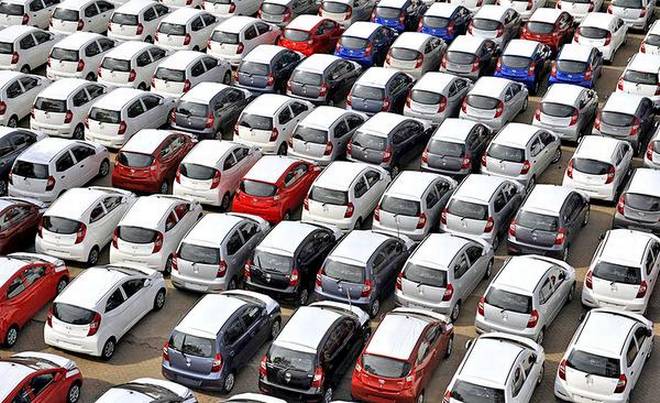
Auto-makers need to start embracing innovation because new age Indian consumer has moved beyond substandard automobiles

Sanju Verma by Sanju Verma
29 September 2019
in Opinions
Auto, Automobiles, Auto-mkaer
Share on FacebookShare on X

“We will bring a complete disruption in India’s 21 million two-wheeler market,” said Rahul Sharma recently, the man best known as the co-founder of mobile-devices-maker Micromax.

Not so long ago, Micromax was India’s largest seller of mobile handsets, with some smart packaging, features like long-lasting batteries and dual-sim functionality, helping it garner a 20% market share in India’s mobile handset market.

RelatedPosts

IMF Ranking Jolt Misread: India’s Economy Strong, Sixth Spot Just a Statistical Glitch

The Fuel Miracle: How India Frozen Petrol Prices Amidst a Global Inferno

India–South Korea Agree to $50 Billion Trade Target in Major Economic Upgrade

Load More

However, Xiaomi beat Micromax at its own game and with a stubborn unwillingness to innovate, Micromax today is struggling with barely a 2% market share. The Indian auto industry today is in some ways, going through the typical “Micromax Syndrome”.

It would be apt to note here that Xiaomi shipped 10.4 million handsets in the June 2019 quarter, commanding 28.3% of the Indian handset market, versus its closest rival, Samsung — which once held the top spot in India but shipped only 9.3 million handsets during the same period, settling for a 25.3% market share. Be it autos or handsets, the discerning Indian consumer is no longer willing to be taken for a ride and wants his money’s worth.

Be it autos or handsets, the discerning Indian consumer is no longer willing to be taken for a ride. Incidentally, overall, 36.9 million handsets were shipped in India during the June 2019 quarter, up 9.9% from the same period last year, clearly showcasing how the so-called ‘slowdown’ story has been overdone.

Coming back to autos, while some part of the downturn in auto sales in India is part of a natural business cycle; equally, changing behaviour patterns,rapid rise in app-based taxi services that give more bang for the buck, rise in mandatory insurance costs post the apex court ruling last year on this count and of course, the looming global shift by 2020 to BS-VI emission norms, have all played a role. The Kerala floods and IRDA’s orders to increase the insurance premium of two-wheeler to five years, at the time of buying have added to the soft demand.

Only as recently as 2018, India overtook Germany to become the fourth largest automobile market in the world, clocking automobile sales of more than 4 million units, beyond the 3.8 million number clocked by Germany. And this, after India surpassed China as the world’s largest two-wheeler market in 2017.

After having superior growth years in 2017 and 2018, a reasonable correction in 2019 was therefore on the radar and those using lacklustre auto sales numbers to pretend that the Indian economy is falling off the cliff are, therefore, either ignorant or doomsday naysayers or maybe, both.

Inability and unwillingness to innovate, have been the Achilles’ heel for Indian automakers. For example, the third generation Maruti Suzuki WagonR which was launched in India in January 2019 received over 12,000 bookings within a few weeks.

The WagonR was first launched in India in 1999 and over 22 lakh units have been sold in the last two decades. Studies show that over 41% WagonR buyers are below 35 years old and over 24% WagonR buyers usually stuck to the brand when it came to replacing their car or adding a new car to the family. However, brand loyalty is soon becoming a thing of the past, with young India demanding a greater bang for their bucks.

Be it the Alto K10 which is a variant of the Alto that replaced the iconic Maruti 800 in 1999, or the Swift that was launched in 2007 but has seen limited technological upgrades thereafter or the WagonR for that matter, Indian car makers have had little value to offer by way of radically superior engine quality, safety and security features, infotainment systems and functional layout, apart from some cosmetic changes to the basic architecture.

Some new launches with better technology have met with decent response, be it Maruti’s Vitara Brezza, Hyundai‘s Creta, Tata’s Nexon, the Jeep Compass, Volkswagen’s Tiguan or Skoda’s Kodiaq, clearly endorsing the fact that, the new age Indian customer is no longer happy with just a great design or good mileage, but wants both.

Even within the nascent EV space, in July this year, Hyundai launched Kona, its electric SUV, with an on-road price of Rs 30 lakh and has received a little over 250 bookings so far. The numbers are far from encouraging but the loud message is this—consumers increasingly want more bang for their buck and simply blaming a “slowdown” for the inability to adapt to rapidly changing customer preferences is not going to help.

For the last two decades, automakers made hay, milking their own greed. The tables have now turned. For a change, the Indian customer has become greedy in terms of his expectations and he is simply not willing to wait any longer or compromise, either on fuel economy or the design. Those car-makers who did not invest enough in research and development in an oligopolistic market, when the going was great, should now wish to arm-twist the government for freebies, to keep competition at bay and spruce up sagging sales, is hence, both unfair and unreasonable.

Interestingly, a recent report by Morgan Stanley predicted that the share of shared mobility will reach 35% by 2030 and 50% by 2040. Besides zero parking hassles, sharing an Ola or Uber is cheaper than owning a car and, the prestige attached with ownership of a car is a thing of the past in any case.

Moving away from cars, it is worth noting that while the recent decline in sales across vehicle categories may have grabbed headlines, India fared far better than most peers till as recently as last year. Surprisingly, the great auto boom of the last five years never captured the imagination of the same Lutyenised media, which has now found time to devote umpteen editorials to talk about the “auto sluggishness”.As they say, good news does not sell!!

For instance, despite contending with a combination of headwinds such as revised axle norms and NBFC crisis, the overall commercial vehicle sales showed a robust 27.28% growth in the domestic market in the calendar year 2018. The CV segment also crossed one million sales mark for the first time in 2018 at 10,04,900 units.M&HCV witnessed a growth of 22.97% while LCVs grew by 30.16% during the period under review. 

However, slight 1-3% contraction can be seen in the market share of major players in the recently concluded financial year due to some notable sales performance of small and new players especially in the SCV and LCV sub-segments. For instance, Maruti Suzuki domestic sales increased over three-fold last year, registering a growth of a whopping 223%. By selling 20,469 units in CY 18, the company managed to grab 1% of the market share in the overall CV space.

 Segment leader, Tata Motors sales volume grew to 448,629 units in CY 18 compared to 343091 units recording a growth of 30% thereby expanding its market share to 44%. On a similar note, Ashok Leyland improved its sales by 24.3% at 1,83,889 units in 2018 but its market share marginally dropped to 18.3% compared to 18.72% in the same period year ago. In terms of market share, Tata Motors, Mahindra and Mahindra, and Ashok Leyland remained the top three contenders in CY 18 holding over 86% of the market.

Besides CVs, the three-wheeler segment grew at a fast pace, posting a double-digit growth of 31% in the calendar year 2018 at cumulative domestic sales of 717,590 units. Three-wheeler sales stood at 548,026 units in 2017.

In this segment, Bajaj Auto remained at the top with 419,246 units sold in 2018, increasing its market share to 58.4% from 54.2% in 2017. Piaggio Vehicles posted second-highest sales number but its market share contracted by 3% last year. Mahindra & Mahindra (M&M) slid to the third position by selling 64,506 units in CY 2018 and growing 29% on Y-o-Y basis.

A discussion on the auto sector is incomplete without talking of the two-wheeler segment which posted double-digit growth in the year 2018. Two-wheeler domestic sales grew by 12.83 per cent in 2018 at 21,64,5169 units compared to 19,18,2688 units in the previous year. And this 12.83% growth came about, despite increased insurance premium that had put a lot of burden on buyers which led to about 10-15% drop in the retail sales of two-wheeler sales.

India’s largest two-wheeler manufacturer, Hero MotoCorp maintained its pole position with 36.15% market share at 7,824,067 units, with an increase of 11.4 per cent in 2018, as compared to 7,023,363 units in the preceding year.

Besides the rise in mandatory insurance costs post the Supreme Court’s order last year and shifting consumer behaviour, CEO of Bosch, Volkar Denner’s words about the changing landscape of combustion engines proved prophetic, with 2018 and 2019 turning out to be a period of severe stress for the global auto industry. China, the world’s biggest car market, recorded a fall of 5.77% to 22.35 million units in 2018, as against 2017.

The US did no better at 17.27 million units, posting a measly growth of 0.23% in 2018 followed by Japan which clocked 5.27 million units, again a mere growth of 0.76%. Germany too suffered a decline of 0.29% in sales in 2018 to 3.43 million units over the preceding year. India fared far better replacing Germany, the home to marquee brands like Daimler, BMW and Volkswagen to become the world’s 4th largest car market in 2018.

The global auto slowdown, abetted by an aversion towards polluting fuels like Diesel played a cataclysmic role. Diesel cars, for instance, have been banned in many Western European cities and in the case of Volkswagen, the petrol-diesel mix shifted to as high as 60:40 by September 2018, from just 45:55, a year earlier.

Again, WLTP (Worldwide Harmonised Light-Duty Vehicle Test Procedure) which was introduced in September 2018 for all newly-registered Euro-6 vehicles intends to measure a vehicle’s fuel consumption and emission values in a lab using a wider and more dynamic driving profile.

This is being followed by RDE (Real Driving Emissions) for all models this year where Nitrogen Oxide and Carbon Monoxide emissions would be tested under real road conditions. Companies both in India and abroad are now bracing for bigger long-term headwinds as “CO2 regulatory economics” is set to become more complex for those nations bound by the Paris Accord.

OEMs are expected to reduce their fleet average of CO2 emissions from 130 grams per km in 2015 to 95 grams per km by 2021, clearly a tall order. And to make matters tougher, the EU proposes to reduce emissions by a further 15% in 2025 and another 15% by 2030.

Amit Kalyani, Executive Director of Bharat Forge, asserted that in BS-VI cars, it is not just the engine and emission systems but the entire drivetrain and powertrain, that change too. Indian subsidiaries and affiliates of MNCs will now have to compete with their global peers to win orders, which can only come about through improvement in costs and quality while building economies of scale.

Indian automakers need to stop making the government their favourite whipping boy and demanding sops. There are only 5 million EVs on the road, worldwide, currently.

Again, of the 86 million vehicles sold last year, only 2 million were EVs. India, on its part, sold just 7.6 lakh EVs last year, primarily three-wheelers, mounted on crude, lead-acid batteries. But the writing on the wall is loud and clear—Plug-in hybrids and EVs are where the future lies and, Indian automakers need to up their game for the opportunity that awaits them in the almost $2 trillion global automotive markets, on course to becoming the world’s 3rd largest car manufacturer, sooner rather than later.

Suffice to say, what we are witnessing today is not so much of an “auto slow down”, but more of an “auto disruption”. Given the policy initiatives and incentives by the Narendra Modi government, this disruption is set to be the harbinger of better times, ahead.

To grasp the changing global dynamics and strengthen the base for suppliers and OEMs alike, policy-makers in India under the Modi government are spelling out a clear strategy and road-map. This will provide the impetus to build a strong export-focused supplier ecosystem.

Additionally, issues pertaining to fuel efficiency standards, electric mobility, new emission norms etc., need to be articulated better by auto manufacturers, who contribute to over 40% of the manufacturing GDP in India and account for almost 37 million jobs directly and indirectly.

Needless to add, the auto sector will continue to play a pivotal role for a country that is on course to becoming a 5 trillion dollar economy in the next 5 years and, the best way to start is by embracing innovation, in a rapidly changing global order.

Ms Sanju Verma is an Economist & Chief Spokesperson for BJP,Mumbai. She tweets @Sanju_Verma_

Tags: Auto SectorAuto-makerAutomobilesEconomyInnovation
Share55TweetSend
Previous Post

Gulalai Ismail, women’s rights activist who fled Pakistan, makes damning allegations against Pak Army

Next Post

Red doormat welcome: Imran Khan’s US visit was a humiliating disaster from beginning to end

Related Posts

Resolve of a Changing Bengal: Youth, Potential, and Call for Transformation
Opinions

Resolve of a Changing Bengal: Youth, Potential, and Call for Transformation

21 April 2026

The yearning for change in the soil of Bengal is not a sudden wave, it is a convergence of...

Redefining Terms of Truly Mutual Trade Deal: Sovereignty and Strategy in the US–Bangladesh Framework
Economy

Redefining Terms of Truly Mutual Trade Deal: Sovereignty and Strategy in the US–Bangladesh Framework

15 April 2026

The debate around Bangladesh’s emerging trade framework with the United States cannot be reduced to a binary choice of...

Race Against Iran Deadline: Was Pakistan’s Ceasefire Bid Driven by the White House?
Geopolitics

Race Against Iran Deadline: Was Pakistan’s Ceasefire Bid Driven by the White House?

9 April 2026

Pakistan attempted to position itself as a peacemaker in the escalating tensions involving Iran, but the reality behind the...

Load More

Leave a Reply Cancel reply

Your email address will not be published. Required fields are marked *

I agree to the Terms of use and Privacy Policy.
This site is protected by reCAPTCHA and the Google Privacy Policy and Terms of Service apply.

Currently Playing

From Runways to Warships: India’s Firefighting Warrior Built for Bases & Battles| IAF | VayuShakti

From Runways to Warships: India’s Firefighting Warrior Built for Bases & Battles| IAF | VayuShakti

00:05:40

Ethanol, EVs and Solar- How India’s Energy Game Is Changing | Modi on LPG & Crude Oil | war| Hormuz

00:05:21

Truth of IRIS Dena: 8 Days That Changed Narrative | War zone Reality, Not an Indian Navy Exercise

00:08:02

300 Million Euros for SCALP: Strategic Necessity or Costly Dependency on France300

00:04:06

Tejas Mk1A: 19th aircraft coupled but Not Delivered: What Is Holding Back the IAF Induction?

00:07:21
Facebook Twitter Instagram Youtube
tfipostTfipost.com
Right Wing | News Analysis | Indian Opinion
  • About us
  • Contact Us
  • Careers
  • Brand Partnerships
  • Terms of use
  • Privacy Policy
  • Sitemap

©2026 TFI Media Private Limited

No Result
View All Result
  • Premium
  • Politics
    • Analysis
    • Opinions
    • Trending
  • Economy
    • Business
    • Finance
  • Defense
    • Defence
    • Strategy
    • Weaponry
  • Geopolitics
    • Africa
    • Americas
    • Asia Pacific
    • Europe
    • South Asia
    • West Asia
  • Knowledge
    • Culture
    • History
    • Indology
  • Law
  • Lounge
    • Books
    • Cinema
    • Food
    • Health
    • Sports
    • technology
    • Travel
    • Satire
TFIPOST हिन्दी
TFIPOST Global

©2026 TFI Media Private Limited