














TFIPOST हिन्दी
TFIPOST Global
Tfipost.com
Tfipost.com
No Result
View All Result
  • Premium
  • Politics
    • All
    • Analysis
    • Opinions
    • Trending
    Delhi government

    Delhi Government Launches Rainwater Harvesting Initiative in Schools to Boost Water Conservation

    Yogi Adityanath

    Yogi Adityanath thrashes Samajwadi Party Over Temple Donations, Ayodhya and Waqf Issues

    Amaira Meena

    Amaira Meena Case: CCTV Footage Renews Debate on School Bullying and Child Safety

    Narottam Mishra

    Chaos in Datia as supporters of Narottam Mishra Clash with Police Over BJP Ticket Denial

    • Analysis
    • Opinions
    • Trending
  • Economy
    • All
    • Business
    • Economy1
    • Finance
    10 Things You Can Do on the Boubyan App That Most People Don’t Know About

    10 Things You Can Do on the Boubyan App That Most People Don’t Know About

    Benefits of using a mortgage loan EMI calculator for long-term budget planning

    Benefits of using a mortgage loan EMI calculator for long-term budget planning

    July 1 Policy Reset: LPG Prices Slashed, Aadhaar, Railways, Banking and Passport Rules See Major Changes

    July 1 Policy Reset: LPG Prices Slashed, Aadhaar, Railways, Banking and Passport Rules See Major Changes

    Credit Score and India’s Digital Lending Boom: Why Financial Literacy Can No Longer Be Optional

    Credit Score and India’s Digital Lending Boom: Why Financial Literacy Can No Longer Be Optional

    • Business
    • Finance
  • Defense
    • All
    • Defence
    • Strategy
    • Weaponry
    From Shipbuilder to Maritime Capability Partner: Navy Outlines Bigger Vision for Defence PSU HSL With Dy Chief of Navy’s visit

    From Shipbuilder to Maritime Capability Partner: Navy Outlines Bigger Vision for Defence PSU HSL With Dy Chief of Navy’s visit

    General Dhiraj Seth’s ‘VIJAY’ Doctrine Signals India’s Next Military Transformation

    General Dhiraj Seth’s ‘VIJAY’ Doctrine Signals India’s Next Military Transformation

    Why the Army is quietly rewriting India’s warfighting doctrine with its first Integrated Battle Groups

    Why the Army is quietly rewriting India’s warfighting doctrine with its first Integrated Battle Groups

    India Officially Names Six Operation Sindoor Martyrs as Their Sacrifice Enters National War Memorial Record

    India Officially Names Six Operation Sindoor Martyrs as Their Sacrifice Enters National War Memorial Record

    • Defence
    • Strategy
    • Weaponry
  • Geopolitics
    • All
    • Africa
    • Americas
    • Asia Pacific
    • Europe
    • South Asia
    • West Asia
    Modi-Takaichi Summit Signals India-Japan’s Strategic Pivot Towards a Stronger Indo-Pacific Alliance

    Modi-Takaichi Summit Signals India-Japan’s Strategic Pivot Towards a Stronger Indo-Pacific Alliance

    PoK Leadership Explodes at Islamabad as Khawaja Asif’s Kashmir Remark Sparks Rare Public Break and Identity Showdown

    PoK Leadership Explodes at Islamabad as Khawaja Asif’s Kashmir Remark Sparks Rare Public Break and Identity Showdown

    Canada’s Khalistan Blowback: After 41 Years, Ottawa Finally Admits Canada-Based Khalistani Extremists Blew Up Air India’s Kanishka

    Canada’s Khalistan Blowback: After 41 Years, Ottawa Finally Admits Canada-Based Khalistani Extremists Blew Up Air India’s Kanishka

    From Cells To Networks: NIA Maps Affiliate Terror Structure In JMB–IMK Case, Chargesheets 11 Linked To Northeast Bengal Module

    From Cells To Networks: NIA Maps Affiliate Terror Structure In JMB–IMK Case, Chargesheets 11 Linked To Northeast Bengal Module

    • Africa
    • Americas
    • Asia Pacific
    • Europe
    • South Asia
    • West Asia
  • Knowledge
    • All
    • Culture
    • Education
    • History
    • Indology
    ‘Not Refugees, But Warriors’: Mohan Bhagwat Seeks to Redefine the Legacy of Partition Migrants

    ‘Not Refugees, But Warriors’: Mohan Bhagwat Seeks to Redefine the Legacy of Partition Migrants

    Why Chennai Is Standing Out in the Growing Map of Franchise Opportunities in India

    Why Chennai Is Standing Out in the Growing Map of Franchise Opportunities in India

    Samvidhan Hatya Diwas: The Emergency That Put India’s Democracy Under Suspension and Still Divides Memory

    Samvidhan Hatya Diwas: The Emergency That Put India’s Democracy Under Suspension and Still Divides Memory

    7 Common GMAT Mistakes That Can Hurt Your ISB MBA Application

    7 Common GMAT Mistakes That Can Hurt Your ISB MBA Application

    • Culture
    • History
    • Indology
  • Law
  • Lounge
    • All
    • Books
    • Cinema
    • Entertainment
    • Food
    • Games
    • Health
    • Lifestyle
    • Satire
    • Sports
    • technology
    • Travel
    The Art of Choosing the Right Cake for Every Occasion

    The Art of Choosing the Right Cake for Every Occasion

    AI VC Investor Risk Model: How Venture Capitalists Evaluate AI Startups

    AI VC Investor Risk Model: How Venture Capitalists Evaluate AI Startups

    PNR Status Check: Everything You Need to Know Before You Travel

    PNR Status Check: Everything You Need to Know Before You Travel

    Wall-Hung WC and Concealed Cisterns: The Future of Bathroom Design

    Wall-Hung WC and Concealed Cisterns: The Future of Bathroom Design

    • Books
    • Cinema
    • Food
    • Health
    • Sports
    • technology
    • Travel
    • Satire
Tfipost.com
  • Premium
  • Politics
    • All
    • Analysis
    • Opinions
    • Trending
    Delhi government

    Delhi Government Launches Rainwater Harvesting Initiative in Schools to Boost Water Conservation

    Yogi Adityanath

    Yogi Adityanath thrashes Samajwadi Party Over Temple Donations, Ayodhya and Waqf Issues

    Amaira Meena

    Amaira Meena Case: CCTV Footage Renews Debate on School Bullying and Child Safety

    Narottam Mishra

    Chaos in Datia as supporters of Narottam Mishra Clash with Police Over BJP Ticket Denial

    • Analysis
    • Opinions
    • Trending
  • Economy
    • All
    • Business
    • Economy1
    • Finance
    10 Things You Can Do on the Boubyan App That Most People Don’t Know About

    10 Things You Can Do on the Boubyan App That Most People Don’t Know About

    Benefits of using a mortgage loan EMI calculator for long-term budget planning

    Benefits of using a mortgage loan EMI calculator for long-term budget planning

    July 1 Policy Reset: LPG Prices Slashed, Aadhaar, Railways, Banking and Passport Rules See Major Changes

    July 1 Policy Reset: LPG Prices Slashed, Aadhaar, Railways, Banking and Passport Rules See Major Changes

    Credit Score and India’s Digital Lending Boom: Why Financial Literacy Can No Longer Be Optional

    Credit Score and India’s Digital Lending Boom: Why Financial Literacy Can No Longer Be Optional

    • Business
    • Finance
  • Defense
    • All
    • Defence
    • Strategy
    • Weaponry
    From Shipbuilder to Maritime Capability Partner: Navy Outlines Bigger Vision for Defence PSU HSL With Dy Chief of Navy’s visit

    From Shipbuilder to Maritime Capability Partner: Navy Outlines Bigger Vision for Defence PSU HSL With Dy Chief of Navy’s visit

    General Dhiraj Seth’s ‘VIJAY’ Doctrine Signals India’s Next Military Transformation

    General Dhiraj Seth’s ‘VIJAY’ Doctrine Signals India’s Next Military Transformation

    Why the Army is quietly rewriting India’s warfighting doctrine with its first Integrated Battle Groups

    Why the Army is quietly rewriting India’s warfighting doctrine with its first Integrated Battle Groups

    India Officially Names Six Operation Sindoor Martyrs as Their Sacrifice Enters National War Memorial Record

    India Officially Names Six Operation Sindoor Martyrs as Their Sacrifice Enters National War Memorial Record

    • Defence
    • Strategy
    • Weaponry
  • Geopolitics
    • All
    • Africa
    • Americas
    • Asia Pacific
    • Europe
    • South Asia
    • West Asia
    Modi-Takaichi Summit Signals India-Japan’s Strategic Pivot Towards a Stronger Indo-Pacific Alliance

    Modi-Takaichi Summit Signals India-Japan’s Strategic Pivot Towards a Stronger Indo-Pacific Alliance

    PoK Leadership Explodes at Islamabad as Khawaja Asif’s Kashmir Remark Sparks Rare Public Break and Identity Showdown

    PoK Leadership Explodes at Islamabad as Khawaja Asif’s Kashmir Remark Sparks Rare Public Break and Identity Showdown

    Canada’s Khalistan Blowback: After 41 Years, Ottawa Finally Admits Canada-Based Khalistani Extremists Blew Up Air India’s Kanishka

    Canada’s Khalistan Blowback: After 41 Years, Ottawa Finally Admits Canada-Based Khalistani Extremists Blew Up Air India’s Kanishka

    From Cells To Networks: NIA Maps Affiliate Terror Structure In JMB–IMK Case, Chargesheets 11 Linked To Northeast Bengal Module

    From Cells To Networks: NIA Maps Affiliate Terror Structure In JMB–IMK Case, Chargesheets 11 Linked To Northeast Bengal Module

    • Africa
    • Americas
    • Asia Pacific
    • Europe
    • South Asia
    • West Asia
  • Knowledge
    • All
    • Culture
    • Education
    • History
    • Indology
    ‘Not Refugees, But Warriors’: Mohan Bhagwat Seeks to Redefine the Legacy of Partition Migrants

    ‘Not Refugees, But Warriors’: Mohan Bhagwat Seeks to Redefine the Legacy of Partition Migrants

    Why Chennai Is Standing Out in the Growing Map of Franchise Opportunities in India

    Why Chennai Is Standing Out in the Growing Map of Franchise Opportunities in India

    Samvidhan Hatya Diwas: The Emergency That Put India’s Democracy Under Suspension and Still Divides Memory

    Samvidhan Hatya Diwas: The Emergency That Put India’s Democracy Under Suspension and Still Divides Memory

    7 Common GMAT Mistakes That Can Hurt Your ISB MBA Application

    7 Common GMAT Mistakes That Can Hurt Your ISB MBA Application

    • Culture
    • History
    • Indology
  • Law
  • Lounge
    • All
    • Books
    • Cinema
    • Entertainment
    • Food
    • Games
    • Health
    • Lifestyle
    • Satire
    • Sports
    • technology
    • Travel
    The Art of Choosing the Right Cake for Every Occasion

    The Art of Choosing the Right Cake for Every Occasion

    AI VC Investor Risk Model: How Venture Capitalists Evaluate AI Startups

    AI VC Investor Risk Model: How Venture Capitalists Evaluate AI Startups

    PNR Status Check: Everything You Need to Know Before You Travel

    PNR Status Check: Everything You Need to Know Before You Travel

    Wall-Hung WC and Concealed Cisterns: The Future of Bathroom Design

    Wall-Hung WC and Concealed Cisterns: The Future of Bathroom Design

    • Books
    • Cinema
    • Food
    • Health
    • Sports
    • technology
    • Travel
    • Satire
No Result
View All Result
Tfipost.com
Tfipost.com
No Result
View All Result
  • Premium
  • Politics
  • Economy
  • Defense
  • Geopolitics
  • Knowledge
  • Law
  • Lounge

Indian nuclear doctrine under PM Modi: A gradual move away from defensive ‘No First Use’

Satyakam Sudershan by Satyakam Sudershan
8 November 2018
in Defence
Indian, nuclear

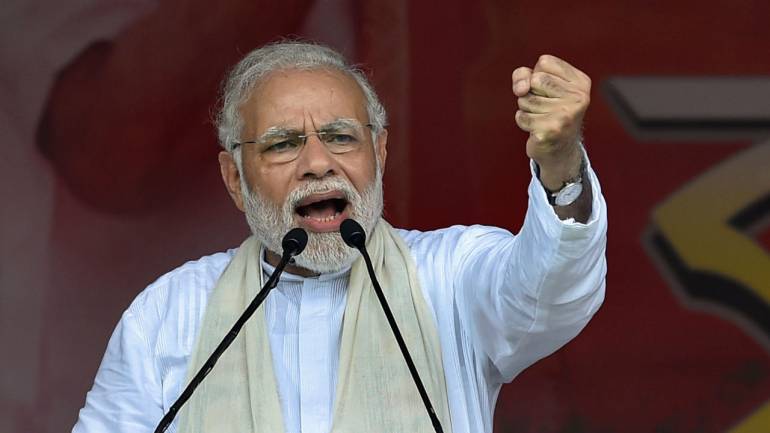
(PC: Money control)

Share on FacebookShare on X

If one was to go by the general media utterances and even the usual publication from majority of the think-tanks we could be forgiven for thinking that Indian nuclear position has been largely well defined and established around minimalistic defensive principles, which are in turn continuation of pacifist Gandhi-Nehurvian policies which have formed the bedrock of Indian post-independence polity. Such perception is also fed by the general thought of India being a “static” country, where the continuity of millennia is confused to be stagnation by the Indian Fabian Socialists and their establishment. This western minded understanding of India ignores that the Indian nuclear scenario has really never been a constant.

While it is true, that Nehru rejected Kennedy’s invite into the NSG and P-5 by US, claiming that India would have no intention of ever working on a nuclear device; it is equally true, that Dr Homi Jehangir Bhabha and Vikram Sarabhai were at the same time working to put in place the infrastructure and knowledge that would later go onto making Buddha smile. They, at many times, worked behind Nehru’s back in terms of creating dual use technologies, and at many times pushed Nehru to allow for funding for nuclear physics which would have been otherwise shut down. The next stage of the journey was to the first weapon trial in 1974, based on Bhabha’s work of the late 50s but delayed due to Nehru’s intransigence and Babha’s death (or murder).

RelatedPosts

‘Drone General’ Is Not Just a Nickname – It Is a Verdict

Sanjeev Sanyal: Is Bengal About to Get Its Own ‘Technocrat’ Finance Minister?

Exposed and Outgunned: How Operation SINDOOR Forced Pakistan to the Ceasefire Table

Load More

However this continued to be similarly couched in Nehruvian terms of the test being a “peaceful nuclear explosion” and full weaponization continued to be shackled. Nevertheless, there continued to be talks of weapons being available as “fissionable material” which could be put together into a warhead if needed. Yet work on full weaponization had continued under wraps, and its disclosure had to wait till PM Atal Bihari Vajpayee successfully executed the aborted attempt by Narasimha Rao a few years earlier. The requirements for a large country to maintain a stable foreign policy outlook and deflect international unease at sudden changes, forced us to pretend to hold on to the pernicious poison of self-defeating pacifism seeded into the Indian state during it’s birth by Nehru. Thus, test was again immediately followed by declarations of continued pacifism, with linchpin of the arguments now taking the shape of no first use policy, self imposed moratorium on nuclear testing, “un-mated” warheads, and stated principle of “minimum” credible deterrence. And so once again while India took a step forward in its capabilities, it took great pains towards minimizing it’s impact on the perception of Indian power projection.

The reader might wonder what bearing does the condensed capsule on historical evolution of Indian nuclear position has on Arihant or on the deterrence in current times, and the answer is that it provides us a framework to understand whats happening even today. There are two key parts to the framework;
1) Externally, the Indian state is still hobbled by the choices made early in its life and can only gradually dismantle the same, while needing to maintain the pretense of continuity.
2) Internally, there has been a push back against the imposition, and at subterranean levels there are continuous bubbling changes, modifying both the ability and the intent of the state in subtle ways but having a stark overall impact which comes to light only once in a while.

The time onwards from Shakti tests can be better understood in the same framework. It had been clear, from the very start, that mere tests were not sufficient for development of complete 360 degree nuclear capabilities. A number of additional steps were needed, and prescribed, and chief amongst them was the completion of the nuclear triad. That is the ability to deliver nuclear weapons from land using ballistic missiles, from airborne platforms such as mirages, and finally sea launched, typically submarine launched ballistic missiles (SLBM) and platforms to carry the same. Additional work on improvement of warheads was also needed. In the same breath, the policy framework to deploy the current and evolving capability was being hotly debated. Even in first decade of this century following the tests, the strategic community was questioning whether no first use was the right policy for India as a country, what was definition of minimum in the “minimum credible deterrence” and what steps were needed to make sure the credible part of the formulation was boldly underlined.

It is in this background that BJP came to power in 2014, seeking to upgrade not only the physical infrastructure but concomitantly study “in detail” India’s nuclear doctrine and “revise and update it to make it relevant to challenges of current times”. A key marker to the thoughts of the new political dispensation were seen, when the newly appointed NSA Ajith Doval in October 2014 laid out the revision of nuclear formulation, dropping minimum from it, and focusing squarely on the strength of the approach. In most forceful words, he called out that “India would like to have an effective deterrence capability that is credible, that is seen and known by people… that India cannot be taken for granted, that its legitimate rights cannot be trampled upon, that it becomes an instrument for stability in the region rather than a cause for conflict”.

Such a stance was accompanied by moving towards deployment of Agni V, a cannister launched ballistic missile, which in turn necessarily asked for warheads to be mated with delivery vehicles; and launch of Arihant, India’s own SSN, also carrying a cannisterized nuclear strike package. Shortly after the commissioning of Arihant, contours of emerging doctrine were marked clearly when Manohar Parrikar, then defense minister indicated that as India was a responsible nuclear power, it automatically meant that any use of nuclear abilities by the country would be a very carefully considered decision. Therefore, there did not exist any additional need to restraint ourselves to a binding doctrine of no-first use.

This was in turn followed up by the noted nuclear strategist, Ex-NSA of UPA, Shiv Shankar Menon’s statement in his book where he pointed out scenarios where there was indeed scope for India to consider first use in certain scenarios. While it was clear that India would not use nuclear weapons against a non-nuclear state, Menon said, “There is a potential grey area as to when India would use nuclear weapons first against another nuclear-weapon state. Circumstances are conceivable in which India might find it useful to strike first, for instance, against an NWS (nuclear weapons state) that had declared it would certainly use its weapons, and if India were certain that adversary’s launch was imminent. But India’s present nuclear doctrine is silent on this scenario.” . Yet another very significant but largely missed development in these times were the efforts to develop additional and more credible thermo-nuclear warheads thereby increasing the impact of our arsenal. A part of these efforts would certainly be an essential mini-test infrastructure, based on laser ignition facility to enable thermonuclear weapons to be tested without a full explosion.

Yet another key factoid which we must examine in this context is India’s Joint Armed Forces Doctrine published in 2017. This was a critical document which formalized the principles that guide the Indian military’s approach to war fighting. The document addresses the force’s needs across “full spectrum of military conflict.” In that it covers Indian military’s approach to everything from nuclear war to internal security and counter-insurgency. Apart from the formalization of the approach of “surgical-strikes”, the other notable part that stood out in the document was the presentation of India’s nuclear strategy. This was the first official document capturing the hitherto demi-official pronouncements of change of stance from “credible minimum deterrence” (CMD) to “credible deterrence” (CD). This formulation now allows India to use as much of force against an enemy as deemed necessary, up to complete and total assured destruction of the entire enemy land; instead of merely unacceptable punitive costs. In addition there was finally an articulation of limited departure from the previously stated position of NFU, when it called for:
“Conflict will be determined or prevented through a process of credible deterrence, coercive diplomacy and conclusively by punitive destruction, disruption and constraint in a nuclear environment across the Spectrum of Conflict.”
In speaking of a process of deterrence based on prevention through disruption in an nuclear environment, it made it clear, that India would be open to first strike on enemies nuclear assets if it sensed an emerging threat; using either conventional or even nuclear weapons.

What the last four years then give us, is essentially that the post-Shakti landscape has been comprehensively changed. The improved technological base has removed the concepts of de-mated warheads and mortarium on test; as well as created very credible weapon platforms. Taking advantages of the improvement in ability, the statement of intent has moved on from constraining ourselves to minimum force to maximum possible response; which if needed would be even before the enemy could act. In doing so, the last four years have conclusively answered the open questions on credibility of our nuclear posture, removed the need to quibble about the minimum force and made the debate on NFU redundant.

This is the cake on which lies the icing of PM Modi’s tweet, applauding the successful completion of the first deterrence patrol by Arihant.

In an era such as this, a credible nuclear deterrence is the need of the hour.

The success of INS Arihant gives a fitting response to those who indulge in nuclear blackmail.

— Narendra Modi (@narendramodi) November 5, 2018

Once again, the Indian polity married the enhanced capabilities with declaration of intent; “a fitting response to those who indulge in nuclear blackmail”. No longer would India be constrained by the Nehruvian waffling woolly headedness, no longer would we labour under self-imposed limitations on our strength. No longer will self-doubts based on external projections define us. This is the new India, directly looking the adversary in the eye, and challenging them to battle. A dare for enemies to try and live up to their threats, and an assurance to them that if they as much as thought of making good on their claims, we would move first, swiftly and hard to put an end to such adventurism no longer than a moment after they were envisaged.

Tags: Indian DefenceIndian Nuclear TestsPM Modi
Share625TweetSend
Previous Post

Restoration drive reaches Gujarat, Ahmedabad to be Karnavati soon

Next Post

The futility of the anti Hindu campaign on Diwali

Related Posts

From Shipbuilder to Maritime Capability Partner: Navy Outlines Bigger Vision for Defence PSU HSL With Dy Chief of Navy’s visit
Defence

From Shipbuilder to Maritime Capability Partner: Navy Outlines Bigger Vision for Defence PSU HSL With Dy Chief of Navy’s visit

8 July 2026

The Indian Navy has signalled a much larger role for Hindustan Shipyard Limited (HSL), the Defence Ministry's Miniratna public...

General Dhiraj Seth’s ‘VIJAY’ Doctrine Signals India’s Next Military Transformation
Defence

General Dhiraj Seth’s ‘VIJAY’ Doctrine Signals India’s Next Military Transformation

1 July 2026

India has entered a decisive phase in its military modernisation with Chief of the Army Staff General Dhiraj Seth...

Why the Army is quietly rewriting India’s warfighting doctrine with its first Integrated Battle Groups
Defence

Why the Army is quietly rewriting India’s warfighting doctrine with its first Integrated Battle Groups

29 June 2026

The Indian Army is set to operationalise its first Integrated Battle Groups (IBGs), marking one of the most significant...

Load More

Leave a Reply Cancel reply

Your email address will not be published. Required fields are marked *

I agree to the Terms of use and Privacy Policy.
This site is protected by reCAPTCHA and the Google Privacy Policy and Terms of Service apply.

Currently Playing
Facebook Twitter Instagram Youtube
tfipostTfipost.com
Right Wing | News Analysis | Indian Opinion
  • About us
  • Contact Us
  • Careers
  • Brand Partnerships
  • Terms of use
  • Privacy Policy
  • Sitemap

©2026 TFI Media Private Limited

No Result
View All Result
  • Premium
  • Politics
    • Analysis
    • Opinions
    • Trending
  • Economy
    • Business
    • Finance
  • Defense
    • Defence
    • Strategy
    • Weaponry
  • Geopolitics
    • Africa
    • Americas
    • Asia Pacific
    • Europe
    • South Asia
    • West Asia
  • Knowledge
    • Culture
    • History
    • Indology
  • Law
  • Lounge
    • Books
    • Cinema
    • Food
    • Health
    • Sports
    • technology
    • Travel
    • Satire
TFIPOST हिन्दी
TFIPOST Global

©2026 TFI Media Private Limited