














TFIPOST हिन्दी
TFIPOST Global
Tfipost.com
Tfipost.com
No Result
View All Result
  • Premium
  • Politics
    • All
    • Analysis
    • Opinions
    • Trending
    Shankar Ghosh casts his ballot as Bengal’s battle for power enters a crucial phase.

    BJP Signals Bengal Breakthrough as Shankar Ghosh Predicts End of TMC Rule

    The Gorakhpur address blended cultural provocation with a direct challenge to the opposition.

    ‘Do People Who Eat Cows Drink Pig’s Milk?’ Yogi Blasts Opposition Over Women’s Quota

    Where fear once shaped the vote, long queues now suggest a different democratic moment.

    Security Grid, Long Queues: How West Bengal’s Poll Day Is Being Redrawn

    Amit Shah addressing a public rally in Saptagram during his West Bengal campaign.

    Shah Flags ‘Love Jihad’ and ‘Land Jihad’ in Sharp Bengal Campaign Attack

    • Analysis
    • Opinions
    • Trending
  • Economy
    • All
    • Business
    • Economy1
    • Finance
    Blood in the Meadows: How the Pahalgam Terror Attack Exposed Calculated Targeting of Civilians in Kashmir

    Blood in the Meadows: How the Pahalgam Terror Attack Exposed Calculated Targeting of Civilians in Kashmir

    Indian economy is stronger than the ranking.

    IMF Ranking Jolt Misread: India’s Economy Strong, Sixth Spot Just a Statistical Glitch

    The Fuel Miracle: How India Frozen Petrol Prices Amidst a Global Inferno

    The Fuel Miracle: How India Frozen Petrol Prices Amidst a Global Inferno

    From Sapta Sindhu to Statecraft: Inaugural ‘Sindhu Samvad’ Links Indus Past with Policy Present

    From Sapta Sindhu to Statecraft: Inaugural ‘Sindhu Samvad’ Links Indus Past with Policy Present

    • Business
    • Finance
  • Defense
    • All
    • Defence
    • Strategy
    • Weaponry
    The scars of Pahalgam endure, even as the nation moves forward

    Pahalgam Anniversary: Modi Signals Firm National Stand as India Reasserts Anti-Terror Resolve

    Precision Strike: Indian Army Approves Procurement of Indigenous MPATGM to Modernise Infantry Wings

    Precision Strike: Indian Army Approves Procurement of Indigenous MPATGM to Modernise Infantry Wings

    Amit Shah on sensitive Gorkha land issue

    Shah Assures Constitutional Path for Gorkha Issue, Intensifies Attack on TMC at Bengal Rally

    Historic Leap for ‘Aatmanirbhar Bharat’ as First India-Made BrahMos Missiles from Lucknow Join Indian Army

    Historic Leap for ‘Aatmanirbhar Bharat’ as First India-Made BrahMos Missiles from Lucknow Join Indian Army

    • Defence
    • Strategy
    • Weaponry
  • Geopolitics
    • All
    • Africa
    • Americas
    • Asia Pacific
    • Europe
    • South Asia
    • West Asia
    Rajnath Singh addresses the possibility of India contributing to peace efforts in West Asia amid ongoing geopolitical tensions.

    Could India Become a Diplomatic Space in the West Asia Crisis? Rajnath Singh Hints at Possibility

    The Fuel Miracle: How India Frozen Petrol Prices Amidst a Global Inferno

    The Fuel Miracle: How India Frozen Petrol Prices Amidst a Global Inferno

    Port Under Siege: Gwadar Faces Threats from All Sides

    Port Under Siege: Gwadar Faces Threats from All Sides

    Modi, Lee Jae Myung hold talks to reset India–South Korea economic ties

    India–South Korea Agree to $50 Billion Trade Target in Major Economic Upgrade

    • Africa
    • Americas
    • Asia Pacific
    • Europe
    • South Asia
    • West Asia
  • Knowledge
    • All
    • Culture
    • Education
    • History
    • Indology
    Kedarnath Dham Portals Open for Devotees After 181 Days Amid Vedic Chants, Traditional Rituals

    Kedarnath Dham Portals Open for Devotees After 181 Days Amid Vedic Chants, Traditional Rituals

    Sardar Patel and Amit Shah

    Sardar Patel’s 1947 Blueprint on Minority Quotas Resurfaces as Reservation Debate Returns to Centre Stage

    The 1973 Constitution and ‘Bhutto’ the Man Who Made It: What Pakistan Owes and What It Destroyed

    The 1973 Constitution and ‘Bhutto’ the Man Who Made It: What Pakistan Owes and What It Destroyed

    Future-Ready Learning: CBSE Launches AI Curriculum for Classes 3–8 to Boost Digital Readiness in Young Learners

    Future-Ready Learning: CBSE Launches AI Curriculum for Classes 3–8 to Boost Digital Readiness in Young Learners

    • Culture
    • History
    • Indology
  • Law
  • Lounge
    • All
    • Books
    • Cinema
    • Entertainment
    • Food
    • Games
    • Health
    • Lifestyle
    • Satire
    • Sports
    • technology
    • Travel
    AI in healthcare

    AI is Recasting Healthcare, Reshaping How Medicine is Practised

    Delhi-Dehradun Expressway

    Modi Launches ₹12,000-Crore Delhi–Dehradun Expressway, Cutting Journey Time to Around 2.5 Hours

    Asha Bhosle last rites

    India Bids Farewell to Asha Bhosle: State Honours Mark Final Journey of a Musical Legend

    Can Gym-Goers Start Calisthenics Easily? Here’s What to Know

    Can Gym-Goers Start Calisthenics Easily? Here’s What to Know

    • Books
    • Cinema
    • Food
    • Health
    • Sports
    • technology
    • Travel
    • Satire
Tfipost.com
  • Premium
  • Politics
    • All
    • Analysis
    • Opinions
    • Trending
    Shankar Ghosh casts his ballot as Bengal’s battle for power enters a crucial phase.

    BJP Signals Bengal Breakthrough as Shankar Ghosh Predicts End of TMC Rule

    The Gorakhpur address blended cultural provocation with a direct challenge to the opposition.

    ‘Do People Who Eat Cows Drink Pig’s Milk?’ Yogi Blasts Opposition Over Women’s Quota

    Where fear once shaped the vote, long queues now suggest a different democratic moment.

    Security Grid, Long Queues: How West Bengal’s Poll Day Is Being Redrawn

    Amit Shah addressing a public rally in Saptagram during his West Bengal campaign.

    Shah Flags ‘Love Jihad’ and ‘Land Jihad’ in Sharp Bengal Campaign Attack

    • Analysis
    • Opinions
    • Trending
  • Economy
    • All
    • Business
    • Economy1
    • Finance
    Blood in the Meadows: How the Pahalgam Terror Attack Exposed Calculated Targeting of Civilians in Kashmir

    Blood in the Meadows: How the Pahalgam Terror Attack Exposed Calculated Targeting of Civilians in Kashmir

    Indian economy is stronger than the ranking.

    IMF Ranking Jolt Misread: India’s Economy Strong, Sixth Spot Just a Statistical Glitch

    The Fuel Miracle: How India Frozen Petrol Prices Amidst a Global Inferno

    The Fuel Miracle: How India Frozen Petrol Prices Amidst a Global Inferno

    From Sapta Sindhu to Statecraft: Inaugural ‘Sindhu Samvad’ Links Indus Past with Policy Present

    From Sapta Sindhu to Statecraft: Inaugural ‘Sindhu Samvad’ Links Indus Past with Policy Present

    • Business
    • Finance
  • Defense
    • All
    • Defence
    • Strategy
    • Weaponry
    The scars of Pahalgam endure, even as the nation moves forward

    Pahalgam Anniversary: Modi Signals Firm National Stand as India Reasserts Anti-Terror Resolve

    Precision Strike: Indian Army Approves Procurement of Indigenous MPATGM to Modernise Infantry Wings

    Precision Strike: Indian Army Approves Procurement of Indigenous MPATGM to Modernise Infantry Wings

    Amit Shah on sensitive Gorkha land issue

    Shah Assures Constitutional Path for Gorkha Issue, Intensifies Attack on TMC at Bengal Rally

    Historic Leap for ‘Aatmanirbhar Bharat’ as First India-Made BrahMos Missiles from Lucknow Join Indian Army

    Historic Leap for ‘Aatmanirbhar Bharat’ as First India-Made BrahMos Missiles from Lucknow Join Indian Army

    • Defence
    • Strategy
    • Weaponry
  • Geopolitics
    • All
    • Africa
    • Americas
    • Asia Pacific
    • Europe
    • South Asia
    • West Asia
    Rajnath Singh addresses the possibility of India contributing to peace efforts in West Asia amid ongoing geopolitical tensions.

    Could India Become a Diplomatic Space in the West Asia Crisis? Rajnath Singh Hints at Possibility

    The Fuel Miracle: How India Frozen Petrol Prices Amidst a Global Inferno

    The Fuel Miracle: How India Frozen Petrol Prices Amidst a Global Inferno

    Port Under Siege: Gwadar Faces Threats from All Sides

    Port Under Siege: Gwadar Faces Threats from All Sides

    Modi, Lee Jae Myung hold talks to reset India–South Korea economic ties

    India–South Korea Agree to $50 Billion Trade Target in Major Economic Upgrade

    • Africa
    • Americas
    • Asia Pacific
    • Europe
    • South Asia
    • West Asia
  • Knowledge
    • All
    • Culture
    • Education
    • History
    • Indology
    Kedarnath Dham Portals Open for Devotees After 181 Days Amid Vedic Chants, Traditional Rituals

    Kedarnath Dham Portals Open for Devotees After 181 Days Amid Vedic Chants, Traditional Rituals

    Sardar Patel and Amit Shah

    Sardar Patel’s 1947 Blueprint on Minority Quotas Resurfaces as Reservation Debate Returns to Centre Stage

    The 1973 Constitution and ‘Bhutto’ the Man Who Made It: What Pakistan Owes and What It Destroyed

    The 1973 Constitution and ‘Bhutto’ the Man Who Made It: What Pakistan Owes and What It Destroyed

    Future-Ready Learning: CBSE Launches AI Curriculum for Classes 3–8 to Boost Digital Readiness in Young Learners

    Future-Ready Learning: CBSE Launches AI Curriculum for Classes 3–8 to Boost Digital Readiness in Young Learners

    • Culture
    • History
    • Indology
  • Law
  • Lounge
    • All
    • Books
    • Cinema
    • Entertainment
    • Food
    • Games
    • Health
    • Lifestyle
    • Satire
    • Sports
    • technology
    • Travel
    AI in healthcare

    AI is Recasting Healthcare, Reshaping How Medicine is Practised

    Delhi-Dehradun Expressway

    Modi Launches ₹12,000-Crore Delhi–Dehradun Expressway, Cutting Journey Time to Around 2.5 Hours

    Asha Bhosle last rites

    India Bids Farewell to Asha Bhosle: State Honours Mark Final Journey of a Musical Legend

    Can Gym-Goers Start Calisthenics Easily? Here’s What to Know

    Can Gym-Goers Start Calisthenics Easily? Here’s What to Know

    • Books
    • Cinema
    • Food
    • Health
    • Sports
    • technology
    • Travel
    • Satire
No Result
View All Result
Tfipost.com
Tfipost.com
No Result
View All Result
  • Premium
  • Politics
  • Economy
  • Defense
  • Geopolitics
  • Knowledge
  • Law
  • Lounge

Valmiki’s description of Ayodhya and Ram Rajya is so Vivid that you’ll feel like a Citizen of Ancient Ayodhya

Aashrai Shrivaths by Aashrai Shrivaths
30 September 2017
in Culture
Ayodhya
Share on FacebookShare on X

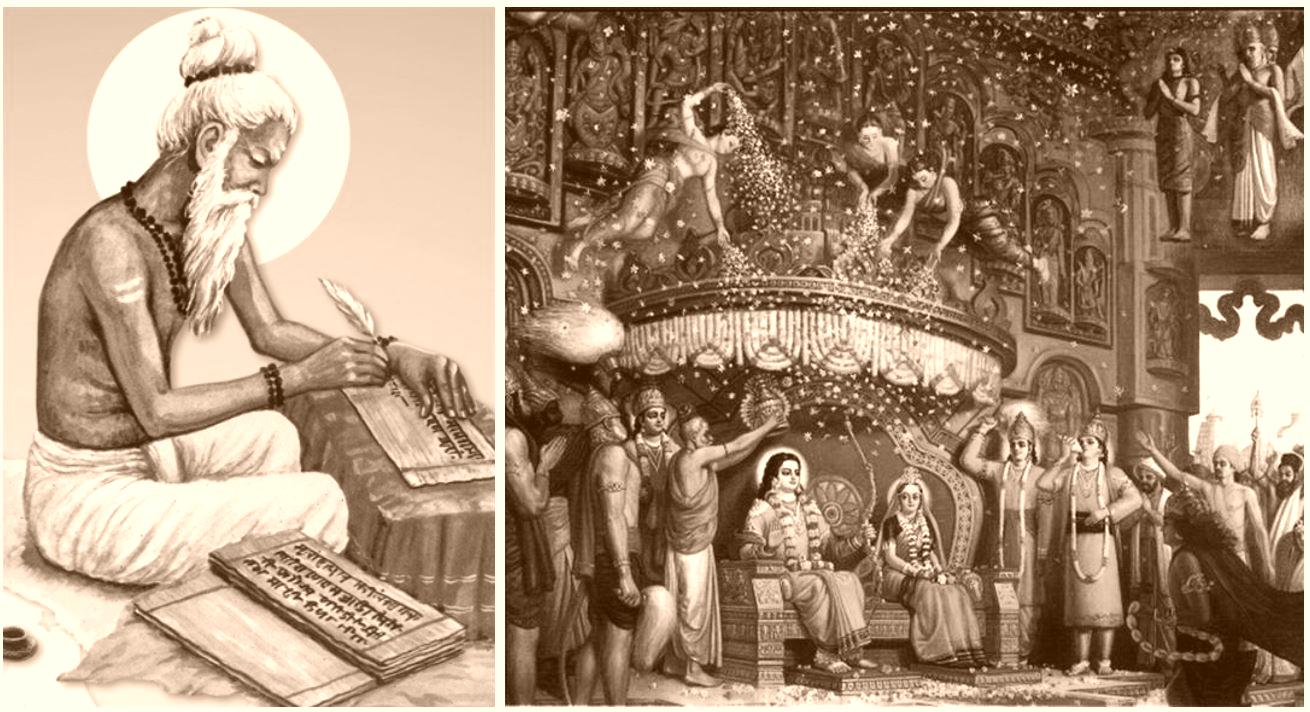
In a day and age when Rama Himself is being foul mouthed by descendants of the very people He once ruled, here is an excerpt from Valmiki himself as to what Rama’s day and age looked like.

12 Yojanas long and 3 Yojanas wide are the roads of Ayodhya. Every day the roads are sprinkled with water by young maidens clad in flowers. This was overseen by Dasharatha himself who like Indra reigned over a capital wherein he accommodated many people. There are shops lining the streets of this city and bustling markets well decorated. The guards patrolling the streets and keeping a lookout over the walls are well versed in the art of multiple weapons. There are sculptures adorning the city crafted my skilled craftsmen. There are skilled artisans and craftsmen all over the bustling city and the soldiers guarding it are armed with Sataghnis (an unknown weapon which was possibly a projectile used in defensive war). There are colourful banners of the nation fluttering everywhere at all times.

RelatedPosts

Devotees Flock to Ayodhya as Ram Temple Opens Long-Awaited Sub-Shrines for Darshan

Weapon Found Inside Motihari Madrasa Triggers Major Security Probe, Three Held as Police Investigate Possible Plot

Ram-avatara on the Pages of Time: A Tale of Virtue, Organised Power, and the Struggle Against Evil

Load More

There are also entertainers of all sorts. There are actors, bards, singers, dancers and street players of various kinds merrily putting up plays on stages to entertain people. There are many orchards and gardens for public relaxations all over the city. Surrounding the city is a fortified wall manned by catapults and tower guards. Outside this wall is a great moat of defence. All the quarters of the city belonging to the 4 communities of Aryans is abundant with all sorts of animals from all lands of the Empire – such as cows, mules, horses and camels. There arrive princes and ambassadors on these streets every day to pay their tribute and respects to Dasharatha. And since many people from across the Empire are on the city’s streets, one can hear many different languages on these streets.

There are jewellers who sell gems by weight. You can find precious metals and stones piled like straw outside their shops. All the women in the city are clad in the finest clothing and best jewellery. The houses are well planned, built on levelled out ground and always have a surplus of rice and sugarcanes within. These houses are built the same way one would arrange chariots elegantly in military formation on either side of the streets. On the streets you can find musicians as well, playing the mrudangam, veena and lutes and singing aloud.

Women of Ayodhya are known for their purity in thought, word and deed. They are the reason why the men are pure in thought, word and deed. Women in Ayodhya are colourfully dressed no matter which community they hail from. Jewellery and colourful fabrics are what they wear at all times. They all have sacred ash, vermillion and other sacred pastes applied to their foreheads, they are controlled in their speech and are hallmarks of good body language and behaviour.

In the forests nearby, there are many lions, tigers, wild hogs which the warriors of the city can easily overcome as they are well versed in archery, melee hand to hand combat and can even fight bare handed. They along with great chariot generals lived in homes provided to them by Dasharatha himself in Ayodhya. And then there are sages, priests, Vedic scholars, poets and many high souled men of faith who are all living in the homes given to them by Dasharatha in Ayodhya. At all times, the sound of music and Vedic hymns fill the air outside temples and fire altars in the city. There are many town halls in the city wherein dancers and singers often perform in honour of the Gods.

Outside Ayodhya, there are the Vanapurusha – a tribe of forest dwellers who are Dasharatha’s subjects and friends. They also attend the yagnya. In fact, their leader Guha who later ferries Rama, Lakshmana and Sita across the Sarayu is the son of a Brahmin man and a Shudra woman. In service to Dasharatha, he is a Kshatriya. This composite working of divided labour uniting in national interests is what an ideal modern state too would need to excel in its day to day workings.

Now Ayodhya is a place where discipline in all matters sets it apart from the rest of the world’s civilizations. What is today foul-mouthed as oppression and an evil caste system is explained by Valmiki rather simply – every community does its duty faithfully and the nation will prosper. Let us see the 4 communities –

  1. The Brahmins – Ayodhya is home to numerous temples, universities and libraries. In these altars, one can see daily yagnyas in the form of fire sacrifices. Brahmins did their duties as teachers, priests, writers and advisors. Brahmins formed councils in temples and in the kings court where form they presided over matters of law, religion, advice to the king and maintenance of holy places such as fire altars. Brahmins knew extensively the science of astronomy. They knew the movements of constellations, stars and had mapped the 10 celestial directions based on this knowledge. A pious Brahmin of the time never had any property. He held only the authority and reputation attached to his name by virtue of the reputation of his lineage built over time, and the reputation he built for his own self. The Brahmins dedicated their lives to spiritual excellence and showing the way to all other communities as to how to live by the Shastras of Dharma. No Brahmin understepped or overstepped his boundaries.

Brahmins have gained and mastered their skills passed down from father to son.

  1. The Kshatriyas – The Kshatriyas are among the most skilled people in Ayodhya. They are of many kinds depending on their rank in the Empire’s security apparatus. We can see Valmiki describing:
    • Charioteers – the highest ranking military personnel who act also as ambassadors and know every single protocol in inviting a foreign ruler, in delivering a message to a foreign prince, or in even speaking to a dignitary. Their role is one of diplomacy apart from just skilled driving on a battlefield. When Dasharatha sends invitations to all the rulers of Aryavartha for his Ashwamedha yagnya, it is a fleet of highly skilled charioteer-diplomats headed by Sumantra who set out across Aryavartha.
    • Cavaliers – horsemen who act as heavy cavalry, shield bearers and attack vanguards in battles. They also patrol highways and streets of towns and cities to keep law and order. They breed horses of various kinds – from the trans-Himalayas Kamboja-Bahlika horses of modern Afghanistan, to the Indus river breeds. Additionally, there are elephant riders as well who ride various breeds such as Airavata, Mandra, Mrga, Anjana, Vamana and Mahapadma.
    • Infantry men – these varied from bannermen to regular soldiers. They knew how to wield swords, spears, javelins, bows, catapults and Sataghnis (an unknown kind of projectile weapon). They patrol streets, highways and man the walls of fortresses. During his tenure as a soldier, Rama Himself served in this position fighting with a bow in hand on foot.
    • Royal spies – unlike present day, these were deployed on the streets of the Empire to listen to the conversations of commoners. Based on what they heard, they would report all the commoners’ grievances to the Emperor in strict confidence, who in turn would solve them making the commoners wonder as to how he read their minds.
    • Ministers – Valmiki gives us an idea as to the positions of the ministers of Ayodhya by the names of the ministers – such as Akopa, Arthavit, Surashtra, Dharmapala, etc. Their names suggest that they presided over economy, agriculture, peoples’/human affairs, religious matters and temples. They all were trained in the art of speech, secrecy, diplomacy, farsightedness in judgement, law and religion.

All Kshatriyas like Brahmins have gained their skills passed down from father to son.

  1. The Vaishyas – They are never singled out by Valmiki but the bustling markets of Ayodhya give us an idea about Ayodhya’s far and wide commercial reach. The markets have people from all over Aryavartha – from the other side of the Himalayas, to the Indus river valley, to the deep south of India and to the east beyond the Ganga’s mouth. The sheer scale of tributes borne by subjects of the state on elephants, mules and camels shows us the commercial reach of Vaishyas in the Tretayuga.

Vaishyas like the Brahmanas and Kshatriyas have gained and mastered their skills passed down from father to son.

  1. The Shudras – Contrary to popular misconception, the Shudra was not a slavish menial serf. He was a builder. The word Shudra itself refers to a constructor. A Shudra in Ayodhya is seen as being well versed in all the arts of building, the art of building houses based on the community to which his client belonged and the art of sculpting and architecture. Temples, fire altars, palaces, gardens, etc are all built and maintained by Shudras in Ayodhya. The Shudras in Dasharatha’s time have a surplus of grain in their houses at all times.

Shudras like Brahmanas, Kshatriyas and Vaishyas have gained and mastered their unique skills passed down from father to son.

Let us now see how the 4 communities worked in sync with one another –

When Dasharatha wanted to conduct the Ashwamedha yagnya for the birth of a son, the priests lose no time in telling the Shudra chiefs what they need. The Shudras and the Brahmana priests decide what size and shape the bricks should be for the fire altar. They decide what sticks and scaffolding should be used to build the altar. Meanwhile, Dasharatha – the Kshatriya Emperor orders his charioteer corps to go invite kings of the lands subject to him and not subject to him as well. The charioteers led by Sumantra know their job perfectly and they set out according to protocol to call all the rulers of Aryavartha giving priority to their relationship with Dasharatha, their relations with Ayodhya and their strength as rulers in the land.

Shudra labourers in the fields and their Vaishya clients buy and sell the year’s harvests to the crown which in turn rations the food towards the great yagnya. The Yagnya takes place over at least 4 full years and therefore is a full time job in itself for the entire city. As grains and food is being bought and sold in the markets of Ayodhya, the Shudras lose no time in following the priests of Ayodhya led by Vasishtha in identifying the land over which the yagnya is to be conducted. And on this land, they start building a mini-city with tent-like temporary houses for all the people of Ayodhya and foreign visitors as well.

They build houses for Brahmanas with all the necessities a Brahmin would need. They build houses for Kshatriyas including the city’s tower guards, soldiers, chariot generals, cavaliers as well as foreign princes. These houses are designed in accordance with the requirements of these folk (baths, scented waters, weapon barracks, etc). They build houses for the Vaishyas and of course, for their own selves. The Brahmanas meanwhile go about inspecting the preparations for the yagnya.

The entire city of Ayodhya and kings and princes of foreign lands too gather in the open yagnya field in a spectacle resembling a grand stadium with the fire altar at the centre of the ground. The 4 years’ harvests are all in surplus and over this time, the people eat well and grow plump (according to Valmiki’s description).

During the yagnya, what follows is 4 years of great celebrations, singing, merry making, prayer and togetherness in which all the 4 communities live in a mini tent city on an open field one beside the other in a grand get together of clans and peoples.

To sum up what Ramarajya is – it is this harmonious functioning of society present in Aryavartha before Rama was born. When Rama ascended the throne, He perfected it further. It was probably the only time in India wherein the Dharmashastras and Vedas were applied and followed by all 4 communities of people to the last word. And hence, this undying faith in one’s ancestral field of excellence and the zeal to better it constantly is what lead to a situation described as Ramarajya.

I leave you on Viajayadashami with these words from the Yajurveda –

यथा ते तत्र वर्तेरन् तथा ते अत्र वर्तेताः

  • As your forefathers lived and did (noble deeds) at one time (excelling in spiritual and human progress), today must you follow those deeds (and better what they have left behind for you).

Tags: AyodhyaLord RamaRam RajyaRamayana
Share1532TweetSend
Previous Post

Dear Non-Hindus, you wished to know why you aren’t allowed in the Jagannath Temple? Here’s your Answer

Next Post

Diplomatic Masterstroke, Strategic Affairs Expert Reveals How PM Modi Resolved Doklam Issue

Related Posts

Kedarnath Dham Portals Open for Devotees After 181 Days Amid Vedic Chants, Traditional Rituals
Culture

Kedarnath Dham Portals Open for Devotees After 181 Days Amid Vedic Chants, Traditional Rituals

22 April 2026

The grand reopening of the Kedarnath Dham on April 22, 2026, marks a pivotal moment in India’s spiritual calendar,...

From Devotion to Divine Strength: Celebrating Lord Hanuman, Eternal Symbol of Courage, Humility
Culture

From Devotion to Divine Strength: Celebrating Lord Hanuman, Eternal Symbol of Courage, Humility

2 April 2026

  “When the battlefield of Lanka fell into anxious silence and Lakshmana lay gravely wounded, it was Lord Hanuman...

Ram-avatara on the Pages of Time: A Tale of Virtue, Organised Power, and the Struggle Against Evil
Culture

Ram-avatara on the Pages of Time: A Tale of Virtue, Organised Power, and the Struggle Against Evil

26 March 2026

The Ram-avatara is not a story of miracles. It is the story of organised virtuous power, of divinity flowing...

Load More

Leave a Reply Cancel reply

Your email address will not be published. Required fields are marked *

I agree to the Terms of use and Privacy Policy.
This site is protected by reCAPTCHA and the Google Privacy Policy and Terms of Service apply.

Currently Playing

From Runways to Warships: India’s Firefighting Warrior Built for Bases & Battles| IAF | VayuShakti

From Runways to Warships: India’s Firefighting Warrior Built for Bases & Battles| IAF | VayuShakti

00:05:40

Ethanol, EVs and Solar- How India’s Energy Game Is Changing | Modi on LPG & Crude Oil | war| Hormuz

00:05:21

Truth of IRIS Dena: 8 Days That Changed Narrative | War zone Reality, Not an Indian Navy Exercise

00:08:02

300 Million Euros for SCALP: Strategic Necessity or Costly Dependency on France300

00:04:06

Tejas Mk1A: 19th aircraft coupled but Not Delivered: What Is Holding Back the IAF Induction?

00:07:21
Facebook Twitter Instagram Youtube
tfipostTfipost.com
Right Wing | News Analysis | Indian Opinion
  • About us
  • Contact Us
  • Careers
  • Brand Partnerships
  • Terms of use
  • Privacy Policy
  • Sitemap

©2026 TFI Media Private Limited

No Result
View All Result
  • Premium
  • Politics
    • Analysis
    • Opinions
    • Trending
  • Economy
    • Business
    • Finance
  • Defense
    • Defence
    • Strategy
    • Weaponry
  • Geopolitics
    • Africa
    • Americas
    • Asia Pacific
    • Europe
    • South Asia
    • West Asia
  • Knowledge
    • Culture
    • History
    • Indology
  • Law
  • Lounge
    • Books
    • Cinema
    • Food
    • Health
    • Sports
    • technology
    • Travel
    • Satire
TFIPOST हिन्दी
TFIPOST Global

©2026 TFI Media Private Limited