












TFIPOST हिन्दी
TFIPOST Global
Tfipost.com
Tfipost.com
No Result
View All Result
  • Premium
  • Politics
    • All
    • Analysis
    • Opinions
    • Trending
    Amit Shah addressing a public rally in Saptagram during his West Bengal campaign.

    Shah Flags ‘Love Jihad’ and ‘Land Jihad’ in Sharp Bengal Campaign Attack

    Amit Shah intensifies BJP’s Bengal campaign, targeting TMC over governance, corruption allegations, and the “Babri Masjid-modelled” controversy.

    “Syndicate Raj to Babri Row”: Shah Sharpens BJP’s Bengal Offensive Against TMC

    Kedarnath Dham Portals Open for Devotees After 181 Days Amid Vedic Chants, Traditional Rituals

    Kedarnath Dham Portals Open for Devotees After 181 Days Amid Vedic Chants, Traditional Rituals

    Rajnath Singh addresses the possibility of India contributing to peace efforts in West Asia amid ongoing geopolitical tensions.

    Could India Become a Diplomatic Space in the West Asia Crisis? Rajnath Singh Hints at Possibility

    • Analysis
    • Opinions
    • Trending
  • Economy
    • All
    • Business
    • Economy1
    • Finance
    Blood in the Meadows: How the Pahalgam Terror Attack Exposed Calculated Targeting of Civilians in Kashmir

    Blood in the Meadows: How the Pahalgam Terror Attack Exposed Calculated Targeting of Civilians in Kashmir

    Indian economy is stronger than the ranking.

    IMF Ranking Jolt Misread: India’s Economy Strong, Sixth Spot Just a Statistical Glitch

    The Fuel Miracle: How India Frozen Petrol Prices Amidst a Global Inferno

    The Fuel Miracle: How India Frozen Petrol Prices Amidst a Global Inferno

    From Sapta Sindhu to Statecraft: Inaugural ‘Sindhu Samvad’ Links Indus Past with Policy Present

    From Sapta Sindhu to Statecraft: Inaugural ‘Sindhu Samvad’ Links Indus Past with Policy Present

    • Business
    • Finance
  • Defense
    • All
    • Defence
    • Strategy
    • Weaponry
    The scars of Pahalgam endure, even as the nation moves forward

    Pahalgam Anniversary: Modi Signals Firm National Stand as India Reasserts Anti-Terror Resolve

    Precision Strike: Indian Army Approves Procurement of Indigenous MPATGM to Modernise Infantry Wings

    Precision Strike: Indian Army Approves Procurement of Indigenous MPATGM to Modernise Infantry Wings

    Amit Shah on sensitive Gorkha land issue

    Shah Assures Constitutional Path for Gorkha Issue, Intensifies Attack on TMC at Bengal Rally

    Historic Leap for ‘Aatmanirbhar Bharat’ as First India-Made BrahMos Missiles from Lucknow Join Indian Army

    Historic Leap for ‘Aatmanirbhar Bharat’ as First India-Made BrahMos Missiles from Lucknow Join Indian Army

    • Defence
    • Strategy
    • Weaponry
  • Geopolitics
    • All
    • Africa
    • Americas
    • Asia Pacific
    • Europe
    • South Asia
    • West Asia
    Rajnath Singh addresses the possibility of India contributing to peace efforts in West Asia amid ongoing geopolitical tensions.

    Could India Become a Diplomatic Space in the West Asia Crisis? Rajnath Singh Hints at Possibility

    The Fuel Miracle: How India Frozen Petrol Prices Amidst a Global Inferno

    The Fuel Miracle: How India Frozen Petrol Prices Amidst a Global Inferno

    Port Under Siege: Gwadar Faces Threats from All Sides

    Port Under Siege: Gwadar Faces Threats from All Sides

    Modi, Lee Jae Myung hold talks to reset India–South Korea economic ties

    India–South Korea Agree to $50 Billion Trade Target in Major Economic Upgrade

    • Africa
    • Americas
    • Asia Pacific
    • Europe
    • South Asia
    • West Asia
  • Knowledge
    • All
    • Culture
    • Education
    • History
    • Indology
    Kedarnath Dham Portals Open for Devotees After 181 Days Amid Vedic Chants, Traditional Rituals

    Kedarnath Dham Portals Open for Devotees After 181 Days Amid Vedic Chants, Traditional Rituals

    Sardar Patel and Amit Shah

    Sardar Patel’s 1947 Blueprint on Minority Quotas Resurfaces as Reservation Debate Returns to Centre Stage

    The 1973 Constitution and ‘Bhutto’ the Man Who Made It: What Pakistan Owes and What It Destroyed

    The 1973 Constitution and ‘Bhutto’ the Man Who Made It: What Pakistan Owes and What It Destroyed

    Future-Ready Learning: CBSE Launches AI Curriculum for Classes 3–8 to Boost Digital Readiness in Young Learners

    Future-Ready Learning: CBSE Launches AI Curriculum for Classes 3–8 to Boost Digital Readiness in Young Learners

    • Culture
    • History
    • Indology
  • Law
  • Lounge
    • All
    • Books
    • Cinema
    • Entertainment
    • Food
    • Games
    • Health
    • Lifestyle
    • Satire
    • Sports
    • technology
    • Travel
    AI in healthcare

    AI is Recasting Healthcare, Reshaping How Medicine is Practised

    Delhi-Dehradun Expressway

    Modi Launches ₹12,000-Crore Delhi–Dehradun Expressway, Cutting Journey Time to Around 2.5 Hours

    Asha Bhosle last rites

    India Bids Farewell to Asha Bhosle: State Honours Mark Final Journey of a Musical Legend

    Can Gym-Goers Start Calisthenics Easily? Here’s What to Know

    Can Gym-Goers Start Calisthenics Easily? Here’s What to Know

    • Books
    • Cinema
    • Food
    • Health
    • Sports
    • technology
    • Travel
    • Satire
Tfipost.com
  • Premium
  • Politics
    • All
    • Analysis
    • Opinions
    • Trending
    Amit Shah addressing a public rally in Saptagram during his West Bengal campaign.

    Shah Flags ‘Love Jihad’ and ‘Land Jihad’ in Sharp Bengal Campaign Attack

    Amit Shah intensifies BJP’s Bengal campaign, targeting TMC over governance, corruption allegations, and the “Babri Masjid-modelled” controversy.

    “Syndicate Raj to Babri Row”: Shah Sharpens BJP’s Bengal Offensive Against TMC

    Kedarnath Dham Portals Open for Devotees After 181 Days Amid Vedic Chants, Traditional Rituals

    Kedarnath Dham Portals Open for Devotees After 181 Days Amid Vedic Chants, Traditional Rituals

    Rajnath Singh addresses the possibility of India contributing to peace efforts in West Asia amid ongoing geopolitical tensions.

    Could India Become a Diplomatic Space in the West Asia Crisis? Rajnath Singh Hints at Possibility

    • Analysis
    • Opinions
    • Trending
  • Economy
    • All
    • Business
    • Economy1
    • Finance
    Blood in the Meadows: How the Pahalgam Terror Attack Exposed Calculated Targeting of Civilians in Kashmir

    Blood in the Meadows: How the Pahalgam Terror Attack Exposed Calculated Targeting of Civilians in Kashmir

    Indian economy is stronger than the ranking.

    IMF Ranking Jolt Misread: India’s Economy Strong, Sixth Spot Just a Statistical Glitch

    The Fuel Miracle: How India Frozen Petrol Prices Amidst a Global Inferno

    The Fuel Miracle: How India Frozen Petrol Prices Amidst a Global Inferno

    From Sapta Sindhu to Statecraft: Inaugural ‘Sindhu Samvad’ Links Indus Past with Policy Present

    From Sapta Sindhu to Statecraft: Inaugural ‘Sindhu Samvad’ Links Indus Past with Policy Present

    • Business
    • Finance
  • Defense
    • All
    • Defence
    • Strategy
    • Weaponry
    The scars of Pahalgam endure, even as the nation moves forward

    Pahalgam Anniversary: Modi Signals Firm National Stand as India Reasserts Anti-Terror Resolve

    Precision Strike: Indian Army Approves Procurement of Indigenous MPATGM to Modernise Infantry Wings

    Precision Strike: Indian Army Approves Procurement of Indigenous MPATGM to Modernise Infantry Wings

    Amit Shah on sensitive Gorkha land issue

    Shah Assures Constitutional Path for Gorkha Issue, Intensifies Attack on TMC at Bengal Rally

    Historic Leap for ‘Aatmanirbhar Bharat’ as First India-Made BrahMos Missiles from Lucknow Join Indian Army

    Historic Leap for ‘Aatmanirbhar Bharat’ as First India-Made BrahMos Missiles from Lucknow Join Indian Army

    • Defence
    • Strategy
    • Weaponry
  • Geopolitics
    • All
    • Africa
    • Americas
    • Asia Pacific
    • Europe
    • South Asia
    • West Asia
    Rajnath Singh addresses the possibility of India contributing to peace efforts in West Asia amid ongoing geopolitical tensions.

    Could India Become a Diplomatic Space in the West Asia Crisis? Rajnath Singh Hints at Possibility

    The Fuel Miracle: How India Frozen Petrol Prices Amidst a Global Inferno

    The Fuel Miracle: How India Frozen Petrol Prices Amidst a Global Inferno

    Port Under Siege: Gwadar Faces Threats from All Sides

    Port Under Siege: Gwadar Faces Threats from All Sides

    Modi, Lee Jae Myung hold talks to reset India–South Korea economic ties

    India–South Korea Agree to $50 Billion Trade Target in Major Economic Upgrade

    • Africa
    • Americas
    • Asia Pacific
    • Europe
    • South Asia
    • West Asia
  • Knowledge
    • All
    • Culture
    • Education
    • History
    • Indology
    Kedarnath Dham Portals Open for Devotees After 181 Days Amid Vedic Chants, Traditional Rituals

    Kedarnath Dham Portals Open for Devotees After 181 Days Amid Vedic Chants, Traditional Rituals

    Sardar Patel and Amit Shah

    Sardar Patel’s 1947 Blueprint on Minority Quotas Resurfaces as Reservation Debate Returns to Centre Stage

    The 1973 Constitution and ‘Bhutto’ the Man Who Made It: What Pakistan Owes and What It Destroyed

    The 1973 Constitution and ‘Bhutto’ the Man Who Made It: What Pakistan Owes and What It Destroyed

    Future-Ready Learning: CBSE Launches AI Curriculum for Classes 3–8 to Boost Digital Readiness in Young Learners

    Future-Ready Learning: CBSE Launches AI Curriculum for Classes 3–8 to Boost Digital Readiness in Young Learners

    • Culture
    • History
    • Indology
  • Law
  • Lounge
    • All
    • Books
    • Cinema
    • Entertainment
    • Food
    • Games
    • Health
    • Lifestyle
    • Satire
    • Sports
    • technology
    • Travel
    AI in healthcare

    AI is Recasting Healthcare, Reshaping How Medicine is Practised

    Delhi-Dehradun Expressway

    Modi Launches ₹12,000-Crore Delhi–Dehradun Expressway, Cutting Journey Time to Around 2.5 Hours

    Asha Bhosle last rites

    India Bids Farewell to Asha Bhosle: State Honours Mark Final Journey of a Musical Legend

    Can Gym-Goers Start Calisthenics Easily? Here’s What to Know

    Can Gym-Goers Start Calisthenics Easily? Here’s What to Know

    • Books
    • Cinema
    • Food
    • Health
    • Sports
    • technology
    • Travel
    • Satire
No Result
View All Result
Tfipost.com
Tfipost.com
No Result
View All Result
  • Premium
  • Politics
  • Economy
  • Defense
  • Geopolitics
  • Knowledge
  • Law
  • Lounge

Don’t blame the Bureaucracy, Blame the Books they read to Pass IAS Exams, We’ll expose one such Book today

Tushar Jain by Tushar Jain
24 June 2017
in Opinions
Bipin chandra History UPSC
Share on FacebookShare on X

The bureaucratic set up in India has always been on the receiving end with critics, thinkers, and other influential faces in and out of the system criticizing it for its vulnerability to corruption, sheer laziness in attending to matters that require urgent attention of the state and center, weak policy implementation and execution, and lack of innovation in problem solving.  From issues that are focused on economic development and social elevation, to the ones that are more instantaneous in nature like damage control after a natural disaster, the elite working force of India is always expected to rise up to the occasion, to deliver, and to usher the system into a spectrum of progress that is well calculated.

As someone who aims for a career with this elite force, my objective has always been to gain a deep understanding of the problems that plague our nation, and more importantly the reasons that these problems have sustained their presence over a period of sixty long independent years, thus taking the population downhill.

RelatedPosts

No Content Available
Load More

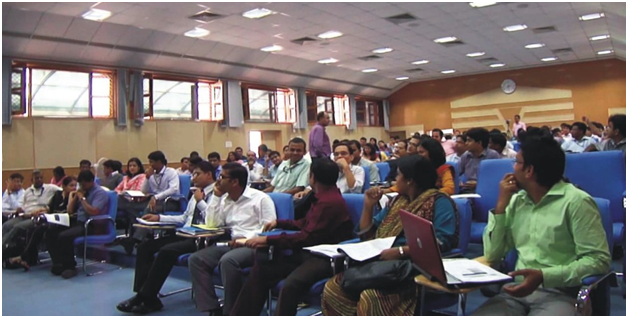
Contrary to what is conveniently believed, the process of carving a successful bureaucrat does not begin after the result is declared, but on the day an aspirant decides to pursue the hard road of preparation for the prestigious exam. The preparation for UPSC exams is focused around Social Studies. Yes, there is aptitude and English segment too, and the additional pressure of an optional subject. However, the core area of preparation revolves around Social Studies, the same subject that is today the most despised subject among school students. Unfortunately, no sincere efforts from CBSE or NCERT have yet been made to address this issue.

I remember my school days very clearly. We had our first tryst with History in Class 5. We started with the civilizations, then moved on to the Vedic Age, and followed it with a brief outline of the history of India up till the Mughal Rule. The information was limited, but enough for that age. However, the subject continued to remain a burden on our tender minds. Class 8 coupled with destiny and I landed up in a CBSE school. The subject was tackled very loosely here. The focus was on guides and only on cracking the board exams. I recall my days in Class 9 and Class 10 as my loyalties quickly shifted from the hapless text of NCERT to guides and other publishing material. These supplements were carefully wrapped in a newspaper so as to avoid any argument with the teacher. The irony was that she used to carry the same book wrapped in a different newspaper, or sometimes the same.

Barring those who studied history, science and commerce happened for most of us. College bought us time and freedom while that freedom brought us freedom from studying our own freedom movement. Half a dozen years later, we are greeted with the unfortunate realization that we have lost touch with social studies. At the threshold of UPSC preparation, we were left with no choice but to refer blogs online for choosing the right books, with the exception of those who are brave enough to spend money in coaching centers for studying their school syllabus again.

I started with history.

It’s always been my favorite subject. I scored 100% in my pre-boards, much to the despair of my classmates. Fortunately for me, I did not lose my touch with history. Engineering happened and like 99% of engineering students, I spent my leisure and study time in activities that had no relevance to the program I had chosen. History happened again and before I knew, I had my own library of over 200 history books. The noteworthy point was that apart from historical chronicles and biographies (most of them from the Mughal Era), the books I chose were mainly authored by foreign authors. From business biographies to the Iraq War and from the First Atom Bomb to the last the Nuclear Test that was conducted, foreign authors always presented me with an interesting perspective of all these events. The Americans were not shying from pointing out the mistakes made by their leaders during the Second World War, nor did the Brits spare any mercy for their most respected Prime Minister for the blunders he committed. These authors were not entirely transparent in their approach but they made me think, something the NCERT writers fail at miserably.

Moving on, I landed up with the books of one of India’s famous historian. The name is Bipin Chandra, and anyone who is even vaguely aware of the UPSC preparation understands that this name and his work are indispensable to crack the UPSC exams. Reluctant, I picked up his work and started reading ‘India since Independence,’ only to be left frustrated and angry for the lack of choices those were available.

India’s period of freedom constitutes a very small part of the history syllabus in the exam. However, in my opinion, aspiring civil servants need to have clarity on the mistakes that were made under the leadership of Indian National Congress. Make no mistake; this is not about the party or its Prime Ministers or even the infamous dynasty, but bureaucrats only.

With all respects to the dead historian, if he could, he would have wiped his face with Nehru’s used toilet paper after dinner. History is a dangerous subject if read from a single perspective, and this is what happens when you pick up the work of Bipin Chandra. In this article, our focus would be on Bipin Chandra ’s ‘India since Independence’.

I am halfway through the book and I am already not looking forward to the second half. I had my first encounter with post-independent India’s history through Ramchandra Guha’s ‘India After Gandhi’ and a couple of other books focusing on specific time periods after independence, notably Tavleen Singh‘s take on the transition of power from Indira Gandhi and Sanjay Gandhi to Rajiv Gandhi which she covered in her critically acclaimed book,’ Durbar’.

The period from 1947-1964 talks of only one person and that is Nehru. After some time, the book becomes so monotonous with the irrelevant and repetitive mention of our first Prime Minister. His contemporaries are more or less ignored considering that the fact that over 300 pages are dedicated to Nehru.

Here I quote a paragraph that describes the fall of Indira Gandhi and the subsequent revolts that followed in the capital. Notice the careless use of words in describing the ruthless killings of innocents in the aftermath of Indira Gandhi’s assassination.  The reader needs to pick up the book and to form a conclusion. The book is biased, and I have already purchased an alternate to Bipin Chandra ’s ‘India’s Struggle for Independence’.

“The government’s delay in bringing the situation under control can only be explained by the confusion following Indira’s assassination, with the swearing-in of the new Prime Minister, the responsibility of arranging the funeral, which was attended by thousands of people, and looking after the foreign guests. It also took a while for the full import of the scale of the massacre to be communicated and understood at the higher levels of the government. On 3rd November, the day of the funeral, Rajiv visited some of the affected areas in the morning, and later the army was called in and the violence suppressed. Many voluntary agencies, whose personnel were generally Hindus, worked for months to bring relief to the families of victims. Similar violence, though on a smaller scale, broke out in some other North Indian cities, especially Kanpur and Bokaro. Within two weeks of his becoming the Prime Minister, there occurred the Bhopal Gas leak tragedy, in which 2000 people, mostly poor slum dwellers, lost their lives and many thousands more were taken ill because of poisonous emissions from a chemicals factory run by Union Carbide, a multinational company. The legal battle for compensation dragged on for years in Indian and US courts, and the final settlement was not a generous one, and was further bogged down in bureaucratic delays due to difficulties of identifying the sufferers.”

Notice how the author discards the careless ‘When-a-might-tree-falls-the –earth-shakes’ statement along with Rajiv Gandhi’s assistance to Warren Anderson in fleeing the country. Even if we were to discard the grammatical errors, this piece of writing is nothing less than shameful and shallow.

Bipin Chandra as a historian as his loyalties towards the Congress dynasty, and not the party as one would assume. His world revolves around Nehru and Indira Gandhi, and this is not good for anyone preparing to become a civil servant.

There is a line that actually defends Nehru for the infamous war of 1962 against China. The Emergency of 1975 is also projected to be a uniting event for the population of India. The ruthless sterilization campaigns have been skimmed over. While Sanjay Gandhi’s illegally purchase license to manufacture 50,000 Maruti cars has been termed as a random accusation on the character of Indira Gandhi, the opposition workers have been scrutinized even for their smallest roles in any anti-Nehru movement.

It is fruitless to go back in history and speculate what should have been the right course for our former Prime Ministers and their cabinets. However, as aspirants, the focus should be on case studies discussing the flaws that resulted in some of the biggest planning mistakes of Independent India, particularly the one committed under Sanjay Gandhi’s leadership, the consequences of which our capital city continues to endure until the day.

Bipin Chandra ’s books are recommended for all civil aspirants. Unfortunately, they are a necessary evil, but the most unfortunate part is that the content in them doesn’t cater to the ones who actually want to serve the nation and not some minister. The history content that is of relevance to our last 150 years doesn’t sow the seeds of thinking or innovation and rather directs towards ministerial dictatorship.

The biggest exam of the country certainly needs better books and texts for its aspirants. While there are some who prefer shortcuts and opt for Institute notes and modules, a certain section of aspirants prefers reading every recommended book from cover to cover.

Cramming is not the way to go in UPSC, but understanding is. However, can a similar logic be applied to bureaucrats when they opt to serve the nation?

Tags: Bipin ChandraCivil Service AspirantUPSC Exam History Syllabus
Share4806TweetSend
Previous Post

Know thy Enemy – Kashmir Files and the Mistakes of Nehru

Next Post

The simplest explanation for why Communism Failed in India

Related Posts

Resolve of a Changing Bengal: Youth, Potential, and Call for Transformation
Opinions

Resolve of a Changing Bengal: Youth, Potential, and Call for Transformation

21 April 2026

The yearning for change in the soil of Bengal is not a sudden wave, it is a convergence of...

Redefining Terms of Truly Mutual Trade Deal: Sovereignty and Strategy in the US–Bangladesh Framework
Economy

Redefining Terms of Truly Mutual Trade Deal: Sovereignty and Strategy in the US–Bangladesh Framework

15 April 2026

The debate around Bangladesh’s emerging trade framework with the United States cannot be reduced to a binary choice of...

Race Against Iran Deadline: Was Pakistan’s Ceasefire Bid Driven by the White House?
Geopolitics

Race Against Iran Deadline: Was Pakistan’s Ceasefire Bid Driven by the White House?

9 April 2026

Pakistan attempted to position itself as a peacemaker in the escalating tensions involving Iran, but the reality behind the...

Load More

Leave a Reply Cancel reply

Your email address will not be published. Required fields are marked *

I agree to the Terms of use and Privacy Policy.
This site is protected by reCAPTCHA and the Google Privacy Policy and Terms of Service apply.

Currently Playing

From Runways to Warships: India’s Firefighting Warrior Built for Bases & Battles| IAF | VayuShakti

From Runways to Warships: India’s Firefighting Warrior Built for Bases & Battles| IAF | VayuShakti

00:05:40

Ethanol, EVs and Solar- How India’s Energy Game Is Changing | Modi on LPG & Crude Oil | war| Hormuz

00:05:21

Truth of IRIS Dena: 8 Days That Changed Narrative | War zone Reality, Not an Indian Navy Exercise

00:08:02

300 Million Euros for SCALP: Strategic Necessity or Costly Dependency on France300

00:04:06

Tejas Mk1A: 19th aircraft coupled but Not Delivered: What Is Holding Back the IAF Induction?

00:07:21
Facebook Twitter Instagram Youtube
tfipostTfipost.com
Right Wing | News Analysis | Indian Opinion
  • About us
  • Contact Us
  • Careers
  • Brand Partnerships
  • Terms of use
  • Privacy Policy
  • Sitemap

©2026 TFI Media Private Limited

No Result
View All Result
  • Premium
  • Politics
    • Analysis
    • Opinions
    • Trending
  • Economy
    • Business
    • Finance
  • Defense
    • Defence
    • Strategy
    • Weaponry
  • Geopolitics
    • Africa
    • Americas
    • Asia Pacific
    • Europe
    • South Asia
    • West Asia
  • Knowledge
    • Culture
    • History
    • Indology
  • Law
  • Lounge
    • Books
    • Cinema
    • Food
    • Health
    • Sports
    • technology
    • Travel
    • Satire
TFIPOST हिन्दी
TFIPOST Global

©2026 TFI Media Private Limited