












TFIPOST हिन्दी
TFIPOST Global
Tfipost.com
Tfipost.com
No Result
View All Result
  • Premium
  • Politics
    • All
    • Analysis
    • Opinions
    • Trending
    From pilgrimage to metros, now without the wait

    From Kashi to Mumbai and Ayodhya to Pune: Modi Expands Rail Network with New Amrit Bharat Express Services

    Why is Making a Jet Engine so Hard | The failure of Kaveri

    Why is Making a Jet Engine so Hard | The failure of Kaveri

    Rajnath Singh at SCO, reaffirming India’s zero-tolerance stand on terrorism.

    “No More Double Standards”: Rajnath Singh’s SCO Message Rewrites India’s Terror Response Playbook

    Nepal PM Faces Fresh Controversy as Church Demolition Row Triggers Political Storm

    Nepal PM Faces Fresh Controversy as Church Demolition Row Triggers Political Storm

    • Analysis
    • Opinions
    • Trending
  • Economy
    • All
    • Business
    • Economy1
    • Finance
    India–New Zealand FTA signed in New Delhi, marking a “once in a lifetime” moment in trade ties.

    India, New Zealand Seal Fast-Tracked Trade Pact to Expand Duty-Free Access, Jobs and $5 Billion Trade Target

    Ahmadis in Pakistan: From Faith to Marginalisation Under Law and Society

    Ahmadis in Pakistan: From Faith to Marginalisation Under Law and Society

    Open Demat Account with Zero Annual Maintenance Charges What to Look For

    Open Demat Account with Zero Annual Maintenance Charges What to Look For

    Blood in the Meadows: How the Pahalgam Terror Attack Exposed Calculated Targeting of Civilians in Kashmir

    Blood in the Meadows: How the Pahalgam Terror Attack Exposed Calculated Targeting of Civilians in Kashmir

    • Business
    • Finance
  • Defense
    • All
    • Defence
    • Strategy
    • Weaponry
    Why is Making a Jet Engine so Hard | The failure of Kaveri

    Why is Making a Jet Engine so Hard | The failure of Kaveri

    Rajnath Singh at SCO, reaffirming India’s zero-tolerance stand on terrorism.

    “No More Double Standards”: Rajnath Singh’s SCO Message Rewrites India’s Terror Response Playbook

    Recovered arms and arrests have intensified scrutiny on a suspected cross-border terror network.

    Pakistan’s Proxy War Faces a Setback as Delhi Terror Plot is Crushed, 18 Weapons Seized

    The scars of Pahalgam endure, even as the nation moves forward

    Pahalgam Anniversary: Modi Signals Firm National Stand as India Reasserts Anti-Terror Resolve

    • Defence
    • Strategy
    • Weaponry
  • Geopolitics
    • All
    • Africa
    • Americas
    • Asia Pacific
    • Europe
    • South Asia
    • West Asia
    When law becomes an instrument of exclusion, persecution moves far beyond the courtroom.

    Ahmadis in Pakistan: From Faith to Marginalisation Under Law and Society

    When uranium becomes strategy, India moves first.

    India’s $4 Billion Uranium Coup with Kazakhstan Rewrites the Global Nuclear Balance

    “Fixing the World”: What a Century of Big Ideas Reveals About Us

    “Fixing the World”: What a Century of Big Ideas Reveals About Us

    Pakistan Tried to Bury an NYT Report. It Only Exposed Asim Munir’s Panic

    Pakistan Tried to Bury an NYT Report. It Only Exposed Asim Munir’s Panic

    • Africa
    • Americas
    • Asia Pacific
    • Europe
    • South Asia
    • West Asia
  • Knowledge
    • All
    • Culture
    • Education
    • History
    • Indology
    Chants of ‘Jai Badri Vishal’ Echo as Badrinath Portals Open; All Four Dhams Now Accessible to Pilgrims

    Chants of ‘Jai Badri Vishal’ Echo as Badrinath Portals Open; All Four Dhams Now Accessible to Pilgrims

    Kedarnath Dham Portals Open for Devotees After 181 Days Amid Vedic Chants, Traditional Rituals

    Kedarnath Dham Portals Open for Devotees After 181 Days Amid Vedic Chants, Traditional Rituals

    Sardar Patel and Amit Shah

    Sardar Patel’s 1947 Blueprint on Minority Quotas Resurfaces as Reservation Debate Returns to Centre Stage

    The 1973 Constitution and ‘Bhutto’ the Man Who Made It: What Pakistan Owes and What It Destroyed

    The 1973 Constitution and ‘Bhutto’ the Man Who Made It: What Pakistan Owes and What It Destroyed

    • Culture
    • History
    • Indology
  • Law
  • Lounge
    • All
    • Books
    • Cinema
    • Entertainment
    • Food
    • Games
    • Health
    • Lifestyle
    • Satire
    • Sports
    • technology
    • Travel
    When regulation meets the algorithm

    India Tightens Digital Control as Online Blocking Orders Surge to 24,300 Amid AI Deepfake Trend

    Digital Data Collection In India

    India’s Data Reset Begins: Census 2027 to Become First Fully Digital Population Count

    5 Facilities in Bengaluru Specializing in Mental Health Treatment for Those with Cancer

    5 Facilities in Bengaluru Specializing in Mental Health Treatment for Those with Cancer

    UNESCO World Book Day and Copyright Day

    World Book Day 2026: UNESCO’s Multilingual Push Aligns with India’s Deep Literary Continuum

    • Books
    • Cinema
    • Food
    • Health
    • Sports
    • technology
    • Travel
    • Satire
Tfipost.com
  • Premium
  • Politics
    • All
    • Analysis
    • Opinions
    • Trending
    From pilgrimage to metros, now without the wait

    From Kashi to Mumbai and Ayodhya to Pune: Modi Expands Rail Network with New Amrit Bharat Express Services

    Why is Making a Jet Engine so Hard | The failure of Kaveri

    Why is Making a Jet Engine so Hard | The failure of Kaveri

    Rajnath Singh at SCO, reaffirming India’s zero-tolerance stand on terrorism.

    “No More Double Standards”: Rajnath Singh’s SCO Message Rewrites India’s Terror Response Playbook

    Nepal PM Faces Fresh Controversy as Church Demolition Row Triggers Political Storm

    Nepal PM Faces Fresh Controversy as Church Demolition Row Triggers Political Storm

    • Analysis
    • Opinions
    • Trending
  • Economy
    • All
    • Business
    • Economy1
    • Finance
    India–New Zealand FTA signed in New Delhi, marking a “once in a lifetime” moment in trade ties.

    India, New Zealand Seal Fast-Tracked Trade Pact to Expand Duty-Free Access, Jobs and $5 Billion Trade Target

    Ahmadis in Pakistan: From Faith to Marginalisation Under Law and Society

    Ahmadis in Pakistan: From Faith to Marginalisation Under Law and Society

    Open Demat Account with Zero Annual Maintenance Charges What to Look For

    Open Demat Account with Zero Annual Maintenance Charges What to Look For

    Blood in the Meadows: How the Pahalgam Terror Attack Exposed Calculated Targeting of Civilians in Kashmir

    Blood in the Meadows: How the Pahalgam Terror Attack Exposed Calculated Targeting of Civilians in Kashmir

    • Business
    • Finance
  • Defense
    • All
    • Defence
    • Strategy
    • Weaponry
    Why is Making a Jet Engine so Hard | The failure of Kaveri

    Why is Making a Jet Engine so Hard | The failure of Kaveri

    Rajnath Singh at SCO, reaffirming India’s zero-tolerance stand on terrorism.

    “No More Double Standards”: Rajnath Singh’s SCO Message Rewrites India’s Terror Response Playbook

    Recovered arms and arrests have intensified scrutiny on a suspected cross-border terror network.

    Pakistan’s Proxy War Faces a Setback as Delhi Terror Plot is Crushed, 18 Weapons Seized

    The scars of Pahalgam endure, even as the nation moves forward

    Pahalgam Anniversary: Modi Signals Firm National Stand as India Reasserts Anti-Terror Resolve

    • Defence
    • Strategy
    • Weaponry
  • Geopolitics
    • All
    • Africa
    • Americas
    • Asia Pacific
    • Europe
    • South Asia
    • West Asia
    When law becomes an instrument of exclusion, persecution moves far beyond the courtroom.

    Ahmadis in Pakistan: From Faith to Marginalisation Under Law and Society

    When uranium becomes strategy, India moves first.

    India’s $4 Billion Uranium Coup with Kazakhstan Rewrites the Global Nuclear Balance

    “Fixing the World”: What a Century of Big Ideas Reveals About Us

    “Fixing the World”: What a Century of Big Ideas Reveals About Us

    Pakistan Tried to Bury an NYT Report. It Only Exposed Asim Munir’s Panic

    Pakistan Tried to Bury an NYT Report. It Only Exposed Asim Munir’s Panic

    • Africa
    • Americas
    • Asia Pacific
    • Europe
    • South Asia
    • West Asia
  • Knowledge
    • All
    • Culture
    • Education
    • History
    • Indology
    Chants of ‘Jai Badri Vishal’ Echo as Badrinath Portals Open; All Four Dhams Now Accessible to Pilgrims

    Chants of ‘Jai Badri Vishal’ Echo as Badrinath Portals Open; All Four Dhams Now Accessible to Pilgrims

    Kedarnath Dham Portals Open for Devotees After 181 Days Amid Vedic Chants, Traditional Rituals

    Kedarnath Dham Portals Open for Devotees After 181 Days Amid Vedic Chants, Traditional Rituals

    Sardar Patel and Amit Shah

    Sardar Patel’s 1947 Blueprint on Minority Quotas Resurfaces as Reservation Debate Returns to Centre Stage

    The 1973 Constitution and ‘Bhutto’ the Man Who Made It: What Pakistan Owes and What It Destroyed

    The 1973 Constitution and ‘Bhutto’ the Man Who Made It: What Pakistan Owes and What It Destroyed

    • Culture
    • History
    • Indology
  • Law
  • Lounge
    • All
    • Books
    • Cinema
    • Entertainment
    • Food
    • Games
    • Health
    • Lifestyle
    • Satire
    • Sports
    • technology
    • Travel
    When regulation meets the algorithm

    India Tightens Digital Control as Online Blocking Orders Surge to 24,300 Amid AI Deepfake Trend

    Digital Data Collection In India

    India’s Data Reset Begins: Census 2027 to Become First Fully Digital Population Count

    5 Facilities in Bengaluru Specializing in Mental Health Treatment for Those with Cancer

    5 Facilities in Bengaluru Specializing in Mental Health Treatment for Those with Cancer

    UNESCO World Book Day and Copyright Day

    World Book Day 2026: UNESCO’s Multilingual Push Aligns with India’s Deep Literary Continuum

    • Books
    • Cinema
    • Food
    • Health
    • Sports
    • technology
    • Travel
    • Satire
No Result
View All Result
Tfipost.com
Tfipost.com
No Result
View All Result
  • Premium
  • Politics
  • Economy
  • Defense
  • Geopolitics
  • Knowledge
  • Law
  • Lounge

Many laid down their lives for Maharashtra and Gujarat. They remain hidden in the pages of history

Kunal Sangwan by Kunal Sangwan
5 May 2017
in History
Maharashtra Bombay Gujarat
Share on FacebookShare on X

The 1st of May has, for 57 years, facilitated unbridled celebrations about belonging to Maharashtra. Yet, it has also seen the importance of a group that not only facilitated the existence of Maharashtra Day, but the very state itself, diminish to insignificance.

The idea of a separate, pre-dominantly Marathi state had loomed ever since Independence, though the desire for it was strengthened in the aftermath of the States Reorganization Act, 1956.

RelatedPosts

From Kashi to Mumbai and Ayodhya to Pune: Modi Expands Rail Network with New Amrit Bharat Express Services

Nagpur ‘NGO Jihad’ Case: HR Head’s FIR Uncovers Conversion Pressure, Sexual Abuse, CCTV Evasion and a Wider Network Under Probe

Thane Woman Duped of ₹54,000 in Helicopter Scam as Chardham Yatra 2026 Registration Begins

Load More

The parliamentary legislation stipulated that the previously established classification of states – under classes A,B,C and D – would be done away with, instead forming thirteen new states along with three union territories, while completely abolishing the princely state hierarchy.

Yet, the act distanced itself from partitioning states on a linguistic basis, something that the States Reorganization Committee deemed unfit citing the political sentiment around that period.

In 1953, the Telugu population of Madras was granted their own state with a significant portion of northern Madras upto Hyderabad becoming its territory. This development took place only after Potti Sreeramulu, an Andhra nationalist, fasted unto death, which led to unbridled protests erupting across Madras and significant damage being meted out to public property over a week’s period, eventually culminating in the centre acquiescing to the Telugu demonstrators’ demands.

Though granting autonomy to the Telugu population brought about an end to their protests, it bolstered the myriad of lingual movements that had been simmering at a smaller scale in most of the states since Independence, while the Congress had to put up a near incessant stand against such groups at state level and this continued even after the reorganization scheme of 1956.

Furthermore, even Jawahar Lal Nehru, an original proponent of a separate Andhra state and others such as Bombay being divided upon lingual preferences, rescinded his support for the phenomenon in a report from the JVP Committee, which he co-headed along with Sardar Vallabhbhai Patel and Pattabhi Sitaramayya.

Thus, the Samyukta Maharashtra Samiti (SMM) was formed under Keshavrao Jedhe’s leadership, while the inclusion of men such as SA Dange, one of the CPI’s founding members, bore ample testimony to its liberal, often ultra-leftist nature.

At the same time, the Mahagujarat movement, termed by literary great KM Munshi, flourished under ample support from the prosperous Gujarati community in hopes for a state of their own. Even with a common objective on agenda, the groups remained autonomous in functioning from each other, despite occasional disputes over villages that would border both proposed states, though these too were resolved by allowing third-parties to conduct linguistic analysis in villages and determine the majority languages.
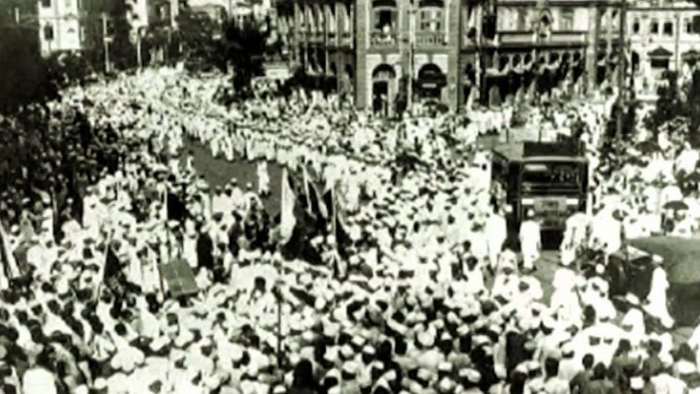
Mahagujarat Movement
Image Courtesy: Guruprasad’s Portal

The knowledge of these proceedings, and most of what we know about the Gujarati side of the statehood struggle, stems from the autobiography of the Mahagujrati movement’s leader Indulal Yagnik, once an essential Gandhian aide in Kheda.

But, within months of the SMM’s commencing and gaining traction, the city of Bombay became a dreaded bone of contention between both sides, neither willing to ascertain the other’s claim over it. The heated nature of the dispute was such that, at one point, some of the leaders from both movements tabled a proposal for simply granting Bombay the status of an independent city-state. The justification provided was that of Bombay’s formidable and unmatched economic status in our infant nation, and that an independent administration concentrated on such a menial region could help it remain that way.

The argument failed to convince almost anyone, with many claiming that it was simply an attempt to make sure that neither Maharashtra nor Gujarat would secure the city and cause embarrassment to the other in the process. And, the dispute raged on into the spring of 1956, before coming to an abrupt, yet tragic end.

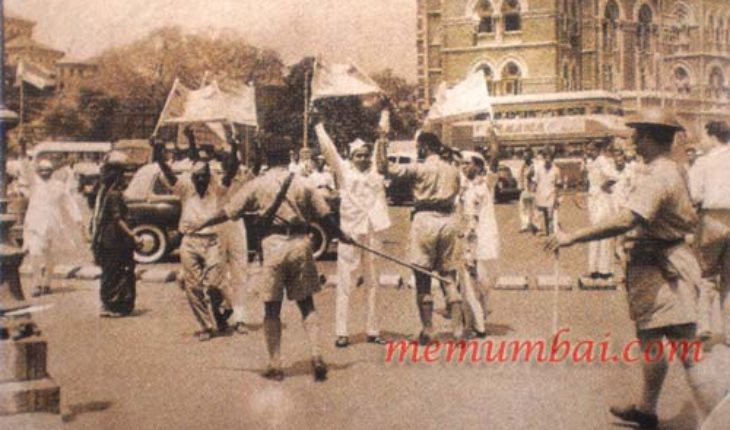
The Mahagujarat movement had been, at least on record, been more successful in employing young ideologues such as students under its fold, meaning it had ample fodder for protests to be initiated at each instance of the establishment failing to meet their demands. One such protest was initiated by two dozen students from Ahmedabad on the 8th of August, who marched onto the Lal Darwaza and were supposed to have interacted with Morarji Desai, then Bombay’s Chief, though only were him to reject their demands. Following Desai’s departure from the location, the students were reported to have become agitated and turned violent. Considering the location’s administrative importance, police forces were deployed and retaliated, resulting in half a dozen or more of the students losing their lives.

The event strengthened Gujarati sentiment and brought more of those previously uninvolved in the movement to the fore. Protests occurred like wildfire, and even compelled Desai to fast, remarkably without any public support by his side, forcing him to abandon it a week later. The situation this remained more or less the same, with a consecrated attempt now being made to move on from the deaths. Yet, the tragedy didn’t prove to be the last not only in half the decade more of agitation that followed, but of that very year.

On the 11th of November that year, thousands of SMM activists mobilized together and poured onto Bombay’s streets, staging a peaceful march toward the city’s administrative district. Though the details never quite saw the light of the day, it’s believed that the enormous number of people, the largest for a protest since pre-independence, succeeded in baffling the police force and caused a significant stir within the Bombay state’s administration.

Followed by a series of miscalculations about the situation at large, an emergency meeting was called with Chief Minister Morarji Desai at head, and the local forces were deployed around the region with complete discretion.

The peaceful march came to a halt right before a pocket of deployed police forces, and after some miscommunication, a conflict erupted between the protestors and the forces, which fired in self-retaliation. Later backed by reinforcements, the police continued firing, resulting in the deaths of more than a hundred people, with hundreds more injured to some degree.

Historical records in the great tragedy’s aftermath almost vanish completely, leaving us in the dark about what transpired in the following months, or even days. In fact, the dearth of information is such that had it not been for the Hutatma Chowk statue, a monument erected near the iconic Flora Fountain immediately after Maharashtra’s formation in honor of those who died, we perhaps wouldn’t even know of the event. Furthermore, absurdly, there is also a substantial amount of confusion about even the year of the incident.

With the separation movements acquiring an incessant nature, the centre came to accept the need for bowing down to the demands, and there were early signs of the same in the late 50’s, though neither group eased up and rather became emboldened further.

Within the Marathi community, those with higher incomes came to the fore and injected the SMM with their financial resources, something that the Gujaratis had accomplished year’s prior, and provided further impetus for mass mobilization.

In 1957, Nehru’s Congress swept the second general elections completely, while securing majorities in every single state of the time, establishing a political dominance that would last another decade. With even the population of the Bombay state affording the party their trust, Nehru rallied the parliament to chalk out the details of the formal separation, while a de facto partition was achieved as early as 1958.

Thus, with all conflicts accounted for and Bombay being named as Maharashtra’s capital, the first day of May in 1960 saw the creation of Gujarat and Maharashtra.

Perhaps, the opulence with which both states ushered into their existence was responsible for the two great movements being forgotten in history, though the complexities involved are such that pinning this down on one sole reason wouldn’t be justified.

Undoubtedly, revisiting the period would certainly bring up questions that would make up for an awkward time in state-centre relations.

For starters, attempting to achieve clarity about what happened on that dreaded November day would bring into question the legacy of Morarji Desai, who, in spite of not being elected Maharashtra’s first CM, went onto become Prime Minister and the man who broke Congress’ chokehold over Indian politics. Taking into account the hostility with which one is received while questioning the temerity of Indian politicians from yore, socially and institutionally, it wouldn’t be too wise of a move.

And, the developments that transpired and motivated the police forces present that day to kill more than a hundred people would, if ever released to the public, attract great scrutiny. Also, it would be held quite unjustified for a law-keeping force to shoot 105 of their fellow countrymen, no matter the predicament, and serve to tarnish the reputation of each man or woman employed by the Bombay state police at the time.

Furthermore, the centre’s desire to prevent more linguistic divide remained intact through the 60’s, while attempts to glorify the Bombay-borne movements too were constricted, although for nothing. The calls for an independent Punjab for the Sikhs too gained unimaginable traction in the mid-60’s and resulted in formation of Punjab and Haryana on 1st November, 1966, followed by a mushrooming of new states which has been responsible for the number being a formidable twenty-nine in the modern day.

Considering these circumstances, it’s perhaps understandable as to why those who laid down their lives during 1956 would remain uncelebrated down the years, even if there were a holiday to commemorate their accomplishment.

Of course, there’s the Hutatma Chowk too, flanked by the Amar Jyot and right at the epicentre of old Bombay, in plain sight. And yet, the remarkable disregard continues to prosper, while the memories of the movement perish.

It’s the boast of any monument to become the heart of a city whose history it keeps intact, though the Chowk remains largely impervious even on a Maharashtra Day, which comes and goes every year only to don the garb of a mere public holiday.

Thus, while keeping the encouragement of separatism to a low, efforts were made to identify the kin of those who died in that November, although none have ever been found owing to the near impossible nature of tracking down ancestral ties in our nation, while those who did attract suspicion of being related to the 105 couldn’t present any concrete proof about the same.

Ancestral identification processes such as these have been conducted over the years pre-dominantly by the Shiv Sena, apt considering that Bal Thackeray’s was the son of revered writer Prabhodhankar Thackeray, who too belonged to the Samyukta Maharashtra Movement and was one of its intellectual powerhouses, hence also explaining the roots of his son’s more vehemently Marathi ideology that would become a facet of Maharashtrian politics for the decades to come.
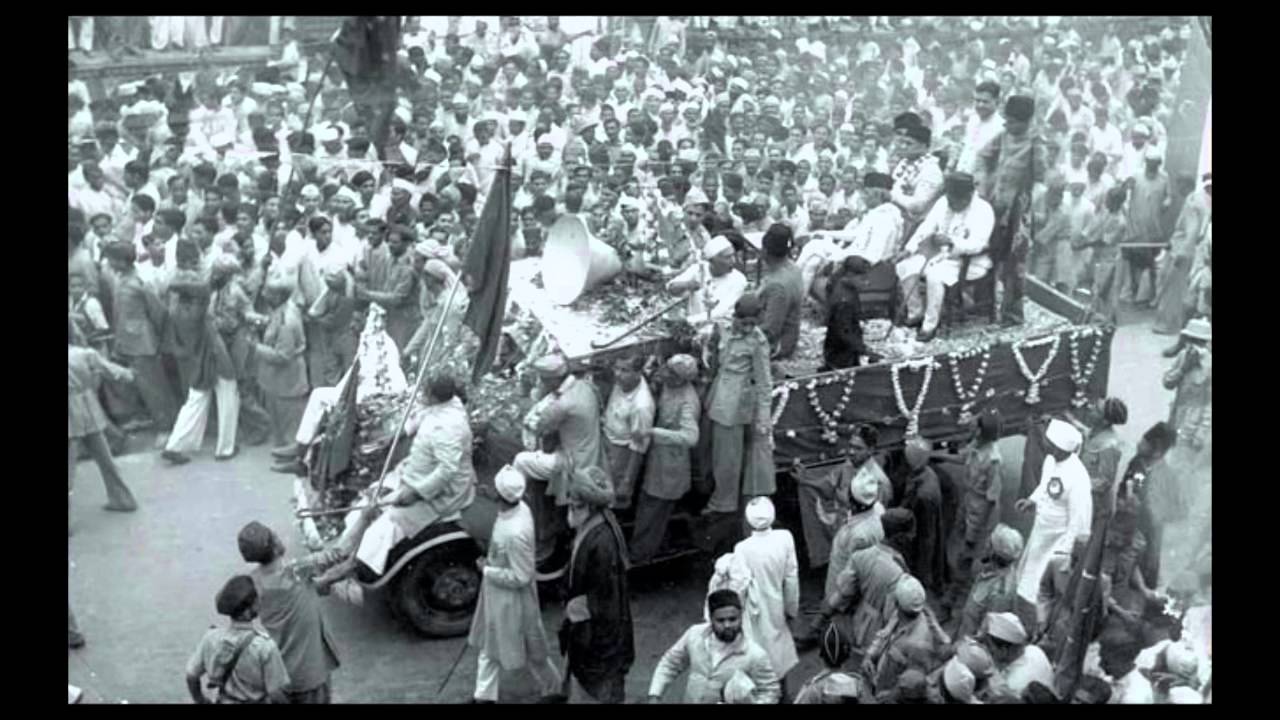
Samyukta Maharashtra Movement
Image Courtesy: Guruprasad’s Portal

Maybe, there’ll be a day when our nation’s long-standing aspiration to achieve unbridled unity would be such that bringing up the Bombay movements wouldn’t be a source of political headache, and the courage to question such that even the most revered figures of our history wouldn’t evade its jurisdiction.
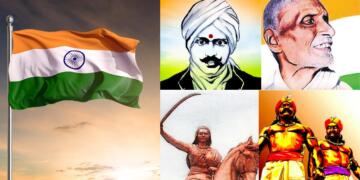
But, until that day comes, those who laid down their lives for Maharashtra and Gujarat will remain shrouded in the pages of history.

Tags: Bombay MovementGujaratMahagujarat MovementMaharashtraSamyukta Maharashtra Movement
Share1TweetSend
Previous Post

It’s official, North Korea is set to follow Pakistan’s footsteps

Next Post

The one thing that separated Narasimha Rao from all other PMs is something PM Modi needs to follow

Related Posts

Sardar Patel and Amit Shah
History

Sardar Patel’s 1947 Blueprint on Minority Quotas Resurfaces as Reservation Debate Returns to Centre Stage

17 April 2026

Sardar Vallabhbhai Patel’s 1947 intervention on minority representation in India’s Constituent Assembly has returned to the centre of political...

The 1973 Constitution and ‘Bhutto’ the Man Who Made It: What Pakistan Owes and What It Destroyed
Analysis

The 1973 Constitution and ‘Bhutto’ the Man Who Made It: What Pakistan Owes and What It Destroyed

6 April 2026

Pakistan’s constitutional story is built on a contradiction so stark that it still indicts the state nearly half a...

The Fall of Lhasa: How Nine Days in 1959 Changed Tibet Forever
History

The Fall of Lhasa: How Nine Days in 1959 Changed Tibet Forever

26 March 2026

There is a photograph that has never left the minds of those who have seen it. Lhasa, March 1959,...

Load More

Leave a Reply Cancel reply

Your email address will not be published. Required fields are marked *

I agree to the Terms of use and Privacy Policy.
This site is protected by reCAPTCHA and the Google Privacy Policy and Terms of Service apply.

Currently Playing

From Runways to Warships: India’s Firefighting Warrior Built for Bases & Battles| IAF | VayuShakti

From Runways to Warships: India’s Firefighting Warrior Built for Bases & Battles| IAF | VayuShakti

00:05:40

Ethanol, EVs and Solar- How India’s Energy Game Is Changing | Modi on LPG & Crude Oil | war| Hormuz

00:05:21

Truth of IRIS Dena: 8 Days That Changed Narrative | War zone Reality, Not an Indian Navy Exercise

00:08:02

300 Million Euros for SCALP: Strategic Necessity or Costly Dependency on France300

00:04:06

Tejas Mk1A: 19th aircraft coupled but Not Delivered: What Is Holding Back the IAF Induction?

00:07:21
Facebook Twitter Instagram Youtube
tfipostTfipost.com
Right Wing | News Analysis | Indian Opinion
  • About us
  • Contact Us
  • Careers
  • Brand Partnerships
  • Terms of use
  • Privacy Policy
  • Sitemap

©2026 TFI Media Private Limited

No Result
View All Result
  • Premium
  • Politics
    • Analysis
    • Opinions
    • Trending
  • Economy
    • Business
    • Finance
  • Defense
    • Defence
    • Strategy
    • Weaponry
  • Geopolitics
    • Africa
    • Americas
    • Asia Pacific
    • Europe
    • South Asia
    • West Asia
  • Knowledge
    • Culture
    • History
    • Indology
  • Law
  • Lounge
    • Books
    • Cinema
    • Food
    • Health
    • Sports
    • technology
    • Travel
    • Satire
TFIPOST हिन्दी
TFIPOST Global

©2026 TFI Media Private Limited