
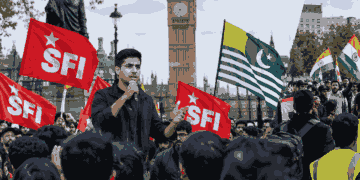






















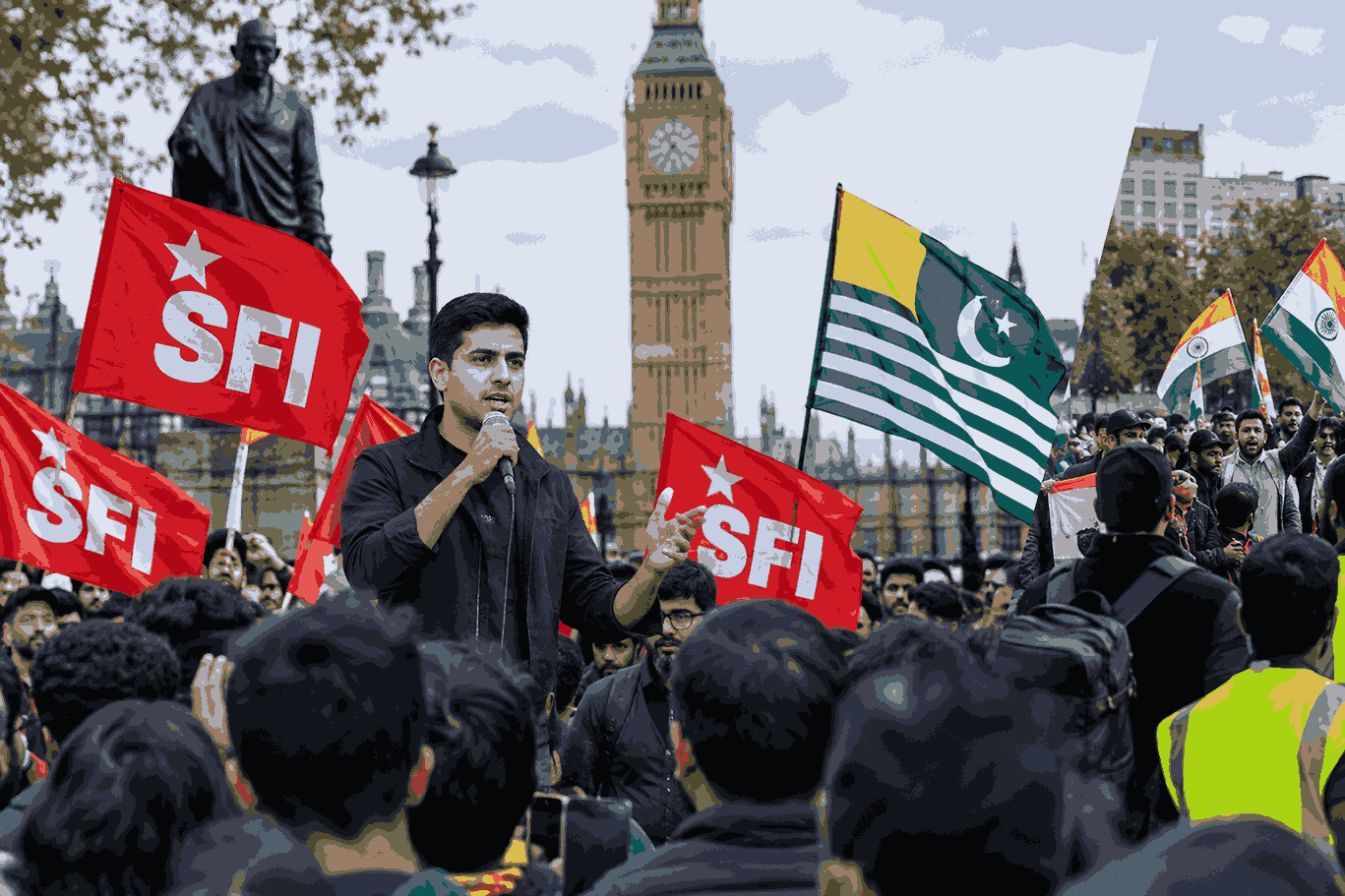
The protest took place near the Mahatma Gandhi statue at Parliament Square, bringing together Indian diaspora members, student activists and supporters of different political causes. Rathee, who had called for an international demonstration over concerns about India’s electoral process, used the London event to draw attention to allegations concerning the Special Intensive Revision (SIR) of electoral rolls. The Election Commission’s handling of the process has become a point of contention among opposition groups and activists.
The demonstration was organised against the backdrop of wider political agitation in India. Protesters questioned the transparency of electoral-roll revisions and demanded accountability from the country’s election authorities. Slogans including “Vote Chor, Gaddi Chhod” were raised, alongside calls for the resignation of the Chief Election Commissioner. These allegations remain matters of political dispute, and claims of electoral wrongdoing should be distinguished from findings established through official investigations or judicial proceedings.
However, the event attracted additional scrutiny because of slogans directed at the BJP leadership and the Rashtriya Swayamsevak Sangh (RSS). According to The Commune’s report, demonstrators raised slogans such as “RSS se Azadi” and “Modi-Shah se Azadi”. The language has drawn criticism from political opponents, who argue that such messaging shifts the focus from specific electoral grievances towards a broader campaign against the ruling establishment.
For supporters of the demonstration, the slogans formed part of a political expression of dissent against the government and its institutions. In a democratic system, criticism of elected leaders and demands for institutional accountability are legitimate forms of political participation, provided they remain peaceful and lawful. The controversy nevertheless illustrates how the framing of a protest can influence public perceptions of its objectives.
A second point of contention concerned the reported appearance of a flag associated with Pakistan-occupied Kashmir. Images and social media posts circulated after the gathering, prompting questions about the identity of the person displaying it and the significance of the symbol. The Commune reported the flag’s presence, but the available reporting does not establish who displayed it, why it was carried or whether the individual was connected to the organisers. Those questions require evidence rather than assumptions about the motives or nationality of participants.
The presence of Pakistani journalists at the event also became a subject of online discussion. Among those reportedly covering the demonstration was journalist Farid Qureshi. Foreign journalists attending a public protest, however, does not by itself establish that they organised, financed or influenced the gathering. Any allegation of outside coordination would require independent substantiation.
The incident has placed SFI-UK under greater public scrutiny, particularly regarding the political message communicated by the protest and the distinction between the organisers’ stated objectives and the wider symbolism associated with the event. The student organisation has participated in demonstrations concerning electoral integrity, while Rathee’s involvement brought additional attention to the gathering.
A counter-protest also took place, with a smaller group of participants waving the Indian national flag and raising slogans including “Vande Mataram” and “Modi, Modi”. The rival gatherings reflected the sharp divisions within sections of the Indian diaspora over the BJP government, electoral reform and the international presentation of domestic political disputes.
The competing demonstrations also highlighted a broader question: how should Indians living abroad engage with political controversies in their country of origin? For some, international protests provide a means of drawing attention to concerns about democratic institutions. For others, taking domestic political disputes to foreign capitals risks deepening divisions within the diaspora and encouraging the portrayal of India through partisan narratives.
The controversy surrounding SFI-UK therefore extends beyond the slogans heard in London. It touches on electoral accountability, freedom of expression, national symbols and the responsibility of political organisers to communicate their aims clearly. Establishing the facts about disputed symbols and participants is essential to a credible assessment of the event.
Ultimately, the London protest has brought competing interpretations of Indian democracy into public view. Demands for transparency in elections deserve scrutiny on their merits, while claims about foreign involvement or the intentions of individual demonstrators should be assessed against verifiable evidence. A careful distinction between documented events, political allegations and online speculation is necessary if the debate is to move beyond partisan accusation.