















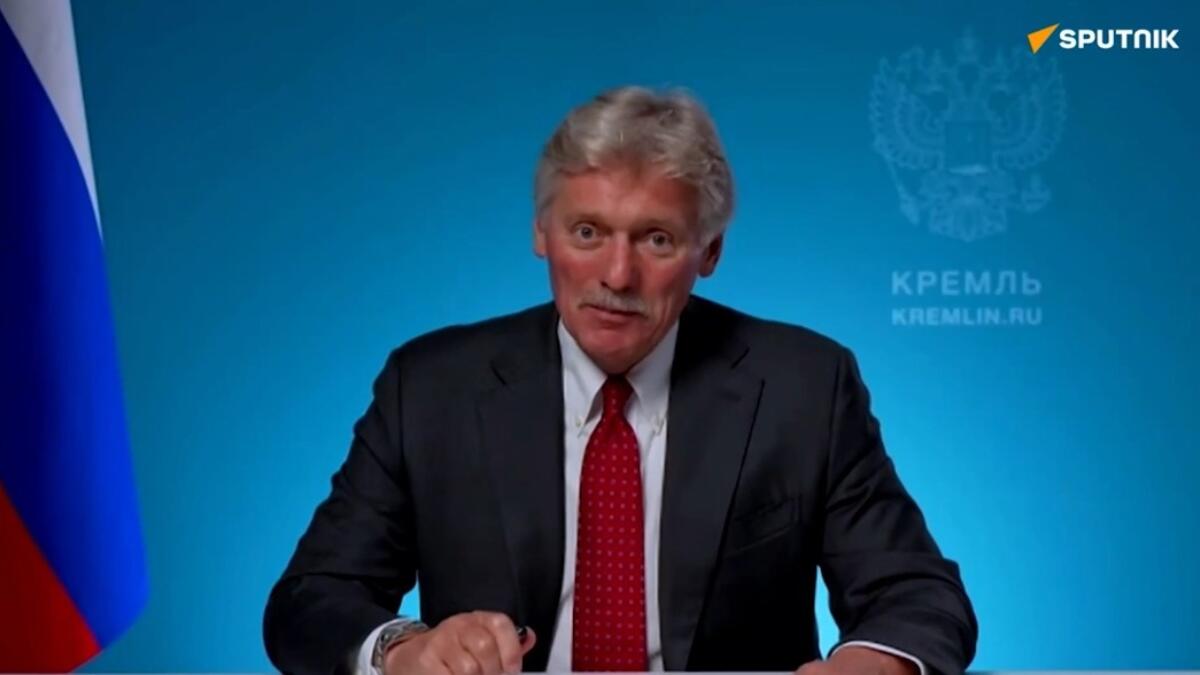
Russia has pushed the share of its payments with BRICS partners settled in national currencies past 90 per cent, Kremlin spokesperson Dmitry Peskov said at an online press conference from Moscow addressing Indian media, days before President Vladimir Putin travels to New Delhi for the BRICS Summit and bilateral talks with Prime Minister Narendra Modi.
Peskov, briefing arranged with Sputnik India, said the shift away from the US dollar and other Western currencies was not driven by ideology but by necessity. “It’s not because we are aiming for de-dollarisation, for getting rid of US dollars. No, no, to the contrary. We are open to every acceptable method of payment,” he said, adding that the move followed Western sanctions that weaponised access to certain national currencies. “Certain countries are using some national currencies as a tool for political pressure. They are introducing sanctions based on their national currencies. So, if they don’t let us use their money, we use our own money.”
The bulk of Russia’s trade with India specifically is now also conducted in national currencies rather than the dollar, Peskov said, describing Russian businesses as increasingly comfortable operating in this new payment landscape and determined to expand it further.
Putin heads to Delhi for BRICS “crown” summit
The currency disclosure came as part of a wider preview of Putin’s upcoming trip, which will combine the BRICS Summit — held this year under India’s chairmanship — with bilateral meetings with Modi. Peskov called the summit “the crown of Indian chair” in the bloc and praised New Delhi’s stewardship of the rotating presidency over the past year.
Tracing BRICS’ evolution from a loose grouping of Russia, India and China two decades ago into today’s expanded bloc with Brazil and South Africa, Peskov stressed that BRICS remains a club rather than a formal institution — with no charter, regulations or standing office — but one bound by a shared vision of how global cooperation should work.
Currency shift sits inside a broader financial push
The de-dollarisation trend is one plank of a three-pillar BRICS agenda Russia is promoting: security, economy and finance, and cultural-humanitarian ties. On the financial side, Russia is also backing a proposed BRICS grain exchange aimed at bolstering global food security, alongside expert-level talks — first launched at the 2024 Rio de Janeiro summit — on reforming the United Nations and other international institutions.
Other agenda items flagged for the New Delhi summit include artificial intelligence, space cooperation, transportation, energy, healthcare and parliamentary exchanges. The bloc has also been expanding its outer ring: since 2024, ten countries — Belarus, Bolivia, Vietnam, Kazakhstan, Cuba, Nigeria, Malaysia, Thailand, Uganda and Uzbekistan — have been granted “partner state” status and are gradually being folded into BRICS working groups.
India ties: nuclear energy and education alongside trade
On the bilateral track, Peskov pointed to Russia’s role in India’s nuclear power sector — including the Kudankulam plant — as a growing pillar of the relationship alongside traditional energy supplies, with talks reportedly under way on a further nuclear plant in India. Russia is currently building more nuclear power units abroad than any other country, he said. Educational and cultural exchange was also highlighted, with Peskov welcoming the continued flow of Indian students to Russian universities.
The Modi-Putin relationship was described as close, pragmatic and candid enough to allow frank discussion of sensitive bilateral and global issues — a dynamic Peskov said opens further room for cooperation as the two leaders prepare to meet on the sidelines of the summit.