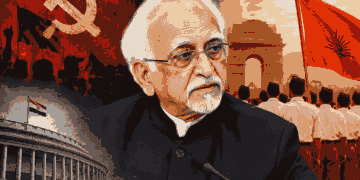







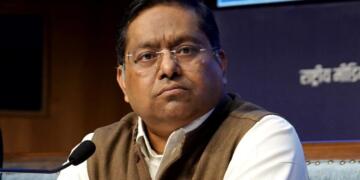












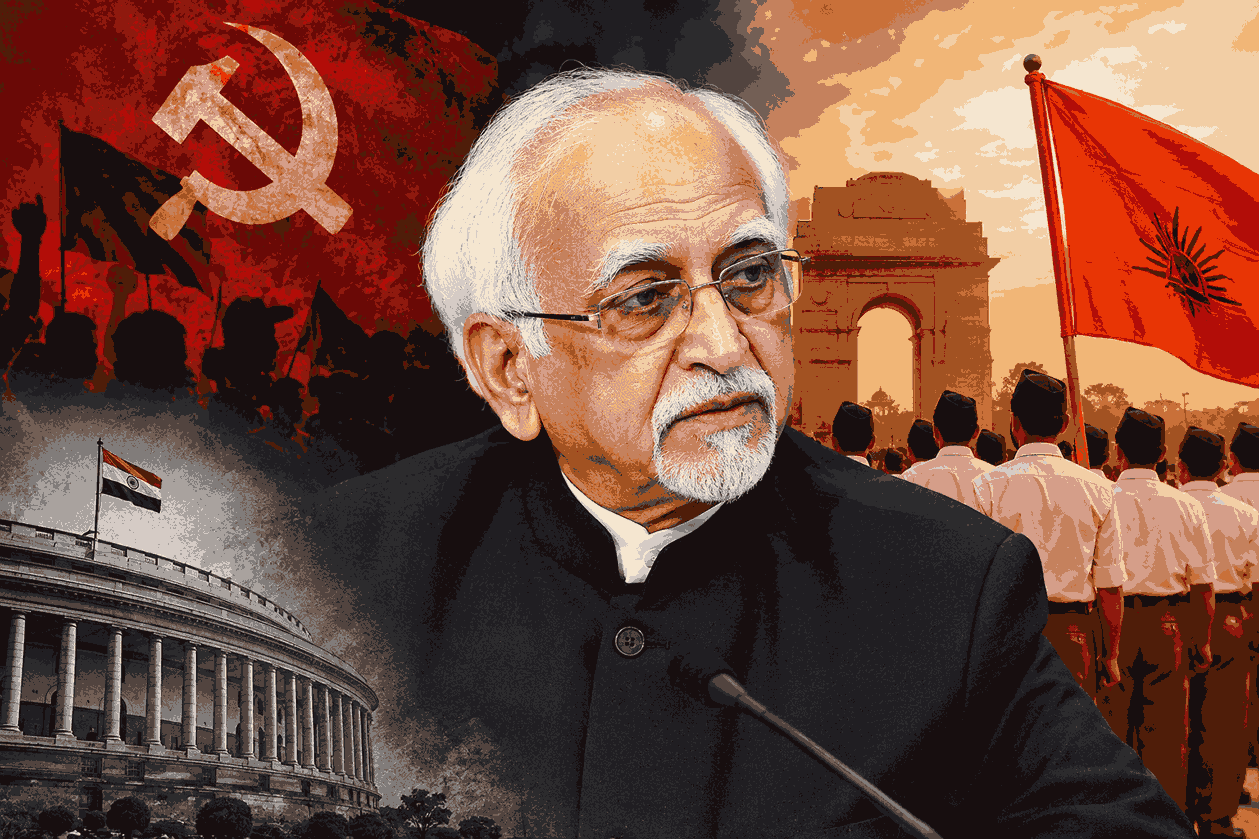
Former Vice President Hamid Ansari has triggered a fresh political controversy after invoking a remark attributed to former Prime Minister Jawaharlal Nehru that Hindu right-wing communalism, rather than communism, represented a danger to India. Ansari made the comments while speaking at a memorial lecture for constitutional expert and political commentator A.G. Noorani in New Delhi on September 18, 2026. His remarks have drawn attention because of their reference to the Rashtriya Swayamsevak Sangh (RSS) and their broader assessment of communal politics in India.
Speaking at the event, Hamid Ansari referred to Noorani’s 2019 book, The RSS: A Menace to India. The book examined the RSS and its ideological position, and Ansari used passages from its introduction to frame his remarks about the political and social challenges facing India. According to reports of the speech, he quoted a statement attributed to Nehru in which the former prime minister reportedly distinguished between the threat posed by communism and what he described as Hindu right-wing communalism.
The former Vice President’s comments also touched upon Noorani’s interpretation of the experiences and sentiments of Indian Muslims. He referred to two Urdu couplets cited by Noorani and said the latter represented a continuing sense of insecurity within sections of the Muslim community. Ansari connected those observations with his argument that contemporary debates over nationalism, identity and communal politics deserve greater public attention.
The intervention by Hamid Ansari comes at a time when questions surrounding religious identity, nationalism and the political role of ideological organisations remain deeply contested in India. Supporters of his argument are likely to view his remarks as a warning against majoritarian politics, while critics have questioned the framing of Hindu communalism as the principal danger while giving comparatively less attention to other forms of political extremism and communal violence.
The reference to the RSS has also become a significant part of the controversy. Noorani’s book itself carried a strongly critical assessment of the organisation, while the RSS has historically rejected characterisations that portray it as a threat to India. The debate therefore extends beyond Ansari’s remarks and touches on a much older disagreement over the organisation’s ideology, its place in Indian public life and its relationship with the country’s political institutions.
For Hamid Ansari, the issue is also connected to his longstanding public interventions on questions of secularism, citizenship and national identity. During his tenure as Vice President, and after leaving office, he has spoken on several occasions about what he described as challenges to India’s constitutional framework. Some of his earlier comments have similarly generated political criticism, particularly when he discussed religious insecurity, cultural nationalism and the treatment of minorities.
At the memorial event, Hamid Ansari presented Noorani’s writings as part of a wider discussion about the nature of Indian nationalism. He cited the late scholar’s interpretation of historical developments and referred to the distinction between civic nationalism and forms of nationalism centred on cultural or religious identity. Such questions remain particularly sensitive in a country where political parties and social organisations hold sharply different views about how national identity should be understood.
The controversy surrounding Hamid Ansari is therefore unlikely to be limited to one speech. His remarks have revived competing interpretations of Nehru’s political legacy, the history of communal politics and the ideological evolution of independent India. They have also reopened debate over whether communism, religious communalism or other forms of political extremism posed the more serious challenges to the country at different points in its history. Those assessments depend heavily on the period, evidence and political framework being considered.
For Hamid Ansari, however, the central message of the lecture was the continuing relevance of Noorani’s arguments about communalism and Indian nationalism. The former Vice President’s invocation of Nehru has ensured that the discussion has moved beyond a memorial lecture and into the wider political debate. As competing sides interpret his remarks through very different ideological lenses, the episode once again highlights how contested questions of secularism, religious identity and nationalism remain in contemporary India.