




















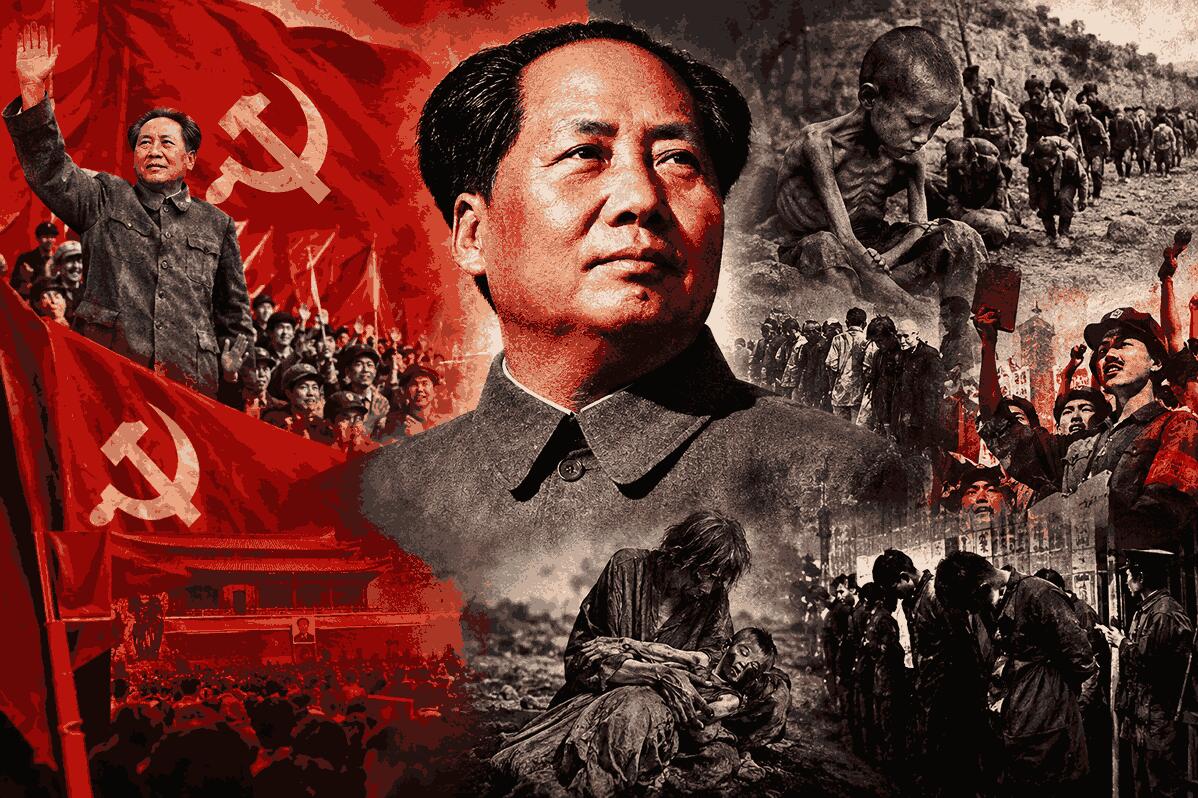
The Communist Party of India (Marxist), or CPI(M), has triggered fresh controversy after describing Chinese communist leader Mao Zedong as a “great revolutionary,” despite the historical record associating his rule with catastrophic famines, political repression and the deaths of millions. Critics have pointed to the contradiction between the party’s praise and the record of a Mass Murderer whose policies caused immense human suffering in twentieth-century China.
The CPI(M)’s remarks came in connection with the 50th death anniversary of Mao, who died on September 9, 1976. In its tribute, the party highlighted his role in the Chinese Communist revolution and presented him as an important revolutionary figure. The statement has once again raised questions about the ideological position of the Indian communist movement and its continuing assessment of controversial communist leaders.
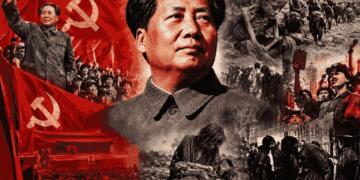
Mao’s rise to power culminated in the Communist victory in China in 1949 and the establishment of the People’s Republic of China. For communist supporters around the world, Mao represented revolutionary mobilisation, particularly his strategy of organising China’s largely rural population. His interpretation of Marxism-Leninism became influential among communist movements in Asia, Africa and Latin America. However, describing Mao solely through his revolutionary achievements leaves out the enormous human cost of his policies.
The term Mass Murderer is frequently used by critics and historians when discussing Mao because of the scale of deaths associated with his political campaigns and policies. One of the most devastating episodes was the Great Leap Forward, launched in 1958. Mao sought to accelerate China’s industrial and agricultural transformation through collectivisation, communal farming and mass mobilisation. Instead, the campaign contributed to a devastating famine between 1959 and 1961.
Historical estimates of deaths connected to the Great Leap Forward vary considerably, but scholars generally place the figure in the tens of millions. Poor harvests were compounded by unrealistic production targets, government procurement policies and political pressure on officials to conceal the worsening situation. Millions faced starvation while the state continued to pursue ambitious economic targets.
The record of the Mass Murderer also extends beyond the famine. In 1966, Mao launched the Cultural Revolution, a political movement that sought to purge alleged enemies of communism and revive revolutionary ideology. The campaign unleashed widespread social and political upheaval. Intellectuals, academics, government officials and ordinary citizens were persecuted, publicly humiliated, imprisoned or sent to labour camps.
The Cultural Revolution devastated educational and cultural institutions and caused deep social trauma. Although the scale of deaths attributed directly to the campaign is disputed, there is little disagreement about the widespread persecution and disruption it caused. The Chinese Communist Party itself subsequently characterised the Cultural Revolution as a serious error.
Another reason Mao’s legacy remains controversial is the concentration of political power around his leadership. Opposition to official policies could carry severe consequences, while campaigns encouraged citizens to participate in political denunciations and ideological struggles. For critics, this combination of authoritarian rule, coercion and catastrophic policymaking strengthens the case for describing Mao as a Mass Murderer rather than merely a revolutionary statesman.
The controversy surrounding the CPI(M)’s tribute is therefore not simply about a historical anniversary. It reflects a larger question concerning how political parties should evaluate leaders responsible for enormous human suffering. Supporters of the CPI(M) may regard Mao primarily through the lens of anti-imperialist struggle and revolutionary history, while opponents argue that ideological sympathy cannot justify overlooking the victims of his policies.
For many observers, the description of Mao as a Mass Murderer is inseparable from the historical debate over accountability. The distinction between revolutionary achievement and human cost remains central to assessments of his rule. A leader can fundamentally transform a country while simultaneously presiding over policies that produce catastrophic consequences.
The CPI(M)’s continued willingness to praise Mao has consequently provided its critics with an opportunity to question whether Indian communists have adequately confronted the darker chapters of communist history. The debate is especially relevant in India, where Maoist insurgency later emerged as a separate revolutionary movement claiming inspiration from Maoist ideology.
Ultimately, the legacy of Mao remains deeply polarising. To admirers, he was the revolutionary leader who unified Communist China and challenged foreign domination. To critics, he was a Mass Murderer whose campaigns produced famine, repression and immense loss of life. The CPI(M)’s latest tribute ensures that this unresolved historical debate will continue, particularly over whether revolutionary credentials can ever outweigh the human cost of authoritarian political experiments.